
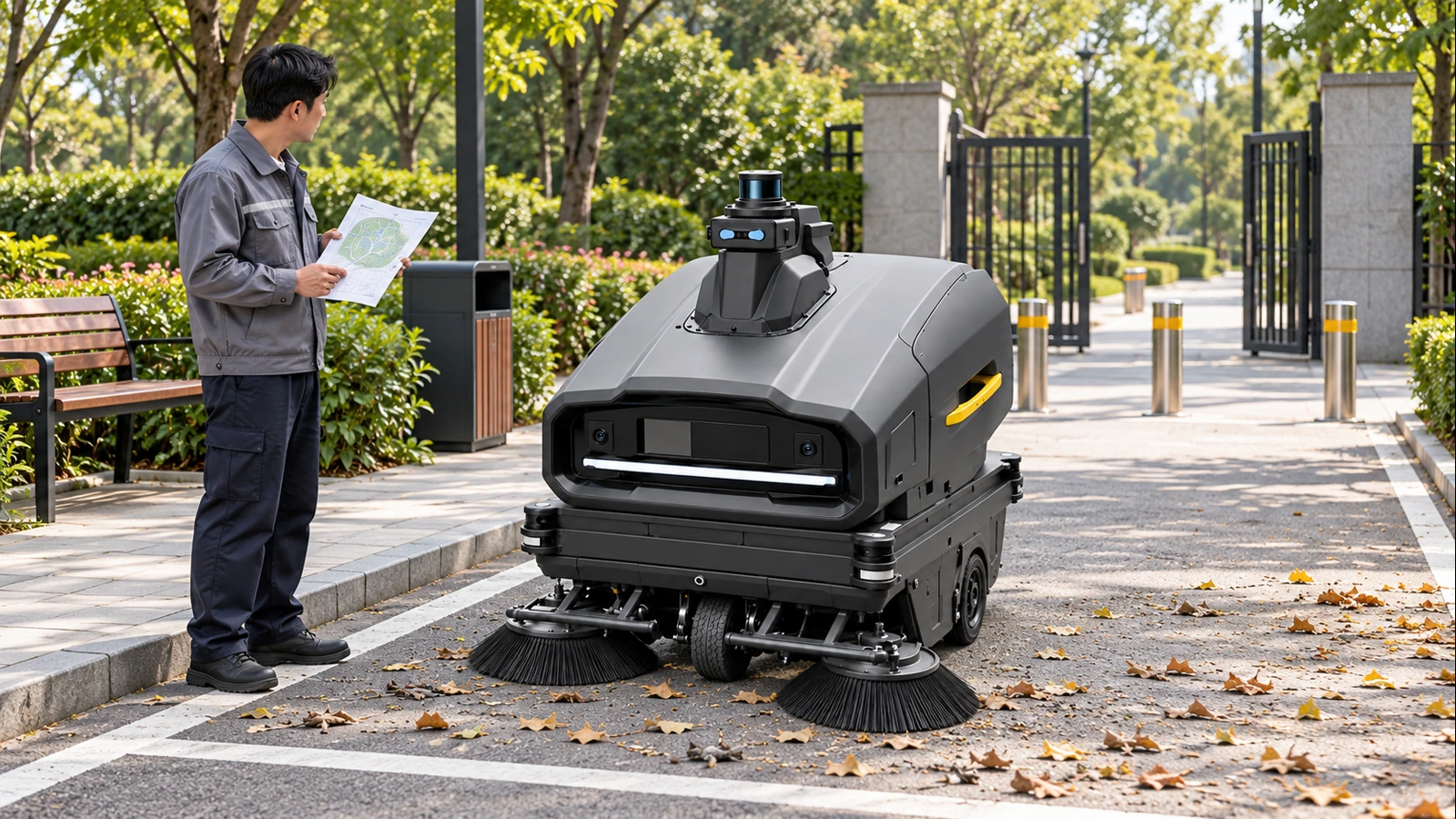
Autonomous sweeping deployment requires verification of actual machine capability, human takeover and site safety conditions.
Define routes and work windows first
Record road widths, obstacles, crossings, entrances and parking/charging. A demonstration video does not establish deployment suitability in a changing site environment.
Define takeover and exception procedures
Name the site lead, reachable operators and exception procedures. Verify navigation, obstacle-handling and remote functions for the supplied model rather than assuming every machine includes them.
Trial operation and maintenance handover
Trial the agreed route and work window, recording waste, collection results, interventions and maintenance. Use actual machine information for brush, collection and charging checks. Unattended management is not promised.
How to confirm the next step
Prepare site photographs and the model/configuration list. Confirm access, work frequency and maintenance conditions. This is a selection and management checklist, not a replacement for the equipment manual, a site trial or confirmation of the supplied configuration.
Read related selection and maintenance information · Send site conditions for selection advice
Checks after reading
- Site area, routes and narrowest access
- Floor, dust, oil, debris or pipe-blockage type
- Daily frequency and continuous working time
- Power, water, wastewater, consumables and service conditions
Explore products and selection information
Autonomous sweeping deployment: routes, takeover and site management — questions
What does this article address?
Autonomous sweeping deployment requires verification of actual machine capability, human takeover and site safety conditions.
What site information is needed before equipment selection?
Provide area, aisle width, floor/pipe conditions, contamination, frequency, power/water, city and budget range.
After reading “Autonomous sweeping deployment: routes, takeover and site management”, is a site trial still needed?
This article offers selection guidance. For complex sites, heavy contamination or continuous work, verify models and configurations through equipment information, video or a trial.