
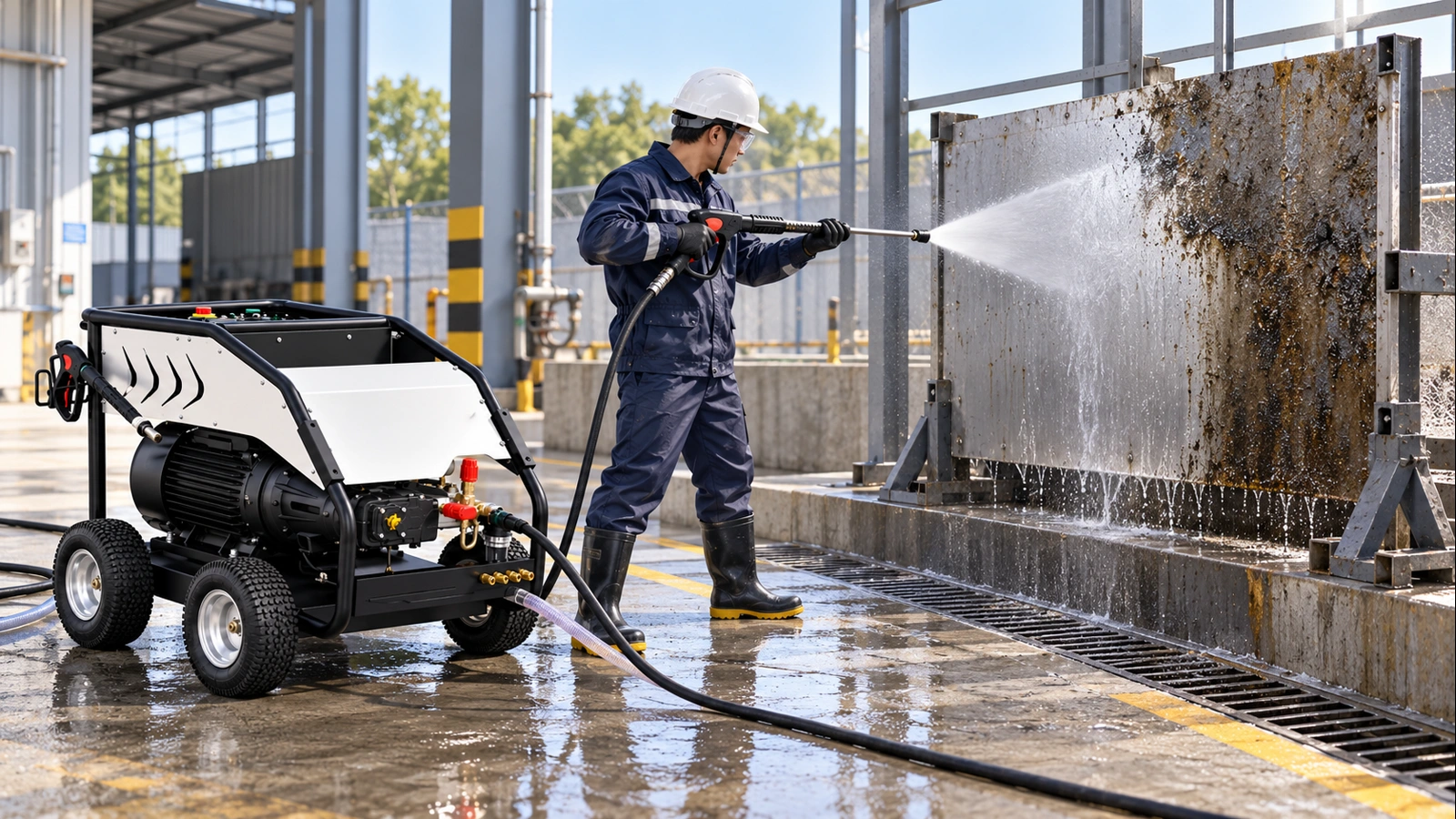
Separate equipment-surface and floor tasks and plan around materials, water/drainage and accessories.
Assess equipment surfaces and floors separately
Equipment materials, deposits and water-sensitive parts differ from floor grit, area and drainage. Provide separate photographs to assess objects and attachments.
Confirm site conditions for fixed work
Provide power, water source, drainage, distance and relocation needs. Petrol equipment requires suitable open outdoor use within the model's restrictions, never indoor or exhaust-accumulating operation.
Choose the working attachment by task
The base long lance serves suitable concentrated surface work. Surface cleaners and multi-nozzle flushing are optional. Nozzle count, flow distribution and multi-lance capability require model-specific evidence.
Include maintenance requirements in purchasing
Confirm manuals, inspection points, consumables and service contacts. Scene images do not replace supplied machine/connection information.
Checks after reading
- Site area, routes and narrowest access
- Floor, dust, oil, debris or pipe-blockage type
- Daily frequency and continuous working time
- Power, water, wastewater, consumables and service conditions
Explore products and selection information
How should factory equipment and floor pressure cleaning be planned? — questions
What does this article address?
Separate equipment-surface and floor tasks and plan around materials, water/drainage and accessories.
What site information is needed before equipment selection?
Provide area, aisle width, floor/pipe conditions, contamination, frequency, power/water, city and budget range.
After reading “How should factory equipment and floor pressure cleaning be planned?”, is a site trial still needed?
This article offers selection guidance. For complex sites, heavy contamination or continuous work, verify models and configurations through equipment information, video or a trial.