
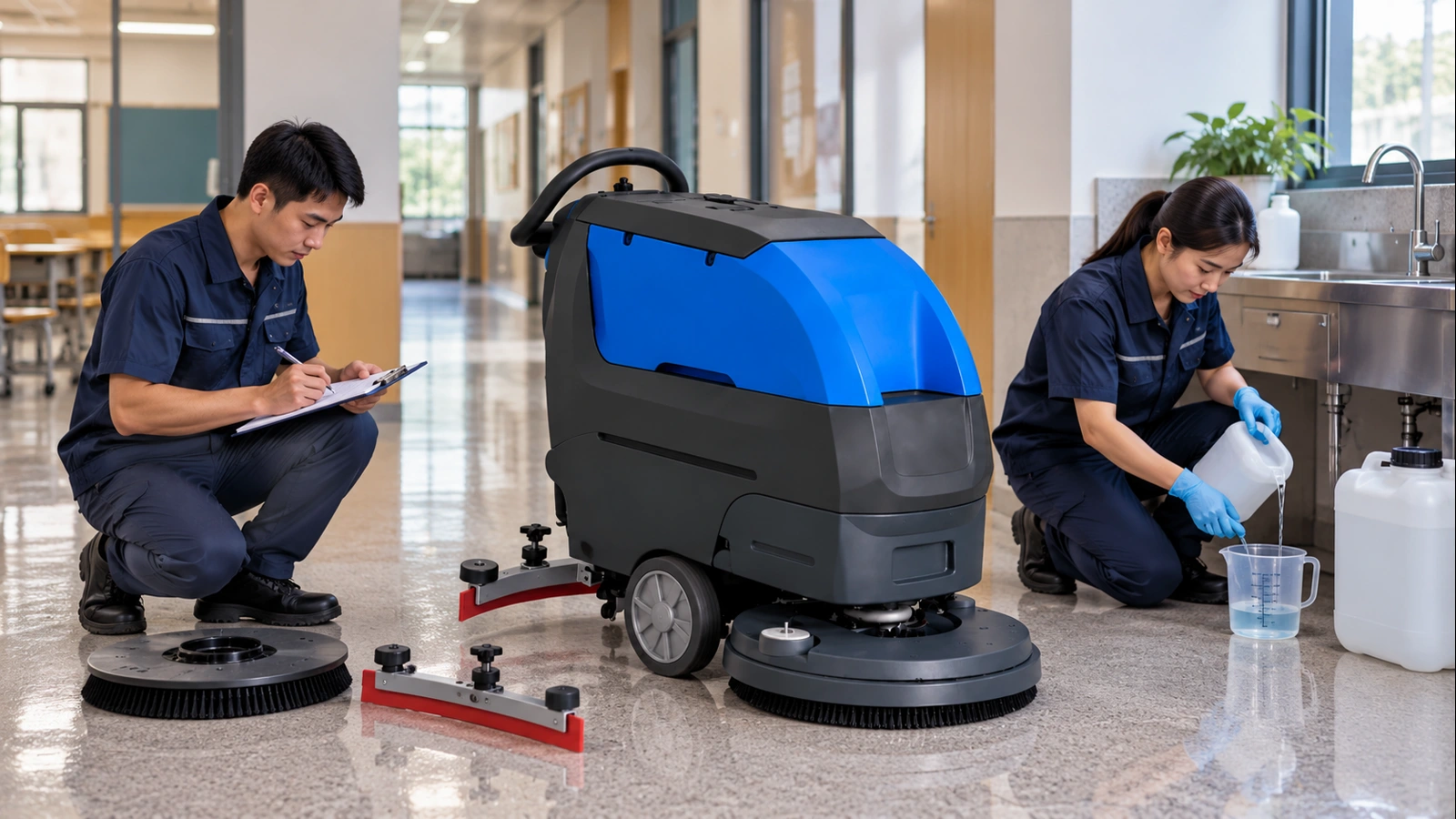
Track daily water, detergent, consumables, time, wastewater and maintenance. Assess water use, emissions and noise for the complete operation using actual measurements.
Set a common basis for comparison
- For the same area and target finish, record water, detergent and labour.
- Specify whether timing includes filling, emptying, consumables and finishing.
- For noise-sensitive sites, review the specific machine data and trial it during the intended operating window.
- Quantify savings and environmental benefits only from measured project records.
Autonomous equipment needs supervision and maintenance
CompareJ-W70、CC1andAllyBot-C2, check the route, operator inspection, consumables and wastewater handling. Measure any labour and resource savings on the actual task.
Use records to guide improvements
Keep task-specific operating and service records. Compare machine condition, faults and consumption to adjust the schedule. Include training, spares and service needs when selecting equipment.
Related material
Source information
- Source name: www.epa.gov
- Source title: EPA Safer Choice
- Source link:https://www.epa.gov/saferchoice
Checks after reading
- Site area, routes and narrowest access
- Floor material, soil type and pre-cleaning
- Daily frequency and continuous working time
- Power, water, wastewater, consumables and service conditions
Explore products and selection information
Questions about this guide
Does an autonomous machine always save water or labour?
Compare labour, water, consumables and maintenance records for the same task.
Which records should we start with?
Start with actual water, chemical use, labour, wastewater recovery and replacement records. Compare on the same basis.
How can we describe environmental cleaning practices without measured results?
Describe the functions, work and supervision required. Use documented evidence for savings, environmental performance or certification.