
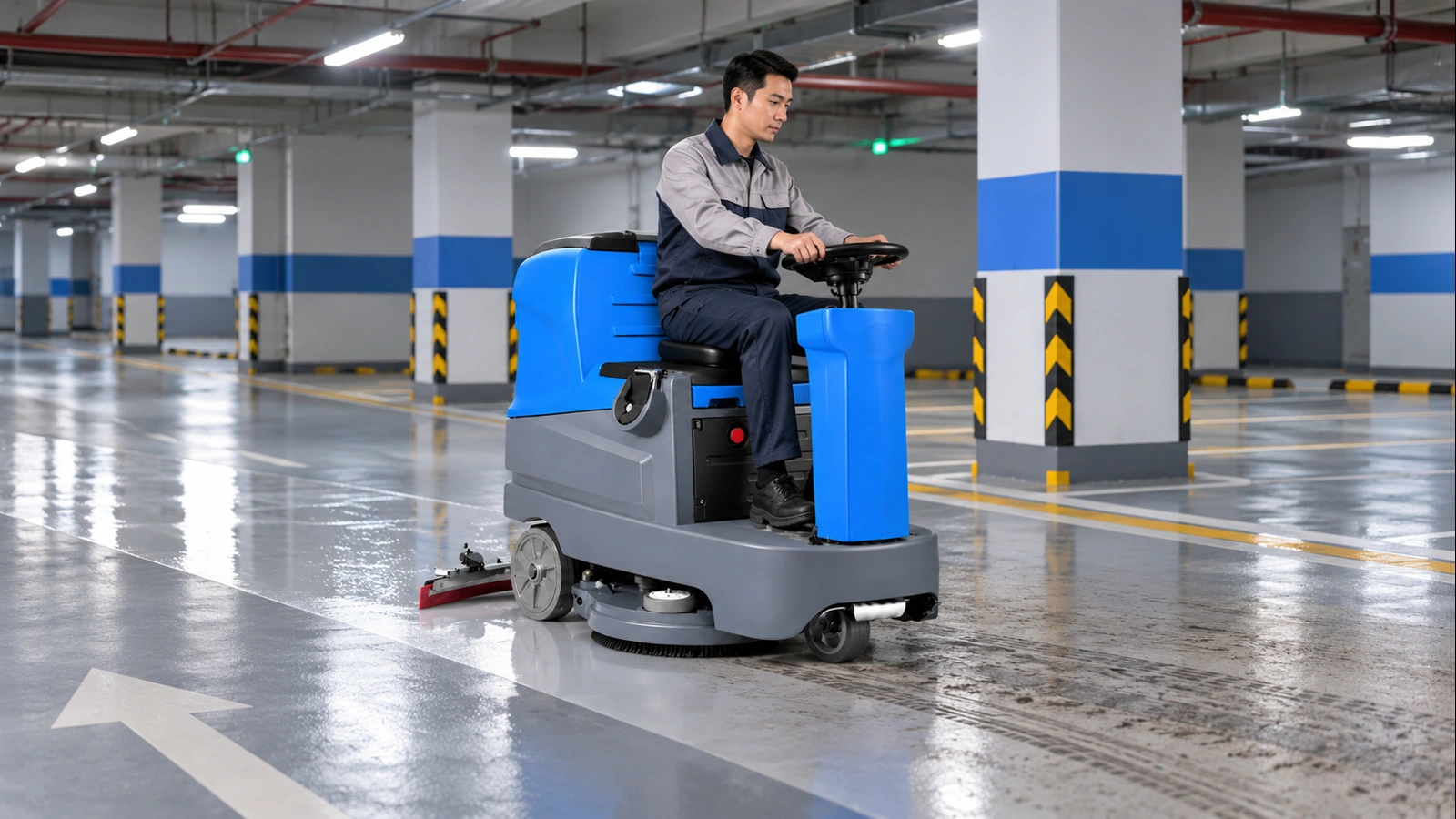
Map the main lane, parking gaps, columns and ramps separately. Test access with vehicles parked and normal traffic in place.
Check access before comparing working widths
Measure the narrowest aisle, turns and passing places. Check ramps, level differences, drains and speed humps against the machine limits. Measure its full envelope and turning space.
For a routine ride-on configuration, seeJ-66BF. For long main aisles, also seeJ-920BandJ-960Bfor its own specifications. Verify suitability through the route, servicing and a cleaning trial.
Record the soil and what was recovered
Dust, grit, tyre marks and oil can need different processes. Remove larger debris first, then test the brush and detergent on the floor and assess the completed pass.
Check actual floor moisture, blade contact and wear, suction path and recovery tank after the pass. Verify recovery at the site.
Simple handover for multi-shift property cleaning
- Identify daily zones, off-peak times, and water filling and discharge points.
- Follow handover instructions for charging, tank cleaning and squeegee inspection.
- At shift handover, record charge level, faults and consumable condition.
- Provide another method for corners and areas the machine cannot safely reach.
Checks after reading
- Site area, routes and narrowest access
- Floor material, soil type and pre-cleaning
- Daily frequency and continuous working time
- Power, water, wastewater, consumables and service conditions
Explore products and selection information
Questions about this guide
Do main car park lanes and gaps between bays need the same equipment?
Check aisles, turns and vehicle positions. Use a separate tool for tight corners if needed.
Does a reflective floor mean water has been recovered?
Observe the actual surface and check the blades, suction path and wastewater recovery.
Is drive power enough to assess a ramp?
Check permitted gradient, surface, load and manufacturer limits separately.