
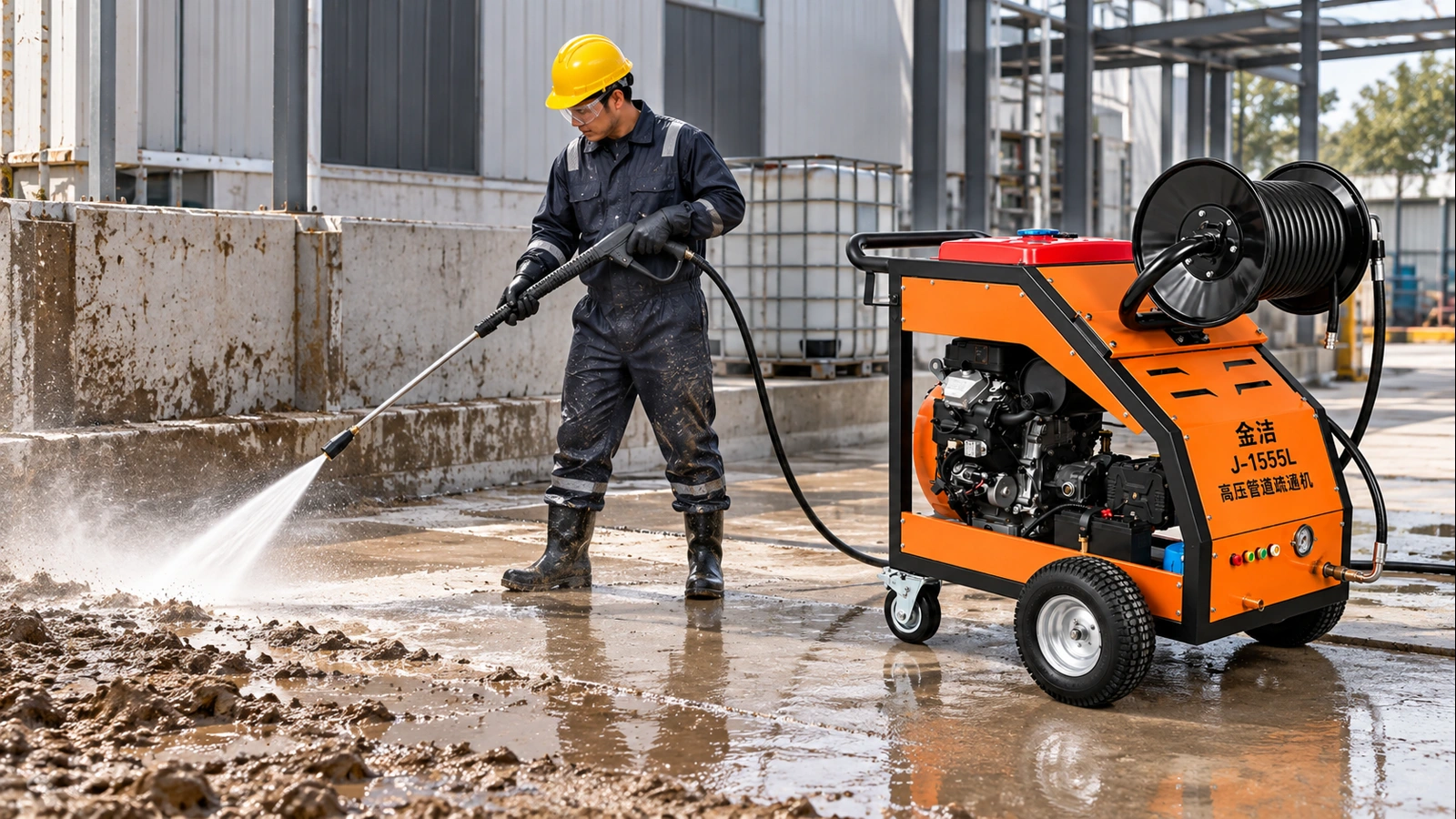
A single gun is standard. Confirm conditions for the earlier 150 bar (15 MPa), 35 L/min figure and plan the wash around soil, substrate and drainage.
Identify the object and contamination first
Assess the base lance for concentrated washing of compatible factory hard surfaces and equipment surroundings. Record oil/sludge, dust and grit, remove bulky debris and confirm material tolerance before trialling.
Ratings do not replace a site trial
An earlier single-gun figure is 150 bar (15 MPa) and 35 L/min. Confirm the nozzle, regulation and supply. Trial a small area at suitable distance and angle before proceeding. Keep jets clear of people, electrical equipment and vulnerable surfaces.
Route wet waste to an appropriate collection point
Plan wastewater handling so grit is not driven into pedestrian routes or recirculated. Isolate work and protect electrical/sensitive parts. Petrol equipment is restricted to suitable open outdoor locations, excluding indoor or exhaust-accumulating spaces.
Discuss special configurations separately
Surface, multi-nozzle flushing and rotary attachments are optional and order-specific. Confirm nozzle counts, parallel lances, special attachments and combined tasks separately against the explicit configuration/supply list.
Checks after reading
- Site area, routes and narrowest access
- Floor, dust, oil, debris or pipe-blockage type
- Daily frequency and continuous working time
- Power, water, wastewater, consumables and service conditions
Explore products and selection information
J-1555L base single lance: assessing factory floors and equipment surroundings — questions
What does this article address?
A single gun is standard. Confirm conditions for the earlier 150 bar (15 MPa), 35 L/min figure and plan the wash around soil, substrate and drainage.
What site information is needed before equipment selection?
Provide area, aisle width, floor/pipe conditions, contamination, frequency, power/water, city and budget range.
After reading “J-1555L base single lance: assessing factory floors and equipment surroundings”, is a site trial still needed?
This article offers selection guidance. For complex sites, heavy contamination or continuous work, verify models and configurations through equipment information, video or a trial.