
Flushing is optional. Verify nozzles, connections, water and drainage before use.
Verify optional equipment against the order first
The source permits an optional10-nozzle J-1575L flushing version, not universal base supply. Verify the actual bar, ten nozzles, fittings, compatibility and order. Photographs or generated illustrations do not replace the supply list or prove another nozzle count is supported.
Check connections and surfaces before work
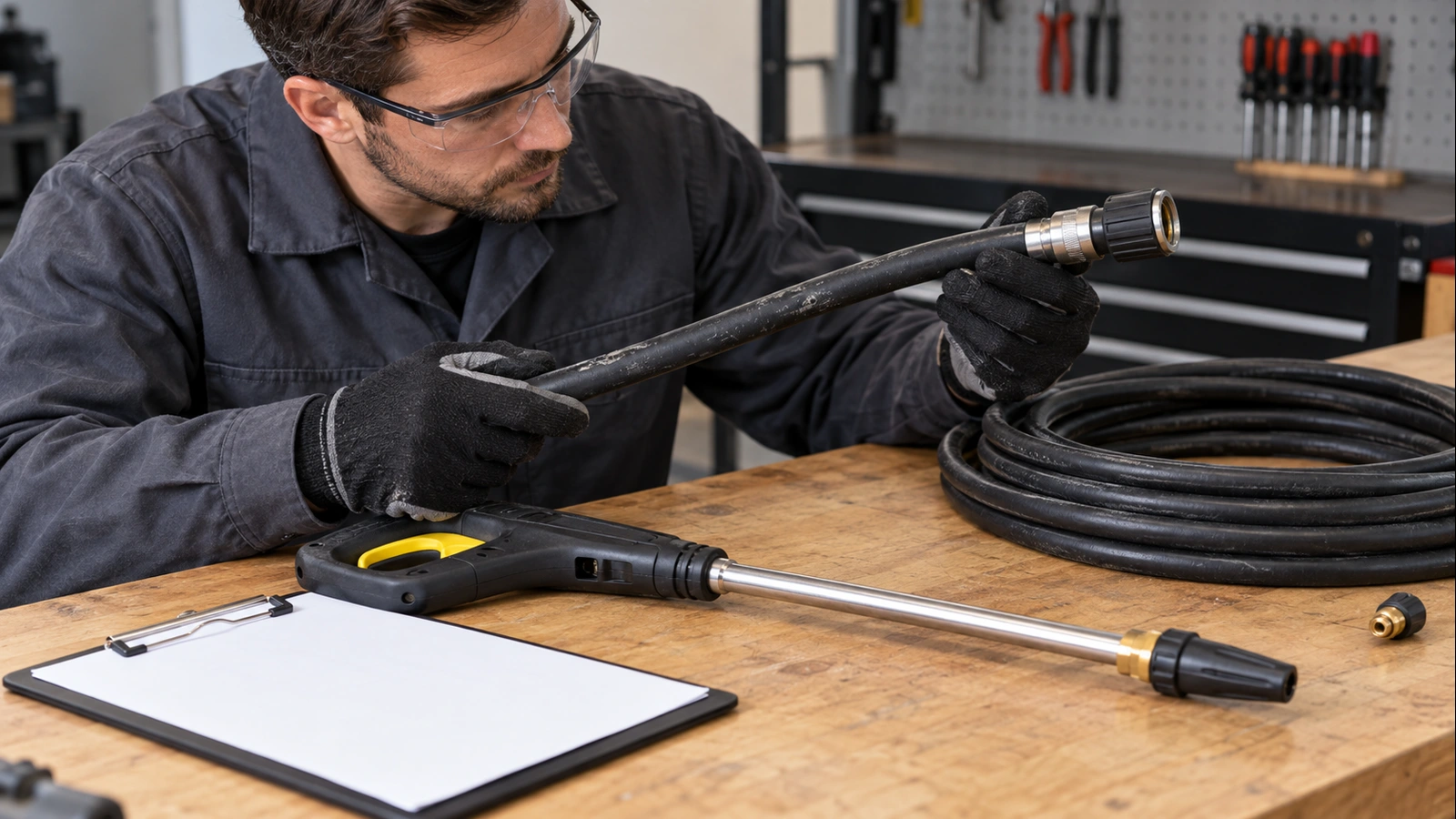
Confirm actual pressure connections under the manual and inspect hoses, quick connections, nozzles and wheels. Remove bulky debris, trial a compatible hard surface and plan wastewater/grit collection before sectional work. Resolve insufficient water first.
Stop safely before investigating abnormal jets
For uneven jets, blockage or leaks, stop and release pressure under the manual before inspecting filters, nozzles and connections. Use original accessory specifications; do not enlarge orifices, invent connections or infer per-nozzle flow. Clean and inspect before storage and avoid hose kinking.
Checks after reading
- Site area, routes and narrowest access
- Floor, dust, oil, debris or pipe-blockage type
- Daily frequency and continuous working time
- Power, water, wastewater, consumables and service conditions
Explore products and selection information
Use and care of the optional10-nozzle flushing attachment — questions
What does this article address?
Flushing is optional. Verify nozzles, connections, water and drainage before use.
What site information is needed before equipment selection?
Provide area, aisle width, floor/pipe conditions, contamination, frequency, power/water, city and budget range.
After reading “Use and care of the optional10-nozzle flushing attachment”, is a site trial still needed?
This article offers selection guidance. For complex sites, heavy contamination or continuous work, verify models and configurations through equipment information, video or a trial.