
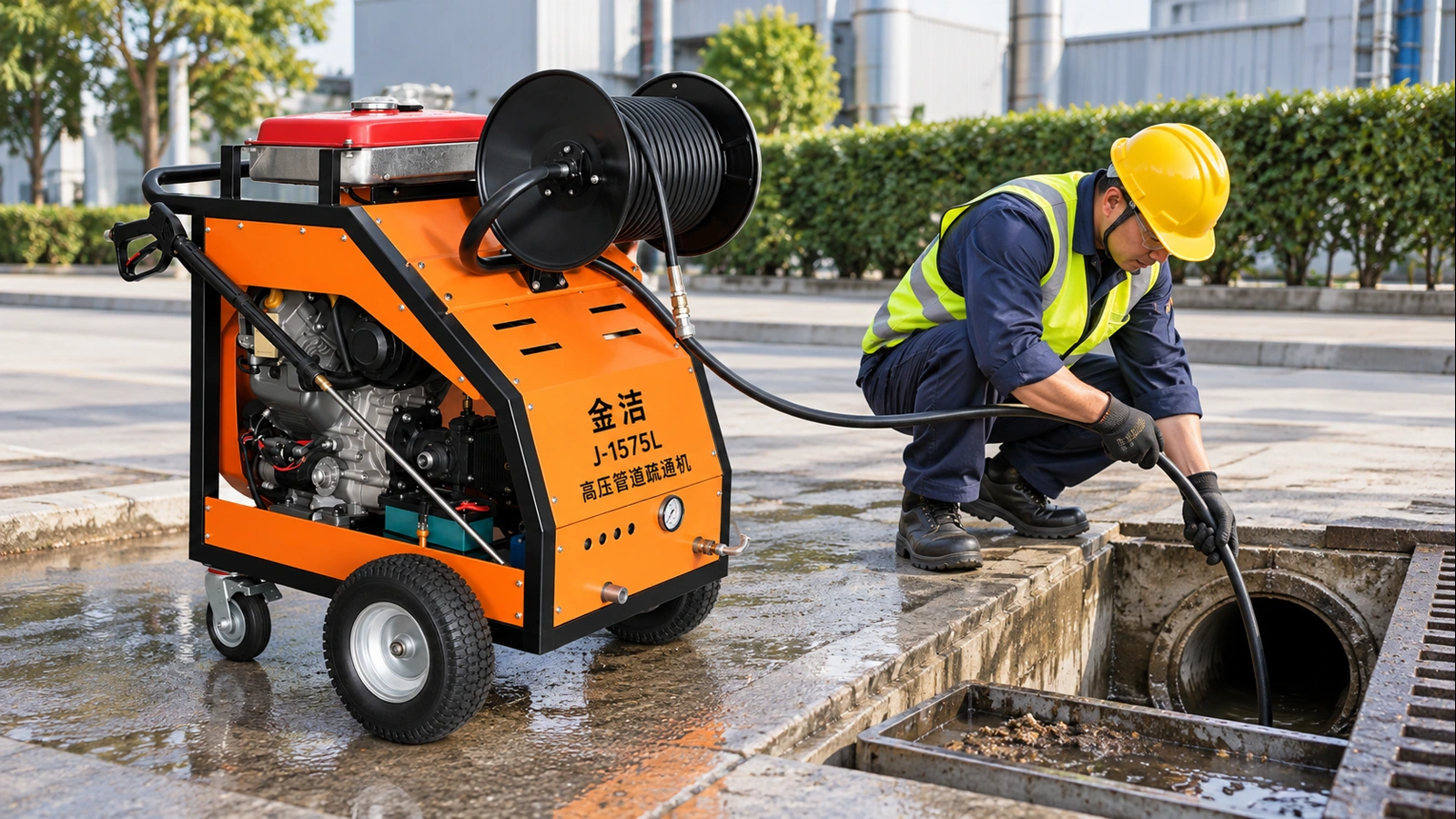
Plan continued transport of loosened material around the pipe, nozzle and drainage conditions.
Assess both loosening and material transport
On the J-1575L, 150 bar (15 MPa) and 75 L/min refer to the machine. Pressure loosens deposits and flow removes them. Nozzle direction, pipe layout, material, supply and drainage determine results. Verify flow at each gun or flushing jet separately.
Plan removal to limit redeposition
Confirm the wastewater outlet and collection method and inspect discharged material by section. Investigate downstream restrictions if water backs up or deposits accumulate again rather than simply increasing operating intensity.
Blockages requiring separate assessment
Hard objects, collapsed pipes, roots and severe hardened deposits may require mechanical removal or repair. Provide diameter, bends, length and deposit photographs; do not infer cleaning speed or per-user output from75L/min.
Checks after reading
- Site area, routes and narrowest access
- Floor, dust, oil, debris or pipe-blockage type
- Daily frequency and continuous working time
- Power, water, wastewater, consumables and service conditions
Explore products and selection information
How can higher-flow drain jetting help transport grit and sludge? — questions
What does this article address?
Plan continued transport of loosened material around the pipe, nozzle and drainage conditions.
What site information is needed before equipment selection?
Provide area, aisle width, floor/pipe conditions, contamination, frequency, power/water, city and budget range.
After reading “How can higher-flow drain jetting help transport grit and sludge?”, is a site trial still needed?
This article offers selection guidance. For complex sites, heavy contamination or continuous work, verify models and configurations through equipment information, video or a trial.