
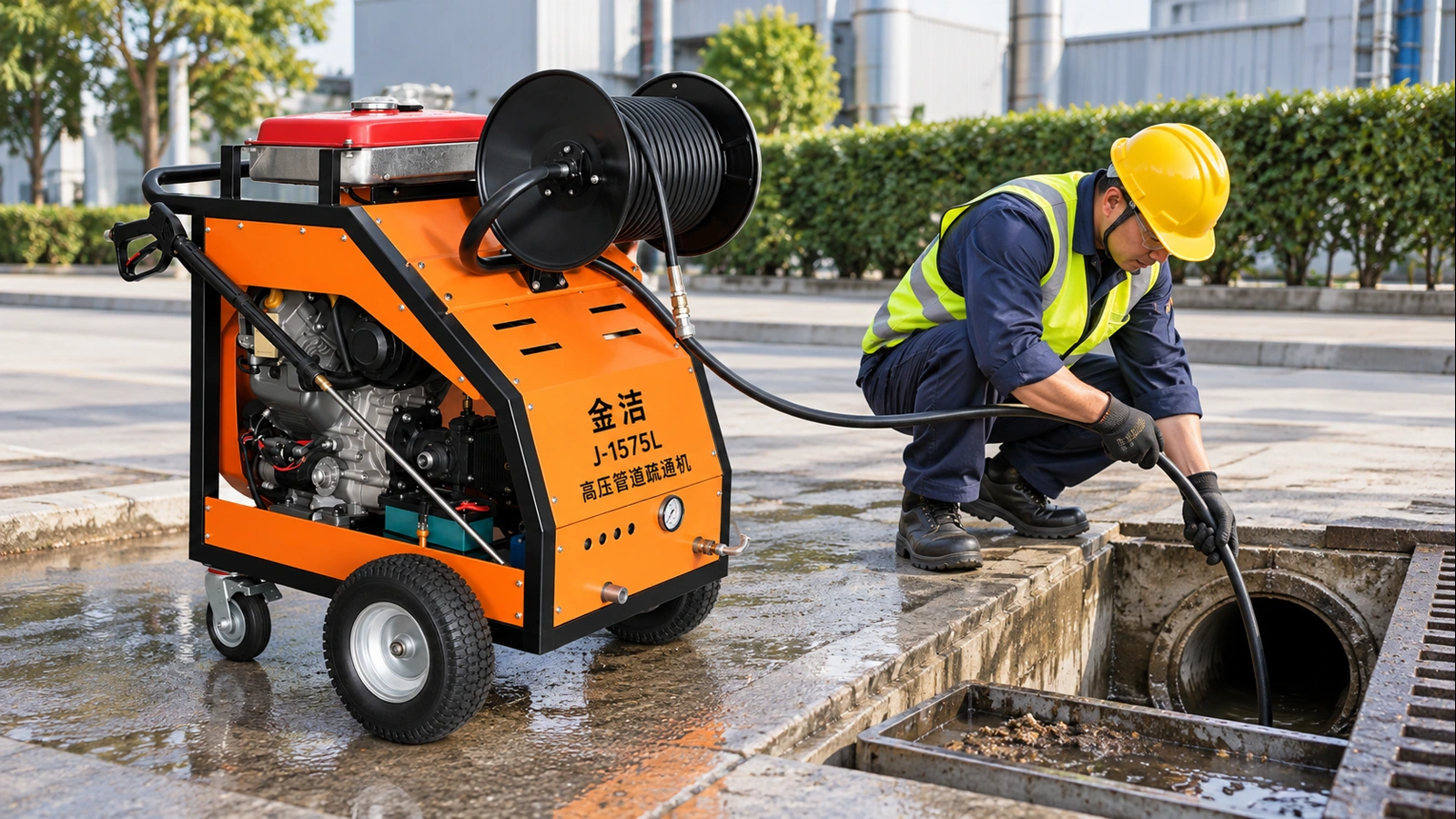
Assess J-1575L against deposits, sustained water and wastewater handling.
Identify deposits requiring sustained flushing
The petrol J-1575L is specified at 150 bar (15 MPa) and 75 L/min for continuous removal of loosened sand and silt. Determine feasible pipe size, reach and blockage type at the site.
Plan water supply and wastewater routing together
Higher flow requires sufficient sustained water and wastewater capacity. Record dimensions, bends, length, deposits, access and collection needs to plan removal rather than redeposition.
Specify drain and surface attachments separately
The base long lance serves suitable surface cleaning. A10-nozzle flushing version, surface cleaner, rotary or dedicated drain nozzles are optional and order-specific. Petrol equipment must not be used indoors or where exhaust can accumulate. Insufficient water, collapsed pipes or lodged hard objects require another plan.
Checks after reading
- Site area, routes and narrowest access
- Floor, dust, oil, debris or pipe-blockage type
- Daily frequency and continuous working time
- Power, water, wastewater, consumables and service conditions
Explore products and selection information
Assessing15MPa /75L/min drain jetters by working conditions: frequently asked questions
What does this article address?
Assess J-1575L against deposits, sustained water and wastewater handling.
What site information is needed before equipment selection?
Provide area, aisle width, floor/pipe conditions, contamination, frequency, power/water, city and budget range.
Should we trial a 150 bar (15 MPa), 75 L/min jetter at our site?
This article offers selection guidance. For complex sites, heavy contamination or continuous work, verify models and configurations through equipment information, video or a trial.