
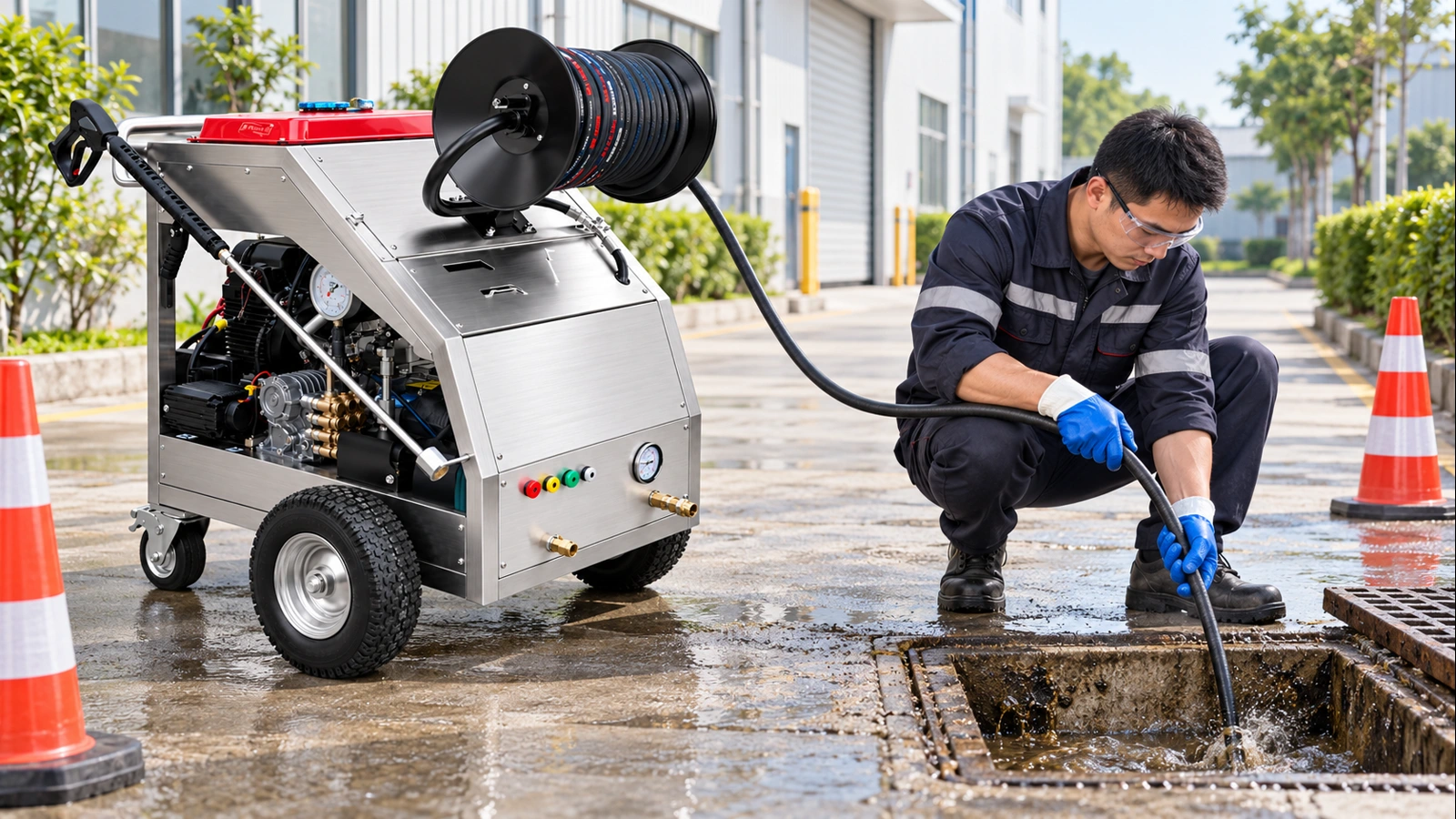
Assess perimeter drain work against pipe diameter/length, nozzles, water and wastewater handling.
Assess pressure and flow against the pipe
Assess diameter, pipe material, deposits, nozzles and sustained water together. Survey access chambers, bends and accessible distance; pressure alone does not establish clearance capability.
Plan safety at perimeter work points
Plan pedestrian/vehicle separation, fuel, outdoor ventilation, wastewater collection and relocation. J-2050H engine brand/model remain unverified pending actual machine evidence; generated illustrations do not establish them.
Checks after reading
- Site area, routes and narrowest access
- Floor, dust, oil, debris or pipe-blockage type
- Daily frequency and continuous working time
- Power, water, wastewater, consumables and service conditions
Explore products and selection information
Parameters and conditions for municipal-perimeter drain jetting — questions
What does this article address?
Assess perimeter drain work against pipe diameter/length, nozzles, water and wastewater handling.
What site information is needed before equipment selection?
Provide area, aisle width, floor/pipe conditions, contamination, frequency, power/water, city and budget range.
After reading “Parameters and conditions for municipal-perimeter drain jetting”, is a site trial still needed?
This article offers selection guidance. For complex sites, heavy contamination or continuous work, verify models and configurations through equipment information, video or a trial.