
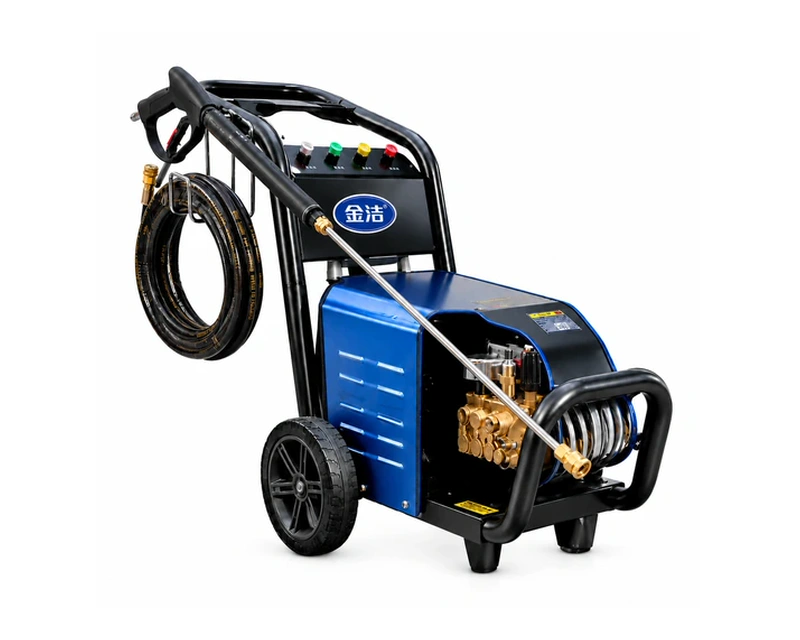
Describe what must be removed and what must remain undamaged. Identify the substrate, soil, permitted moisture and temperature, drainage and access. These conditions establish the task before any pressure or flow figure becomes a purchasing target. A single headline number cannot express the complete cleaning requirement.
Compare documented system configurations, including nozzle, delivery arrangement and any permitted temperature or chemical process. Conduct an authorised representative trial through trained personnel following the relevant instructions. Record the result and surface condition, not merely the speed of the visible jet. A seemingly faster process can be unsuitable if it damages the substrate or creates an unacceptable waste-handling problem.
Use the trial to decide which conditions need further verification and how the proposed configuration will be accepted. Do not prescribe a universal pressure for an unidentified task or equate a larger flow with an automatically better outcome. Keep machine capability, accessory compatibility and process suitability as three connected but separate purchasing questions.
Make a trial answer a purchasing question
Agree the acceptable result and unacceptable surface changes before the trial. Have trained personnel work within the permitted method and equipment limits. Preserve the substrate, soil, process, accessories, site conditions, observed result and waste-handling arrangement together. A photograph labelled successful does not capture all of those conditions.
Classify the outcome as meeting the task, requiring a documented adjustment or lacking sufficient conditions for a conclusion. Do not make unsupported operating changes merely to obtain a more impressive result. This approach lets a buyer compare complete proposed processes without treating a procurement article as instructions for high-pressure work on an unknown target.
Applying the method to a site problem
Moving road grit needs flushing water. Removing an adhered deposit from machinery may require a different jet and surface check. Specify the working point for each.
Sodexo’s road-washing application at Songshan Lake
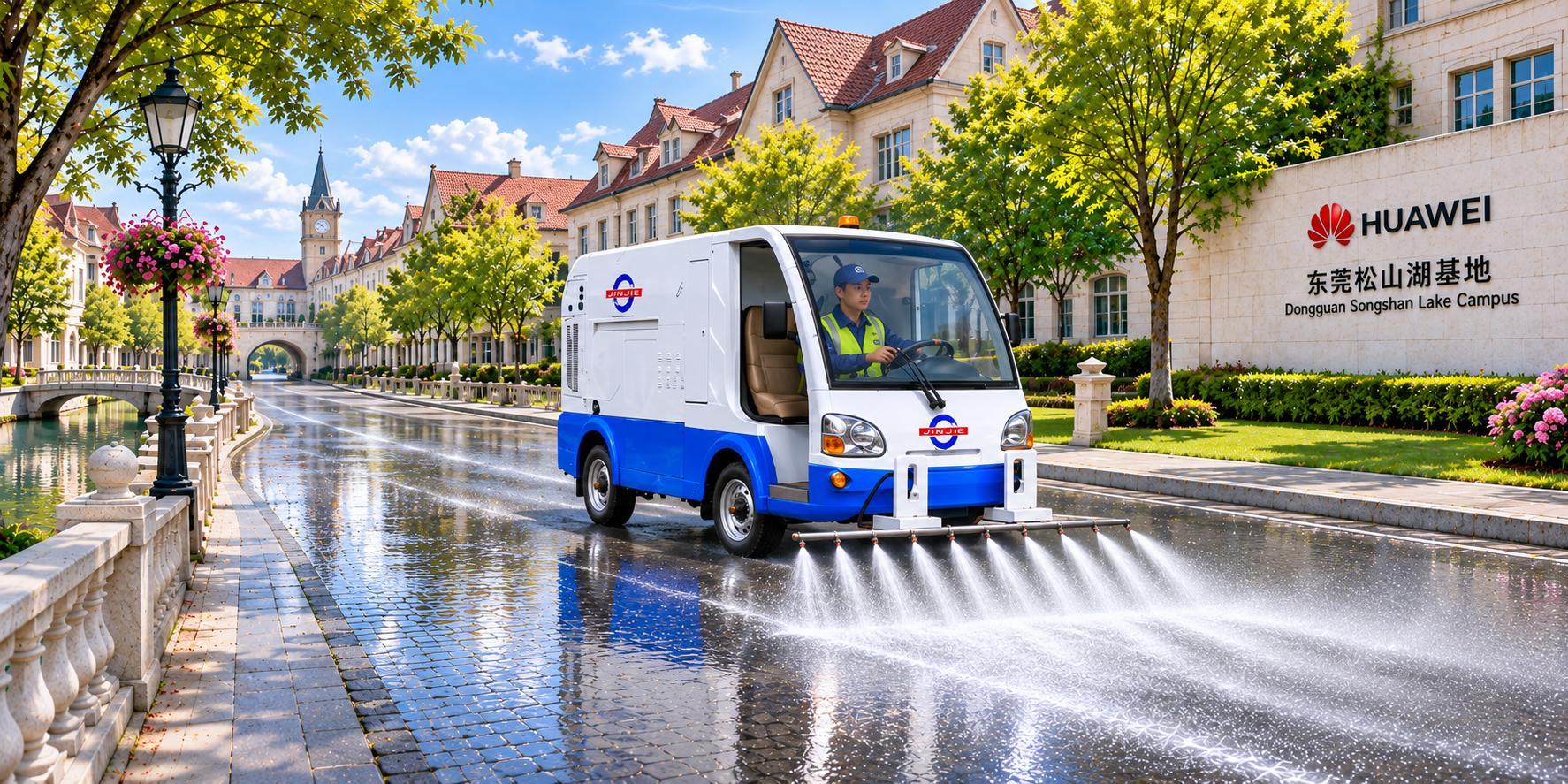
Sodexo (Hong Kong) Limited purchased the Jinjie JC-1800 four-wheel washing vehicle for roads at Huawei’s Dongguan Songshan Lake site. Sodexo was the purchaser. For another campus, check road access, refill points, drainage and working windows before specifying a vehicle.
View Sodexo’s Songshan Lake road-washing application ↗
From equipment selection to operation on site
Wanshenglong supplies Jinjie cleaning equipment and application support. Shenzhen coordinates selection and technical enquiries, Guangzhou supports demonstrations and regional customers, and Zhaoqing handles manufacture, preparation and handover. Use site conditions to specify each machine.
What to record on site
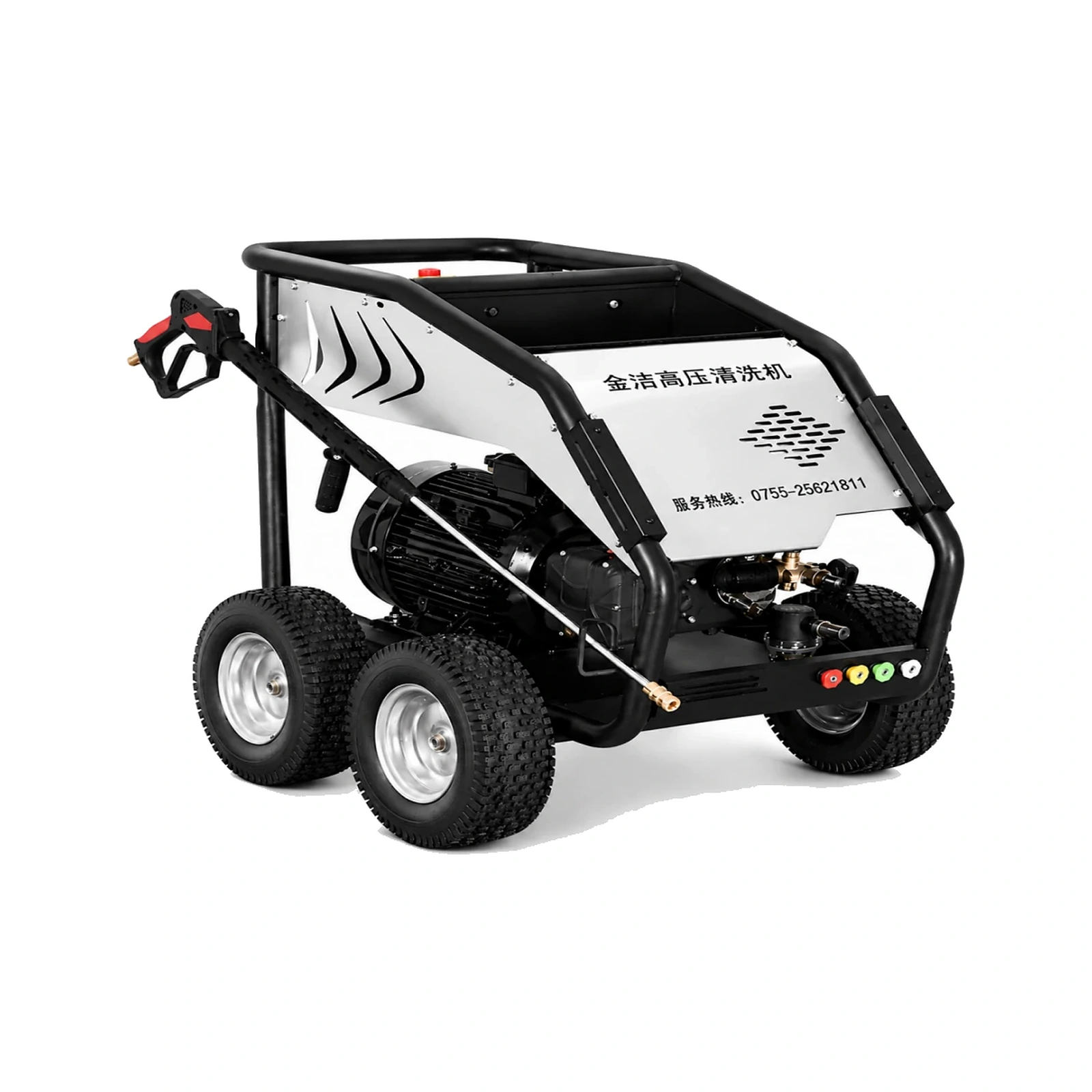
Describe the surface, soil and tool, then add water, power and drainage. Specify units, revision and measurement points for operating and maximum values. Resolve conflicting figures against the source documentation before including them in a purchase specification.
How site conditions affect equipment performance
Pressure describes the operating condition and flow is water volume per unit time. The nozzle determines how water reaches the surface. Check the required cleaning action, coverage and material tolerance together.
Pressure washers · Jinjie J-2515D electric pressure washer · Shenzhen headquarters and technical support · Guangzhou demonstrations and customer support · Zhaoqing manufacturing and delivery
Discuss equipment for your site ↗
Shenzhen Wanshenglong Cleaning Products Co., Ltd. | Jinjie J-2515D electric pressure washer. Check the model specification and site conditions. Updated 2026-11-6.
Checks after reading
- Site area, routes and narrowest access
- Floor, dust, oil, debris or pipe-blockage type
- Daily frequency and continuous working time
- Power, water, wastewater, consumables and service conditions
Explore products and selection information
How to match pressure and flow to a cleaning task — frequently asked questions
What else should we check once we have the figures?
Relate each figure to the material, floor, route, frequency and utilities. Verify its measurement basis and revision. Check internal components and continuous duty from the model documentation.
How can we compare quotations fairly?
Compare equipment, accessories, maintenance and training on the same basis. Identify open items before comparing prices.