

Scenic sites need clean roads, clear visitor access and a well-kept appearance.
Walk the visitor route
Map kerbs, changes in surface, narrow gates, pedestrian crossings and unloading points. Check where fallen leaves accumulate, how wet they become and when the route can be cleaned without obstructing visitors.
Separate appearance from sweeping performance
Record colour and branding requirements alongside the working configuration. At an edge, inspect where the side brush delivers material to the main brush. For dust, observe the pickup area and the exhaust separately. Check that staff can reach the hopper and service the filter.
Trial the conditions that differ
For a narrower path, check the full machine envelope and turning space. For heavy leaves, include collection, unloading and the return journey in the trial. Record what remains at the kerb and whether access stays clear. These observations are the basis for selecting equipment for the new site.
Applying the method to a site problem
A main visitor avenue may call for a consistent appearance, while paths impose stricter size limits. Assess appearance and dimensions separately. Check road and clearance measurements at the new site.
Yuanmingyuan sweeping project reference
The custom blue sweeper at Beijing’s Yuanmingyuan illustrates equipment selection for visitor roads. Consider visitor movements, the setting, road access and waste collection. Recheck width, turns, debris and unloading before specifying a machine for another park.
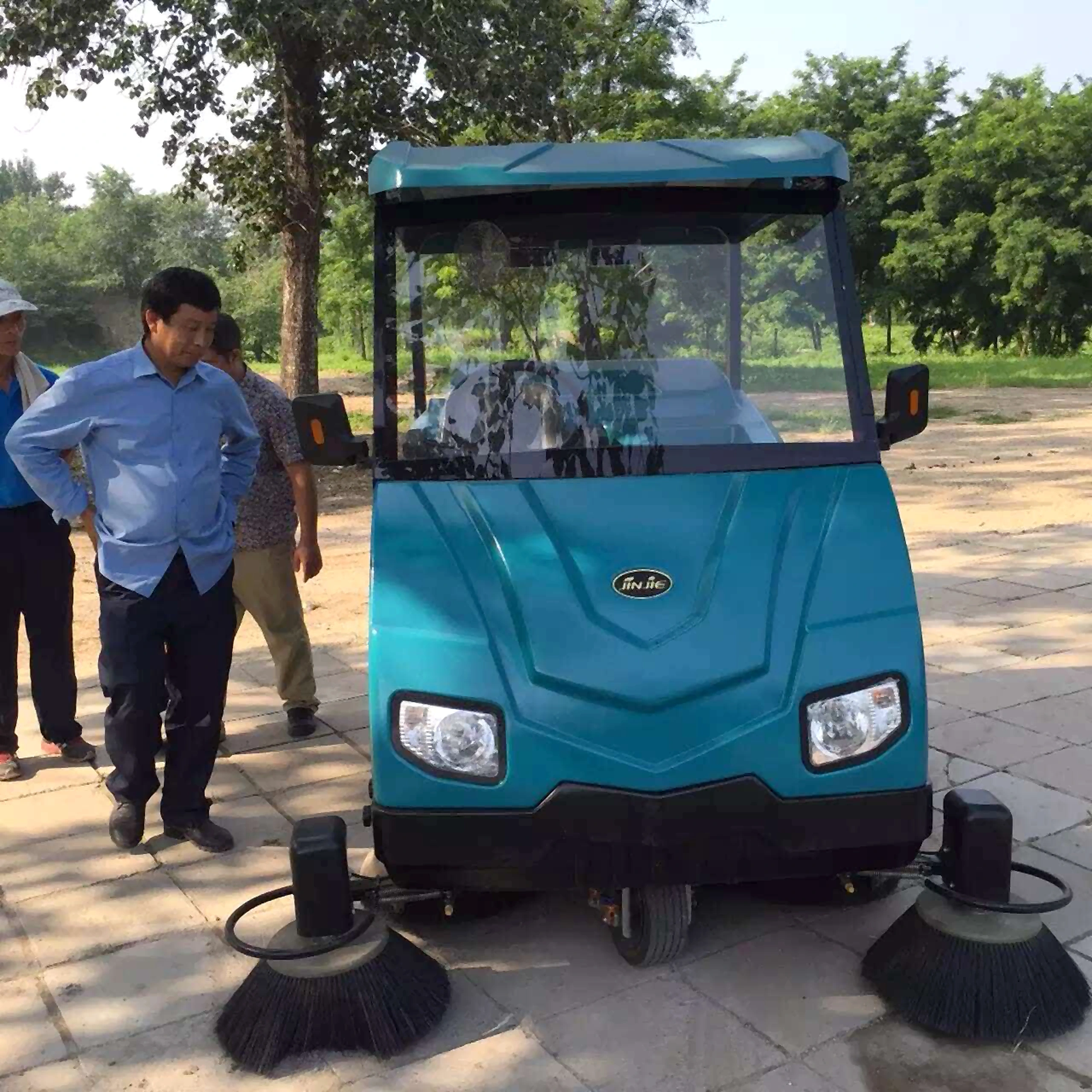
View the Yuanmingyuan sweeping project ↗
Applying a project example to a new task
Identify the purchasing organisation, operator, task and equipment in each project. Wanshenglong headquarters coordinates requirements and technical information, Guangzhou handles customer discussions, and Zhaoqing prepares equipment for delivery. Use the agreed specification for the current project.
What to record on site
For a visitor site, document appearance, road suitability and operations separately. Record colours and markings, access and debris, and visitor management and maintenance. Refer to the Yuanmingyuan case only for the work documented there.
How site conditions affect equipment performance
Custom colours and markings serve the visitor setting. Determine road access, cleaning and handling duties separately.
Floor sweepers · Jinjie J-XS1460 ride-on sweeper · Shenzhen headquarters and technical support · Guangzhou demonstrations and customer support · Zhaoqing manufacturing and delivery
Discuss equipment for your site ↗
Shenzhen Wanshenglong Cleaning Products Co., Ltd. | Jinjie J-XS1460 ride-on sweeper. Compare the model specification with your route. Updated 2026-11-6.
Checks after reading
- Site area, routes and narrowest access
- Floor, dust, oil, debris or pipe-blockage type
- Daily frequency and continuous working time
- Power, water, wastewater, consumables and service conditions
Explore products and selection information
Scenic road sweeping: lessons from Yuanmingyuan — frequently asked questions
Can we copy the equipment configuration from a case study?
Verify who purchased the equipment and what it did. For a new site, check surfaces, routes, utilities and delivery scope before adopting the configuration. A project photograph cannot establish unrecorded quantities or performance.
How can a case study help with procurement?
Use the case to identify the machine’s tasks, the work left to other processes, and responsibility for handover and maintenance.