

Dry sweeping and road washing address different materials and tasks.
Define the handover condition
State what may remain after sweeping, what must be removed before washing and how residual material or wastewater will be handled afterwards. Establish surface, material and safety limits before discussing a trial. Unknown hazardous material is not ordinary road litter.
Measure a combined task
Record pre-treatment, sweeping, washing, replenishment, manual completion, residual-material handling and reopening. Keep the individual machines’ specifications separate. Their widths, tanks and power sources cannot be combined into one performance promise. Waiting and transfers remain part of the cycle.
Assign the gaps
If the first method gathers debris and the second only removes attached soil, someone must receive the debris. Washing also needs a permitted wastewater arrangement. Identify the responsible roles before the machines are mobilised. A missing handover can leave the surface unresolved despite both machines operating.
Use a case accurately
The confirmed Sodexo purchase of JC-1800 for road washing at Huawei’s campus demonstrates a genuine washing context. It does not prove that the project purchased a sweeper or used every combination discussed here. Historical facts and a proposed new combination remain distinct. Choose the current configuration against the actual new task, not the status of the reference location.
Applying the method to a site problem
Yuanmingyuan sweeping and Songshan Lake road washing illustrate different tasks on separate projects. Neither establishes a jointly tested fleet configuration.
Sweeping and washing project references
The Yuanmingyuan custom blue sweeper and Sodexo’s JC-1800 for road washing at Songshan Lake belong to separate projects. Compare their tasks without treating them as a combined delivery.
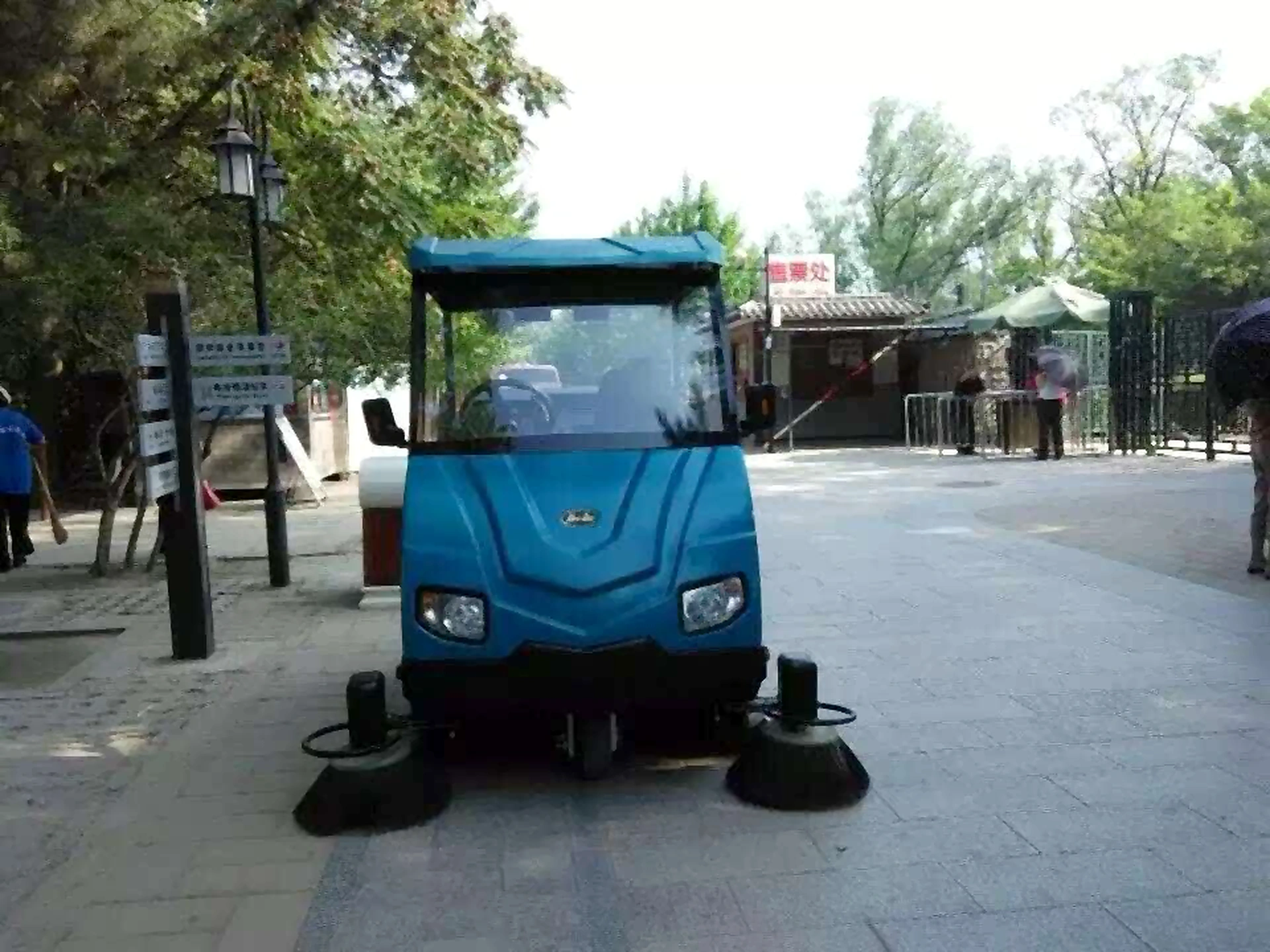
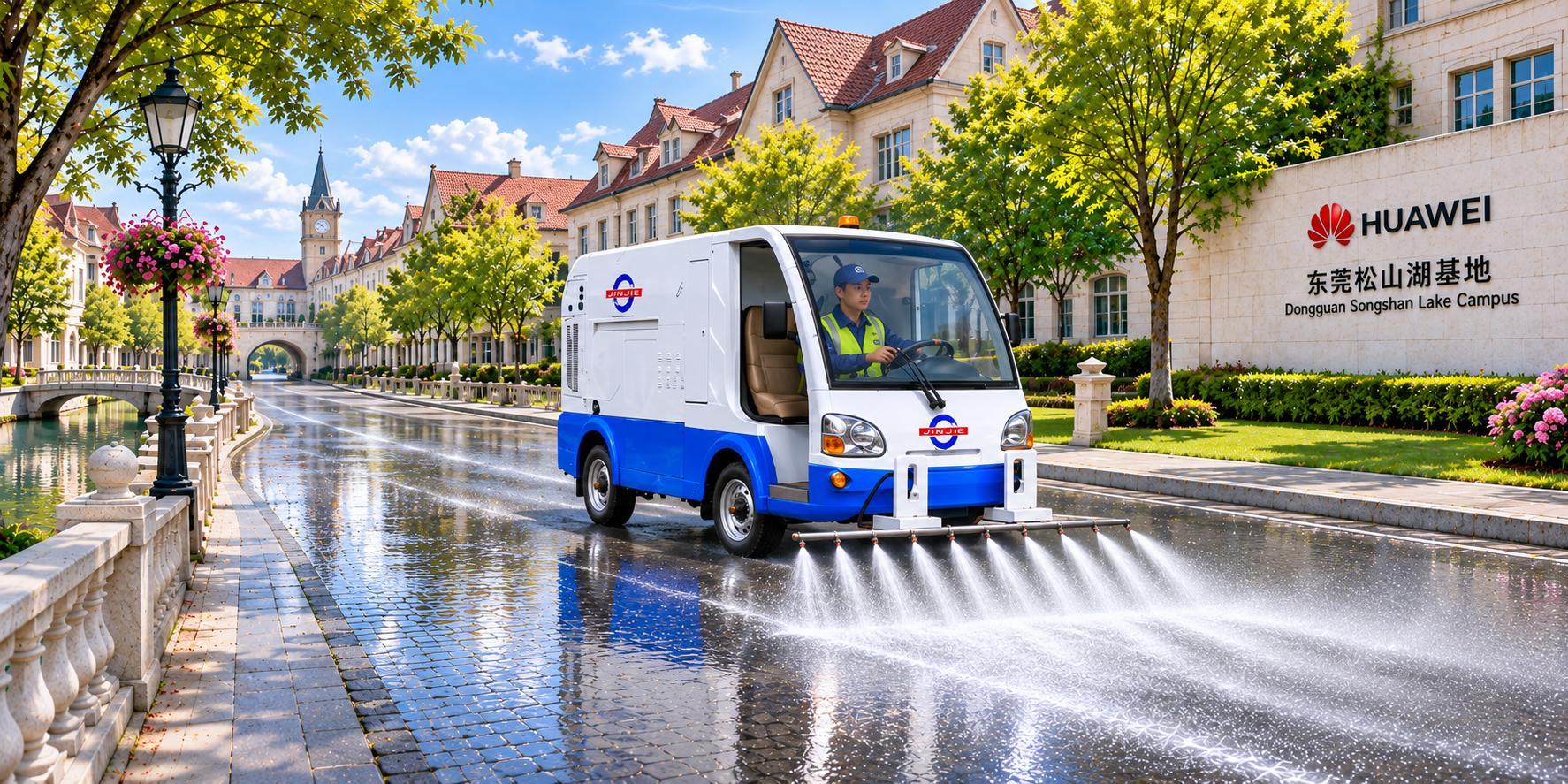
Yuanmingyuan park sweeping project · Road washing at Songshan Lake
Applying a project example to a new task
Identify the purchasing organisation, operator, task and equipment in each project. Wanshenglong headquarters coordinates requirements and technical information, Guangzhou handles customer discussions, and Zhaoqing prepares equipment for delivery. Use the agreed specification for the current project.
What to record on site
On each road, distinguish loose litter, adhered soil and wastewater handling. Assign equipment and set a completion condition for each stage. Refer to sweeping and washing projects separately, with each project's own equipment, photographs and task.
How site conditions affect equipment performance
Sweeping takes debris to a collection point. Washing produces runoff. When combining the two, plan both waste disposal and wastewater management.
Floor sweepers · Jinjie J-XS1460 ride-on sweeper · Shenzhen headquarters and technical support · Guangzhou demonstrations and customer support · Zhaoqing manufacturing and delivery
Discuss equipment for your site ↗
Shenzhen Wanshenglong Cleaning Products Co., Ltd. | Jinjie J-XS1460 ride-on sweeper. Compare the model specification with your route. Updated 2026-11-6.
Checks after reading
- Site area, routes and narrowest access
- Floor, dust, oil, debris or pipe-blockage type
- Daily frequency and continuous working time
- Power, water, wastewater, consumables and service conditions
Explore products and selection information
When to sweep a campus road and when to wash it — frequently asked questions
Can we copy the equipment configuration from a case study?
Verify who purchased the equipment and what it did. For a new site, check surfaces, routes, utilities and delivery scope before adopting the configuration. A project photograph cannot establish unrecorded quantities or performance.
How can a case study help with procurement?
Use the case to identify the machine’s tasks, the work left to other processes, and responsibility for handover and maintenance.