
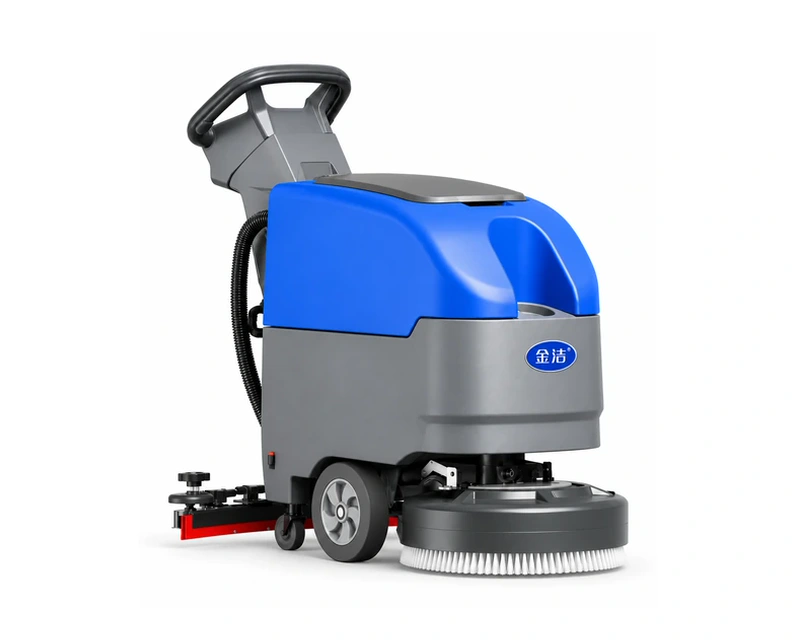
Receiving a machine is only one part of handover. The receiving team must identify the supplied version, confirm accessories, understand routine operation and know how to report a fault. This article addresses delivery acceptance; replenishment quantities belong in a separate spares-planning process.
Match the machine to the agreed scope
Check the nameplate, quotation, configuration confirmation and physical equipment. List the battery, charger, brushes, squeegee components and included or optional accessories. A scene photograph does not establish the supplied version. J-D5S and J-D5SL illustrate why similar bodywork must not conceal the distinction between manual propulsion and traction assistance.
Identify working components
Record brush and blade specifications, connections, intended task and maintenance instructions. Similar diameters or blade lengths do not establish compatibility. During a permitted demonstration, assess scrubbing and recovery separately; a straight run does not verify turns and joints.
Do not equate capacity with runtime acceptance
Check the matching battery and charger, installation requirements and operating instructions. Battery capacity alone is not evidence of working duration. If shift performance is part of acceptance, define the route, floor, load, method and time boundaries in advance.
Keep training with the asset record
Record starting and stopping, filling, emptying, daily cleaning, storage, charging, consumable identification and fault reporting. Note participants and unfinished items. Transfer these records with the equipment when staff or projects change.
Wanshenglong and the buyer should distinguish configuration received, operator instruction and site-performance observation. Completing one does not automatically complete the others. Outstanding parts or tests should remain outstanding; no unmeasured efficiency or customer feedback should be added to make the handover look complete.
Practical acceptance check
Record machine identity, serial number, tools, blades, batteries and charger against the order. Document damage, missing items and trial results. Training should cover routine operation, clean-down and fault escalation. Acceptance does not authorise untrained electrical or mechanical repair.
Applying the method to a site problem
In a shared parts store, label brushes and blades by model and part number. Agree the regularly used spares list when purchasing.
Wanli Tire equipment delivery
The Wanli Tire project records delivery of 4 Jinjie J-920B ride-on scrubbers. For another factory, assess production areas, logistics lanes and floor conditions separately. The delivery record contains no measured coverage, cost saving or cleaning rate from which to calculate another site's fleet size.

View the Wanli Tire delivery project ↗
Maintenance starts with a clear handover
For service, provide the model, nameplate, photos and a description of the symptom. Headquarters coordinates technical and spare-parts information. Regional support and the delivery records help identify the installed parts.
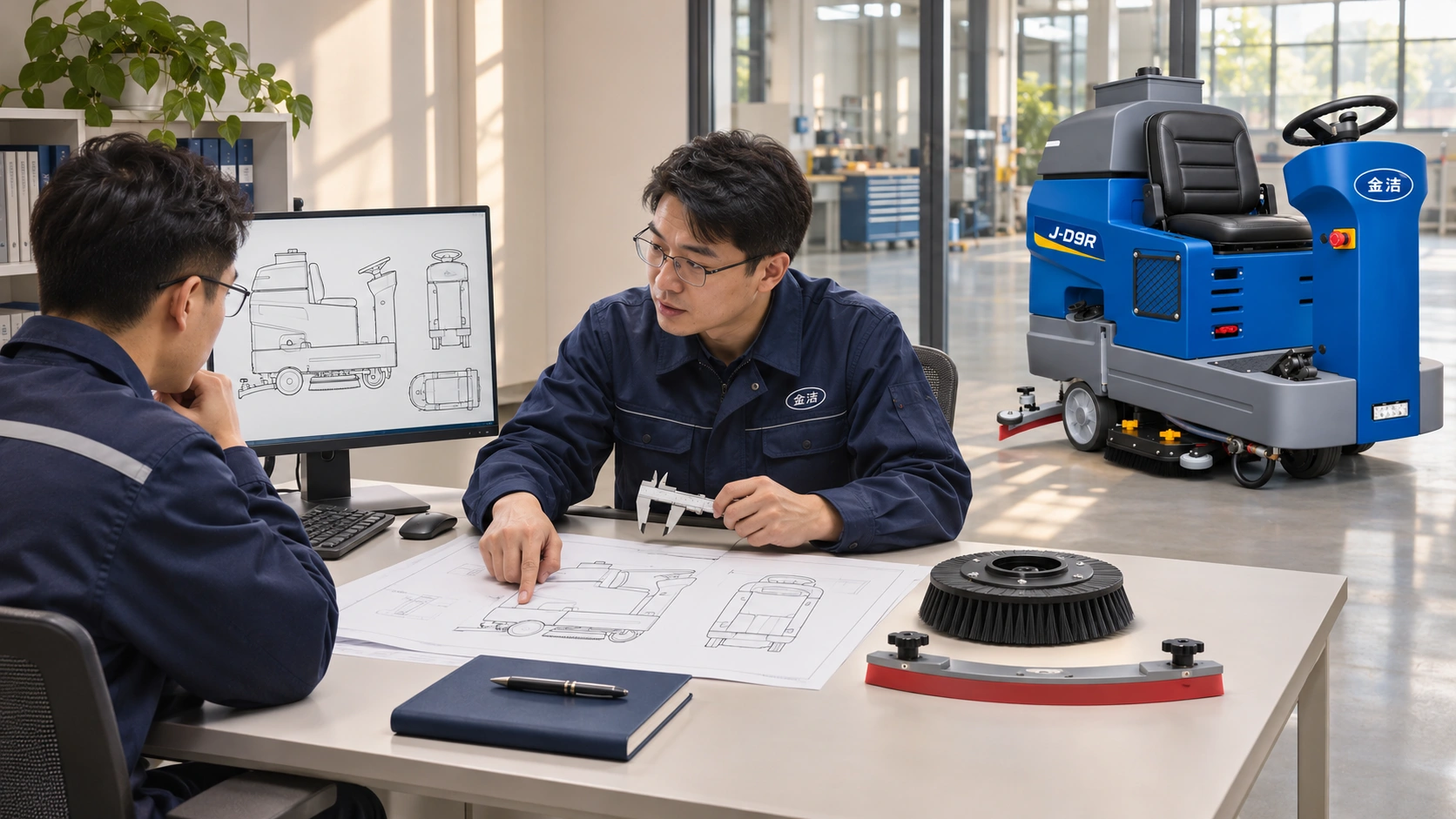
What to record on site
Give each machine a handover sheet with identification photos, accessories, training, consumable specifications and a service contact. Keep it with the machine across shifts. Use the same identifiers for spare-parts enquiries and repairs.
How site conditions affect equipment performance
Brushes affect cleaning contact, squeegee blades affect recovery and batteries supply power. Record wear and service conditions by component to identify changes.
Floor scrubbers · Jinjie J-D3C Walk-Behind Scrubber-Dryer · Shenzhen headquarters and technical support · Guangzhou demonstrations and customer support · Zhaoqing manufacturing and delivery
Discuss equipment for your site ↗
Shenzhen Wanshenglong Cleaning Products Co., Ltd. | Jinjie J-D3C walk-behind scrubber. Check the model specification and site conditions. Updated 2026-11-6.
Checks after reading
- Site area, routes and narrowest access
- Floor, dust, oil, debris or pipe-blockage type
- Daily frequency and continuous working time
- Power, water, wastewater, consumables and service conditions
Explore products and selection information
Checking brushes, squeegees and batteries at handover — frequently asked questions
What information helps a service technician?
Provide the nameplate, component photos, time and location of the symptom, material or floor condition, recent maintenance and accessory changes. Stop if inspection cannot be carried out safely.
How can we check that maintenance solved the problem?
Repeat the observation under permitted, comparable conditions. Record one change at a time. If the symptom returns, give the service team the earlier results.