
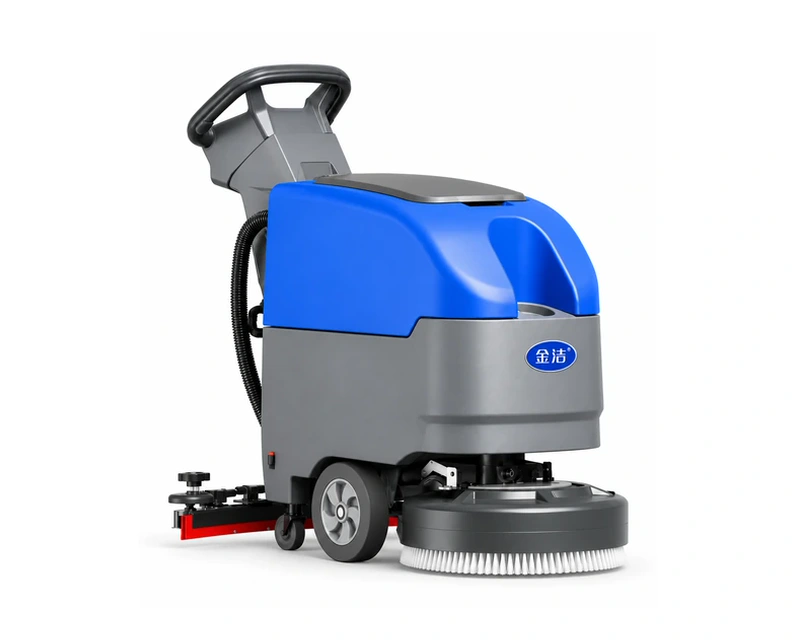
Drive position describes part of the travel system. It does not establish cleaning quality, permissible slope or suitability for a particular area. Compare handling, scrubbing and recovery, and routine maintenance as separate subjects.
Identify the machines before comparing them
Jinjie J-D9BF is the front-wheel-drive model and J-D9BH is the rear-wheel-drive model. J-85BF is front-wheel drive and J-85BH is rear-wheel drive; each still requires its own configuration checks. Similar coverage or related names do not prove matching chassis, controls or spare parts. Record version, battery, brushes and accessories alongside the model.
Observe representative maneuvres
A permitted route should include turns, access restrictions, columns and stopping points. Trained operators can record where reversing, avoidance or extra space is required. A driver's preferred feel is useful information, but it is not a universal performance ranking. Slope operation remains subject to the individual machine's documented limits; extreme trials are inappropriate.
Assess cleaning independently
Use comparable floors, contamination, brushes, chemicals and recovery requirements. Observe straight runs, turns and joints. Faster travel does not necessarily produce higher complete-task productivity, and the drive label does not replace the function of the brush and recovery systems.
Compare maintenance access and compatibility
Inspect access needed for permitted daily checks and cleaning. Motors, controls and connections require model-specific confirmation, not interchange based on a familiar appearance. If the compared machines also differ in battery, coverage or brush configuration, do not attribute every observed difference to drive position.
Document the current machine identity, actual route and the problem the purchase should solve. Without comparable observations, the defensible result is a selection method and an identified configuration difference—not a claim about staffing savings, slope superiority or universal replacement.
Practical acceptance check
Confirm the actual drive layout and complete configurations before a trial. Keep floor, load, soil and route comparable. A higher motor rating does not establish greater climbing ability or a tighter turning circle. Leave unsupported performance comparisons blank; compare service access and documented maintenance tasks instead.
Applying the method to a site problem
Record where the operator prefers the steering response. Compare the manoeuvres, recovery and maintenance requirements alongside that preference.
Wanli Tire equipment delivery
The Wanli Tire project records delivery of 4 Jinjie J-920B ride-on scrubbers. For another factory, assess production areas, logistics lanes and floor conditions separately. The delivery record contains no measured coverage, cost saving or cleaning rate from which to calculate another site's fleet size.

View the Wanli Tire delivery project ↗
Use model-specific documentation for technical discussions
Wanshenglong headquarters handles sales, development and technical application enquiries for Jinjie equipment. Guangzhou supports demonstrations and Zhaoqing prepares the agreed configuration. Compare each model using its own specification revision and record the site measurements still required.
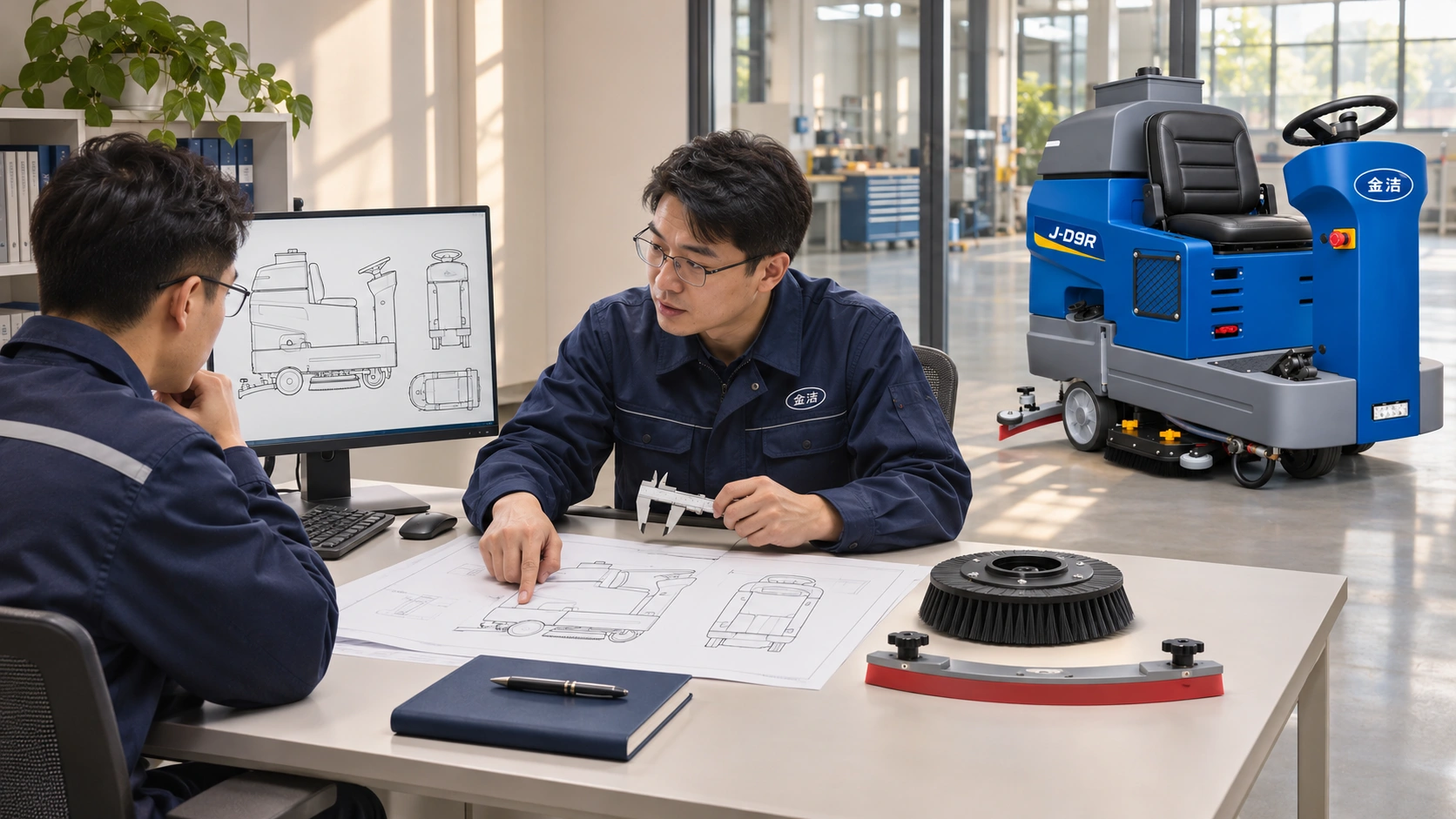
What to record on site
Count turns, reversals and stops and record access to maintenance points. Identify gradients and slippery areas omitted from the trial. Compare handling, cleaning results, maintenance and supplied configuration together.
How site conditions affect equipment performance
Drive location identifies one part of the traction system. Brushes and recovery have their own components and operating conditions. Assess handling, cleanliness and maintenance access separately.
Floor scrubbers · Jinjie J-D3C Walk-Behind Scrubber-Dryer · Shenzhen headquarters and technical support · Guangzhou demonstrations and customer support · Zhaoqing manufacturing and delivery
Discuss equipment for your site ↗
Shenzhen Wanshenglong Cleaning Products Co., Ltd. | Jinjie J-D3C walk-behind scrubber. Check the model specification and site conditions. Updated 2026-11-6.
Checks after reading
- Site area, routes and narrowest access
- Floor, dust, oil, debris or pipe-blockage type
- Daily frequency and continuous working time
- Power, water, wastewater, consumables and service conditions
Explore products and selection information
Comparing front- and rear-drive scrubbers on the same route — frequently asked questions
Can a comparison table settle the purchase?
Use the table to identify differences and decide what to verify on site. Keep specification revisions and test conditions alongside the figures. Record trial observations and cost scope separately.
Is a larger configuration always a safer choice?
Not always. Extra width, size or power can increase access, storage, supply and maintenance requirements. Size the machine for the actual task.