
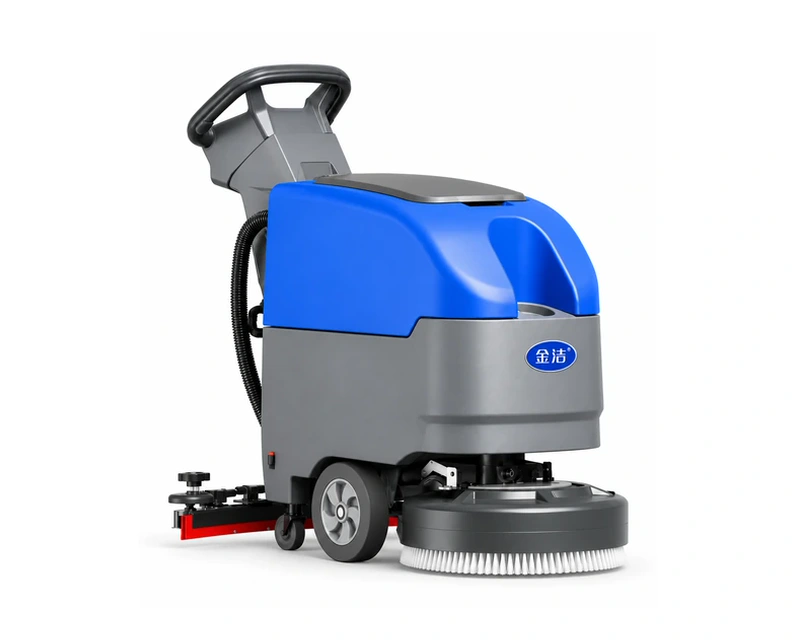
Before ordering a factory scrubber, identify where wet cleaning is permitted, what needs prior collection and which production areas are restricted. A configuration should follow that task map rather than expecting one large machine to cover the whole factory.
Combine production and cleaning information
The production team understands processes, materials and access restrictions; cleaning staff understand recurring soil and operating difficulties. Mark permitted wet-cleaning zones, pre-cleaning areas, service points and storage. Record the floor finish, damage, joints and contamination source. Unknown chemicals, combustible dust and sharp debris cannot simply be labelled ordinary floor soil.
Traffic determines usable working time
Forklift crossings, loading activity and safety routes need agreed work windows and separation. Include turning, recovery, filling, emptying and machine cleaning in the shift record. Width and tank capacity alone do not show whether the job can be completed without disrupting production.
Jinjie J-D5R and J-D9R offer different coverage and tank configurations. Their suitability still depends on brushes, chemicals, squeegees, batteries and the permitted process. Sweeping or vacuuming should be specified only after the material and collection requirements are understood.
Use case material within its actual scope
Taomei's historical material records a J-920B scrubber and J-XS1350 sweeper. It can illustrate division of tasks, but must not be rewritten as a J-D5R or J-D9R installation. It provides no automatic machine quantity or measured output for a new factory.
Ask Wanshenglong to separate confirmed data, outstanding conditions and delivery scope. Before arrival, agree water, wastewater, storage and training arrangements. At handover, use the same list to match the nameplate, accessories and assigned tasks, so the procurement plan remains useful during operation.
Practical acceptance check
Identify wet-cleaning exclusions before writing the procurement specification. Electrical areas, sensitive materials, drains and production machinery can require separate controls. Define the permitted floor task and complementary methods; total factory area is not automatically the scope of one scrubber.
Applying the method to a site problem
Where metal chips and footprints occur together, identify and recover the chips before testing scrubbing. Use process information to identify the material.
Wanli Tire equipment delivery
The Wanli Tire project records delivery of 4 Jinjie J-920B ride-on scrubbers. For another factory, assess production areas, logistics lanes and floor conditions separately. The delivery record contains no measured coverage, cost saving or cleaning rate from which to calculate another site's fleet size.

View the Wanli Tire delivery project ↗
Connecting product selection, manufacture and operation
In factories, match cleaning duties and equipment to production schedules. Headquarters coordinates selection and application support, Guangzhou handles regional enquiries and demonstrations, and Zhaoqing supports assembly and handover. Keep the agreed delivery documentation with the equipment.
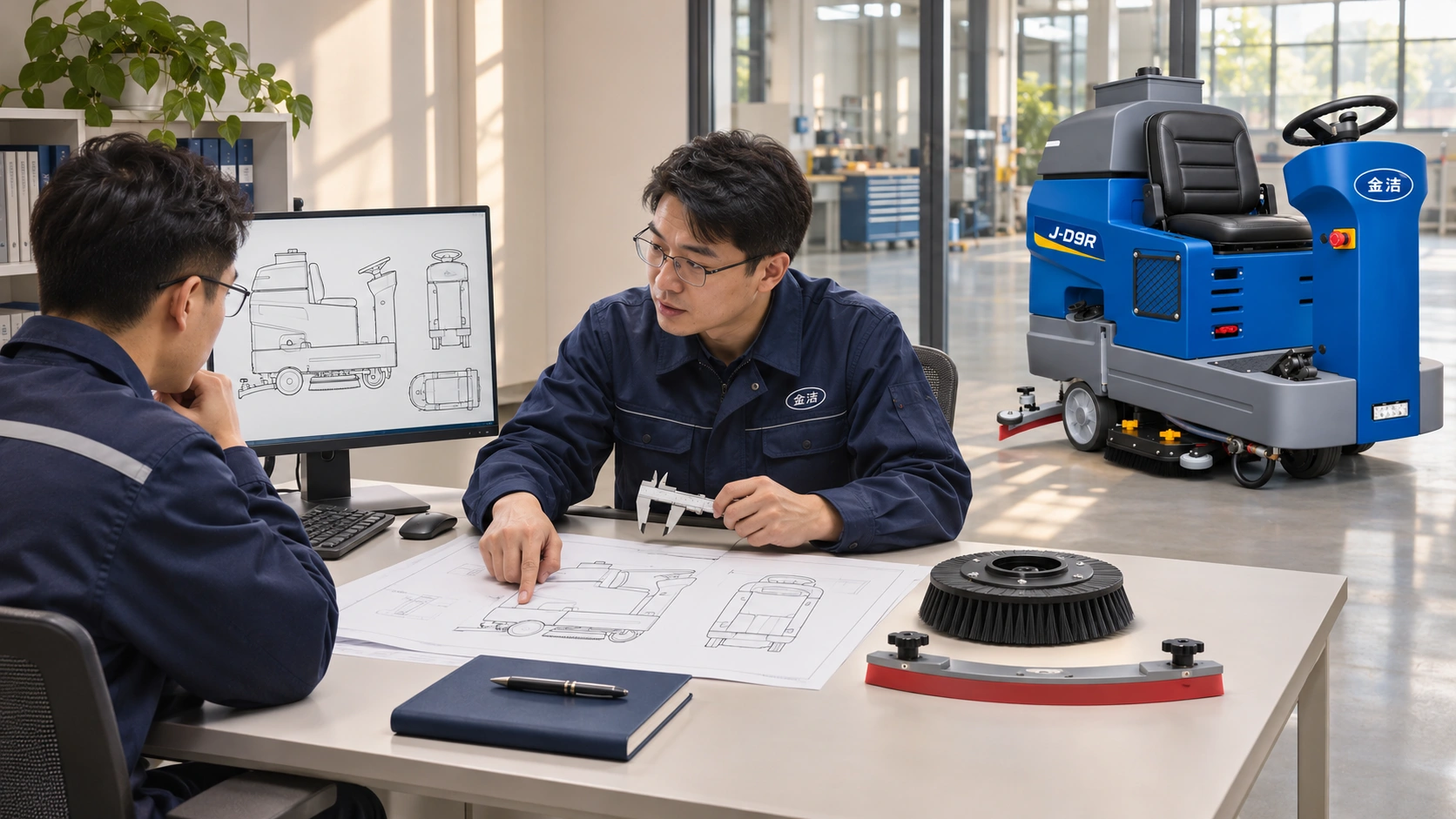
What to record on site
Mark wet-cleaning zones, debris pickup areas, temporary exclusions and refill points with the production team. Define the result and reopening condition for each zone. The trial should cover finish, return route, parking and close-down as well as scrubbing.
How site conditions affect equipment performance
Remove loose particles before scrubbing adhered soil. Assess the debris and floor separately: uncollected material can affect both scrubbing and recovery.
Floor scrubbers · Jinjie J-D3C Walk-Behind Scrubber-Dryer · Shenzhen headquarters and technical support · Guangzhou demonstrations and customer support · Zhaoqing manufacturing and delivery
Discuss equipment for your site ↗
Shenzhen Wanshenglong Cleaning Products Co., Ltd. | Jinjie J-D3C walk-behind scrubber. Check the model specification and site conditions. Updated 2026-11-6.
Checks after reading
- Site area, routes and narrowest access
- Floor, dust, oil, debris or pipe-blockage type
- Daily frequency and continuous working time
- Power, water, wastewater, consumables and service conditions
Explore products and selection information
Planning factory floor scrubbing around oil, debris and traffic — frequently asked questions
How can different departments agree the requirements?
Production, cleaning, procurement and operators should agree the object, exclusions, working window and close-down. Assign pre-cleaning, scrubbing, washing and recovery separately.
What else should be agreed before delivery?
Confirm equipment and accessories, receiving and unloading access, training, utilities and document revisions. Prepare the workstation and servicing access before delivery.