
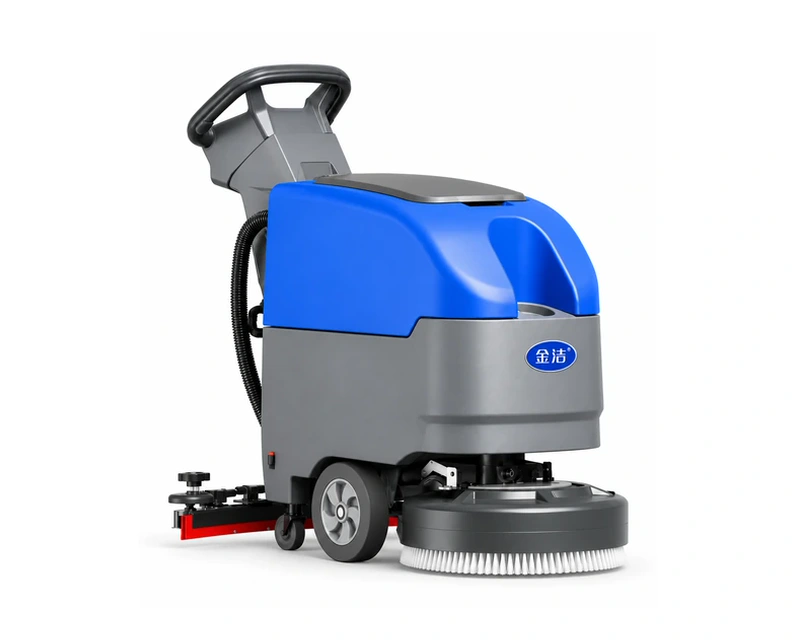
A parking facility is not one uninterrupted surface. Start with zones, then decide which tasks a machine can actually cover. Vehicle occupation, columns and servicing time can make an area-based machine count misleading.
Plan a main route and available branches
Confirm bay availability, turning space and a return route for filling and emptying. Allow other methods for inaccessible edges and areas obstructed by vehicles. When comparing J-D5R, J-D6SL and J-D7SL, use each machine's complete dimensions and recovery assembly. J-D6SL has a confirmed 560 mm cleaning width; J-D7SL has 710 mm. These values must not be exchanged.
Check epoxy, cement and dry-shake-hardened concrete floors separately
For an epoxy-coated surface, inspect coating damage and repairs. Cement surfaces may have dusting, pores or joints. A dry-shake-hardened concrete surface still requires its finish and wear condition to be understood. Select brushes and chemicals for the actual floor and soil, then assess a suitable trial area. Stronger chemicals or harder brushes are not a default solution to tire marks.
Assess ramps and entrances independently
Follow the particular machine's limits and parking-management requirements. Drive type alone does not establish slope suitability. Large water accumulations need a separate assessment. Never use speed, abrupt turning or operation beyond documented limits as a capability test.
Record the recovery result
Distinguish straight-line streaks, water left at turns and changes in overall pickup. Note the location, floor, chemical and component condition. Site management must organize traffic and reopening. The final buying brief should state machine tasks, supplementary manual work and unverified areas. Wanshenglong can relate those requirements to Jinjie specifications without converting catalog productivity into a guaranteed shift output.
Practical acceptance check
Treat level driveways, parking bays and ramps as separate tasks. Use access and water-handling checks for the main route, and complementary methods for restricted spaces. A successful level-floor trial does not demonstrate safe wet-cleaning performance on a ramp.
Applying the method to a site problem
If main lanes are always accessible but only some parking bays open each day, plan a main route and a rotating bay route. Check travel and residual water. Bay count alone cannot establish production.
Contractor purchasing and in-store use
The cleaning contractor serving China Resources Vanguard purchased Wanshenglong equipment centrally for stores in South China. The contractor handled procurement. Individual stores differed in flooring, aisles, restocking and cleaning windows. Check the delivery list for the model at each store.
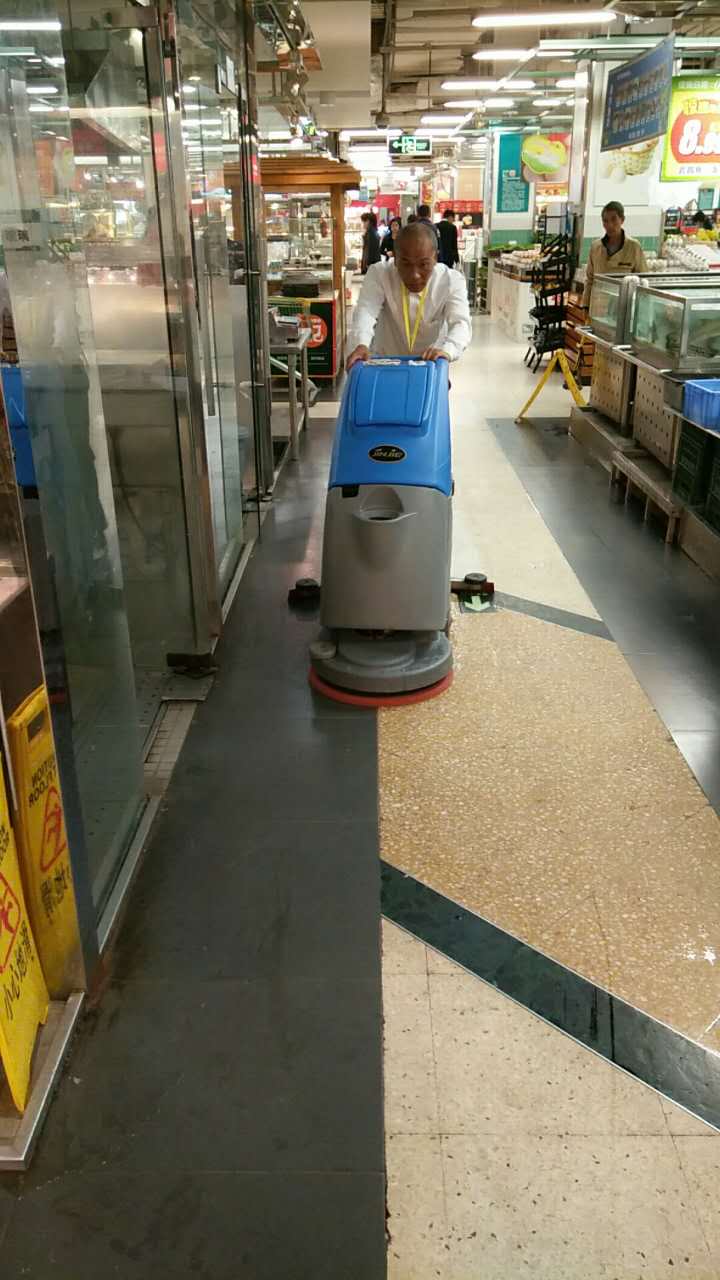
View the contractor purchase and store application ↗
Wanshenglong floor scrubber selection and application support
Wanshenglong has supplied cleaning equipment and application support since 2004. Shenzhen headquarters reviews photos, routes and schedules against Jinjie model data. Guangzhou supports demonstrations and regional enquiries, and Zhaoqing prepares the confirmed equipment.
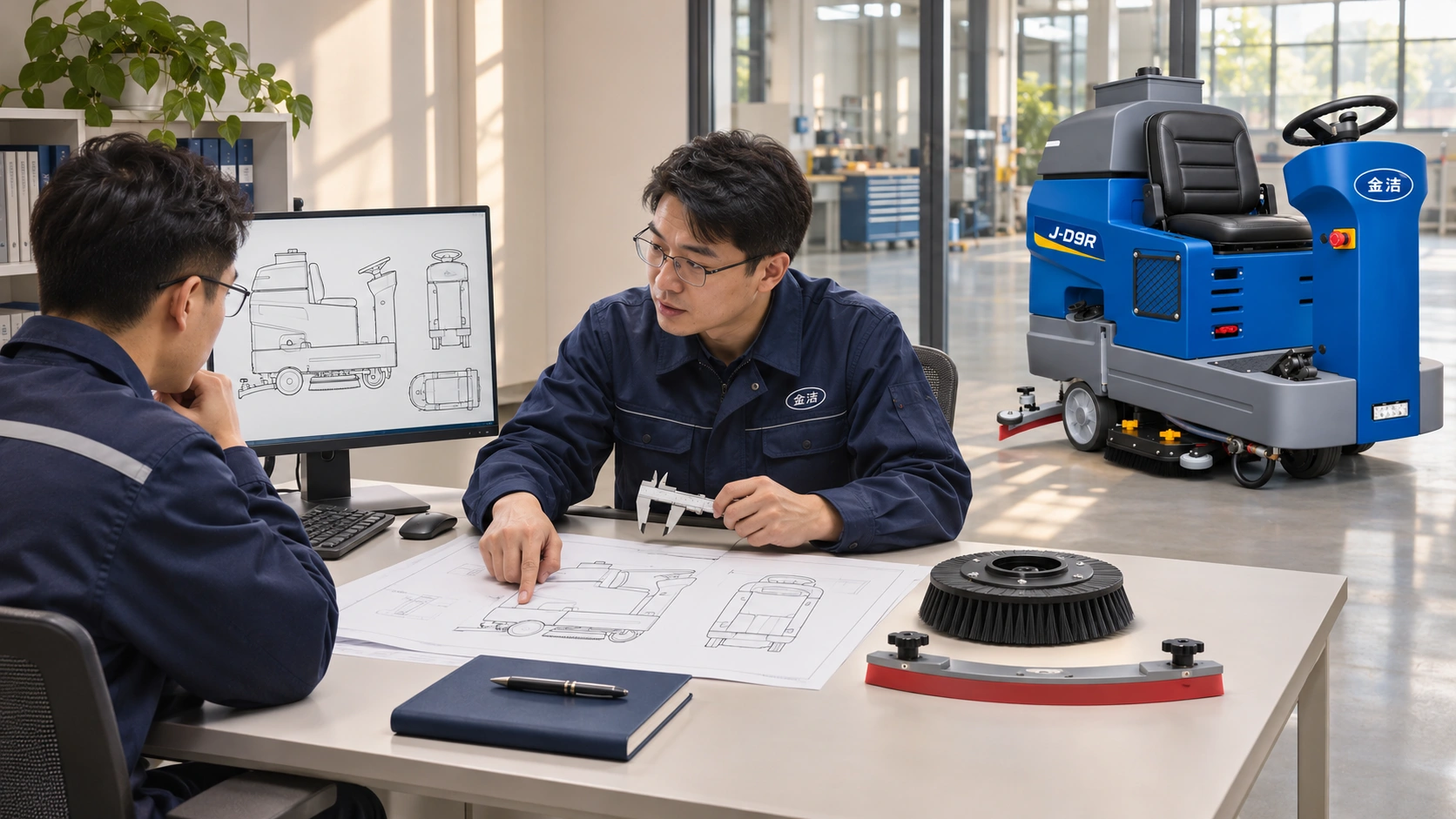
What to record on site
Test straight lanes, turns between columns and trips for refilling and draining separately. Mark residual water and yield points. Record gradients or damaged flooring that need assessment and keep trials within the manual. Agree warning signs, barriers and reopening responsibilities.
How site conditions affect equipment performance
Continuous garage lanes and scattered bays involve different routes. Empty travel, waiting and detours reduce time spent scrubbing even where brush width is the same.
Floor scrubbers · Jinjie J-D3C Walk-Behind Scrubber-Dryer · Shenzhen headquarters and technical support · Guangzhou demonstrations and customer support · Zhaoqing manufacturing and delivery
Discuss equipment for your site ↗
Shenzhen Wanshenglong Cleaning Products Co., Ltd. | Jinjie J-D3C walk-behind scrubber. Check the model specification and site conditions. Updated 2026-11-6.
Checks after reading
- Site area, routes and narrowest access
- Floor, dust, oil, debris or pipe-blockage type
- Daily frequency and continuous working time
- Power, water, wastewater, consumables and service conditions
Explore products and selection information
Choosing a scrubber for ramps, parking bays and garage lanes — frequently asked questions
What information should we collect on site?
Provide overall and close-up photos, the narrowest passage, tightest turn, service points and parking. Describe normal pedestrian and vehicle activity and identify where each measurement was taken.
How should we compare two trials?
Compare the same floor, soil, objective and route. Record cleaning, refilling, yielding and close-down. Note differences in the conditions before extrapolating a trial.