
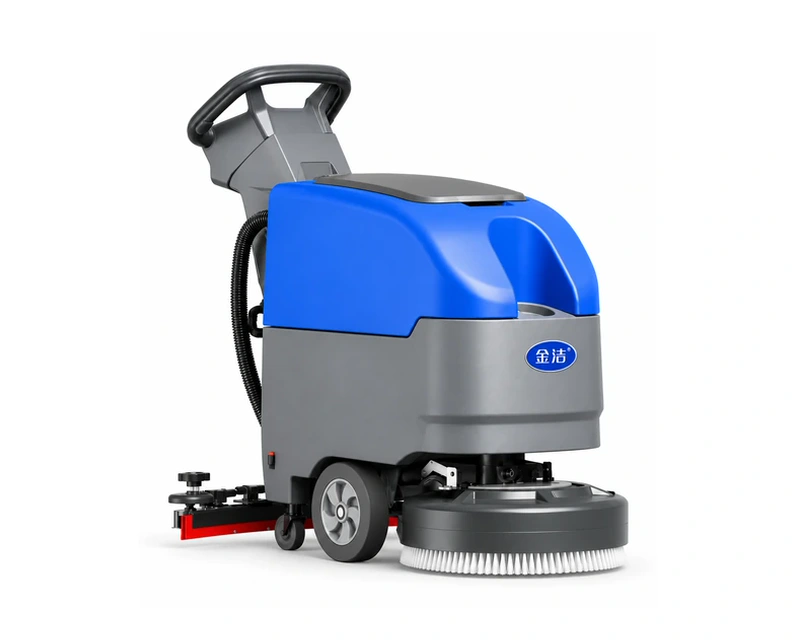
Water remaining on the floor does not itself identify a failed vacuum motor. A narrow streak, water at a turn, residue across the full path and a sudden change in recovery are different symptoms. Start with a clear record and follow the instructions for the actual machine.
Capture the operating conditions
Record the nameplate, configuration, when the problem began, straight-line or turning behaviour, floor joints and the cleaning solution used. Note recent component changes or cleaning. Photographs should show the residue and relevant visible components, not only the outer body. Distinguish a recent fault from a task that has never produced an acceptable result.
Inspect only what the operator is permitted to inspect
Carry out the prescribed shutdown before checking for debris at the squeegee, visible hose bends or loose connections, seals and the recovery-tank condition. Cleaning, adjustment and restarting depend on the model. Do not bypass protection or perform live disassembly.
Consider the floor and chemical alongside the blade. Installation, wear, joints, foam and the soil can influence recovery. Similar-looking blades need not be compatible. A vague diagnosis of low suction is not a sufficient reason to order a motor.
Change one permitted condition at a time
Keep a before-and-after record on a comparable safe route. A temporary improvement does not prove the underlying cause has been established. Replacing a component does not automatically prove that the removed part was faulty.
For persistent or unexplained symptoms, electrical work or internal mechanisms, stop and obtain suitable technical assistance. Send the responsible technician the model, configuration, symptom photographs and checks already performed. This is a method for preparing a service enquiry, not a substitute for model-specific instructions or an invented repair case.
Practical acceptance check
Distinguish one-sided streaks, water left during turns and weak recovery across the whole path. Follow the machine shutdown procedure before accessible checks. Retest on the same patch after cleaning. Abnormal electrical smells, noise or persistent poor recovery require service rather than repeated operation or an unsupported motor diagnosis.
Applying the method to a site problem
If water recovery works on straights but leaves water at sharp turns, inspect turning technique, the route and the squeegee before diagnosing a motor fault.
Contractor purchasing and in-store use
The cleaning contractor serving China Resources Vanguard purchased Wanshenglong equipment centrally for stores in South China. The contractor handled procurement. Individual stores differed in flooring, aisles, restocking and cleaning windows. Check the delivery list for the model at each store.
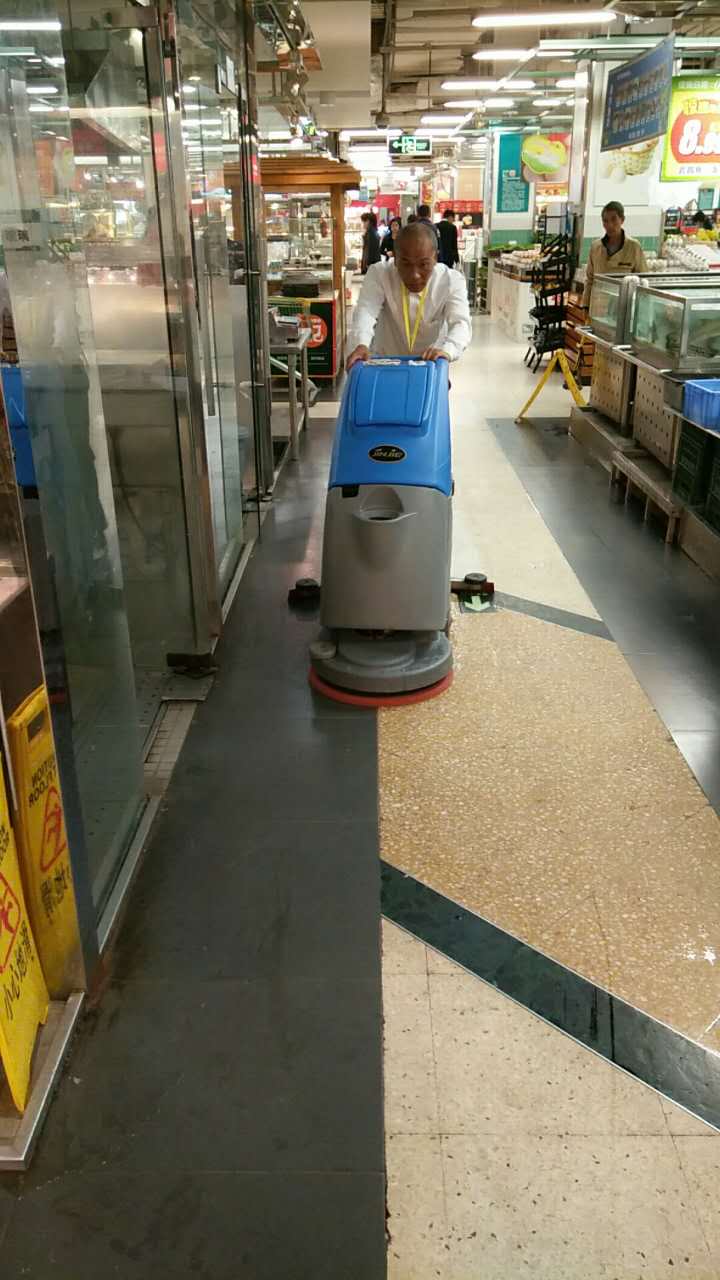
View the contractor purchase and store application ↗
Maintenance starts with a clear handover
For service, provide the model, nameplate, photos and a description of the symptom. Headquarters coordinates technical and spare-parts information. Regional support and the delivery records help identify the installed parts.

What to record on site
Distinguish water on straights, at turns, along one side and across the full recovery path. Record the floor and detergent and photograph visible components. After each change, repeat the same route. Note the conditions if the symptom returns.
How site conditions affect equipment performance
The squeegee and blades guide dirty water to the inlet. Hose connections and tank seals complete the recovery path. Record whether the symptom is a narrow streak or widespread water and where it appears.
Floor scrubbers · Jinjie J-D3C Walk-Behind Scrubber-Dryer · Shenzhen headquarters and technical support · Guangzhou demonstrations and customer support · Zhaoqing manufacturing and delivery
Discuss equipment for your site ↗
Shenzhen Wanshenglong Cleaning Products Co., Ltd. | Jinjie J-D3C walk-behind scrubber. Check the model specification and site conditions. Updated 2026-11-6.
Checks after reading
- Site area, routes and narrowest access
- Floor, dust, oil, debris or pipe-blockage type
- Daily frequency and continuous working time
- Power, water, wastewater, consumables and service conditions
Explore products and selection information
How to trace streaks and standing water behind a floor scrubber — frequently asked questions
What information helps a service technician?
Provide the nameplate, component photos, time and location of the symptom, material or floor condition, recent maintenance and accessory changes. Stop if inspection cannot be carried out safely.
How can we check that maintenance solved the problem?
Repeat the observation under permitted, comparable conditions. Record one change at a time. If the symptom returns, give the service team the earlier results.