
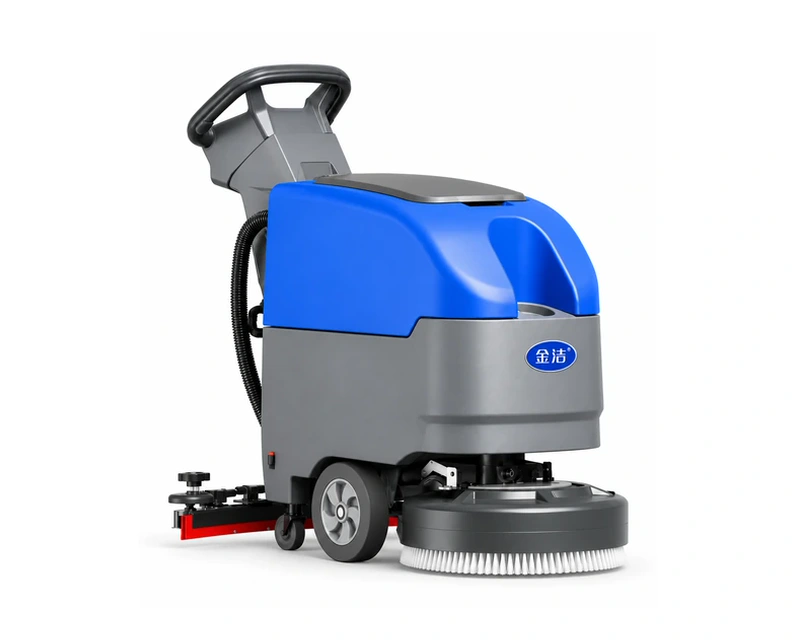
A lobby, corridor, lift hall and basement should not be collapsed into one area figure. They may have different surfaces, working windows and water-handling distances. For property teams, a route brief is often more useful than selecting a machine first and trying to justify it afterwards.
Measure the space during normal operations
Mark doors, columns, turns, thresholds, lifts and temporary storage. Delivery trolleys or events can change the usable route. Brush coverage, squeegee width and complete-machine dimensions answer different questions. Include operator space and access for daily maintenance.
Jinjie J-D3C and J-D5R can help compare walk-behind and compact ride-on arrangements. The word compact does not establish lift or doorway suitability. Check the specific configuration and the actual access conditions.
Put traffic and service points on the same plan
Identify reception peaks, arrival times and areas that can be closed or managed. Show where clean water is obtained, wastewater is handled and the machine returns to storage. A larger tank does not directly establish a longer working time; a distant service point can alter shift planning.
Leave a usable trial record
State the floor, contamination, brush configuration and cleaning objective. Separate active cleaning from waiting, transfer, water handling and end-of-task work. Record water remaining at turns and areas requiring manual attention. A clear corridor demonstration cannot verify the whole property.
Headquarters selection and technical discussions at Wanshenglong can relate the customer's route to Jinjie model information. Identify measurements that are confirmed, estimated or still outstanding. Site attendance and trial arrangements require separate confirmation. The address of the headquarters is a contact point, not evidence that every property in Shenzhen has received a service.
Practical acceptance check
Separate daily essential routes from periodic restoration work. Include barriers, debris removal, transfers, water handling and machine clean-down in the shift plan. Traffic can require several short windows rather than one uninterrupted run. A general property-management guide does not replace a site-specific survey.
This is general purchasing guidance for the stated location, not evidence of a completed local project or a guaranteed service response.
Applying the method to a site problem
For a property with a lobby and narrow corridors, try both routes before deciding whether a single machine or separate equipment makes sense.
Contractor purchasing and in-store use
The cleaning contractor serving China Resources Vanguard purchased Wanshenglong equipment centrally for stores in South China. The contractor handled procurement. Individual stores differed in flooring, aisles, restocking and cleaning windows. Check the delivery list for the model at each store.
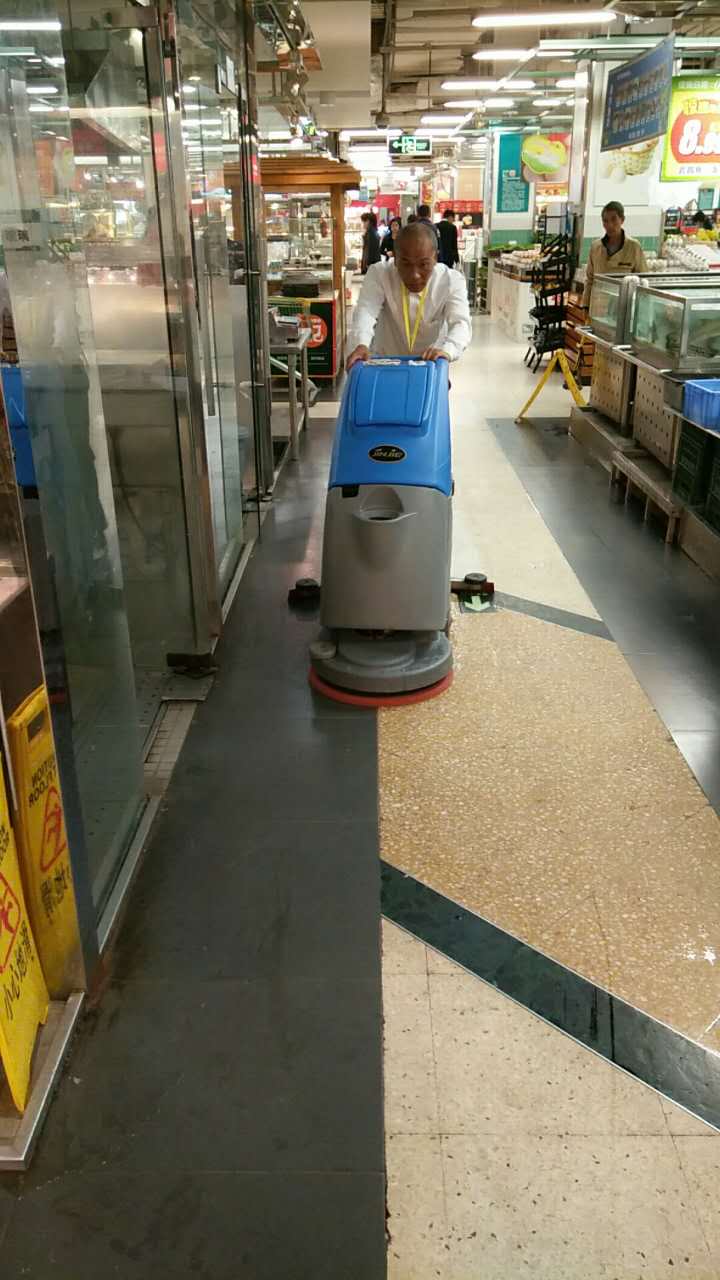
View the contractor purchase and store application ↗
Wanshenglong floor scrubber selection and application support
Wanshenglong has supplied cleaning equipment and application support since 2004. Shenzhen headquarters reviews photos, routes and schedules against Jinjie model data. Guangzhou supports demonstrations and regional enquiries, and Zhaoqing prepares the confirmed equipment.
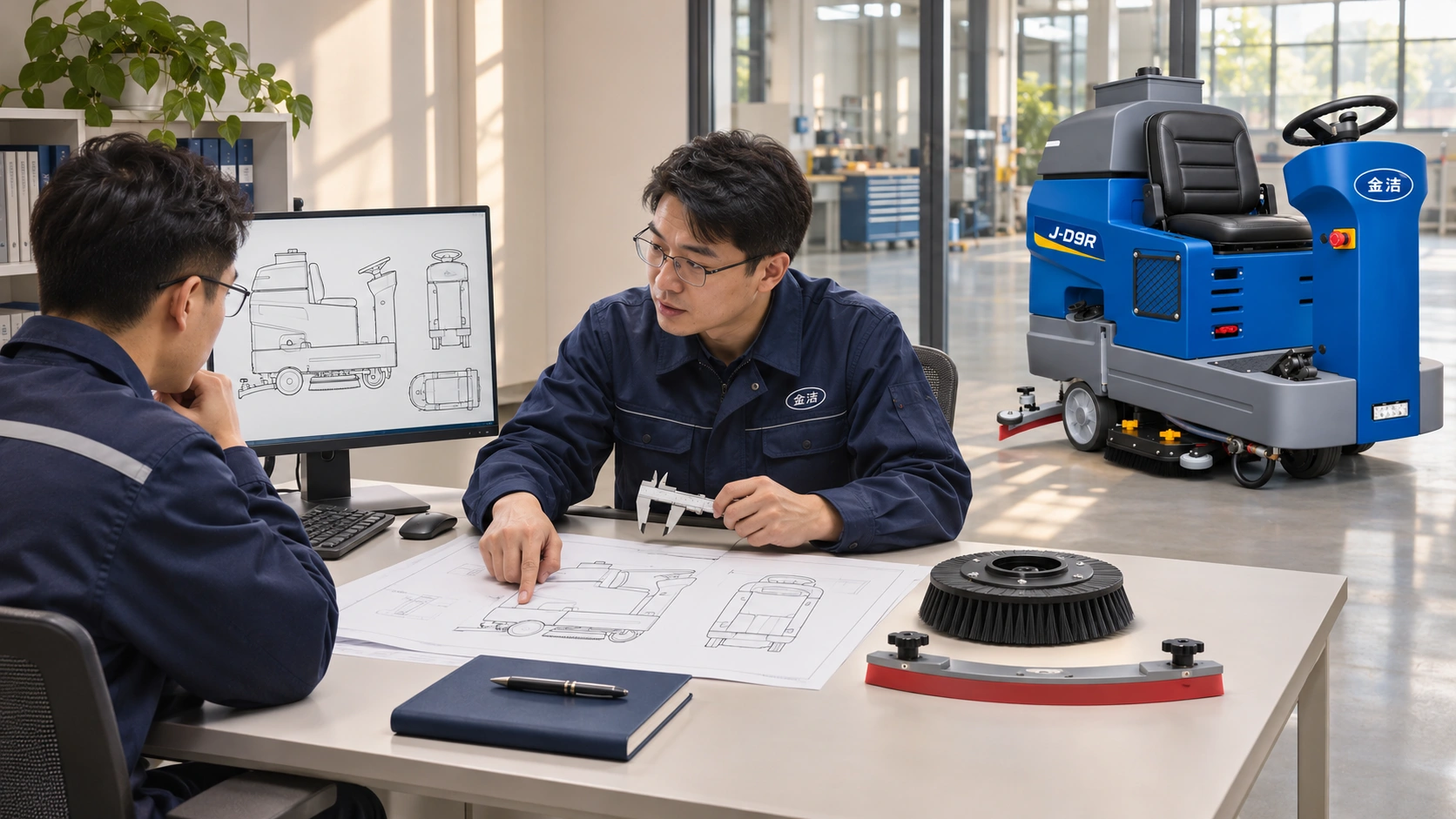
What to record on site
Use one row per lobby, corridor, lift hall or garage. Record floor, narrowest point, cleaning window, service points and manual finishing. Distinguish estimates from measurements and update the same record after the trial.
How site conditions affect equipment performance
Solution delivery wets the floor, brushing loosens soil and recovery removes the dirty water. Observe water left at turns and time spent refilling and draining alongside brush coverage.
Floor scrubbers · Jinjie J-D3C Walk-Behind Scrubber-Dryer · Shenzhen headquarters and technical support · Guangzhou demonstrations and customer support · Zhaoqing manufacturing and delivery
Discuss equipment for your site ↗
Shenzhen Wanshenglong Cleaning Products Co., Ltd. | Jinjie J-D3C walk-behind scrubber. Check the model specification and site conditions. Updated 2026-11-6.
Checks after reading
- Site area, routes and narrowest access
- Floor, dust, oil, debris or pipe-blockage type
- Daily frequency and continuous working time
- Power, water, wastewater, consumables and service conditions
Explore products and selection information
Choosing a floor scrubber for a Shenzhen property route — frequently asked questions
What information should we collect on site?
Provide overall and close-up photos, the narrowest passage, tightest turn, service points and parking. Describe normal pedestrian and vehicle activity and identify where each measurement was taken.
How should we compare two trials?
Compare the same floor, soil, objective and route. Record cleaning, refilling, yielding and close-down. Note differences in the conditions before extrapolating a trial.