
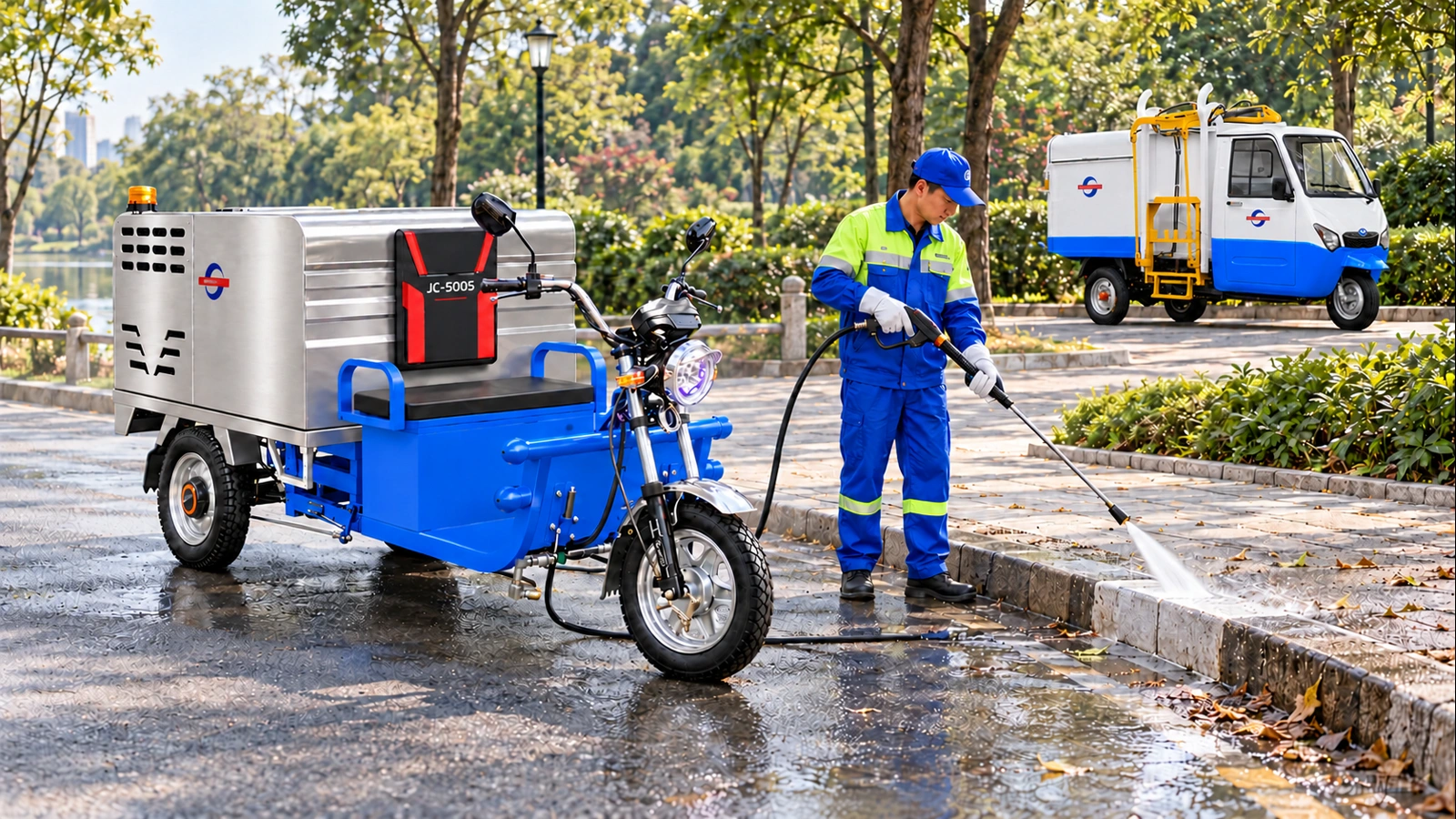
Assess road length, frequency, debris types, water points and contract requirements before choosing a municipal equipment combination.
Municipal sanitation outsourcing and public-resource notices commonly specify service areas, work frequency, road classification, cleaning hours and assessment requirements.
For sweeping, compare working width, hopper, dust control and operating range. For road washing, compare pressure, flow, tank and refill points. A suitable pressure washer may address local stains and steps.
Selection information should address municipal and estate roads, sanitation outsourcing, sweepers, washing vehicles and water-sweeping vehicles as distinct related topics.
Source information
- Source name: www.ggzy.gov.cn
- Source title: National Public Resources Trading Platform
- Source link:https://www.ggzy.gov.cn/
Checks after reading
- Site area, routes and narrowest access
- Floor, dust, oil, debris or pipe-blockage type
- Daily frequency and continuous working time
- Power, water, wastewater, consumables and service conditions
Explore products and selection information
Assessing sweeper, flushing-vehicle and pressure-washer needs in municipal service contracts — questions
What does this article address?
Assess road length, frequency, debris types, water points and contract requirements before choosing a municipal equipment combination.
What site information is needed before equipment selection?
Provide area, aisle width, floor/pipe conditions, contamination, frequency, power/water, city and budget range.
After reading “Assessing sweeper, flushing-vehicle and pressure-washer needs in municipal service contracts”, is a site trial still needed?
This article offers selection guidance. For complex sites, heavy contamination or continuous work, verify models and configurations through equipment information, video or a trial.