CN EN
Location:Home > Equipment selection > Drain-jetter selection: pipe diameter, pressure, flow and nozzles
Equipment selection

How to choose a pipe jetter: the relationship between pipe diameter, pressure, flow rate, and nozzle.

Select drain-jetting pressure and flow around diameter, blockage, length and water supply rather than pressure alone.

How to choose a pipe jetter: the relationship between pipe diameter, pressure, flow rate, and nozzle.

Select drain-jetting pressure and flow around diameter, blockage, length and water supply rather than pressure alone.

Confirm drain diameter and blockage first

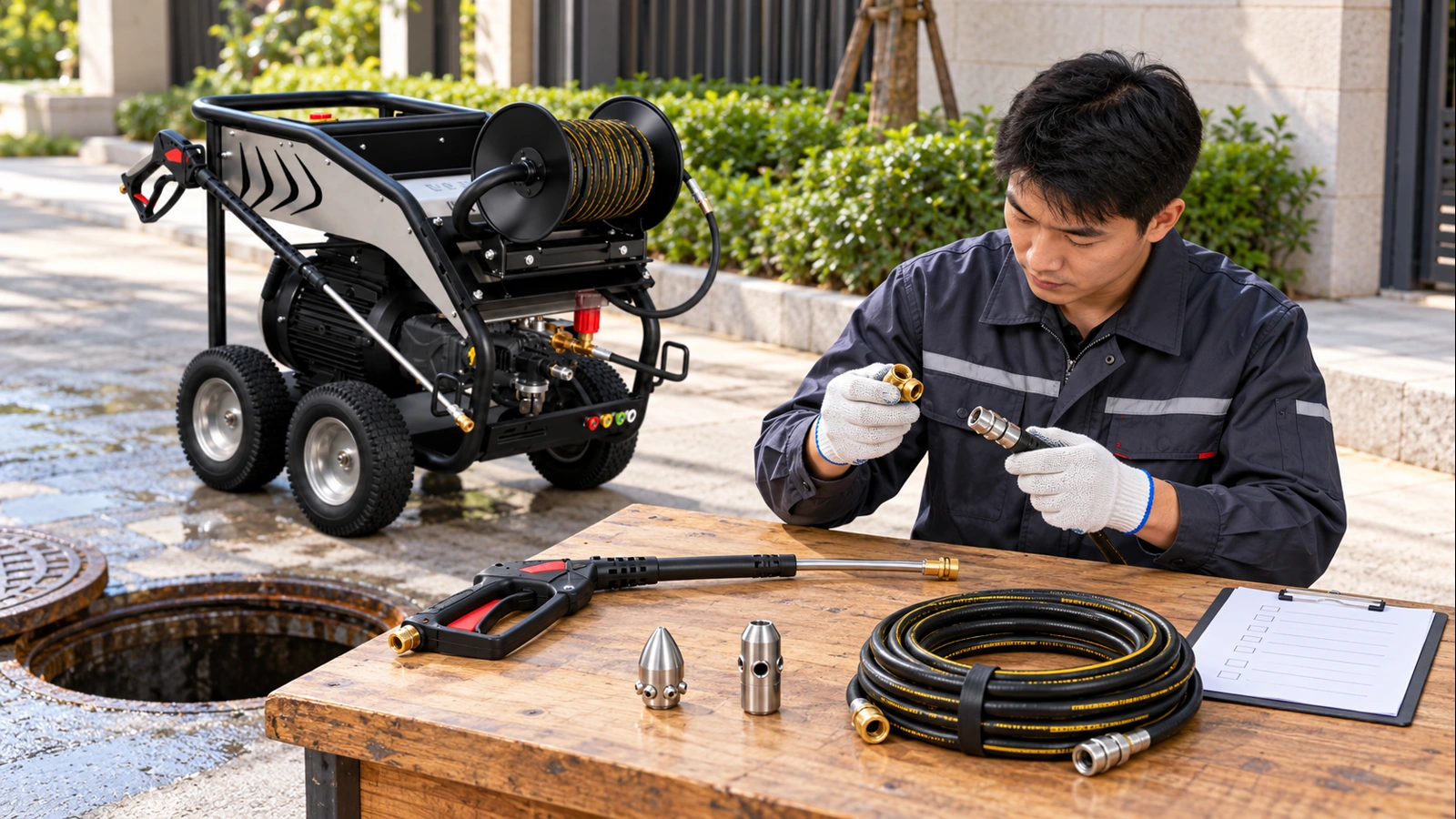
For property and kitchen branch drains, the J-1020D is listed at 100 bar (10 MPa), 20 L/min with a 30 m hose. Establish reach from pipe size, material, bends, deposits, supply and drainage. Compare J-1730H and J-2050H under the same task conditions.

Assess nozzles and hoses together

Forward/rearward jets, rotary nozzles, hose length and reel arrangements affect drain work. Confirm diameter, length, bends, blockage and access before recommending equipment.

Checks after reading

  • Site area, routes and narrowest access
  • Floor, dust, oil, debris or pipe-blockage type
  • Daily frequency and continuous working time
  • Power, water, wastewater, consumables and service conditions
Related products

Explore products and selection information

FAQ

Drain-jetter selection: pipe diameter, pressure, flow and nozzles — questions

What does this article address?

Select drain-jetting pressure and flow around diameter, blockage, length and water supply rather than pressure alone.

What site information is needed before equipment selection?

Provide area, aisle width, floor/pipe conditions, contamination, frequency, power/water, city and budget range.

After reading “Drain-jetter selection: pipe diameter, pressure, flow and nozzles”, is a site trial still needed?

This article offers selection guidance. For complex sites, heavy contamination or continuous work, verify models and configurations through equipment information, video or a trial.

Further reading

Related cleaning equipment information

Applying the selection method to different pipework

J-1020D | Check access and greasy deposits in retail service branches

Drains, access openings and branch bends govern hose and nozzle entry. Record clear bore, material, distance between chambers and the blockage symptom. Separate soft grease from solid obstructions and suspected collapse.

For electric operation at a fixed point, confirm the actual supply circuit and continuous water supply. Verify this model's voltage. Assess nozzle, tool-end conditions and hose retrieval separately from the listed 30 m hose length.

Assess this model for your site →

J-1730H | Moving between outdoor inspection chambers and retrieving the hose

Petrol power allows work away from a fixed electrical supply. At each outdoor location, plan water, fuel and wastewater disposal. Include chamber spacing, traffic, hose retrieval, transfers and replenishment.

Compare this machine's black reel with the HS version's 304 stainless-steel reel for the expected retrieval frequency. Check powered feed, working reach, nozzle and hose separately.

Assess this model for your site →

J-1730C | Diesel supply for outdoor drain maintenance

Where outdoor sites support diesel refuelling and maintenance, consider diesel power. Check jetting suitability separately against water supply, clear bore, bends, deposits and downstream discharge.

Use the nameplate and current machine documents to identify the engine, pump and hose. Follow that model's service intervals, pressure limits, parking, exhaust and fuel instructions. Account for passing traffic.

Assess this model for your site →