
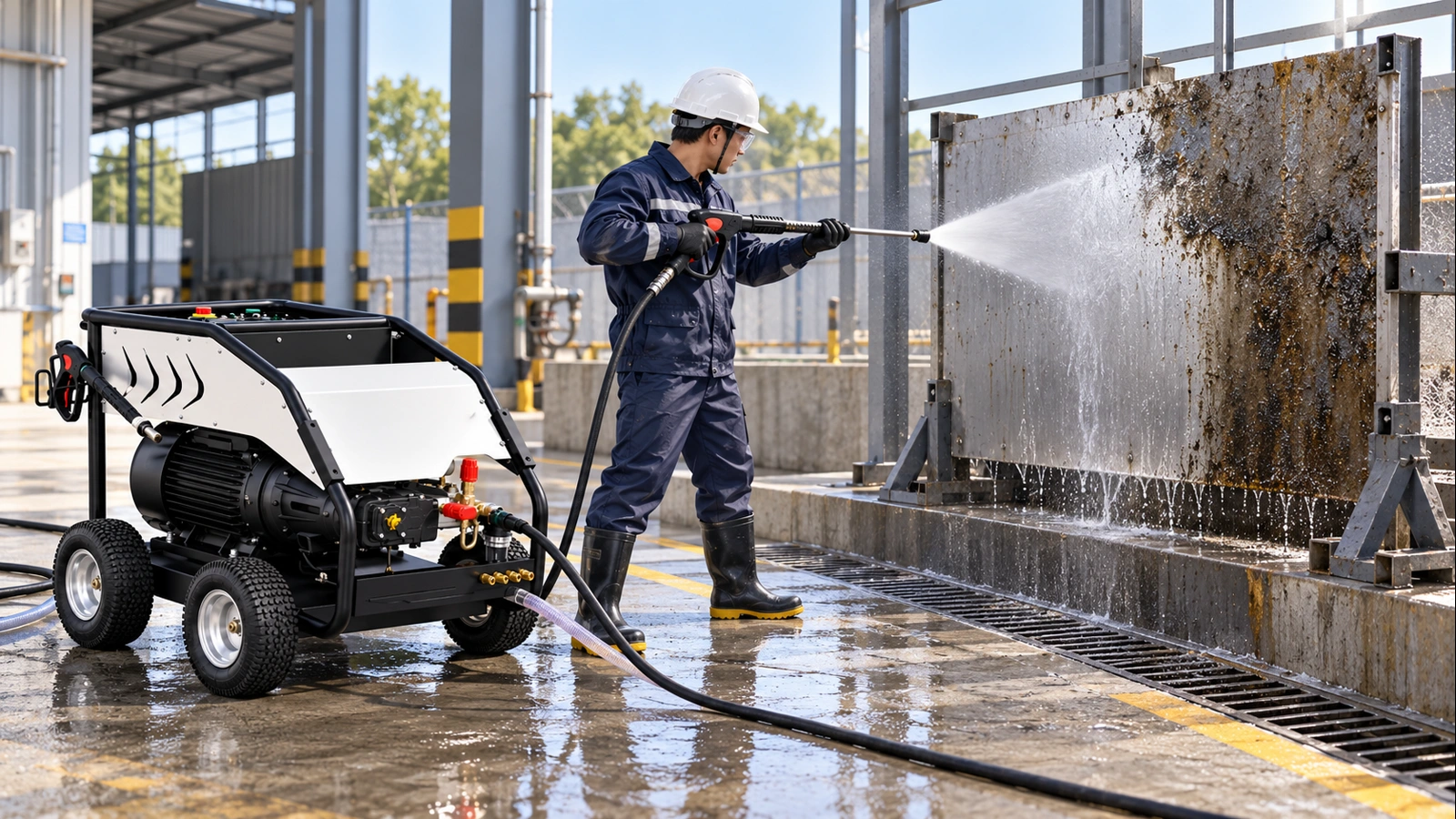
Verify pressure, machine flow and site conditions separately before comparing models and accessories.
Identify the working object first
Record floor, equipment, vehicle or pipe tasks with deposits, materials and distance. Match the model to the task rather than one rating.
Do not interchange pressure and flow ratings
Distinguish pressure from water flow and machine/theoretical/working-end conditions. Keep J-1555L's source55L/min machine rating and historical35L/min lance record separate. The lance conditions remain pending and do not establish two-lance output.
Then confirm power and site conditions
Fixed-power and mobile outdoor tasks have different requirements. Verify power, site restrictions, water, drainage and hose needs for the selected model. Resolve conflicting specifications separately rather than borrowing values.
Confirm accessories as separate configuration items
The source identifies a base long lance, with surface, rotary, flushing and additional hose equipment optional. Confirm quantities and supply in the order rather than inferring them from images.
Checks after reading
- Site area, routes and narrowest access
- Floor, dust, oil, debris or pipe-blockage type
- Daily frequency and continuous working time
- Power, water, wastewater, consumables and service conditions
Explore products and selection information
Pressure-washer selection: pressure, flow, power and water first — questions
What does this article address?
Verify pressure, machine flow and site conditions separately before comparing models and accessories.
What site information is needed before equipment selection?
Provide area, aisle width, floor/pipe conditions, contamination, frequency, power/water, city and budget range.
After reading “Pressure-washer selection: pressure, flow, power and water first”, is a site trial still needed?
This article offers selection guidance. For complex sites, heavy contamination or continuous work, verify models and configurations through equipment information, video or a trial.