
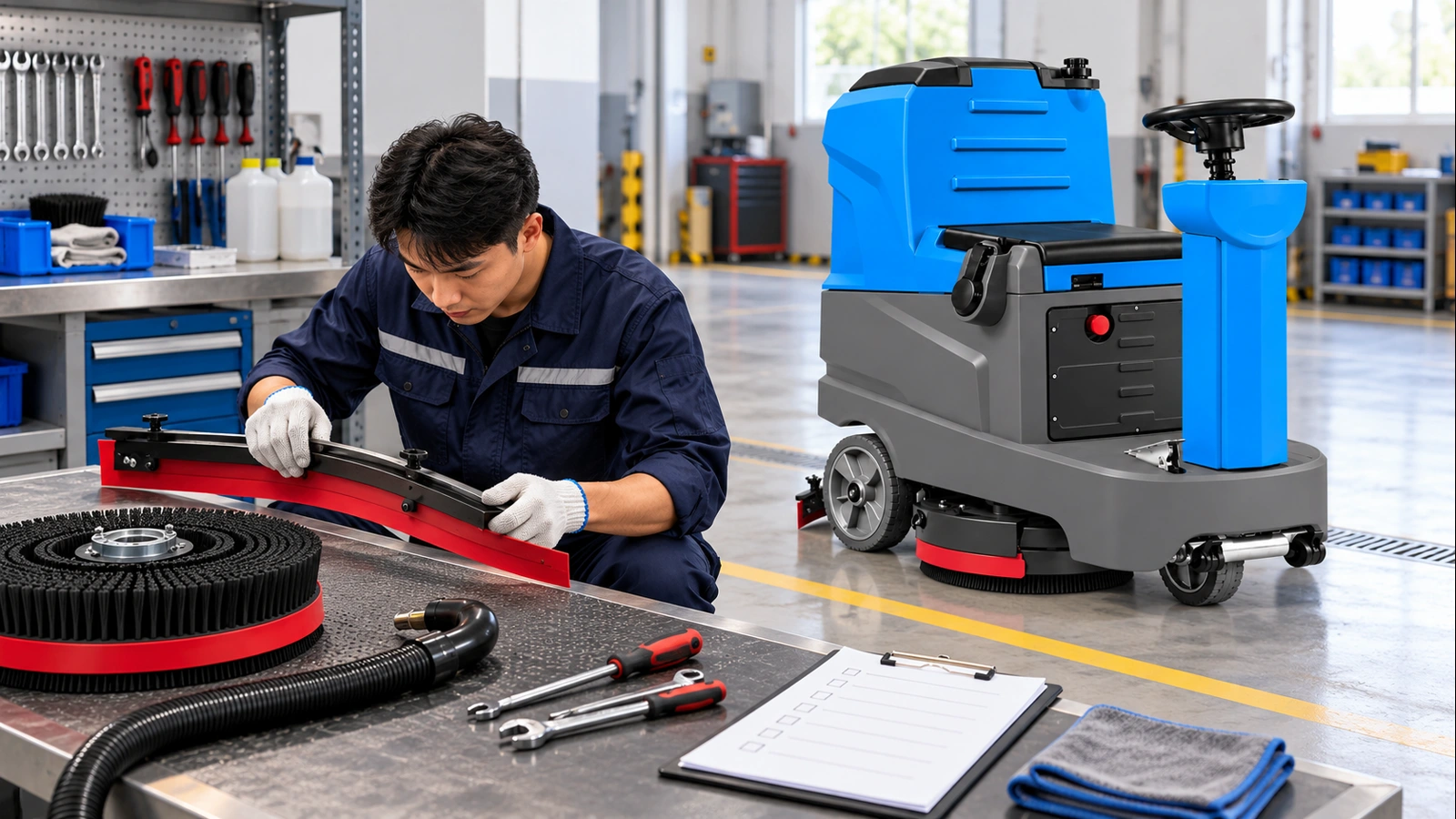
Record scrubbing, recovery and operating condition each shift and assign maintenance responsibilities for the actual model.
Clean recovery components after the shift
Drain and clean the recovery tank, filters and hoses as instructed, and inspect brushes/squeegees. Stop safely under the manual before cleaning; do not dismantle running equipment.
Observe driving and access
Record turning, brakes, wheels, unusual sounds and residual water separately from cleaning results. Stop for safety concerns. Website pictures do not establish braking or gradient capability.
Assign responsibilities and plan spares
Record operator, area, shift, maintenance time and fault photographs. Match parts to the actual version and follow the supplied battery/charging instructions.
How to confirm the next step
Prepare site photographs and the model/configuration list. Confirm access, work frequency and maintenance conditions. This is a selection and management checklist, not a replacement for the equipment manual, a site trial or confirmation of the supplied configuration.
Read related selection and maintenance information · Send site conditions for selection advice
Checks after reading
- Site area, routes and narrowest access
- Floor, dust, oil, debris or pipe-blockage type
- Daily frequency and continuous working time
- Power, water, wastewater, consumables and service conditions
Explore products and selection information
Ride-on scrubber-dryer after-shift care: recovery, consumables and safety — questions
What does this article address?
Record scrubbing, recovery and operating condition each shift and assign maintenance responsibilities for the actual model.
What site information is needed before equipment selection?
Provide area, aisle width, floor/pipe conditions, contamination, frequency, power/water, city and budget range.
After reading “Ride-on scrubber-dryer after-shift care: recovery, consumables and safety”, is a site trial still needed?
This article offers selection guidance. For complex sites, heavy contamination or continuous work, verify models and configurations through equipment information, video or a trial.