
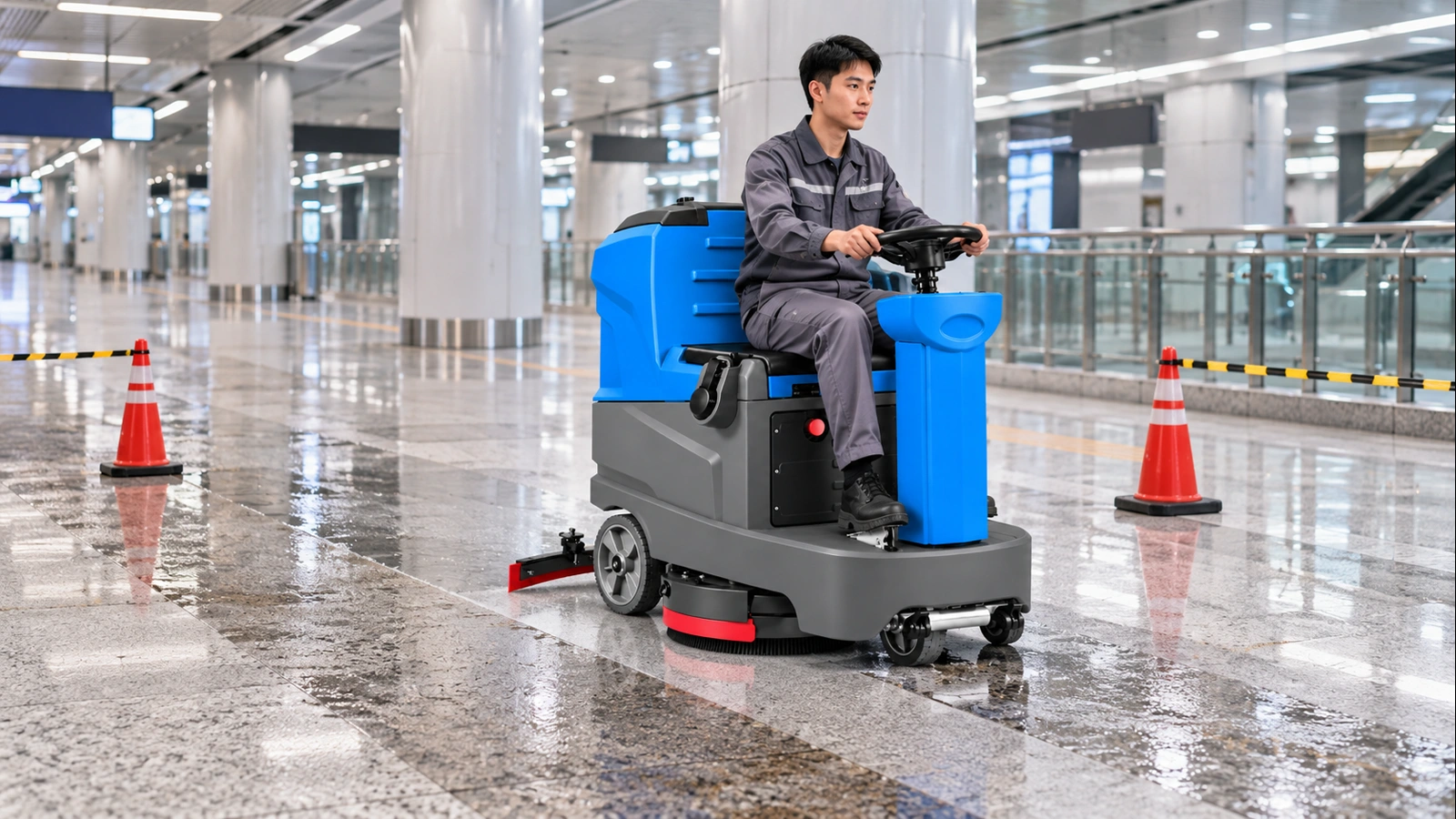
Validate a ride-on solution along the complete route; area is only one condition.
Map the complete route
Mark doors, columns, turns, ramps, humps and pedestrian access. Compare actual dimensions and manual restrictions; working width is not minimum passage width.
Compare the complete work cycle
Include filling, draining, transport and finishing care in task time. Trial a typical route and record operation and safe reopening rather than promising a completion time from theoretical coverage.
Selection information checklist
Provide routes, floors, stains, shifts, filling/draining and storage. Separately assess ramps, slippery surfaces and pedestrian areas rather than selecting by machine size alone.
How to confirm the next step
Prepare site photographs and the model/configuration list. Confirm access, work frequency and maintenance conditions. This is a selection and management checklist, not a replacement for the equipment manual, a site trial or confirmation of the supplied configuration.
Read related selection and maintenance information · Send site conditions for selection advice
Checks after reading
- Site area, routes and narrowest access
- Floor, dust, oil, debris or pipe-blockage type
- Daily frequency and continuous working time
- Power, water, wastewater, consumables and service conditions
Explore products and selection information
Ride-on scrubber-dryer selection: routes, turns and filling/draining — questions
What does this article address?
Validate a ride-on solution along the complete route; area is only one condition.
What site information is needed before equipment selection?
Provide area, aisle width, floor/pipe conditions, contamination, frequency, power/water, city and budget range.
After reading “Ride-on scrubber-dryer selection: routes, turns and filling/draining”, is a site trial still needed?
This article offers selection guidance. For complex sites, heavy contamination or continuous work, verify models and configurations through equipment information, video or a trial.