
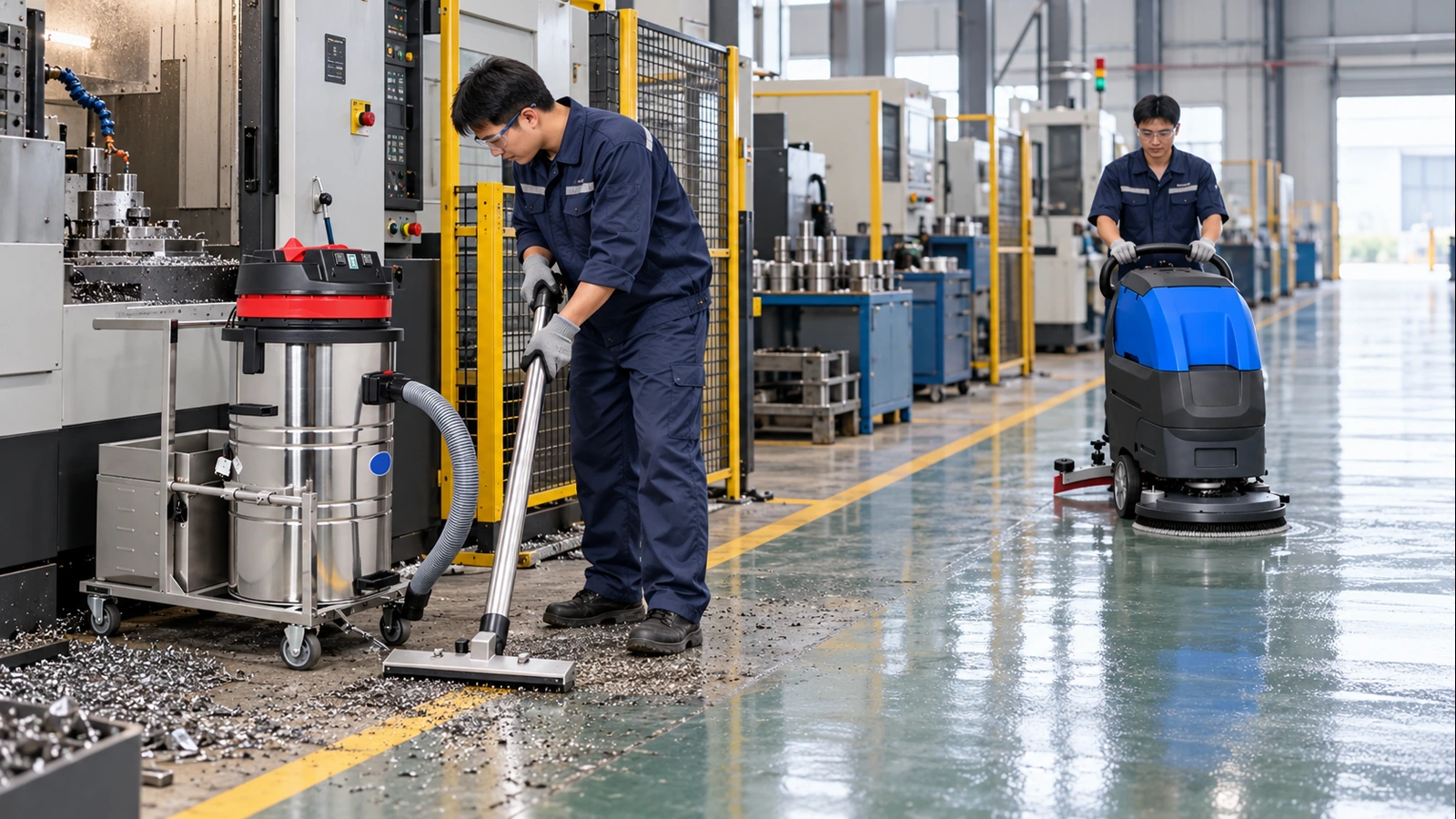
Equal floor areas can require different routes and shifts. Distinguish dense production equipment, open warehouse aisles and mixed pedestrian/vehicle zones.
Identify the soil before selecting the cleaning sequence
Record dust, large particles, oil, tyre marks and the floor material. Remove larger debris first. Ask a specialist to assess equipment and procedures for unusual dusts, liquids or hazardous media.
Trial a small patch using a brush and detergent compatible with the floor. Inspect blade contact, recovery and the resulting floor condition.
Assess continuous and confined areas separately
For continuous hard-floor areas, considerJ-85BF、J-85BHandJ-105BFfor the comparison. Check width, drive, replenishment and service conditions for each model and factory.
To assess particle removal together with scrubbing, seeJ-SX1360D configuration. Sweeping and scrubbing widths describe different systems. Check both when assessing coverage.
Keep a comparable trial record
- For the same area and cleanliness requirement, record staffing and total working hours.
- Include turning, refilling, emptying and finishing time in the run.
- Record the floor finish, consumable condition and operator feedback before confirming the configuration.
- Include water supply, drainage, charging and storage locations in the handover plan.
Checks after reading
- Site area, routes and narrowest access
- Floor material, soil type and pre-cleaning
- Daily frequency and continuous working time
- Power, water, wastewater, consumables and service conditions
Explore products and selection information
Questions about this guide
Should floors with particles or dust be scrubbed immediately?
Identify the material and any required pre-cleaning. Have a specialist assess hazardous or unusual media.
Can heavy oil be removed in one pass?
Check floor, brush and detergent compatibility on a small test patch first.
What should a factory trial record?
For the same task, include total labour, hours, water, recovery and finishing alongside travel time.