
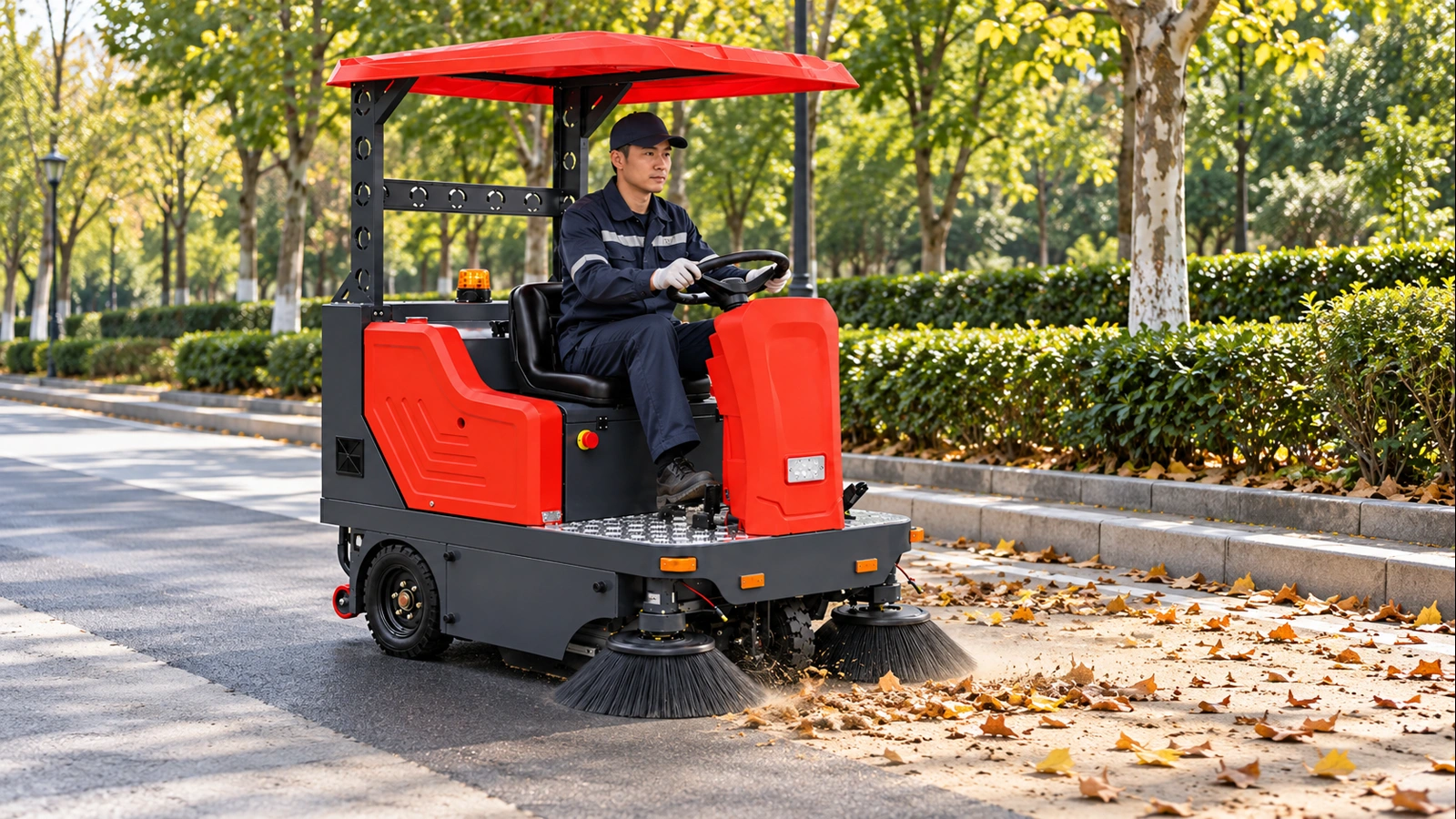
Assess road width, debris types, dust, gradients, runtime and the need for an enclosed cab.
The source positions medium ride-on sweepers such as J-XS1450 for frequent sweeping of industrial-estate roads, property access roads, school roads, car parks and factory grounds. It describes wider coverage than J-XS1250, while longer sanitation routes call for comparison with larger enclosed-cab sweepers.
For dusty sites, significant weather exposure or long shifts, compare the J-XS1900Q, J-XS2100Q or J-WX2400 series, subject to verified site and configuration requirements.
Compare road width, hopper capacity, filtration and dust control, operating range, turning space and operator accommodation when selecting a sweeper.
Source information
- Source name: www.intercleanshow.com
- Source title: International cleaning industry reference
- Source link:https://www.intercleanshow.com/
Checks after reading
- Site area, routes and narrowest access
- Floor, dust, oil, debris or pipe-blockage type
- Daily frequency and continuous working time
- Power, water, wastewater, consumables and service conditions
Explore products and selection information
Estate and municipal-road sweepers: assessing width, hopper, dust control and runtime — questions
What does this article address?
Assess road width, debris types, dust, gradients, runtime and the need for an enclosed cab.
What site information is needed before equipment selection?
Provide area, aisle width, floor/pipe conditions, contamination, frequency, power/water, city and budget range.
After reading “Estate and municipal-road sweepers: assessing width, hopper, dust control and runtime”, is a site trial still needed?
This article offers selection guidance. For complex sites, heavy contamination or continuous work, verify models and configurations through equipment information, video or a trial.