
Site problems
Main aisles show dust and footprints, loading entrances bring in grit, and manual mopping around equipment is difficult.
Ride-on scrubber for main workshop aisles, washing/recovery of routine dust and footprints.
Application reference: images show similar conditions and equipment operation; confirm configuration and results for the actual site.
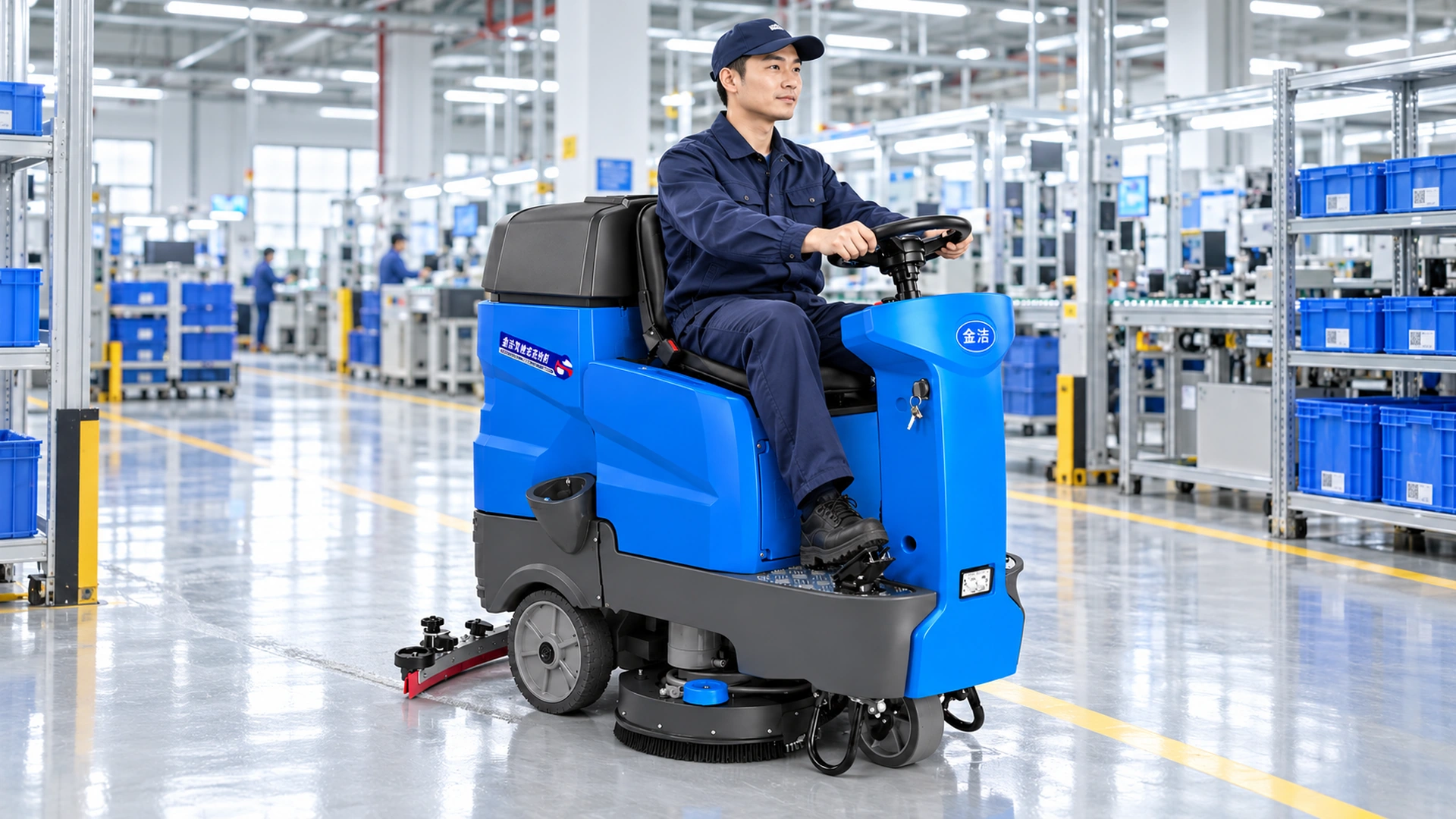
Only traceable images of the same project, area and angle may be labelled before/after. Other images show comparable conditions or equipment operations, not that customer's site.
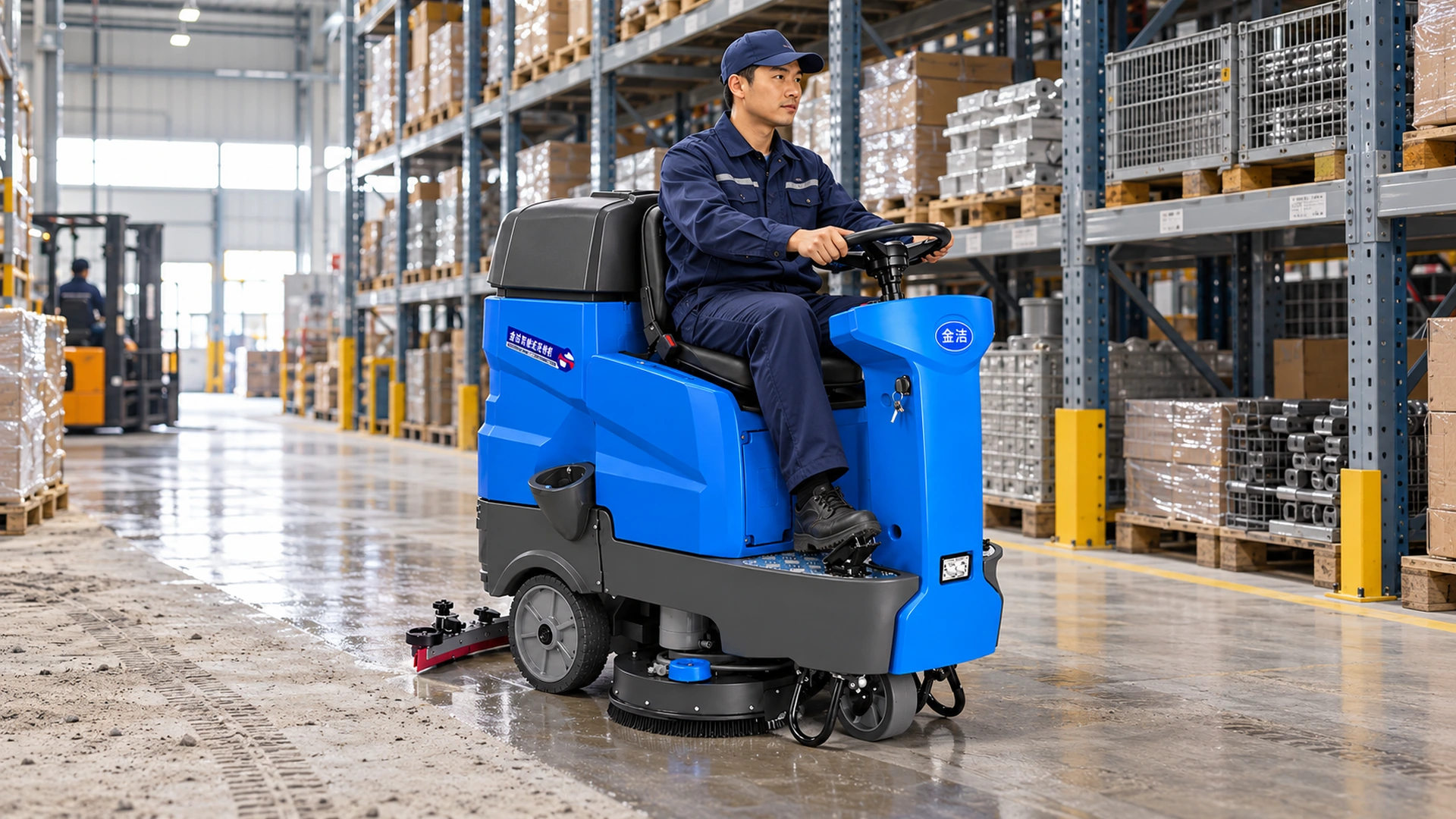
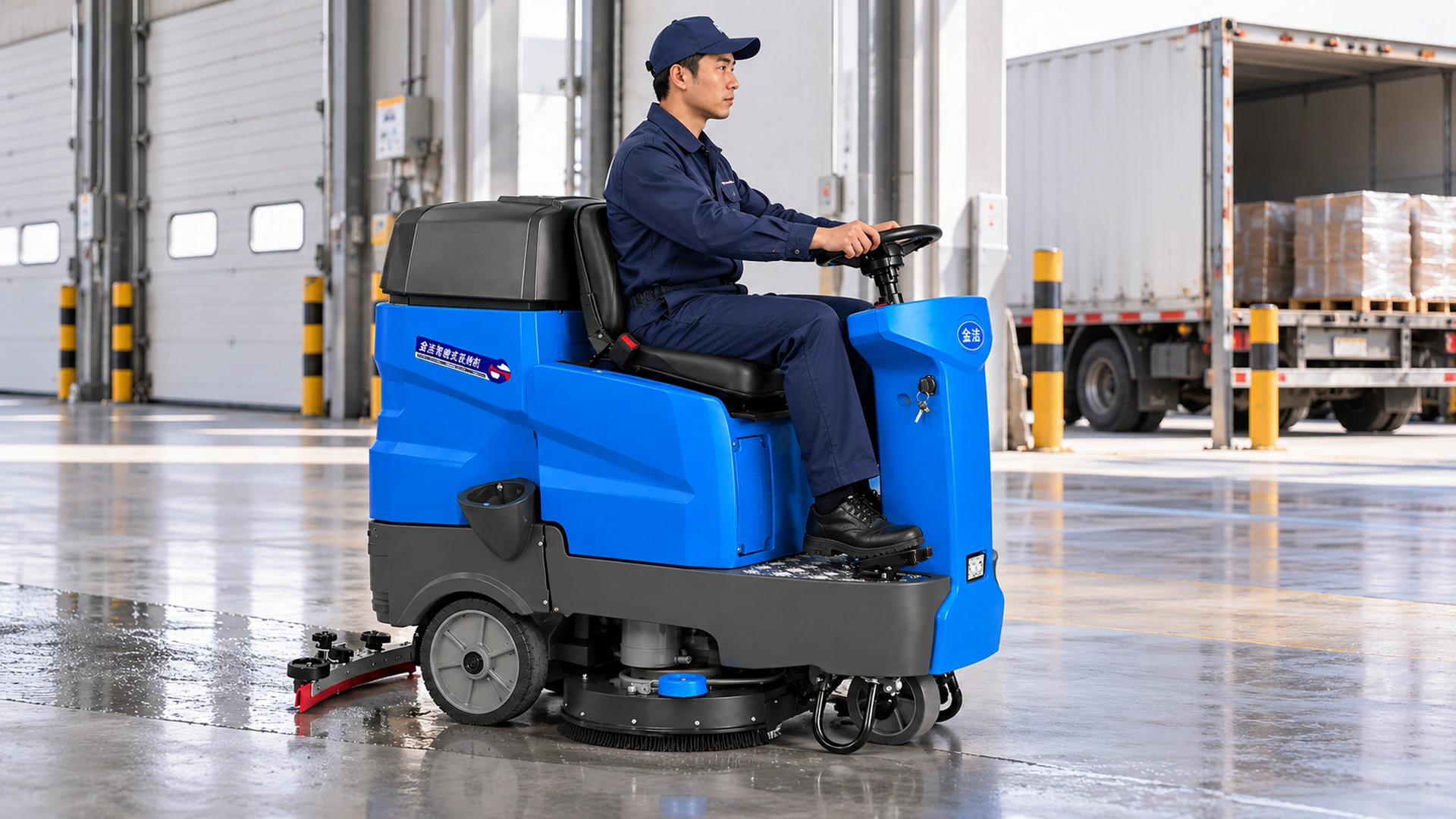
Main aisles show dust and footprints, loading entrances bring in grit, and manual mopping around equipment is difficult.
D6SL/J-D9BH ride-on scrubbers, J-D5SL self-propelled scrubber, JGY industrial vacuum, brushes, squeegee blades, recovery hoses and chemicals.
Mechanized route cleaning with simultaneous recovery may reduce repeat mopping and wet-floor risks, subject to the site and operation.
Images illustrate typical operation using the depicted equipment; confirm the actual configuration for the site.
Mechanized route cleaning with simultaneous recovery may reduce repeat mopping and wet-floor risks, subject to the site and operation.
Recheck visible dust, footprints, tyre marks, oil film, edges, recovery and drying in the agreed test area. Electronics sites must also confirm antistatic flooring and production-area rules.
Only traceable images of the same project, area and angle may be labelled before/after. Other images show comparable conditions or equipment operations, not that customer's site.
Separate production, storage, aisles and loading areas, then select scrubbers, sweepers, vacuums or pressure washers by floor material, oil level and frequency.
 Jinjie J-D6SL Ride-On Scrubber-Dryer
For underground parking, logistics warehouses, main factory aisles, shopping-centre back areas and medium/large continuous routes. The Chinese source positions ride-on operation for broader continuous work than self-propelled walk-behind machines; J-D3L or J-D5SL may complement edge work. Actual output depends on the site.
 Jinjie J-D5SL walk-behind scrubber
Compact and manoeuvrable for shopping centres, hospitals, offices and underground parking, subject to site conditions.
 Jinjie J-D9BH ride-on scrubber
An 860 mm rear-wheel-drive ride-on scrubber for routine cleaning in factories, warehouses and large garages.
 Jinjie JGY-80P industrial vacuum
Battery industrial vacuums support rounds around workshops, warehouses and equipment without fixed sockets, emphasizing mobility.
 Jinjie JT-CJ Workshop Scrubber Squeegee Blades
Workshop squeegee blades for oil, dust and frequently cleaned floors.
The related plan explains site challenges, equipment categories, candidate models and implementation steps.
Recover paper, metal chips and packaging particles with an appropriate industrial vacuum first; then scrub footprints, tyre marks and water-compatible light oil film to limit scratching and blockages in brushes and recovery systems.
Consider ride-on equipment for large continuous routes, with walk-behind or compact self-propelled units at workstation edges, shelves, turns and machinery; total area alone does not determine the choice.
Do not make a fixed recommendation without assessment. Identify epoxy, antistatic or other floor systems, pollutants, compatibility, residues and discharge requirements. Dilute chemicals to their labels and test an inconspicuous area first.
Only traceable images of the same project, area and angle may be labelled before/after. Other images show comparable conditions or equipment operations, not that customer's site.
Recheck visible dust, footprints, tyre marks, oil film, edges, recovery and drying in the agreed test area. Electronics sites must also confirm antistatic flooring and production-area rules.
Record the trial method, result and reopening time. Specify the equipment configuration, training and handover scope in writing.

The Yuanmingyuan project specified a custom blue Jinjie J-XS1980 ride-on sweeper to combine park cleaning requirements with a tailored appearance.
View details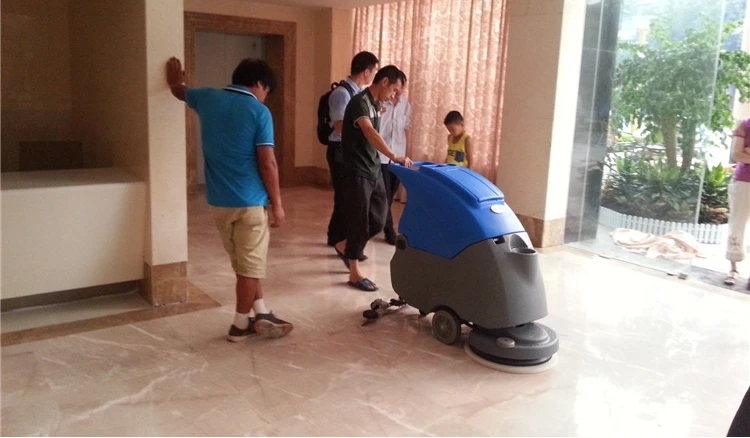
Guangzhou Haoyun Hospital selected a Jinjie DP500 walk-behind scrubber with a white pad for its marble reception lobby.
View details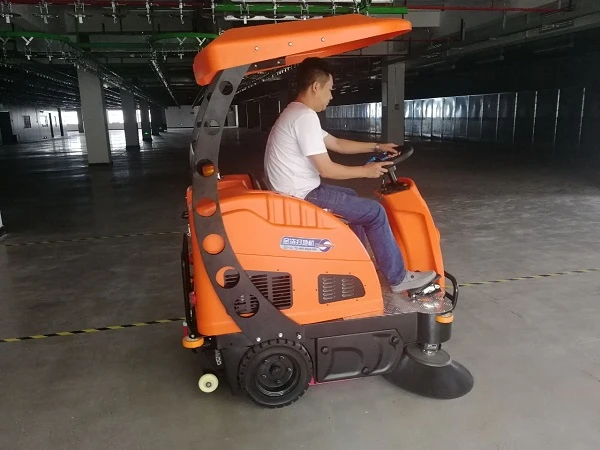
Tonghua Forest furniture factory combined sweeping and scrubbing equipment to address wood chips, small debris and floor dust.
View detailsCompare the industry, equipment tasks and operating conditions before using this reference.
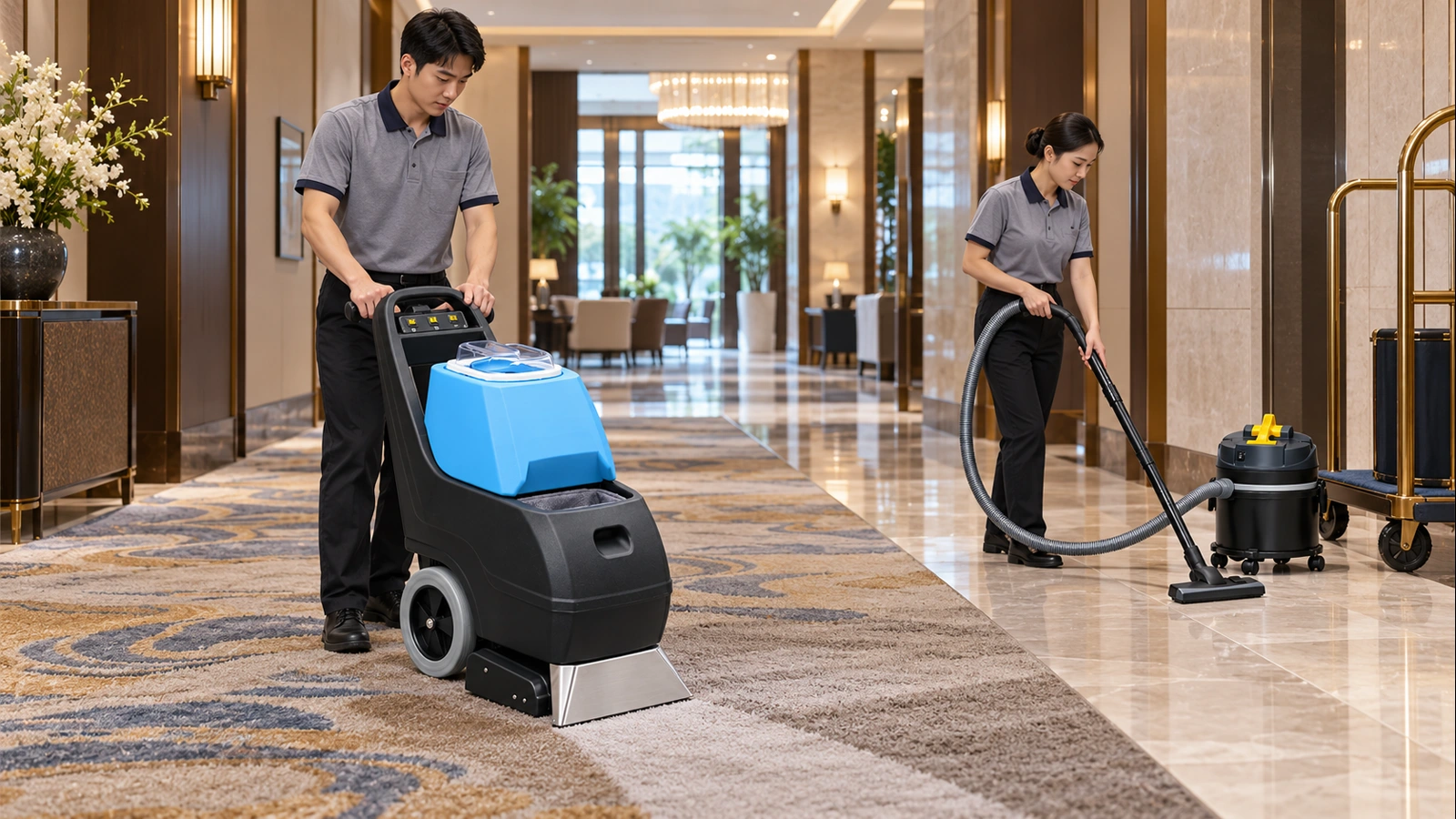
For hotels and commercial spaces, plan quiet-use vacuums, carpet cleaners, stone-care machines, escalator cleaners and consumables around noise needs, carpet/stone floors, lobbies, corridors, escalators and guest rooms.
Read article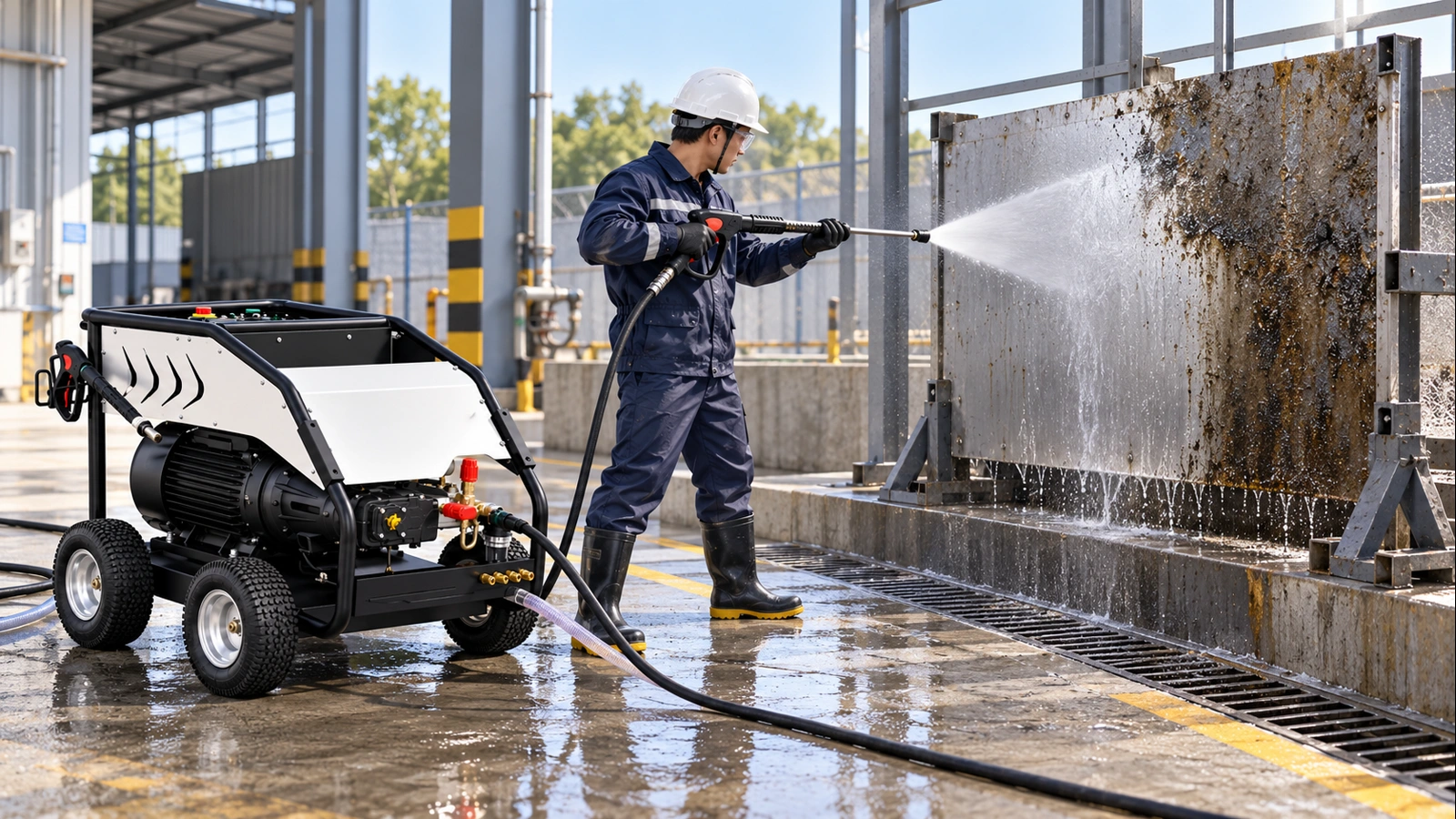
Pressure, flow and nozzle combinations affect results. Match equipment and methods separately for wall posters, road markings, equipment refurbishment, coated roofing, rust and ship cleaning; suitability requires material and process assessment.
Read article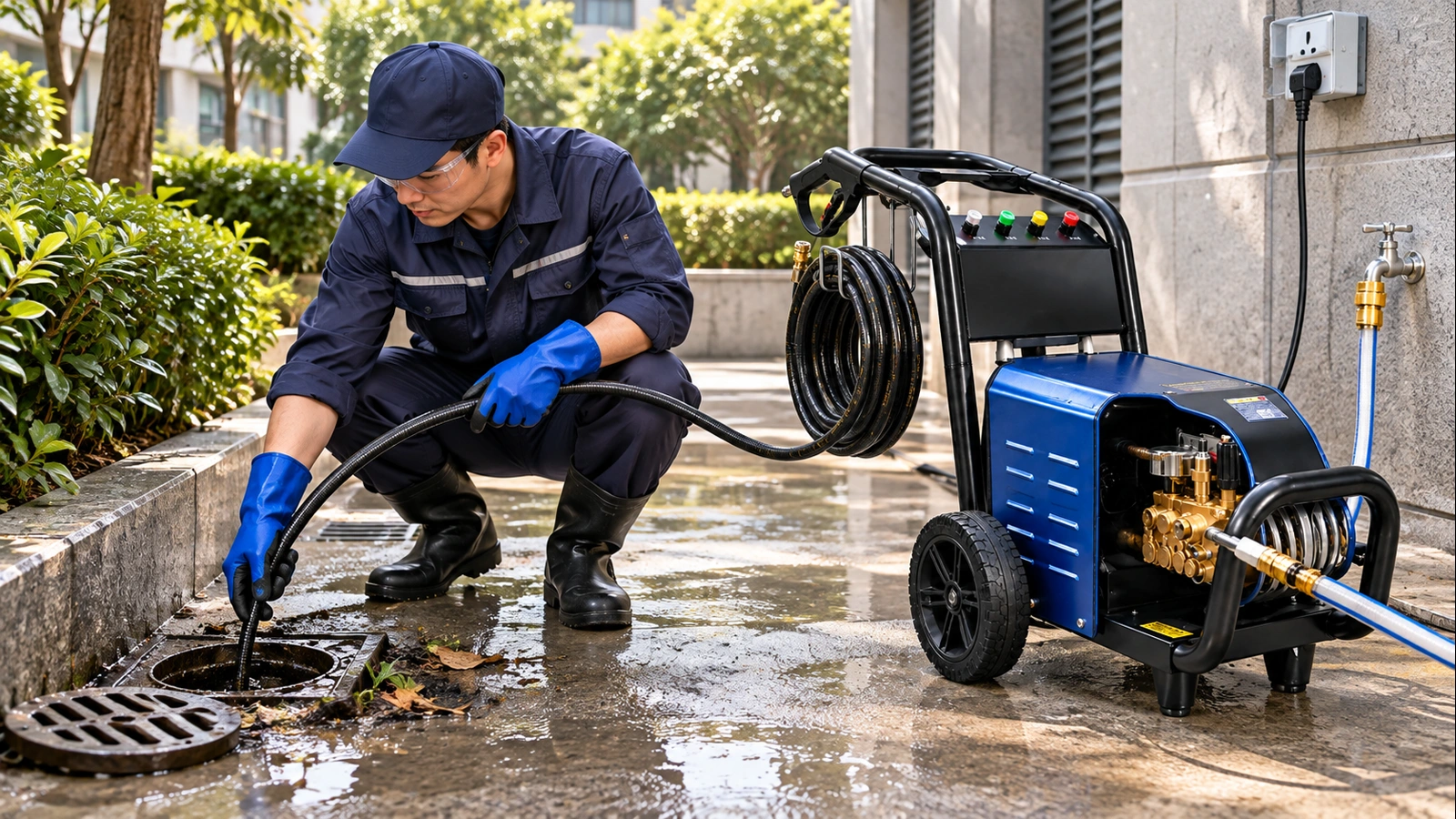
J-1020D pipe jetter pressure 100 bar (10 MPa)、flow 20 L/min、high-pressure hose 30 meters, suitable for property complexes, catering kitchens, building drainage and maintenance of small diameter blockages.
Read article
Do not select pressure-washing equipment in Zhuhai by price alone. Confirm voltage, pressure, flow, water supply and protection before comparing 220 V, 380 V, petrol and high-flow options.
Read article