

J-W70
For frequent fixed-route scrubbing in shopping centres, offices, hospitals, hotels and regular public areas.
- Autonomous mapping
- Route planning
- Active obstacle avoidance
- Scrubbing and water recovery

Assess autonomous equipment on stable frequent routes, with attention to access, ramps, lifts, doors, networks, water services and staffing.
Present confirmed functions only; do not promote unverified navigation, networking, integration or waste-handling functions.
For frequent fixed-route scrubbing in shopping centres, offices, hospitals, hotels and regular public areas.

For three-in-one autonomous hard-floor cleaning in offices, hospitals, shopping centres, hotels and schools.
Cards show models, roles and confirmed capabilities without placeholders for unknown functions.
An autonomous scrubber-dryer for hotel lobbies, offices, shopping-centre passages, hospitals, schools, transport hubs, exhibition halls and defined factory aisles. Mapping, route planning and active obstacle avoidance support repetitive floor tasks, subject to deployment checks.
Scrubbing 510 mm / Squeegee 810 mm / Clean tank 70 L / Up to 2570 m²/h / Approximate scrub runtime 3 hView details
Combines scrubbing, vacuuming and dust mopping for indoor commercial spaces such as offices, hospitals, shopping centres, hotels, schools, restaurants, gyms and transport buildings, subject to site conditions.
Cleaning width 440 mm / Output 500–800 m²/h / Maximum suction 20 kPa / Clean/recovery tanks 10/10 L / Runtime 5–12 hView details
Combined sweeping, scrubbing, recovery and pushing for indoor floors in malls, hospitals, hotels, offices, schools, food service and transport facilities.
Scrubbing 400 mm / Sweeping 500 mm / Mopping 600 mm / Theoretical 700–1000 m²/h / Suction 17000 PaView details
For factories, logistics warehouses, underground parking, transport hubs and large commercial areas, moving from fixed-route sweeping toward waste-distribution-based intelligent rounds.
Sweep width 700 mm / Hopper 35 L / Standard mode up to 1800 m²/h / AI patrol up to 6000 m²/h / Runtime 4–8 hView details
An autonomous sweeper for defined industrial-estate, property, logistics, commercial-perimeter and garage routes, with mapping, obstacle avoidance, return charging and task management, subject to deployment checks.
Sweep width 1300 mm / Theoretical up to 6500 m²/h / Hopper 130 L / Approximate runtime 4–6 h / Return chargingView detailsFor fixed-route cleaning of regular hard floors; assess mapping, obstacle avoidance, charging, water arrangements and human takeover.
For fixed-route sweeping on estate roads, public areas, factories and outdoor or partly sheltered areas; verify road boundaries, waste and operational safety.
For commercial spaces requiring multiple tasks. Public descriptions cover confirmed four-in-one cleaning, navigation, charging and digital task management only.
Repetitive regular tasks suit assessment for automation; edges, unexpected stains, obstacles and exceptions may still need staff.
| Capability | J-W70 | Allybot-C2 | CC1 | J-S130 | J-MT1 |
|---|---|---|---|---|---|
| Automatic navigation | Displayed | Displayed | Displayed | Displayed | Presented according to existing documentation |
| Active obstacle avoidance | Displayed | Displayed | Presented according to existing documentation | Displayed | Presented according to existing documentation |
| Automatic return for charging | Displayed | Displayed | Displayed | Project assessment required | Displayed |
| Mapping / Map creation | Displayed | Presented according to existing documentation | Project assessment required | Project assessment required | Project assessment required |
| Connectivity and remote management | Presented according to existing documentation | Presented according to existing documentation | Project assessment required | Project assessment required | Project assessment required |
| Lift / access-control integration | Project assessment required | Project assessment required | Project assessment required | Project assessment required | Project assessment required |
Check narrowest aisles, turning space, thresholds and fixed obstacles before confirming route access.
Busy pedestrian or mixed-traffic areas require work windows, yielding rules and manual takeover procedures.
Surface levelness, ramps and carpet/hard-floor transitions require site testing for reliable operation.
Plan charging points, power, docking and maintenance space in advance.
Without compatible automatic water/waste systems, filling, draining and emptying still require staff.
Cross-floor or access-control integration needs separate assessment of lift controls, access systems and interfaces.
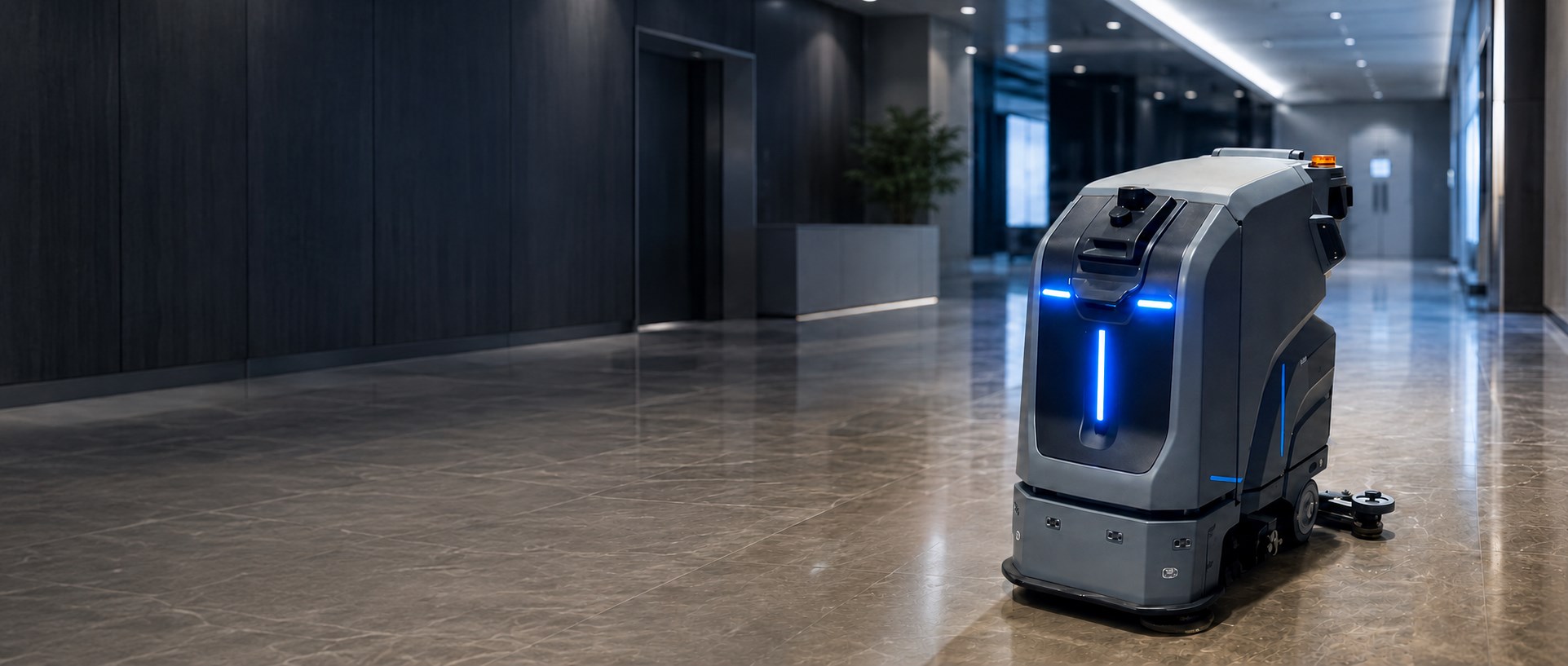
More suitable where routes are stable, tasks can be scheduled at night or off-peak, and charging and human takeover are available.
Compare: J-W70 / Allybot-C2
Confirm crowd density, quiet-operation requirements, changing obstacles and manual replenishment procedures.
Compare: J-W70 / Allybot-C2 / CC1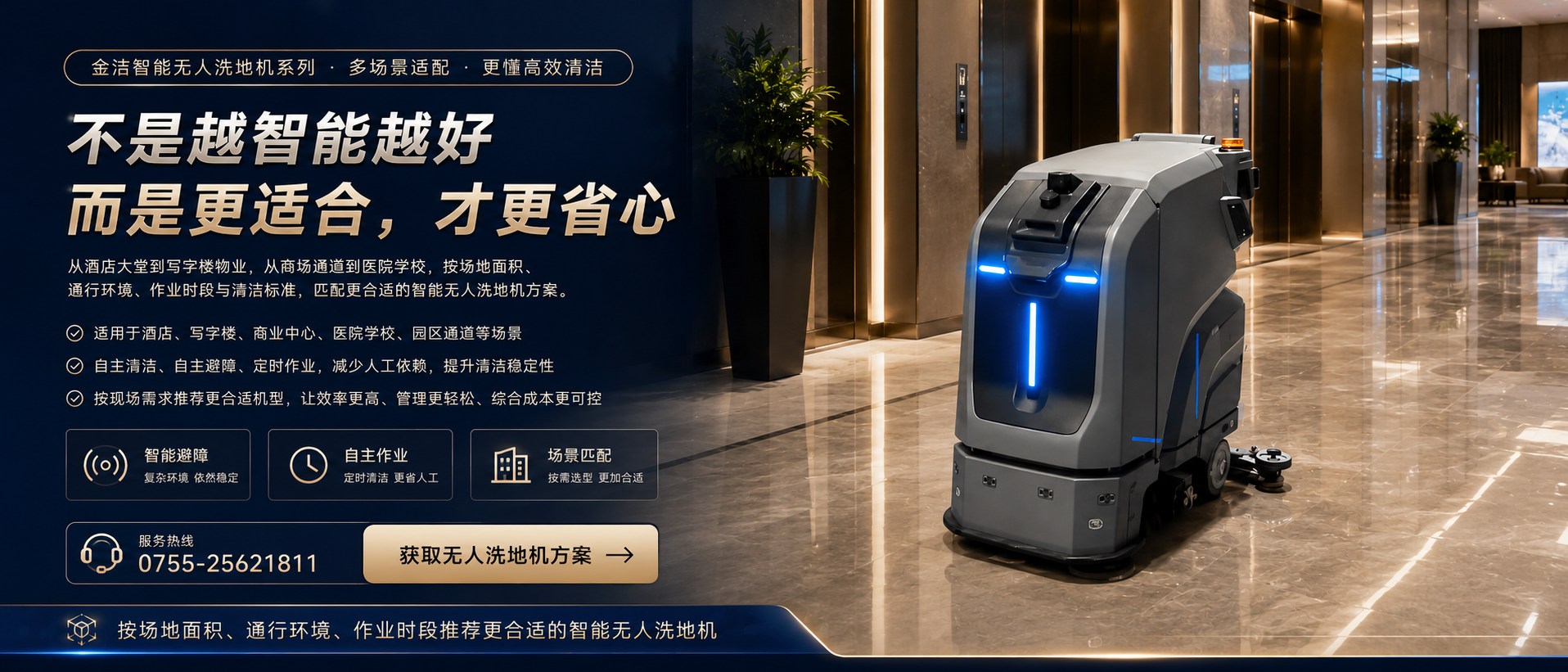
Check route stability, gradients, mixed traffic, water services and night windows.
Compare: J-W70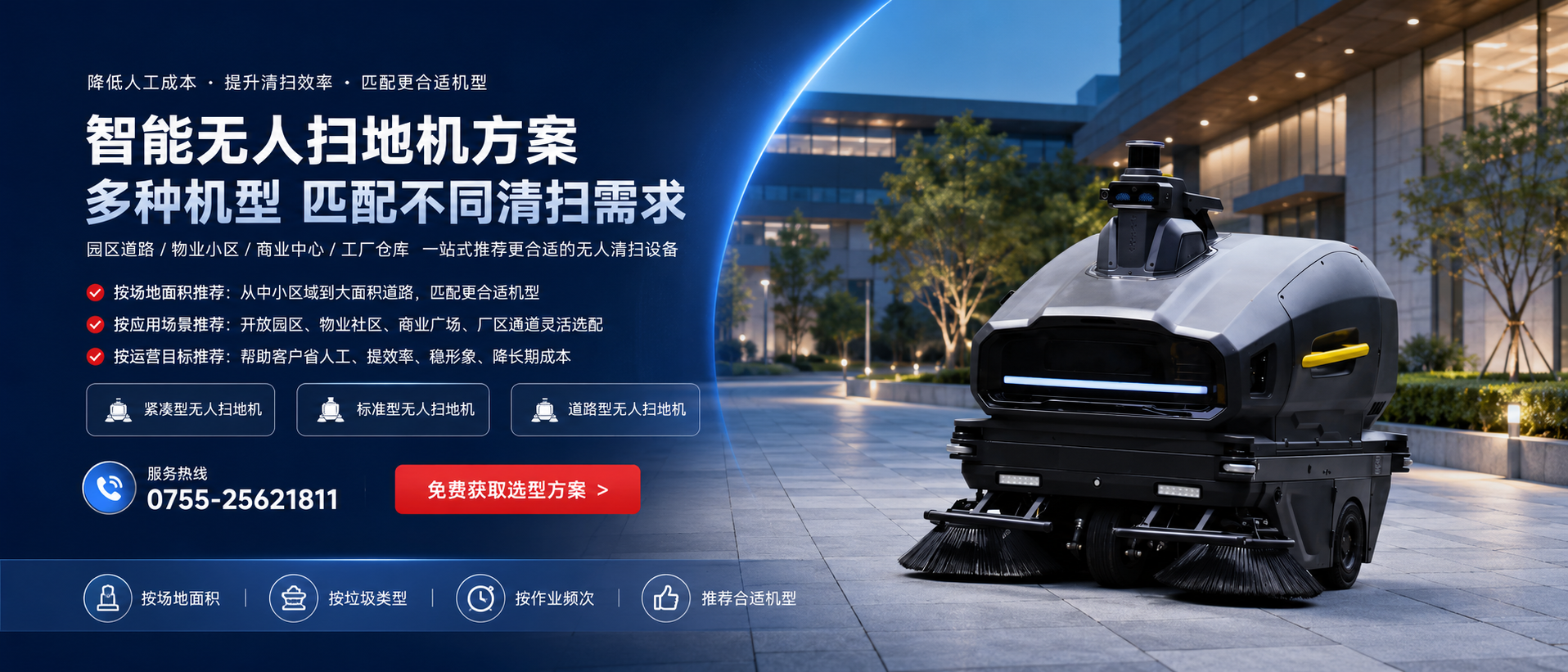
Verify road boundaries, waste type, mixed pedestrian/vehicle traffic and weather limits.
Compare: J-S130 / J-MT1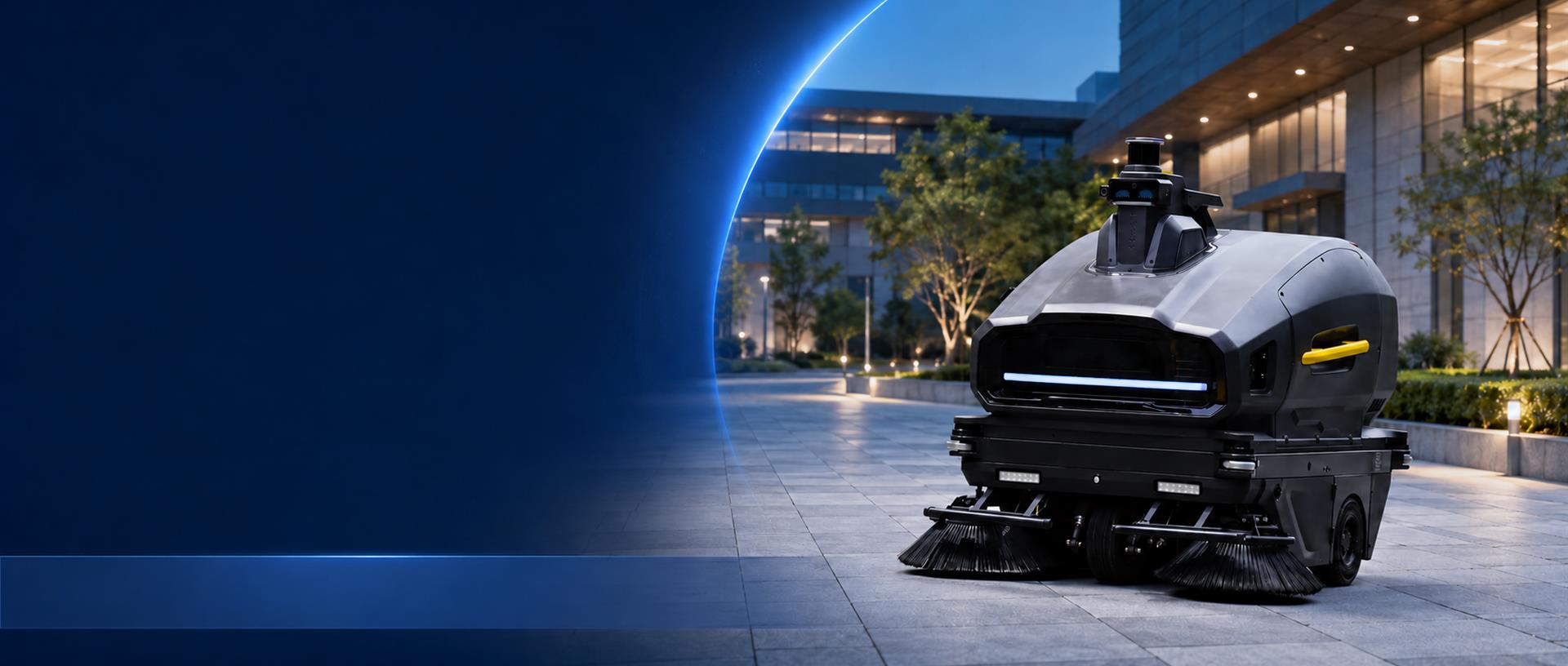
Fixed routes, repeated shifts and defined waste suit assessment for autonomous rounds, with exception procedures still required.
Compare: J-S130 / J-MT1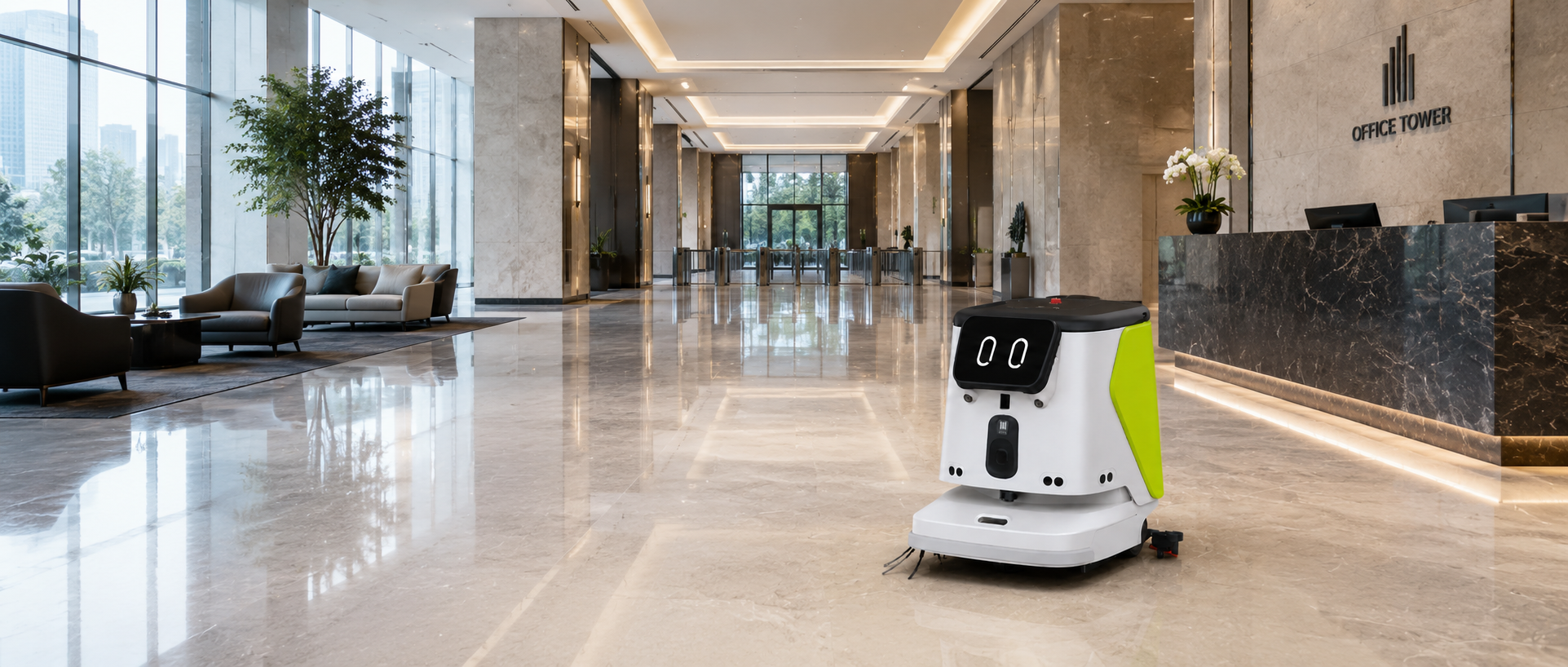
For indoor public areas with multiple tasks and regular routes; complex corners still require manual cleaning.
Compare: CC1Assess scrubbing, mapping/navigation, avoidance and return charging; multi-floor, access-control and water services depend on project conditions.
Documented directions include indoor robotic scrubbing/vacuuming/mopping, return charging and multisensor navigation. Lift integration requires suitable controls and site integration assessment.
Documented four-in-one cleaning, navigation, return charging and digital task management are shown; unspecified navigation type, waste handling and runtime are not invented.
Documented autonomous rounds, active avoidance, task logs and road-sweeping direction are shown; detailed navigation, networking and outdoor limits require evidence.
Documented waste recognition, fixed routes, hopper direction and return charging are shown; confirm other specifications against project records.
Filling, draining, emptying, consumables, exceptions, relocation and temporary obstacles may still require staff.
Prioritize the first option when:Consider autonomous scrubbers first for hard-floor scrubbing, water recovery and repeated washing tasks.
Compare the alternative direction:For dust, leaves, paper and routine road rounds, assess autonomous sweeping equipment.
Prioritize the first option when:J-W70 focuses on deployment for repeated scrubbing on regular hard floors.
Compare the alternative direction:AllyBot-C2 focuses on indoor commercial robotic vacuuming, scrubbing and dust mopping.
Prioritize the first option when:J-S130 targets assessed autonomous sweeping on park, factory and property roads.
Compare the alternative direction:Assess J-MT1 deployment against route following, waste recognition and return-to-charge requirements.
Prioritize the first option when:Assess autonomous equipment for fixed routes, repetitive frequent tasks and staffing constraints.
Compare the alternative direction:Conventional equipment or staff may be more flexible for temporary tasks, changing conditions, judgement-intensive work and unexpected stains.
Observe indoor floor cleaning and movement. Check access, pedestrian traffic, water and wastewater arrangements and deployment conditions before selection.
Describe target, conditions and frequency to confirm the approach with the actual model.
Autonomous equipment suits repetitive tasks, but filling, draining, emptying, consumables, exceptions and temporary obstacles may still require staff.
Many autonomous machines require cleaning routes to be mapped or confirmed before operation. The method depends on the model and site; assess the location first.
Obstacle avoidance can reduce collision risk, but obstacle height, reflective materials and mixed traffic affect performance. Site rules and human takeover remain necessary.
Show documented return-charging functions only, with charging points, power, docking space and routes planned on site.
Multi-floor operation depends on equipment capabilities, lift-control interfaces and project integration. Lift integration is not automatically standard equipment.
Assess local autonomous operation, remote monitoring and task dispatch separately. Wi-Fi availability alone does not define the full capability.
Assess autonomous scrubbing where routes and working hours are stable, ramps and mixed traffic are controlled, and water, wastewater and charging locations are defined.
Autonomous deployment merits assessment on regular frequent routes; conventional scrubbers may be more flexible for temporary, changing or judgement-intensive tasks.
Provide a plan, access widths, obstacles, work windows, water services, docking and staff arrangements to assess autonomous or conventional equipment.
Assess autonomous scrubbers/sweepers for stable frequent routes, checking widths, obstacles, water services, waste and manual takeover.
Repeated routes in retail, offices, hospitals, exhibition halls, parks and parking areas can support defined tasks and acceptance criteria.
Automatic charging is only a starting point. Water filling, wastewater discharge, waste removal, exception handling and parking locations determine whether autonomous equipment can continue operating.
Test mapping, avoidance and timing on one defined route before extending to more floors, zones or shifts.
 Office and Commercial Cleaning Plan
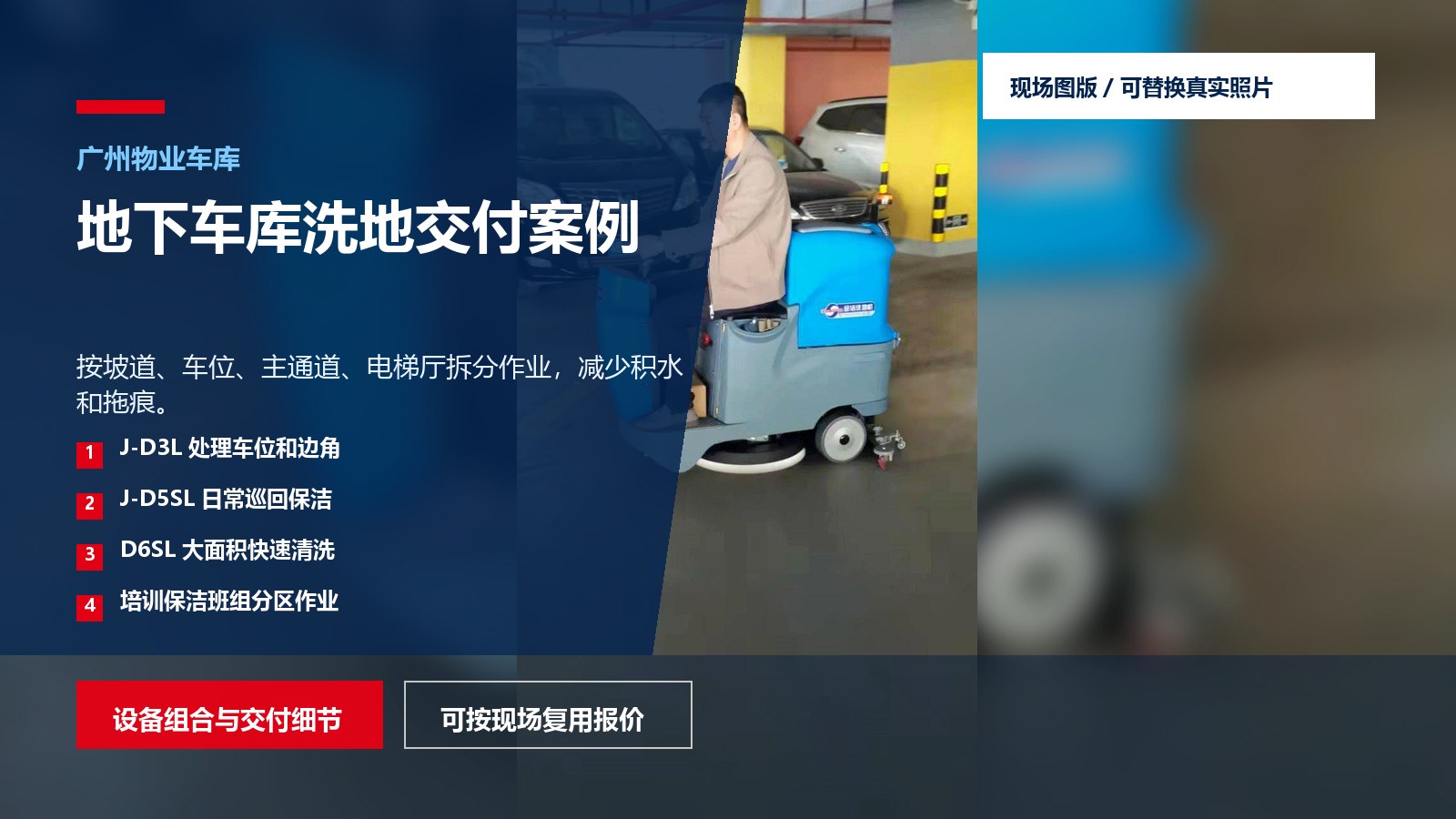 Property Underground Garage Cleaning Plan