

Municipal cleaning equipment

Selecting municipal equipment
Find products by model, equipment type or conditions.
Municipal-equipment product catalogue
8 models found

JC-80H
Garden chipping
Landscape-pruning point;Residential green-waste collection point;Nursery branch-sorting area

JQ-50
Waste removal
Residential collection point;Estate waste points;Commercial-complex collection point

JC-500JY
Wet road sweeping
Loose dust on estate roads;Scenic-site paths and plaza edges;Property public roads

JQ-260
Waste removal
Estate waste-transport routes;Residential centralized collection point;Estate green-waste collection point


JC-1800
Road washing
Large-estate main roads;Municipal side roads and scenic-site plazas;Factory outdoor and loading areas
No matching products. Reset conditions or contact us.
Selected-model comparison
Select up to three models to compare tasks and configurations.
No equipment selected.
Road washing, water sweeping, bin transfer, leaf collection and chipping differ. Assess width, waste, frequency, loads and access, not vehicle size alone.
Quick selection
Choose the equipment direction by task first.
01High-pressure road washingFor washing estate roads, property exteriors and stubborn surface stains.
02Water sweeping / Washing combinationFor road dust, sediment and routine wet sweeping.
03Bin collection and transferFor moving waste bins between collection points on properties, estates and public sites.
04Leaf collectionFor planted areas, estate roads and seasonal concentrations of fallen leaves.
05Garden branch processingFor shredding and reducing the volume of pruned branches.
06Multi-task municipal cleaningFor customers requiring combinations of tasks or project-specific configurations.
Current municipal-equipment candidates
View all equipmentSelect washing, water sweeping and waste transfer by task.
Main candidates are presented for established tasks; other model links remain without invented specifications.
All products
Municipal-equipment catalogue
Cards show images, models, task roles and documented key specifications; view details for complete configuration.
Select equipment by task
Which specifications matter for street washing, waste transfer and grounds maintenance?
Washing vehicles, waste carriers, leaf collectors and chippers have different roles; show documented capability for each.
Assess water tank, pressure/flow, routes and soil; vehicle size alone does not determine results.
For routine wet cleaning of road dust and sediment; a different task from dry sweeping.
Assess bin positions, loads, access and transfer routes; present only documented capabilities.
For leaves in planted areas, parks and factory roads; no unverified airflow or efficiency promises.
For shredding and reducing the volume of garden branches. Unconfirmed branch diameter, power, blade and output figures are not published.
Combine washing, transfer, leaf collection and garden maintenance equipment without presenting one machine as universal.
Choosing three-wheel, four-wheel or specialist equipment
Assess routes, access and waste before the vehicle type.
| Equipment type | Relevant strengths | Selection reminder |
|---|---|---|
| Three-wheel municipal equipment | Manoeuvrable in passages and suitable for short-distance property and estate work. | Lower energy use or price is not guaranteed; compare tanks, loads, routes and conditions. |
| Four-wheel municipal equipment | Stable driving for longer routes, large estates, factory exteriors and municipal roads. | Four wheels do not automatically make equipment better for every task. |
| Specialist task equipment | Leaf collectors and chippers address specific waste and green-maintenance tasks. | Do not compare it with washing vehicles using the same specification framework. |
Select equipment by application
Property, park, municipal and garden tasks differ.
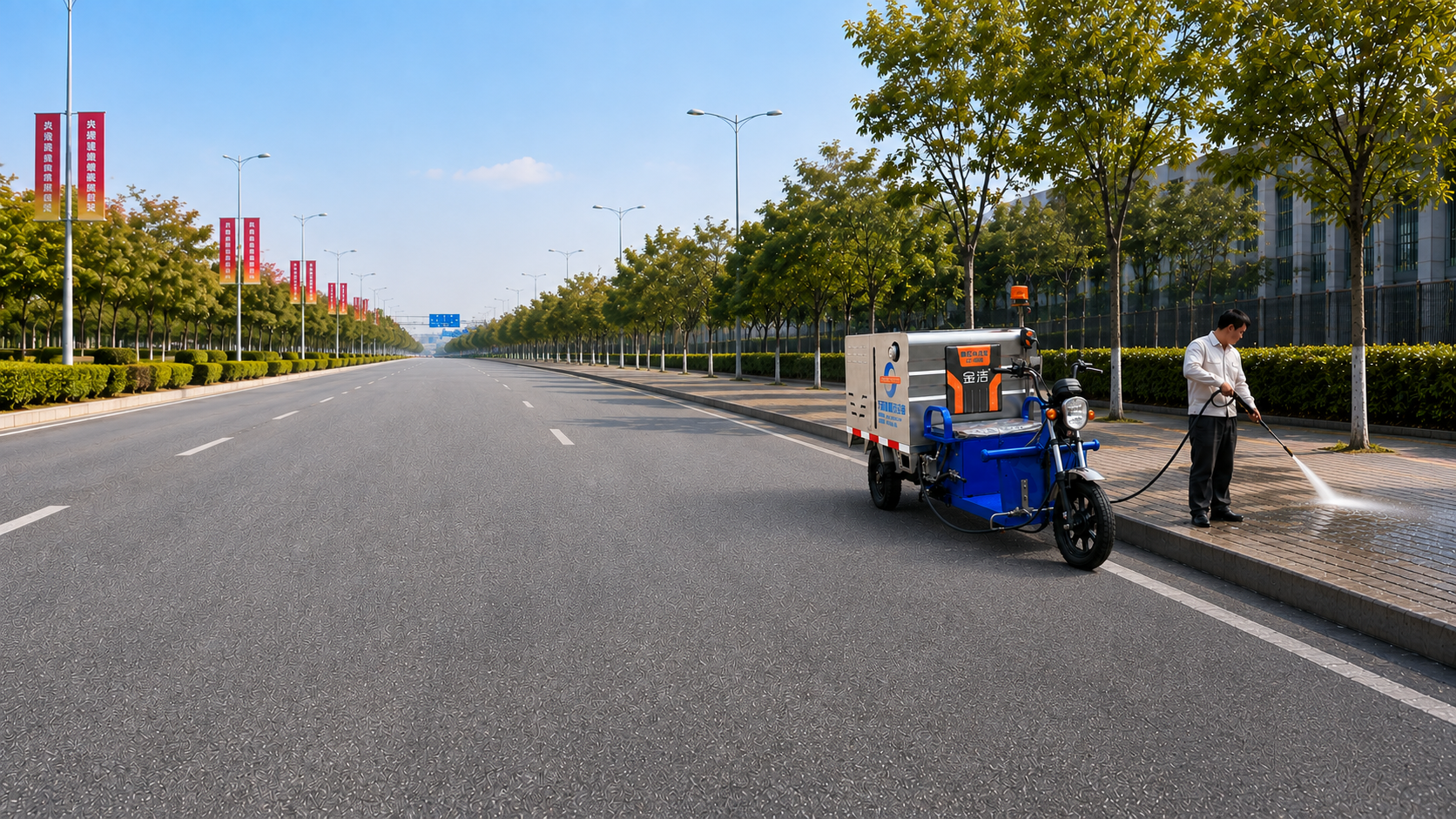
Three-wheel or four-wheel equipment for residential-road washing?
For short distances, many passages and scattered cleaning points, compare three-wheel washing vehicles first; consider four-wheel platforms for longer routes.
Compare: JC-500S / JC-1800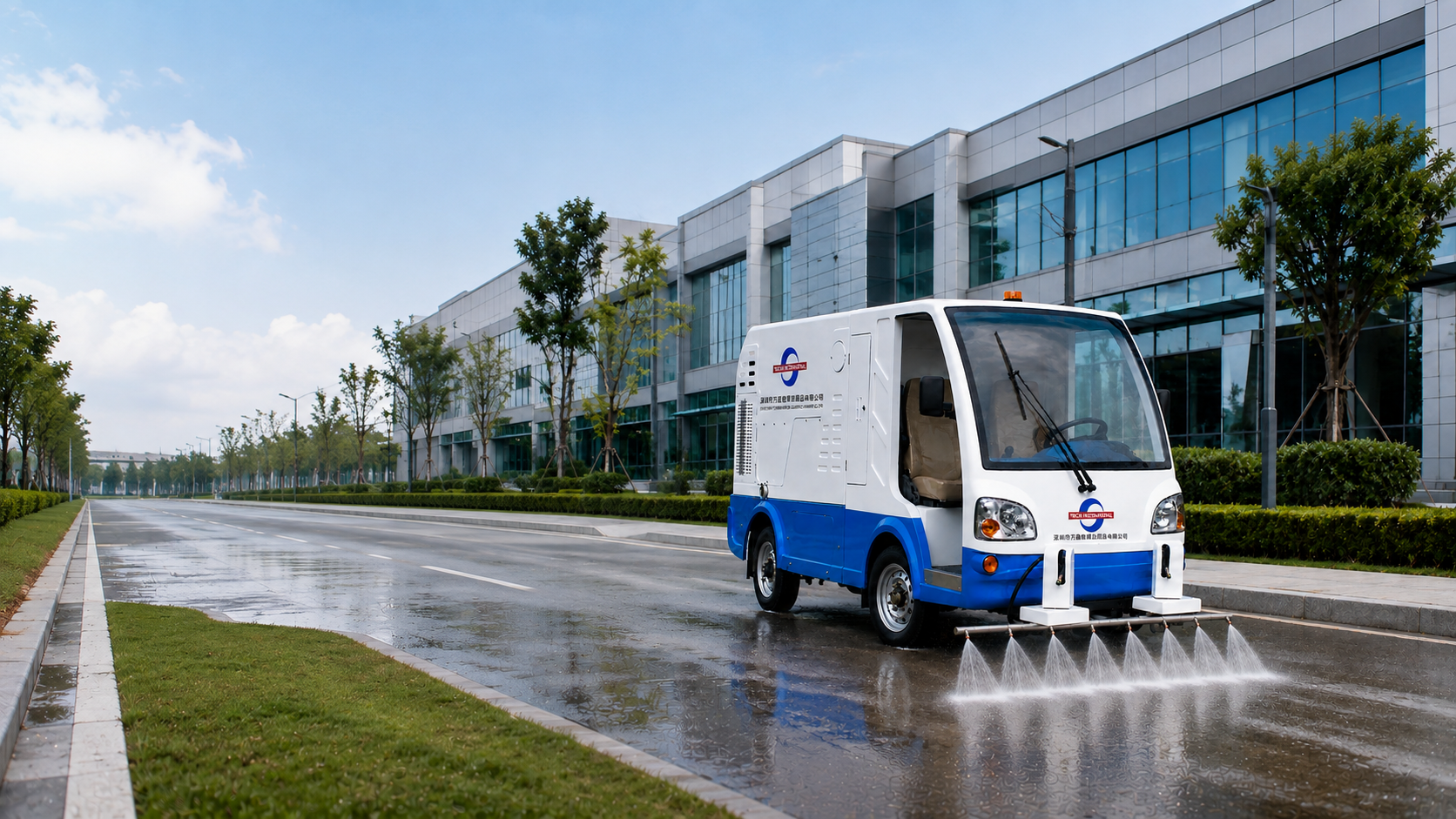
Which equipment should be assessed for long factory-road washing rounds?
Larger areas and longer routes require platform, tank, water-supply and sustained-work planning.
Compare: JC-1800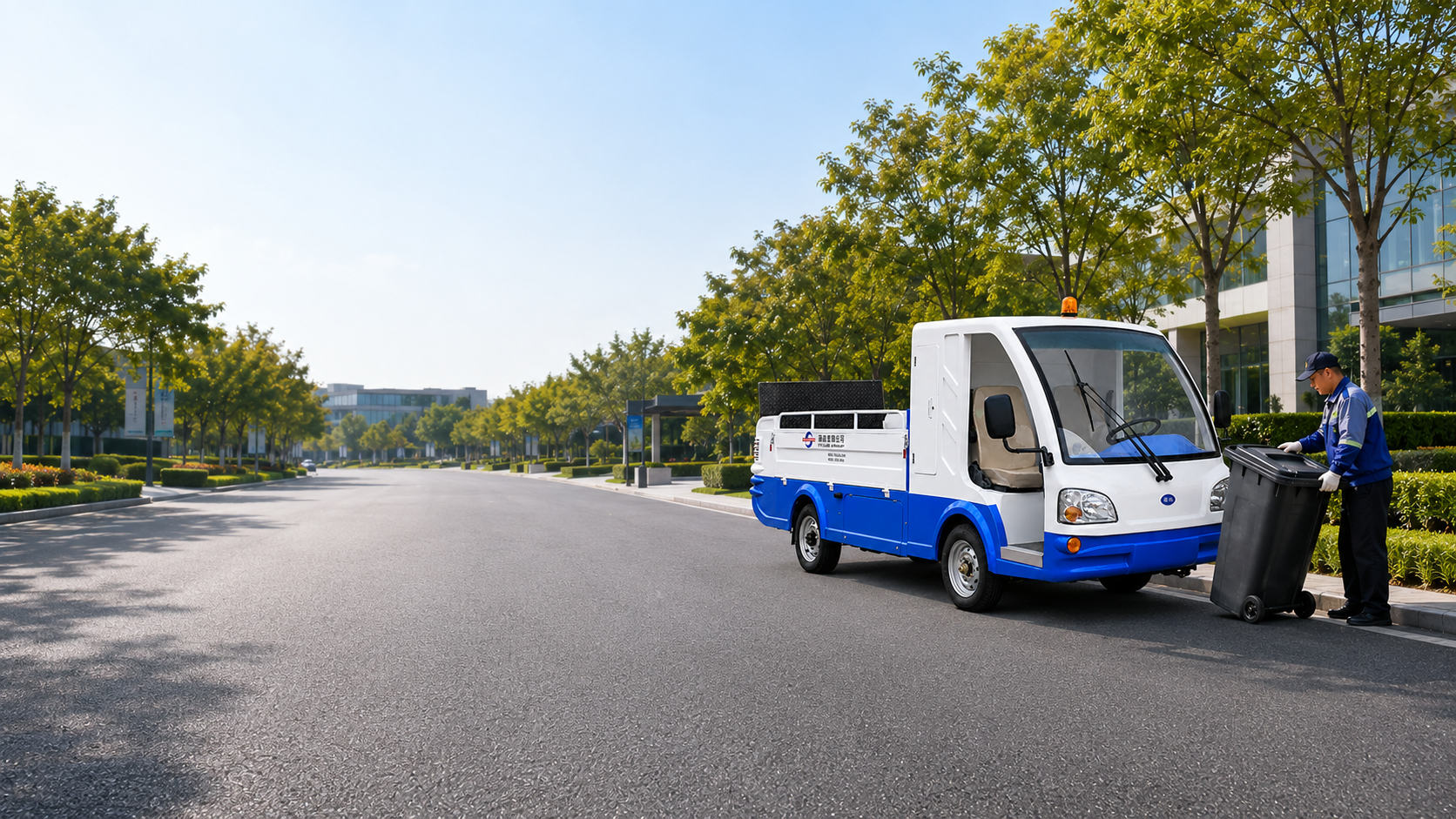
How should collection be organized across many bin locations?
Multi-bin work needs bin positions, routes, collection points and access assessment, not vehicle appearance alone.
Compare: JQ-8 / JQ-50 / JQ-260Should heavy leaf loads be handled by a sweeper or a dedicated leaf vacuum?
Consider sweepers for general roads and leaf vacuums for concentrated leaves and planted areas.
Compare: JC-268
How should road washing and ordinary sweeping work together?
Sweepers focus on dry collection; washing vehicles focus on mud, wet dust suppression and surface maintenance.
Compare: JC-500S / JC-500JY / SweepersHow should large pruning loads be reduced on site?
Branch processing is a specialist garden task requiring material, space and power assessment.
Compare: JC-80HDividing tasks between municipal equipment and sweepers
Distinguish dry sweeping, washing, transfer and garden processing.
Road sweepers
Focuses on collecting dry dust, grit, leaves and road waste.
Municipal washing / Water-sweeping equipment
Focuses on road washing, mud, water sweeping and wet suppression.
Transfer and garden equipment
Waste carriers serve multiple bin points; garden equipment handles leaves, branches and green waste.
Model comparison
Compare municipal cleaning equipment by task
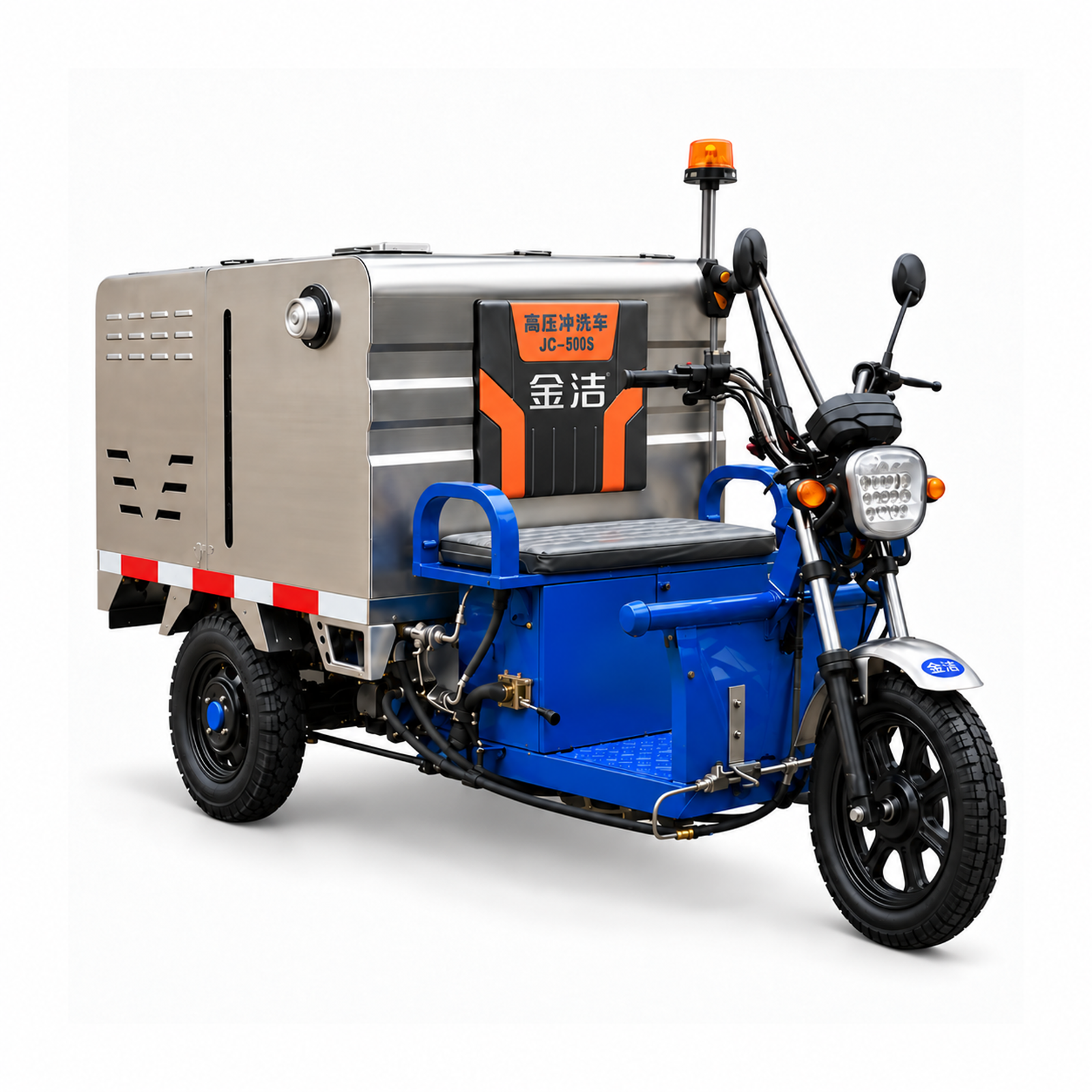
JC-500S vs JC-500JY
Prioritize the first option when:Consider JC-500S for assessed outdoor floor washing, local deposits and property exteriors.
Compare the alternative model:Compare JC-500JY where road dust, sediment and routine wet sweeping predominate.
JC-500S vs JC-1800
Prioritize the first option when:Compare three-wheel JC-500S for dispersed short routes with many access points.
Compare the alternative model:Compare four-wheel JC-1800 for larger areas, longer routes and platform-stability needs.
JC-500JY vs Road sweepers
Prioritize the first option when:Compare JC-500JY for wet sweeping, washing and dust suppression.
Compare the alternative model:Compare sweepers for collecting dry debris, grit, leaves and road waste.
JQ-8 vs JQ-50 / JQ-260
Prioritize the first option when:Compare JQ-8 for multiple bin points and centralized transfer.
Compare the alternative model:Compare JQ-50 or JQ-260 for other waste-transfer requirements, using documented specifications only.
JC-268 vs Road sweepers
Prioritize the first option when:Compare JC-268 for concentrated leaves, planted areas and autumn/winter leaf collection.
Compare the alternative model:Consider sweepers for general road cleaning, dust, gravel and mixed litter.
JC-80H vs JC-268
Prioritize the first option when:Consider JC-80H for reducing pruned branches and garden waste.
Compare the alternative model:Consider JC-268 for light leaves and planted-area collection.
Selection notes
Choose equipment for the material and its transfer route
JC-80H branch chipper
Presented for garden branch chipping and volume reduction. Confirm maximum diameter, power, blades, output and weight against project documentation.
JC-268 leaf collector
For grounds care and leaf collection, compare the quantity of leaves, route and collection arrangements.
JQ-50 / JQ-260
For waste transfer, check payload, bin positions, body type and operating range against the collection route.
Related knowledge / videos / references
View more contentAssess equipment by road, waste type and task
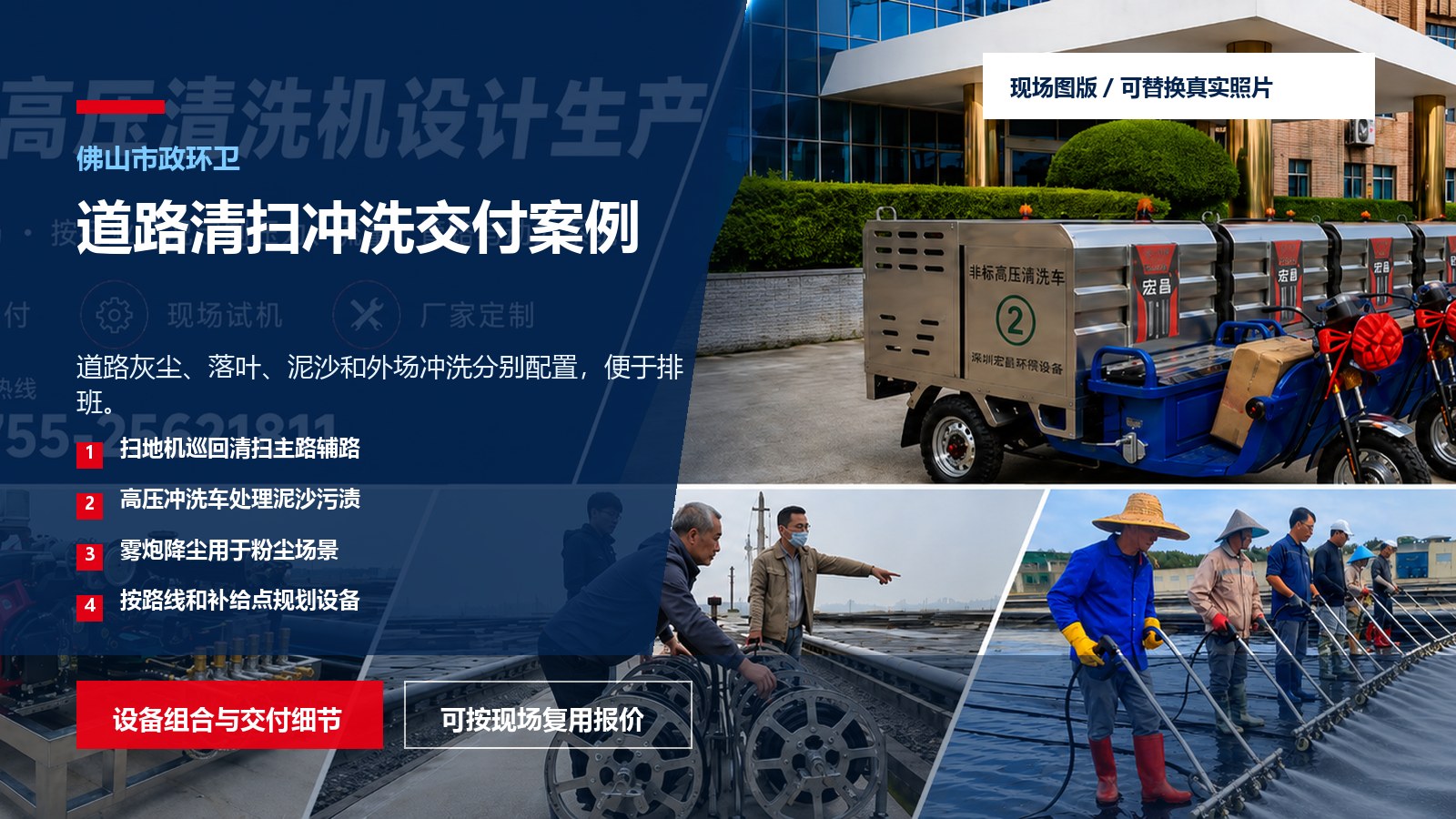 Municipal Road Sweeping and Dust-Control PlanOutdoor municipal washing equipment and operator; application illustrationFor road flushing, water sweeping and outdoor rounds, assess pressure, flow, tanks, battery runtime, working width and refill points when comparing three-wheel pressure-washing/water-sweeping and four-wheel pressure-washing vehicles.Leaf collection and branch-chipping equipment outdoors; application illustrationLandscaping, property grounds and visitor-area sanitation can be planned around three tasks: leaf collection, branch chipping and bin transfer.
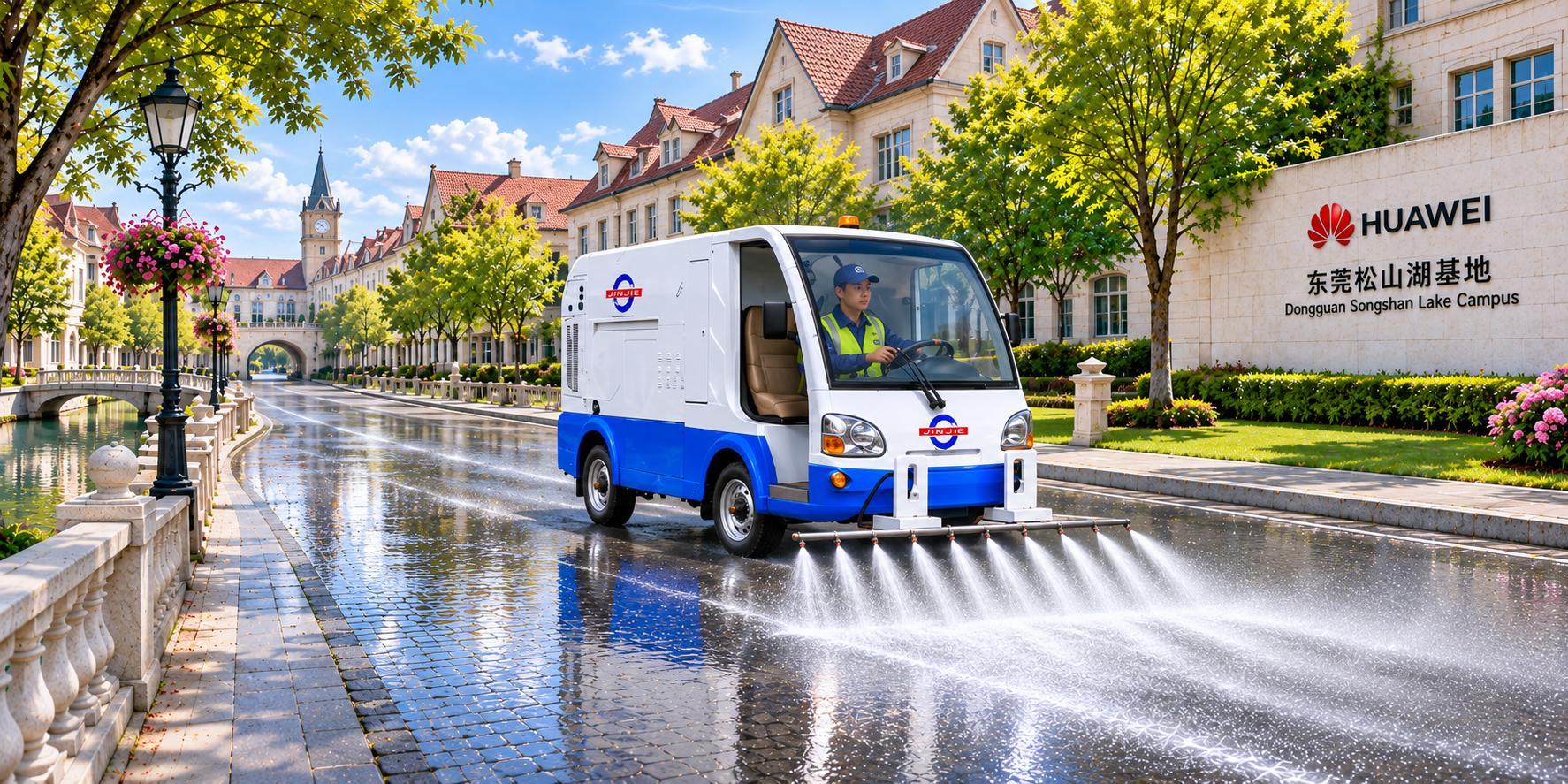 Campus road washing with the JC-1800 at Songshan LakeSodexo (Hong Kong) Limited purchased a Jinjie JC-1800 four-wheel road washer for Huawei's Dongguan Songshan Lake campus.Assessing sweeper, flushing-vehicle and pressure-washer needs in municipal service contractsAssess road length, frequency, debris types, water points and contract requirements before choosing a municipal equipment combination.
Equipment operation video
JC-500S three-wheel washing operation reference
Observe movement and road/public-facility washing. Select refill routes and working attachments for actual conditions and delivered configuration.
JC-500S selection enquiry
Describe target, conditions and frequency to confirm the approach with the actual model.
— FAQ
Questions before buying sanitation equipment
Washing vehicle or sweeper: what differs?
Sweepers collect dust, grit, leaves and road waste; washing vehicles address water washing, muddy deposits and wet suppression.
How should I choose three-wheel or four-wheel municipal equipment?
Assess three-wheel platforms for short, varied property routes, and four-wheel platforms for longer routes, larger parks, factory exteriors and municipal roads.
Which municipal equipment suits residential roads?
Compare JC-500S for floor washing and local maintenance, or JQ-8/JQ-50/JQ-260 for bin-transfer tasks.
How do water sweeping and pressure washing differ?
Pressure washing targets local stains and surface flushing; wet road sweeping targets dust, sediment and routine wet maintenance.
How can multi-bin waste transfer be organized more effectively?
Select transfer equipment by bin count, distance, collection points and access, not appearance alone.
Sweeper or leaf vacuum for leaves?
Consider sweepers for general roads and leaf vacuums for planted areas and concentrated seasonal leaves.
Which tasks should assess a branch chipper?
Primarily reduces the volume of pruned branches and garden waste; assess capability against branch condition and configuration.
Can municipal equipment be combined by project?
Configure road washing, waste transfer, leaf collection and garden work separately rather than claiming one machine covers all tasks.
Municipal-equipment selection support
Unsure about washing, waste-transfer or garden equipment? Tell us the road, waste and task.
Provide road width, waste, collection points, frequency, water and transfer distance to narrow equipment types.
Municipal-equipment industry and selection material
Municipal-equipment trends, selection and procurement information
Municipal-equipment planning approach
Plan roads, waste and shifts around the same route
Combine equipment by road class, waste source, operating radius and shifts so sweeping, washing and transfer work together rather than expecting one machine to do everything.
Road conditions determine access capability
Park branches, scenic paths, municipal and township roads differ in width, gradients, turns and stopping places; confirm the actual route.
Waste sources determine the task combination.
Leaves, gravel, general waste and sediment need different sweeping, washing and collection schedules; do not configure equipment by its name alone.
Shift planning affects long-term costs
For continuous work, consider runtime, replenishment, driving comfort, maintenance intervals and parts support within the daily sanitation process.
Municipal-equipment industry and selection entries
Municipal-equipment development
Municipal-equipment industry information, project references and selection material.
Road sweeping and waste-transfer projects
Municipal-equipment industry information, project references and selection material.
Municipal procurement information
Municipal-equipment industry information, project references and selection material.
Organizing park cleaning
Municipal-equipment industry information, project references and selection material.