

Sweeper series

Selecting sweepers
Find products by model, equipment type or conditions.
Sweeper catalogue
17 models found


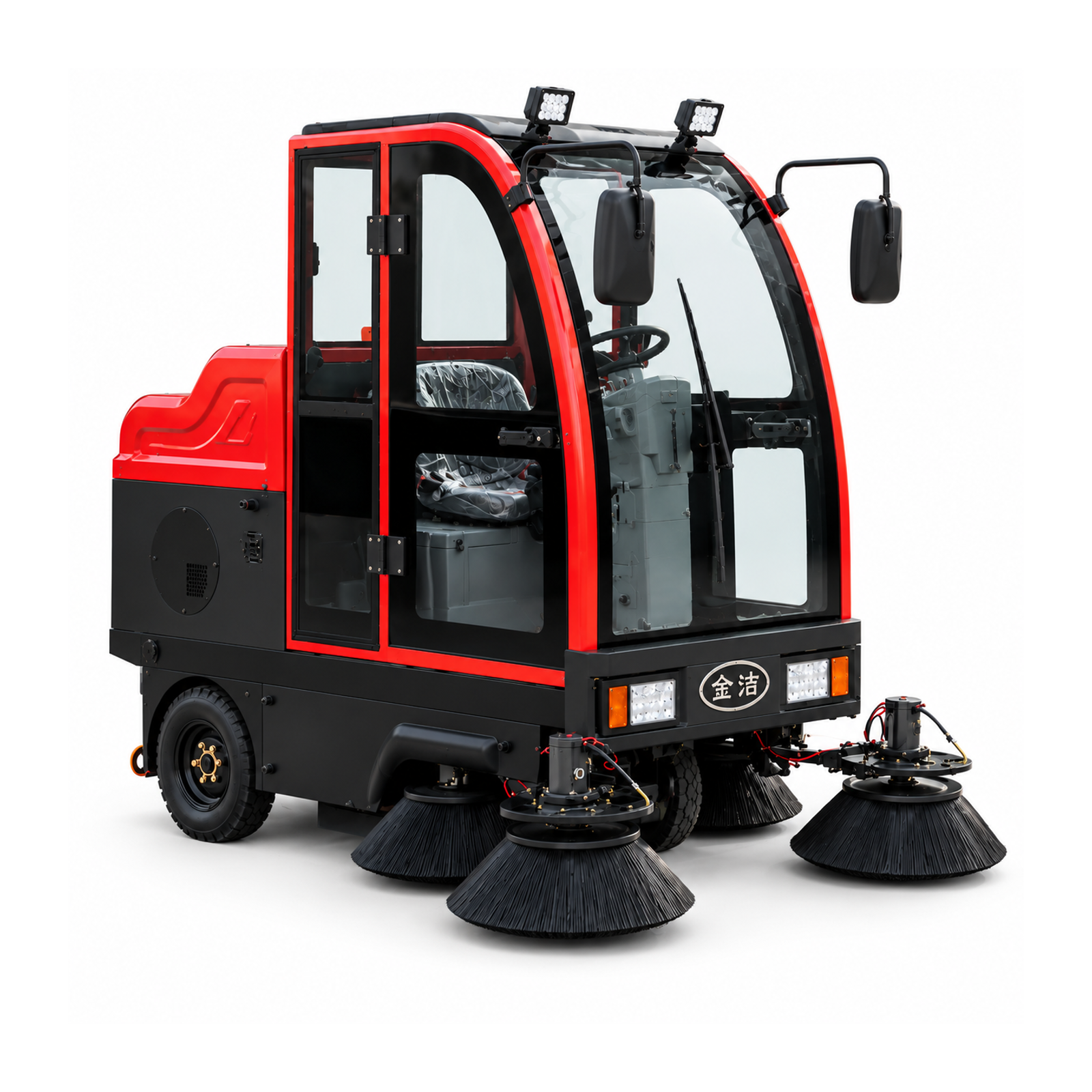
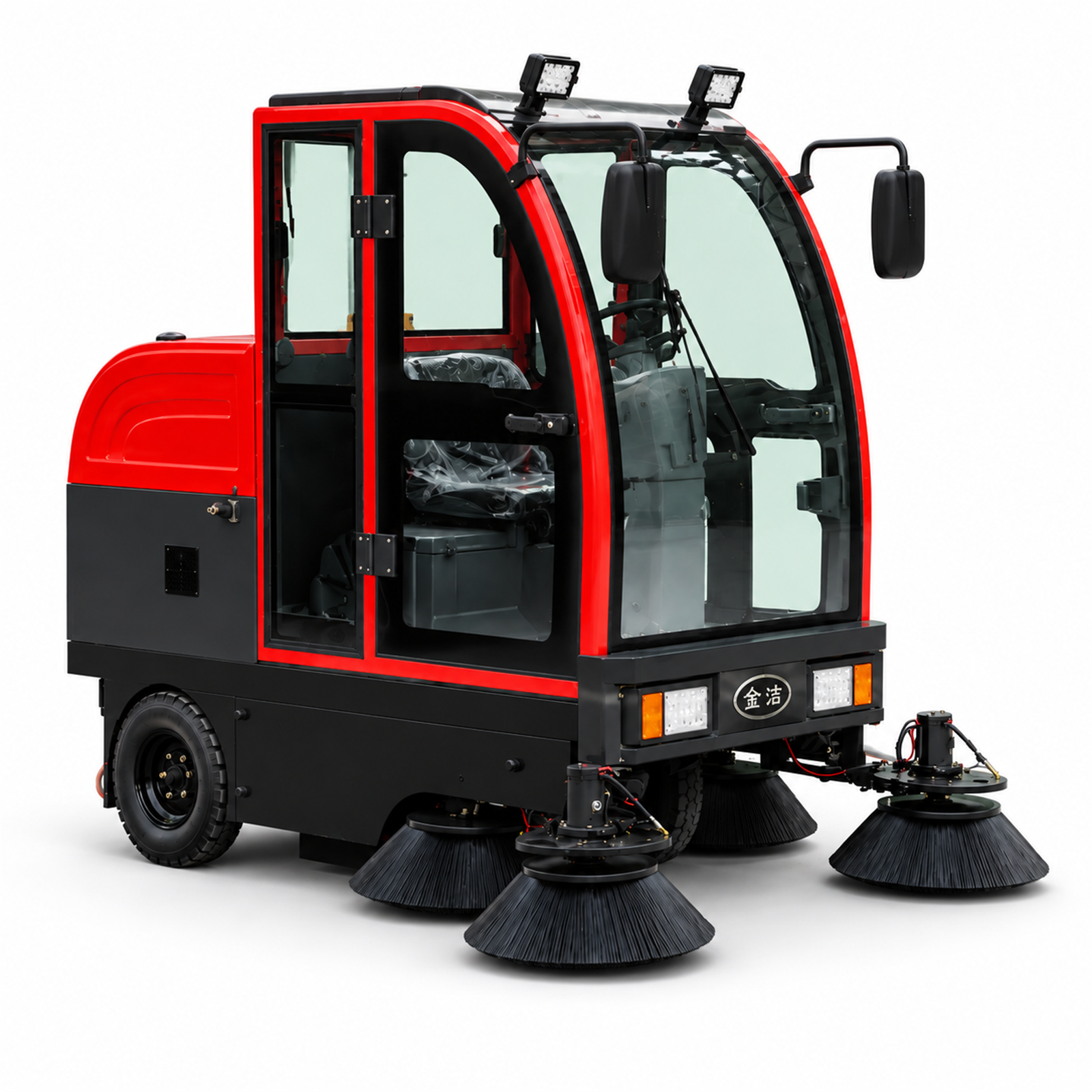
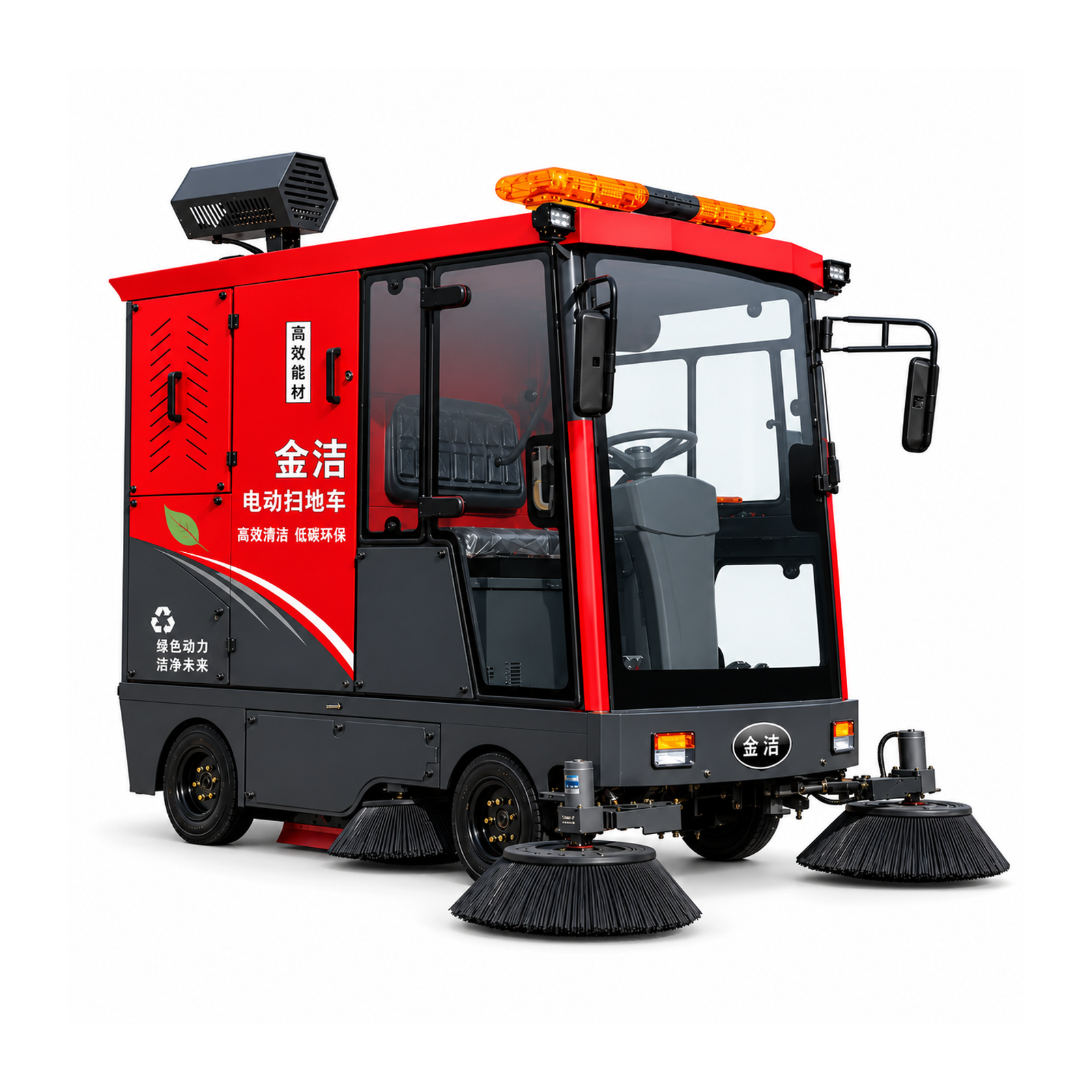
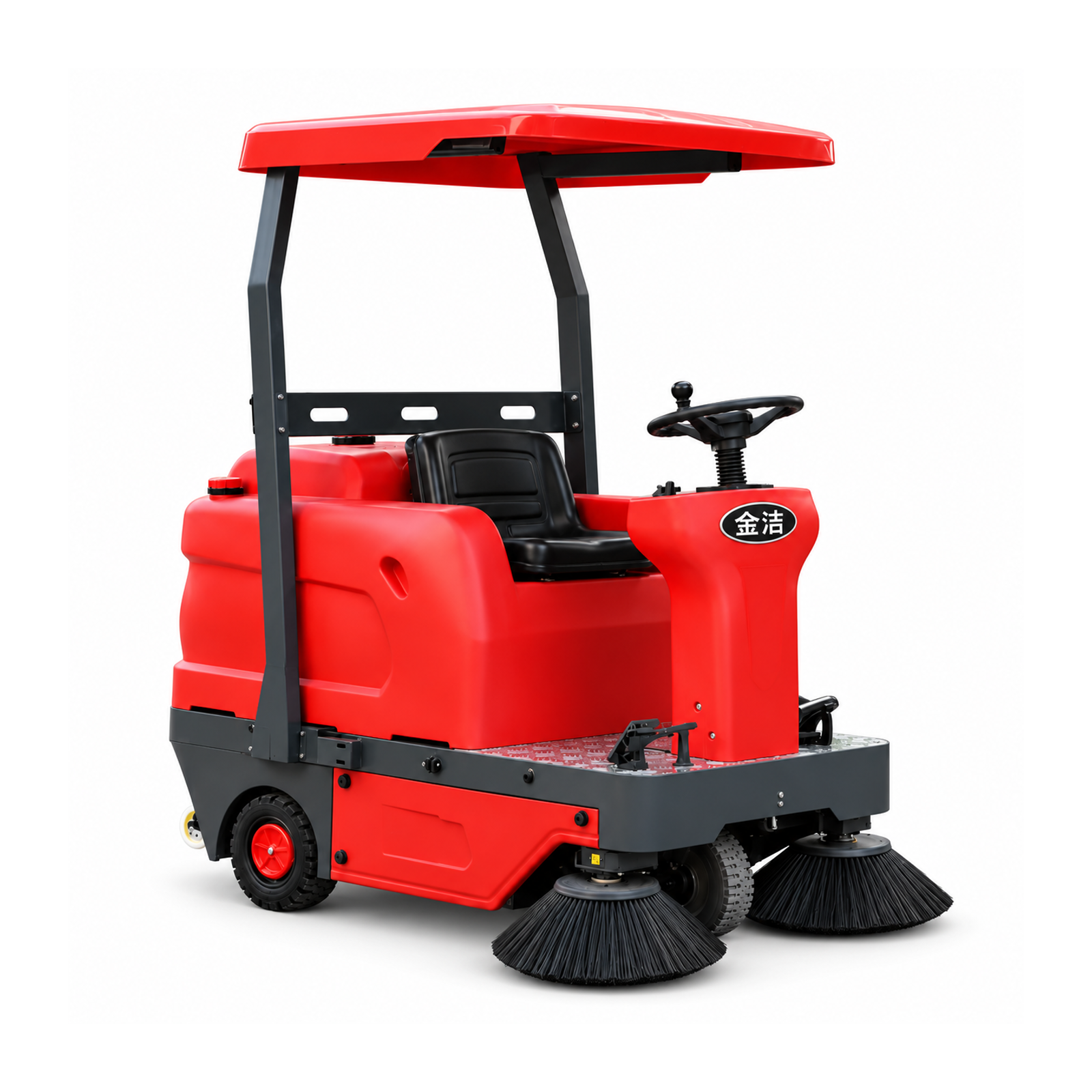
J-XS1500
Ride-on
- Sweeping width1500mm
Large property estates;Factory roads;Underground car parks / parking areas




J-XS1550
Ride-on
- Sweeping width1550mm
- Hopper capacity80L
- Water tank capacity45L
Larger estate roads;Factory yards;Property plazas

J-XS1280
Ride-on
- Sweeping width1280mm
- Hopper capacity80L
Estate side roads;Warehouse yards;Property surroundings

J-S130
Autonomous
- Sweeping width1300mm
- Hopper capacity130L
Estate / property roads;Factory / industrial-estate perimeter;Campus / public paths

No matching products. Reset conditions or contact us.
Selected-model comparison
Select up to three models to compare tasks and configurations.
No equipment selected.
For property roads, factory exteriors, logistics and larger roads, compare sweep width, hopper, water tank, drive arrangement, access and sustained duty.
Three sweeper-selection checks
Describe road-cleaning difficulties before sweeper selection.
Start with the road problem, area, waste and access conditions; you need not know sweep-width specifications first.
Is road waste left behind, or is the sweeping route too long?
Leaves, gravel and loose dust differ from adherent grease. Confirm whether dry-waste collection is the main task.
Assess road width, turns, traffic, waste volume, disposal points and dust suppression before choosing ride-on or autonomous equipment.
| Compare models | Why consider this category first? |
|---|---|
| J-XS1500 | Operator-driven sweeping: 1500 mm coverage; verify actual productivity against the route. |
| J-XS1460 | For waste collection and scrubbing together, assess both tasks and water services first. |
| J-XS1950 | For long routes and cab requirements, verify 1,900 mm coverage and machine access. |
| J-S130 | For automation on stable routes, verify traffic boundaries and human takeover arrangements first. |
How to compare alternative approaches
Dry sweeping alone may not need a sweeper-scrubber; a cab does not authorize all-weather use; autonomous selection cannot rely on theoretical productivity alone.
Which conditions need confirmation first?
Assess sticky waste, entangling material and special dust separately. J-XS2100 uses current confirmed specifications for large-road assessment, with access, water, charging and emptying checks retained.
Check the model nameplate, configuration and operating instructions
Check the model nameplate, configuration and accessories. Trial critical cleaning conditions and access on site before purchase.
Send waste close-ups, narrowest access, route length, traffic times and disposal points. We draw on over 20 years of experience and identify items requiring confirmation.
Submit conditions to compare configurationsRelated applications and selection guidance
Determine selection direction from the site problem
Leaves and adherent dirt on park roads: sweeper or sweeper-scrubber?
For collectable dry waste, compare routes and emptying first. For brushing as well, check water and wastewater conditions for a sweeper-scrubber. Sweeping does not replace oil-film scrubbing.
Can a park sweeping plan be copied directly onto municipal roads?
No. Reassess mixed traffic, road boundaries, work windows and waste. Autonomous deployment also needs suitable setup and exception-handling arrangements.
Quick selection
Choose a capability range by the site task.
01Compact / ManoeuvrableFor confined areas, property roads and routine sweeping rounds.
02Medium/large ride-onFor continuous sweeping in factories, estates and logistics sites.
03Enclosed-cab ride-onFor outdoor dust, long routes and operator-protection requirements.
04High-capacity continuous sweepingFor large estates, industrial roads and high waste-collection volumes.
Current sweeper candidates
View all modelsCompare the three main candidates by sweep width, operator protection and continuous duty.
Main candidates provide selection starting points; older models remain for related capability and configuration comparisons.
Equipment operation video
J-XS1280 sweeping, driving and waste-collection demonstration
Observe ride-on sweeping, side brushes and waste collection on courtyard hard surfaces. This illustrates the model's operation, not the configuration or results of every sweeper.
J-XS1280 selection enquiry
Describe target, conditions and frequency to confirm the approach with the actual model.
All products
Sweeper model catalogue
Standard cards show images, models, roles and core specifications; consult details for complete content.
Capability levels
From compact rounds to large continuous routes
Compare sweeper classes rather than one model or specification alone.
Assess for dispersed compact property/park rounds.
For estate roads, factory yards and parking areas, balancing working coverage and mobility between areas.
For wider roads and longer routes; assess waste containers, dust suppression and continuous operation.
For outdoor dust, sun exposure and longer routes where operator protection matters.
For large estates and industrial roads; assess sweeping width, waste capacity, water and emptying frequency.
Sweepers by application
Match model capability to the site problem.

Which sweep width suits property and park roads?
For medium or medium/large ride-on selection, check road width and waste load first.
Related models: J-XS1500 / J-XS1450 / J-XS1250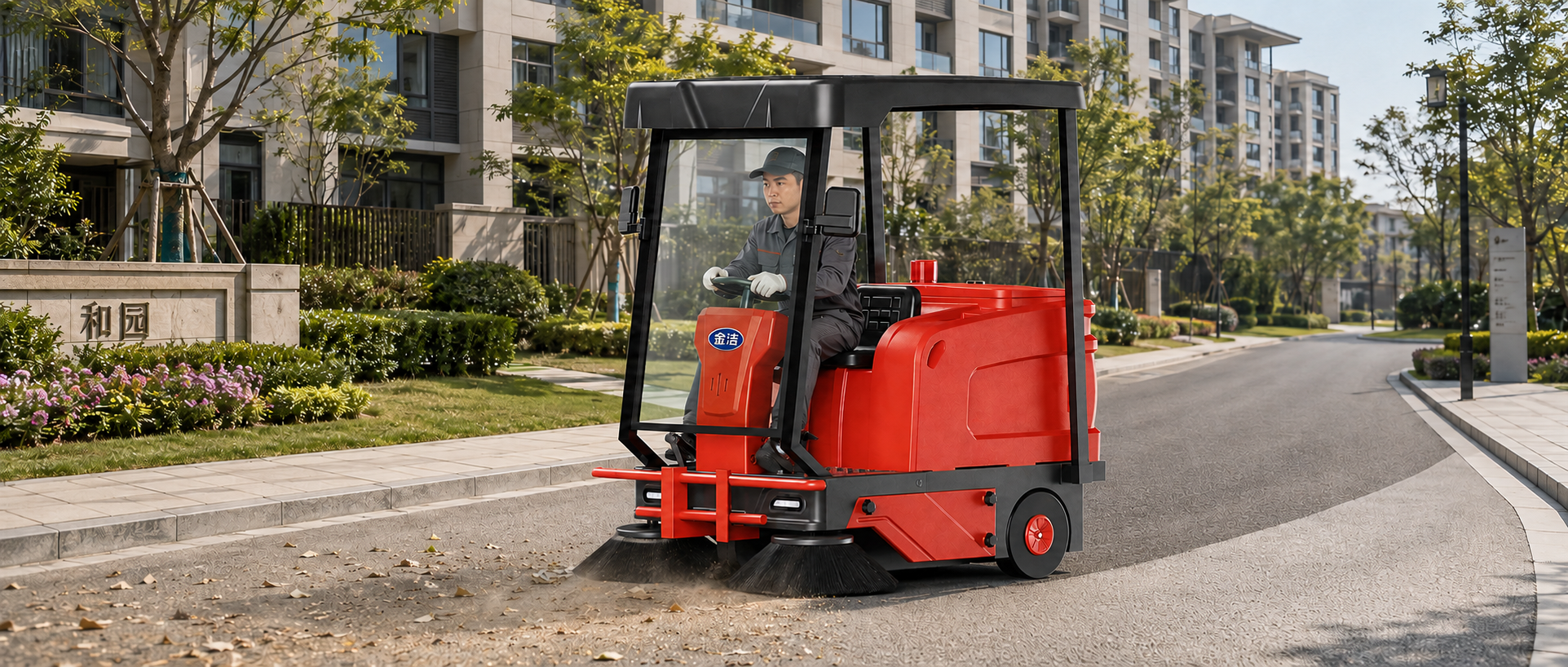
How should sweepers be selected for factory grit and leaves?
Assess main/side-brush coordination, hopper capacity and relocation routes.
Related models: J-XS1500 / J-XS1800 / J-XS1950
Should a warehouse prioritize capacity or manoeuvrability?
Choose medium or medium/large equipment by aisles, turns and shifts.
Related models: J-XS1250 / J-XS1300 / J-XS1500
Can a large sweeper be used in underground parking?
Check gradients, turns, height limits and dust control, not sweep width alone.
Related models: J-XS1250 / J-XS1450 / J-XS1500
Does a commercial plaza need enclosed sweeping equipment?
Assess operator protection for long/dusty outdoor routes; open equipment may suit routine rounds.
Related models: J-XS1500 / J-XS1950
Why do large industrial-road projects need hopper and water-tank assessment?
On long routes with high waste volumes, larger capacity can reduce interruptions for emptying and water filling.
Related models: J-XS2100 / J-WX2400A / J-WX2400RChoosing a model
Narrow the model range using key conditions
| Assessment factor | What customers should confirm | Relevant effect |
|---|---|---|
| Sweeping width | Road width, access and turning space | Affects pass coverage and access |
| Hopper | Leaves, gravel, packaging waste and disposal points | Affects sustained work and interruptions |
| Water tank | Airborne dust, route length and water replenishment | Affects dust suppression and outdoor comfort |
| Driving arrangement | Open / Enclosed / Route duration | Affects operator protection and running costs |
| Site width | Doorways, ramps, column layout and parking | Determines safe relocation and return to storage |
| Waste type | Dust, leaves, gravel and mixed waste | Determines collection, filtration and dust-suppression needs |
Model comparison
Comparing main candidates and related models
J-XS1500 vs J-XS1450
Consider the first option when:The source lists J-XS1500 at 1500 mm, theoretical 18000 m²/h and a 180 L hopper, as a candidate for park roads.
Compare another option:J-XS1450 remains a related-capability option for comparison where budget and configuration fit.
J-XS1950 vs J-XS1900Q
Consider the first option when:The source lists J-XS1950 at 1900 mm, a 150 L hopper and enclosed driving; discuss it for current 1900-class projects.
Compare another option:J-XS1900Q remains a comparable enclosed alternative; confirm configuration, lead time and evidence for the project.
J-XS2100 vs J-XS2100Q
Consider the first option when:The source lists J-XS2100 at 2100 mm, with 180 L water and 240 L waste capacities, for assessment where continuous sweeping and capacity matter.
Compare another option:J-XS2100Q retains its own page for customers comparing other 2100-class configurations.
J-XS1500 vs J-XS1950
Consider the first option when:Compare J-XS1500 for open-cab road sweeping in parks, property exteriors and factory grounds.
Compare another option:Consider J-XS1950 where outdoor dust, sunlight and operator-protection needs are defined.
J-XS1950 vs J-XS2100
Consider the first option when:Consider J-XS1950 as a starting point for 1900-class enclosed projects with moderate routes and waste loads.
Compare another option:For wider roads, longer routes and greater waste and water requirements, compare J-XS2100 as a large continuous-sweeping option.
Related knowledge / videos / references
View more contentAssess equipment by the application problem
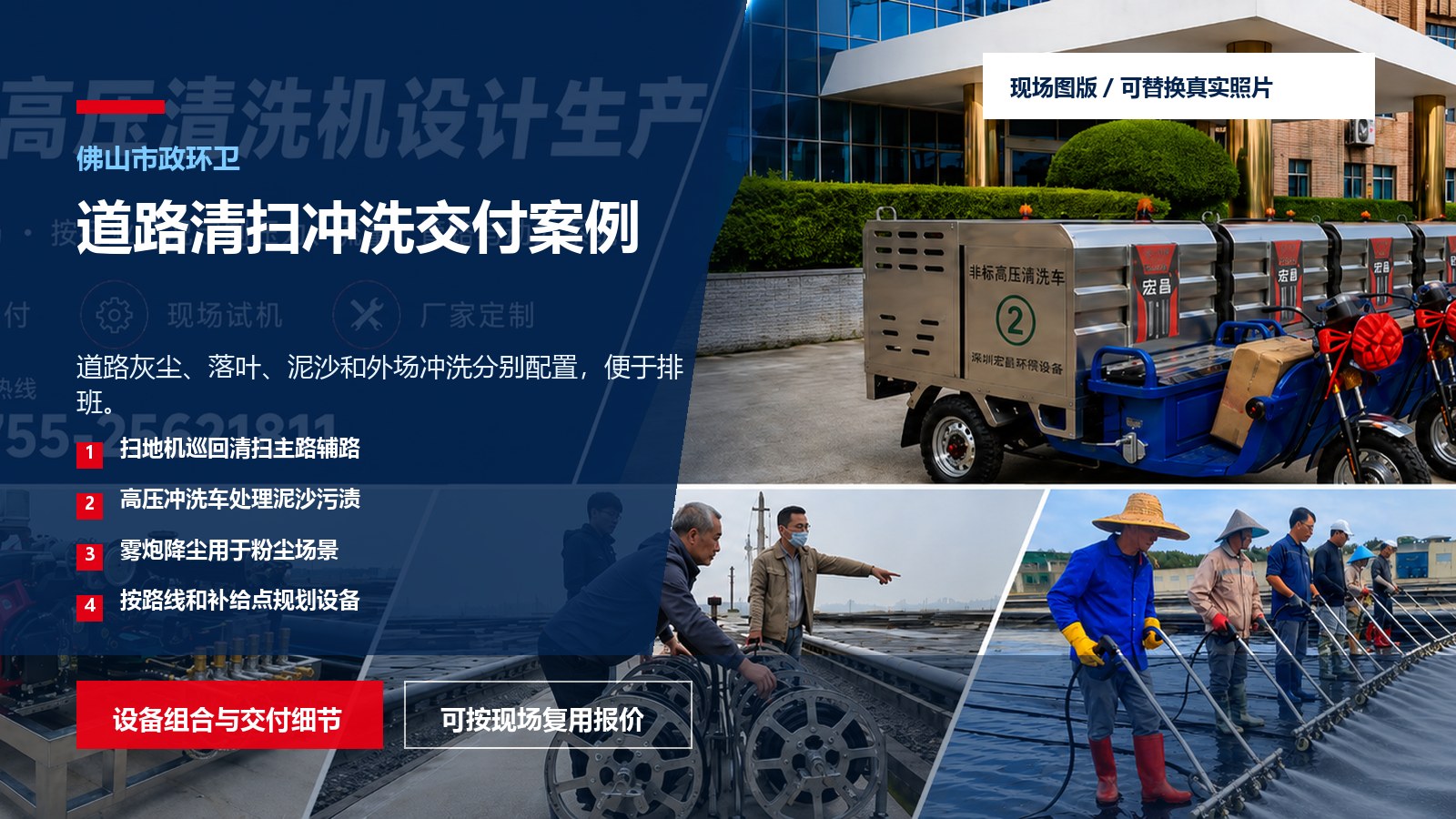 Municipal Road Sweeping and Dust-Control PlanCoordinate enclosed sweeping and pressure washing for road-cleaning rounds; actual productivity requires site confirmation.Zhuhai port road dust sweeping application referencePort and logistics-yard roads face dust, gravel and frequent vehicle traffic; consider ride-on sweepers and pressure-washing equipment.
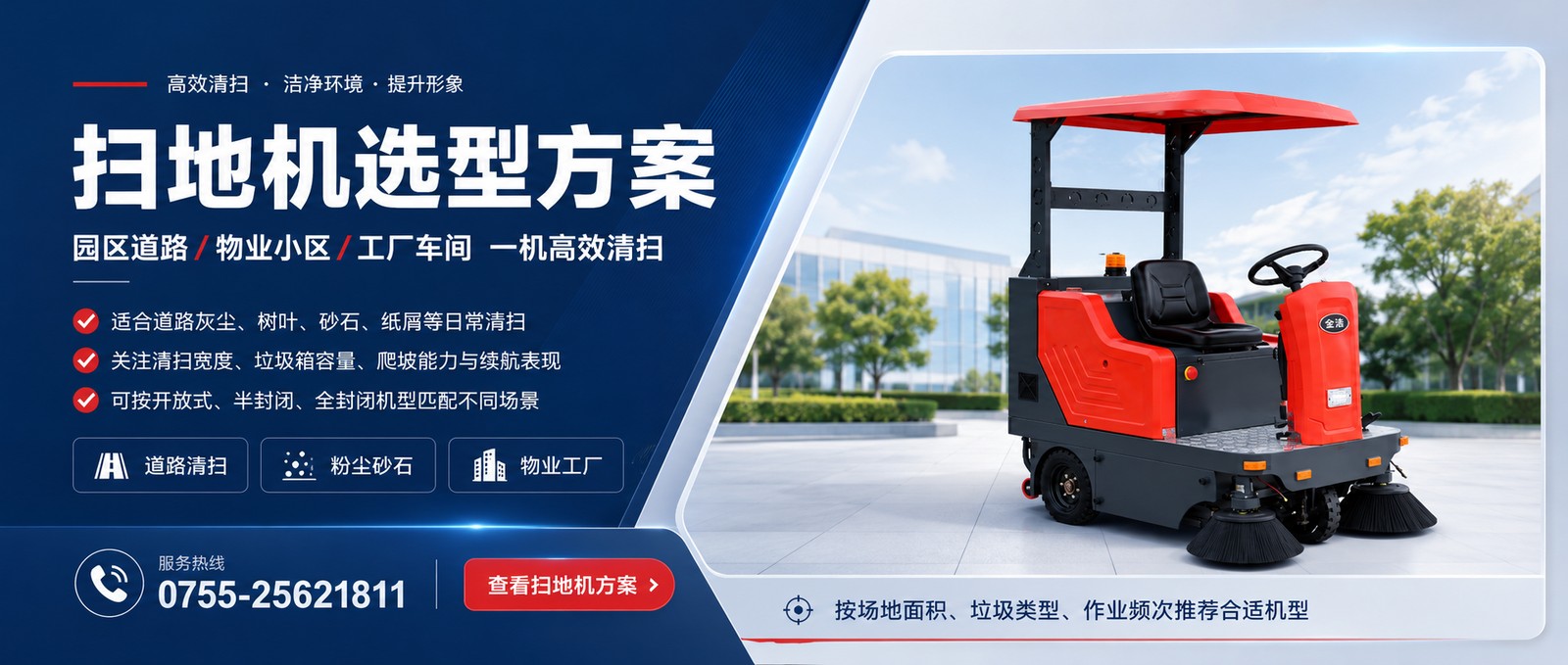 Municipal and Park Road Sweeping and Washing ReferencePlan sweepers and pressure-washing equipment for leaves, dust, grit and washing needs on park and municipal roads.
 Zhuhai municipal and estate road sweeping: assess the site before selecting equipmentFor Zhuhai municipal and estate road sweeping, assess leaves, dust, hopper capacity and refill routes before comparing sweepers, enclosed-cab sweepers and pressure-cleaning equipment. Price alone is insufficient.Enclosed-cab ride-on sweeper in an outdoor equipment yard; model and customer-project identity unverifiedFor Zhongshan municipal and estate road sweeping, assess leaves, dust, hopper capacity and refill routes before comparing sweepers, enclosed-cab sweepers and pressure-cleaning equipment. Price alone is insufficient.Ride-on sweeper beside an estate road; application illustrationFor Huizhou municipal and estate road sweeping, assess leaves, dust, hopper capacity and refill routes before comparing sweepers, enclosed-cab sweepers and pressure-cleaning equipment. Price alone is insufficient.Enclosed-cab ride-on sweeper in an outdoor equipment yard; model and customer-project identity unverifiedFor Foshan municipal and estate road sweeping, assess leaves, dust, hopper capacity and refill routes before comparing sweepers, enclosed-cab sweepers and pressure-cleaning equipment. Price alone is insufficient.Enclosed-cab ride-on sweeper in an outdoor equipment yard; model and customer-project identity unverifiedFor Dongguan municipal and estate road sweeping, assess leaves, dust, hopper capacity and refill routes before comparing sweepers, enclosed-cab sweepers and pressure-cleaning equipment. Price alone is insufficient.Enclosed-cab ride-on sweeper in an outdoor equipment yard; model and customer-project identity unverifiedFor Guangzhou municipal and estate road sweeping, assess leaves, dust, hopper capacity and refill routes before comparing sweepers, enclosed-cab sweepers and pressure-cleaning equipment. Price alone is insufficient.
— FAQ
Questions before buying a sweeper
Which sites should assess sweepers?
Assess sweepers for parks, factory exteriors, logistics, parking and roads, considering width, waste, access, dust and sustained duty together.
Which sweep width is appropriate?
Consider compact or mid-size ride-on equipment for confined areas, and compare 1,500 mm, 1,900 mm and 2,100 mm classes for estate roads and factory yards. Greater sweeping width is not always better; check passages, turning and parking space.
How should I choose enclosed or open sweepers?
Assess open ride-on equipment for routine flexible rounds and enclosed equipment for defined outdoor dust, sunlight, longer routes and operator-protection needs.
Is a larger hopper always better?
A larger hopper may reduce emptying, but assess vehicle size, route length, waste density and disposal points. Continuous routes need hopper, water and replenishment planning together.
What matters in a dusty environment?
Dusty sites require attention to vacuum filtration, dust-suppression tanks, sealing and operator protection. If road washing or spray suppression is also required, assess sanitation equipment alongside the sweeper.
Can a large sweeper be used in underground parking?
A large sweeper requires garage height, ramps, turning, pillars, traffic and parking/charging assessment. Restricted sites may favour more manoeuvrable ride-on units.
Sweeper or sweeper-scrubber?
Consider sweepers for dry waste, leaves, grit and dust. For wastewater, oil or brushing/recovery tasks, assess scrubbers or sweeper-scrubbers.
Sweeper or municipal cleaning equipment?
Compare ride-on sweepers for routine park/factory roads. For washing, spray suppression, waste transfer or municipal combinations, explore municipal equipment plans.
Sweeper selection support
Unsure which sweeper? Tell us the site and waste conditions.
Provide road width, area, waste, dust, cab needs and daily hours to narrow sweepers.
Sweeper industry and selection material
Sweeper trends, selection and procurement information
Sweeper selection approach
Identify waste and routes before selecting a sweeper.
A sweeper's value depends on waste, dust, gradients and daily routes as well as width, helping teams organize attention around actual cleaning needs.
Waste type determines the sweeping arrangement.
Leaves, grit, paper, packaging and fine dust differ in brush, filter and hopper requirements; identify the main waste first.
Road area determines the equipment class
Warehouse, parking, park and municipal routes differ in length; larger areas also require runtime, hopper and staffing plans.
Dust control affects the operating experience
Filtration, dust control, noise and access may matter more than speed alone in industrial, school, hospital and commercial environments.
Sweeper industry and selection entries
Sweeper products and technology trends
Equipment-development information on sweep width, hoppers, dust control, runtime and autonomous rounds.
Park-road and factory sweeping reference
Explore sweeping configurations for park roads, factory aisles, warehouse exteriors and parking.
Municipal-equipment procurement information
Municipal-road, scenic-square and property-public-area procurement and application information.
Selection by dust and waste type
Assess leaves, grit, paper, packaging and fine dust before sweeping method and model.