
01 Intended use
Cleaning separate indoor zones
For hard surfaces such as offices and commercial areas, first check the passage and corners, then determine the deployable area.

The AllyBot-C2 autonomous cleaning robot is a zoned indoor option combining scrubbing, vacuuming and dust mopping with a compact body. Validate access, replenishment, sensing conditions and human takeover rather than relying on body size.
Cleaning separate indoor zones
For hard surfaces such as offices and commercial areas, first check the passage and corners, then determine the deployable area.
Three types of tasks: washing, suction, and dust pushing
Washing, suction, and dust pushing are selected based on the floor surface and dirt type; 10 L wastewater tank needs to be arranged for cleaning according to the task.
Sensing and automatic hose retraction.
The data includes multiple types of perception devices and automatic return to charging. The charging location, network, and personnel coordination are separately implemented.
Compact body with washing, suction, and scrubbing functions, suitable for partitioned management in indoor cleaning.
The route is determined by the entrance, corners, temporary items, and pedestrian flow, not just by the width.
The floor material and pollution level are different, so the mode, consumables, and acceptance of the effect need to be arranged separately.
Cleaning, refilling, and inspection of the water tank will affect the total time of the zone task.
Based on the floor type and dirt level in office or commercial areas, tasks should be divided and verified segment by segment, including the entrance, corners, thresholds, and temporary obstacles. The 2 L/10 L water tank of AllyBot-C10 should be coordinated with the planned refilling and drainage frequency; the mode working time and movement speed should be understood separately, and manual refilling, cleaning, and hose connection should also be included in the daily schedule.
Clear width, corner, and pedestrian flow in the entrance area.
Floor surface, dirt, and operating hours
Passage management, area division, and supply.
Clean-water supply, wastewater disposal, charging and staff handover
| Field or task | Configuration and operating conditions to check | AllyBot-C2 Selection Judgment |
|---|---|---|
| Office public corridors | Clear width, corner, and pedestrian flow in the entrance area. | Check according to 503 × 503 mm body plane outer dimensions; the entire machine size is not equal to the minimum passage width. |
| Commercial atriums | Floor surface, dirt, and operating hours | First distinguish between light dirt and temporary scattered items, then choose between floor scrubber or other delivery modes. |
| Hospital public corridors | Passage management, area division, and supply. | Applicable judgment for general floor cleaning, no commitment to medical disinfection or infection control effectiveness based on this. |
| Zone cleaning points | Clean-water supply, wastewater disposal, charging and staff handover | The 10 L tank is suitable for tasks of certain lengths, which need to be observed on-site, and should not be calculated directly from the capacity. |
Prepare a floor plan or road photo, the floor material and contaminants, the narrowest passage and corners, and the traffic and vehicle activity periods. Then verify the charging, waste collection, or water replenishment points, as well as the responsible person for abnormal hose connections.

Organize daily floor cleaning along repeated routes, checking doorways and temporary obstacles on site.
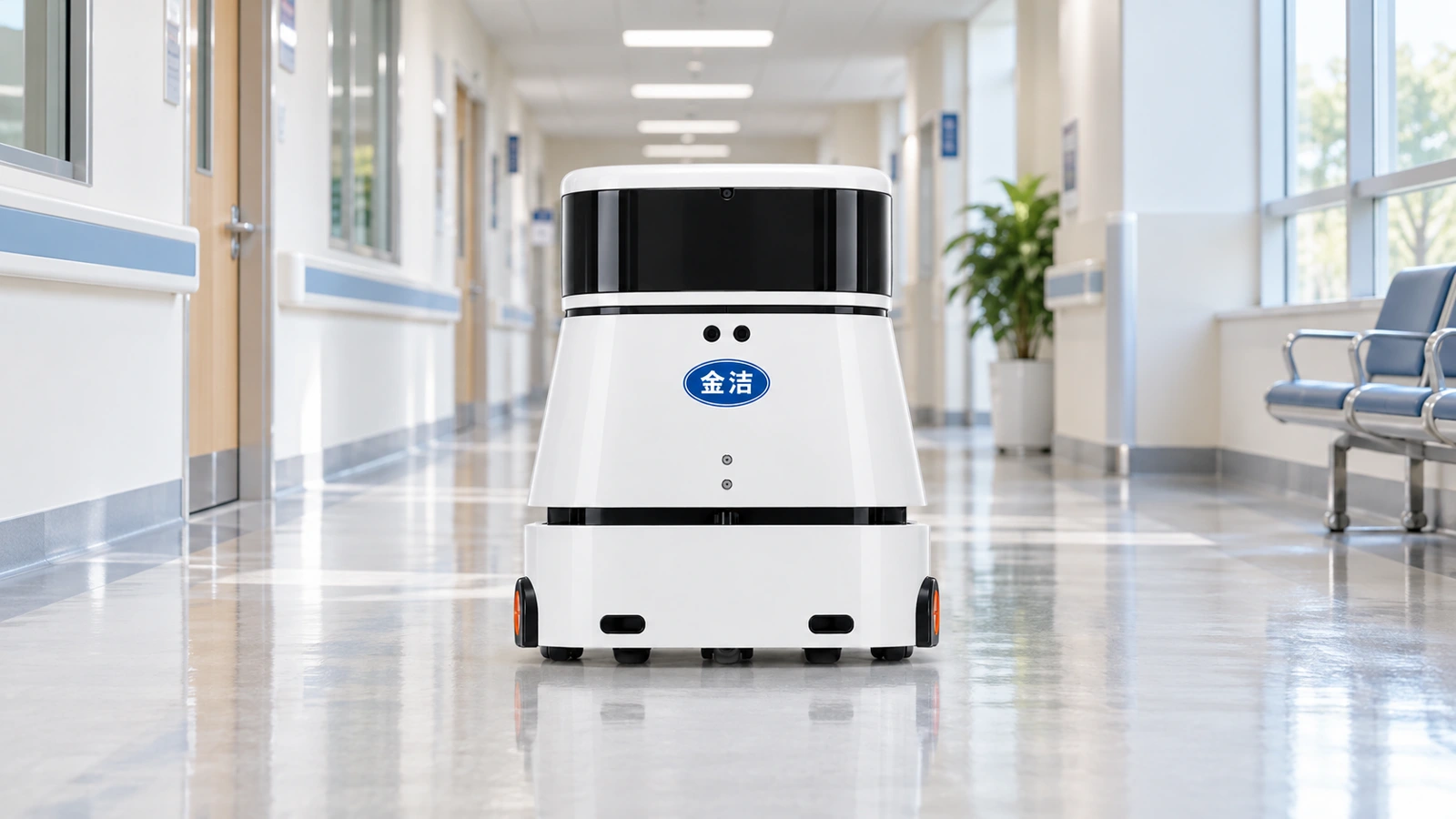
This illustrates public-passage cleaning only. Coordinate work with pedestrian access.
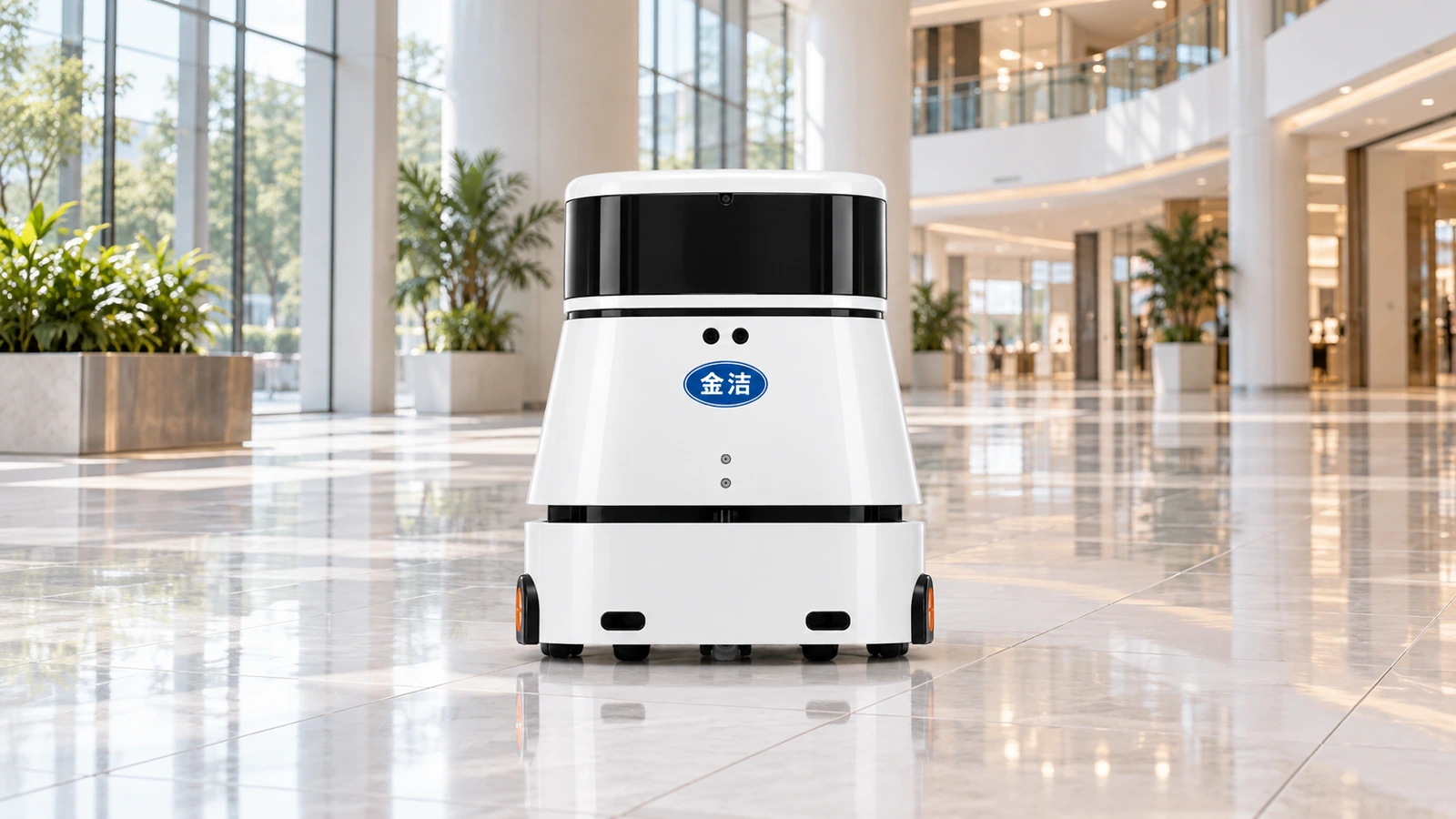
Plan atrium and public-corridor floor care, checking operating routes against changing traffic.
First, check the settings related to daily use. The complete specifications can be viewed in detail.
| Key operating figures | |||
|---|---|---|---|
| Cleaning width | 440mm | Clean water tank | 10L |
| sewage tank | 10L | Runtime reference | 5 to 12 hours |
| Maximum suction | 20kPa | Operating speed | Adjustable from 0.1 to 0.8 m/s |
| Edge cleaning | Supported | Product category | Commercial intelligent cleaning robot |
| Main functions | Scrubbing, vacuuming and dust mopping | Perception system | 2D LiDAR, ultrasonic sensors, structured-light camera and line LiDAR |
| Automatic return for charging | Supported | ||
| Drive and electrical system | |||
| Operating voltage | 24V | Battery type | Lithium iron phosphate battery |
| Battery specifications | 25.6V、36Ah | Charge-time reference | Approximately 3 hours |
| Machine configuration | |||
| Travel mode | Autonomous navigation with operator takeover | Machine dimensions | 503 × 503 × 629mm |
| Machine weight | 42kg | Product model | Allybot-C2 |
| Operating noise | ≤65dB | Connectivity | 4G、Wi-Fi |
| Ingress protection rating | IP34 | Drop detection | Supported |
The data on battery life, operating speed, mode efficiency, and actual task completion should be understood separately. The routes, supply, waste removal, and manual finishing are all counted as actual tasks.
Theoretical efficiency, documentation working time, and actual continuous operation performance should be understood separately. On-site conditions and final delivery configuration need to be verified together.
Use the complete machine diagram for the corresponding model; the following numbers are function description indices, and unverified internal component locations are not marked

Dimensions 503×503×629 mm; check the door area, corners, and parking space.
440 mm cleaning width, set the appropriate task according to hard floor and dirt.
The fresh and wastewater tanks are both 10 L, and personnel should replenish water and discharge wastewater according to the task.
The data list includes laser radar, ultrasonic sensors, and cameras as perception devices, with the boundary first deployed for verification.
The data supports automatic hose retraction, with charging points and traffic routes arranged on-site.
Support manual takeover, temporary obstacles, consumable cleaning, and abnormal handling by personnel.
The following is a task flow description, which does not replace internal mechanical diagrams or specific operation manuals; it is executed according to the machine's delivered training.
Define the operating area and no-entry boundary around indoor door zones, corners, and fixed facilities.
Select tasks and consumables based on hard floor, floating dust, or daily stains according to the delivery mode.
Observe the brushing, wastewater recovery, and passage performance, and have personnel handle temporary scattered objects and obstructed areas.
Arrange return to charging dock according to the task, clean the wastewater tank and working attachment, then prepare for the next period.
Machine plane dimensions are used for preliminary verification, actual turns, thresholds, and obstacle conditions require route verification.
10 L clear water tank needs to clearly specify who is responsible for refilling and discharging, and where this process takes place, rather than just comparing battery life.
Automatic charging is documented. Confirm water filling, draining, lift integration, door access and multi-floor operation separately.
The reference machine separately demonstrates task combinations, water tanks, and refilling methods. First, determine what needs to be solved on-site, then compare the configurations.
| Comparison criteria |  CC1 | AllyBot-C2 |  J-W70 |
|---|---|---|---|
| Work direction | Sweeping, scrubbing, vacuuming and dust mopping | Indoor floor scrubbing, dusting, and dust mop | Fixed route unmanned floor scrubber |
| Clean or sweep area | Floor scrubber clearance: 400 mm; Sweeper clearance: 500 mm. | 440mm | 510mm |
| Water tank or waste collection | Clear water about 15 L / dirty water about 17 L; garbage about 6 L; | Clear water 10 L / dirty water 10 L | Clear water 70 L / dirty water 55 L |
| Navigation or control | Visual SLAM + LiDAR SLAM | Autonomous navigation, supports manual takeover | Fused vision and LiDAR navigation |
| Supplemental supply and personnel arrangement. | Automatic hose retraction; drainage required with workstation. | Automatic hose retraction; the housing is managed by personnel. | Charge/workstation select by version |
| Selection focus | Multi-mode and consumable switching schedule | Compact body with zone-based tasks. | Long line and supply arrangement. |
Check the machine, charging point, network and accessories required on site. List any workstation separately to avoid counting it twice.
Zone tasks should record preparation, mode switching, body organization, return charging, and inspection; a compact body does not directly equate to lower usage costs.
Record consumables, maintenance, and energy usage based on the actual brush, collection, or recovery configuration of the machine; no fixed person-saving ratio is committed without data of the same diameter.
Follow the machine instructions for water replenishment, drainage, and body cleaning, and check the seal and odors.
Check the brush or dust mop consumables according to the actual task, noting wear and entanglement.
Check for visible rubber seals, sealing, and recovery pathways; water residue issues should be verified in conjunction with the floor surface.
Follow the machine's instructions to clean the visible perception window; do not arbitrarily block, move, or disassemble the sensor.
Check the battery charging and actual supply configuration of the machine, and maintain the workstation according to its instructions.
Retain the unfinished areas, blocked positions, and prompt information. Abnormalities are to be taken over according to training and contact after-sales.
Service scope, costs, and on-site arrangements are confirmed based on the actual project and agreement.
Check together the machine version, configuration, random documents, and accompanying conditions.
Understand the operation by combining the machine's task mode, deployment boundary, maintenance, and manual takeover.
Bring the model number, route conditions, and equipment prompts for communication of tasks and usage issues.
Check the actual consumables, replaceable parts, and compatible configurations against the machine version.
Service scope, fees, and arrival arrangements should be confirmed in advance, and will be executed according to the actual agreement.
Combine usage frequency, location, and actual agreed maintenance arrangements.
Consider suitable indoor commercial routes, selecting scrubbing, vacuuming or dust mopping for the surface and soil. Validate usable areas through trials; compact dimensions do not establish suitability for every corner or threshold.
The 503 × 503 mm figure is the body size. Allow for turns, frames, temporary obstacles and people in narrow aisles. Trial actual routes with the delivered version and assess both navigation and cleaning coverage rather than body width alone.
First, divide the task by area and record the time spent on cleaning, water replenishment, and returning to the starting point for each area. The small water tank requires convenient water supply arrangements, and its capacity cannot be directly converted to continuous area. It is also important not to overlook the time spent by personnel going back and forth.
Identify the operating mode, then record battery condition, actual load, returning and supplies. The listed 5–12 hours is a reference range across conditions, not a universal continuous-scrubbing duration. Verify each mode and schedule from task completion.
Assign takeover staff and an exception contact process during deployment. Check lighting, access, people and changing obstacles. Follow instructions for stopping, takeover and task recovery; sensors do not replace site management. Reassess conditions after route changes.
For short zoned routes, assess compact access and convenient replenishment; for long routes, assess tank capacity and return costs. Compare the same results and human input instead of only size or runtime.
Handle tanks, brushes, recovery and vacuum components as instructed and check sensing and charging-return conditions. Stop safely before maintenance and do not dismantle control systems. Logs, photographs and task conditions support fault diagnosis.
Provide indoor routes, door corner transitions, floor materials and contaminants, personnel shift times, and supplementary water and drainage conditions, and clearly define the management personnel. Wanshenglong is responsible for communication during the trial operation, delivery training, and maintenance support, retaining the original brand and model identity, and not rebranding as other machines.
Discuss the floor, routes, and daily cleaning schedule, and together see if Allybot-C2 is suitable.
Phone consultation: 0755-25621811 View other contact information →
Product enquiryBring a route plan, photographs of the floor or debris, and details of pedestrian and vehicle movements. Identify refill points, network coverage and who will inspect the machine or take over. We can then assess which tasks suit the configuration.