
01 Intended use
Washing and basic care of hard surfaces

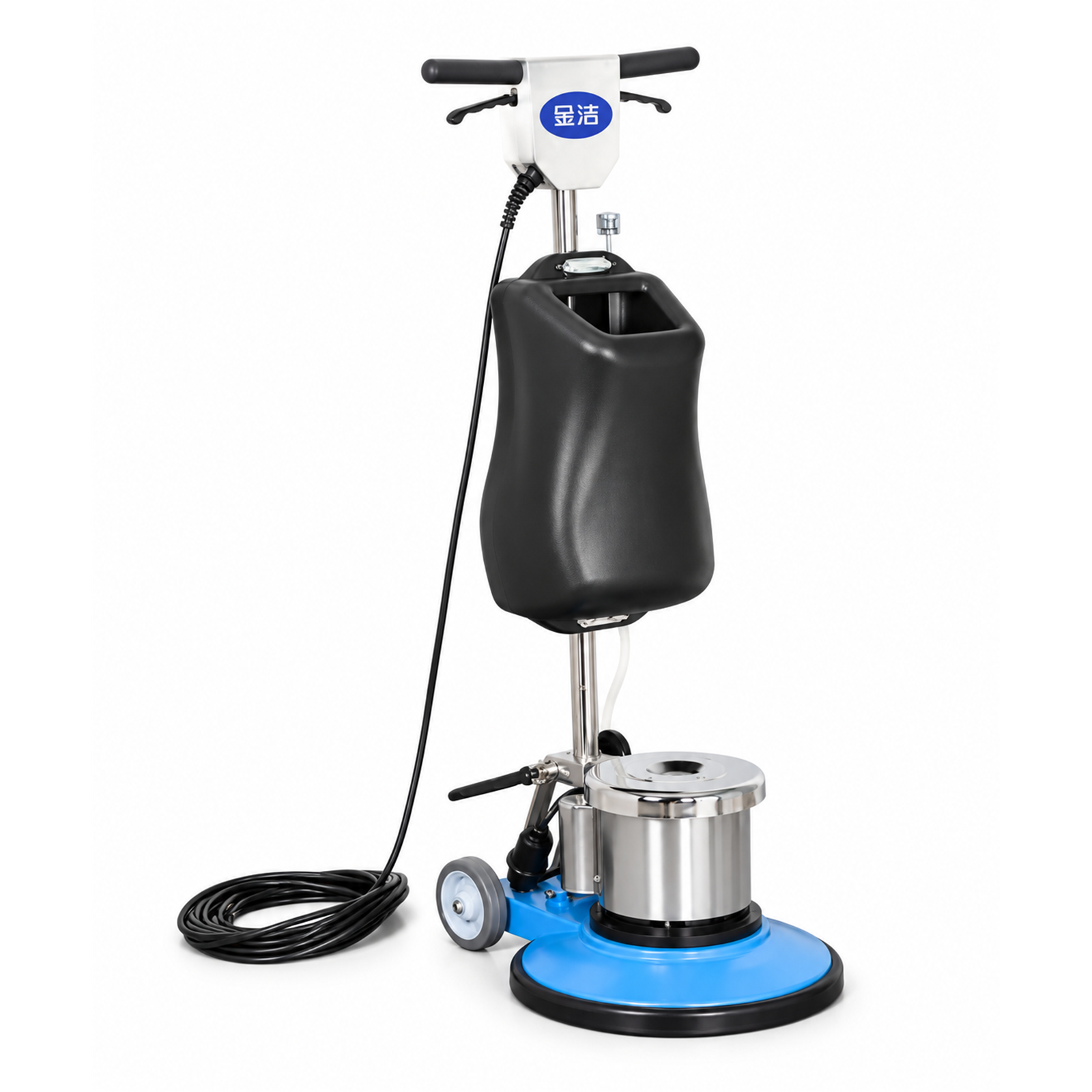
For scrubbing and routine care of hard floors in hotels and shopping centres, fit the brush or consumable suited to each process. Provide separate equipment to recover the dirty solution.
Washing and basic care of hard surfaces
The main unit is matched with the brush disk, needle seat, and cleaning consumables according to the process.
Multi-process accessories and wastewater post-treatment, power and accessories should be checked according to the machine version.
Observe the equipment in operation and discuss configuration for your working conditions.
Tell us the cleaning task, working area and accessory requirements.
Discuss equipment selectionWashing and basic care of hard surfaces requires separate clarification of objects and work processes, cannot be directly applied from similar equipment.
The main unit is matched with the brush disk, needle seat, and care consumables according to the process; multi-process attachments and liquid waste post-treatment are equally affected by on-site resources and personnel arrangements.
First, separate the cleaning or maintenance tasks from the recovery of contaminated liquid and the inspection of the floor, and schedule them together to avoid only completing the intermediate steps.
Floor surface, coating, and dirt
Brush roll, needle seat, and chemical compatibility
Operation space and personnel isolation
Wastewater recovery and resumption of traffic
| Field or task | Conditions that require verification | Selection check |
|---|---|---|
| Hard surface periodic washing | Floor surface, coating, and dirt | First confirm the floor material, coating, and contaminants, then determine if hard floor periodic scrubbing is appropriate. |
| Waxing of commercial floors | Brush roll, needle seat, and chemical compatibility | With the premise of brush, needle seat, and chemical compatibility, check the tools, operating methods, and risk boundaries. |
| Multi-tasking cleaning team | Operation space and personnel isolation | Include operation space and personnel isolation into the on-site solution, not just compare individual specifications |
| Base floor care | Wastewater recovery and resumption of traffic | Combine the liquid recovery and restoration of access arrangements for completion and handover, and for complex conditions, test the machine or conduct on-site verification first. |
A single disk scrubber does not automatically have a waste collection system; different processes require corresponding consumables, and one pad is not used to process all types of floor materials.
The scenario is for illustrating the applicable conditions and is not a case of a completed customer or actual test results.
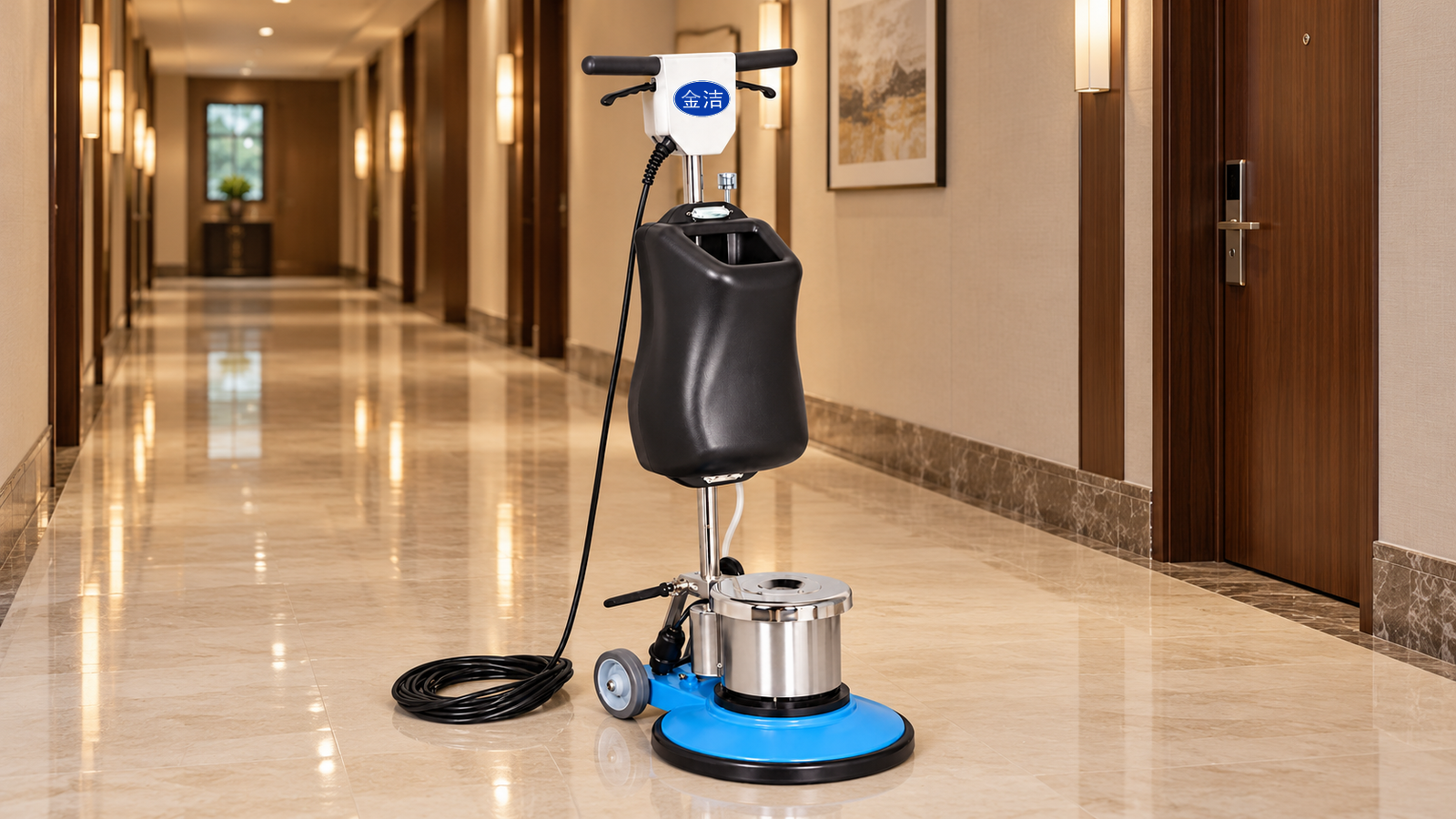
For hard-floor care; carpet tasks require separate confirmation of accessories, chemicals and process.
View the corresponding scene description →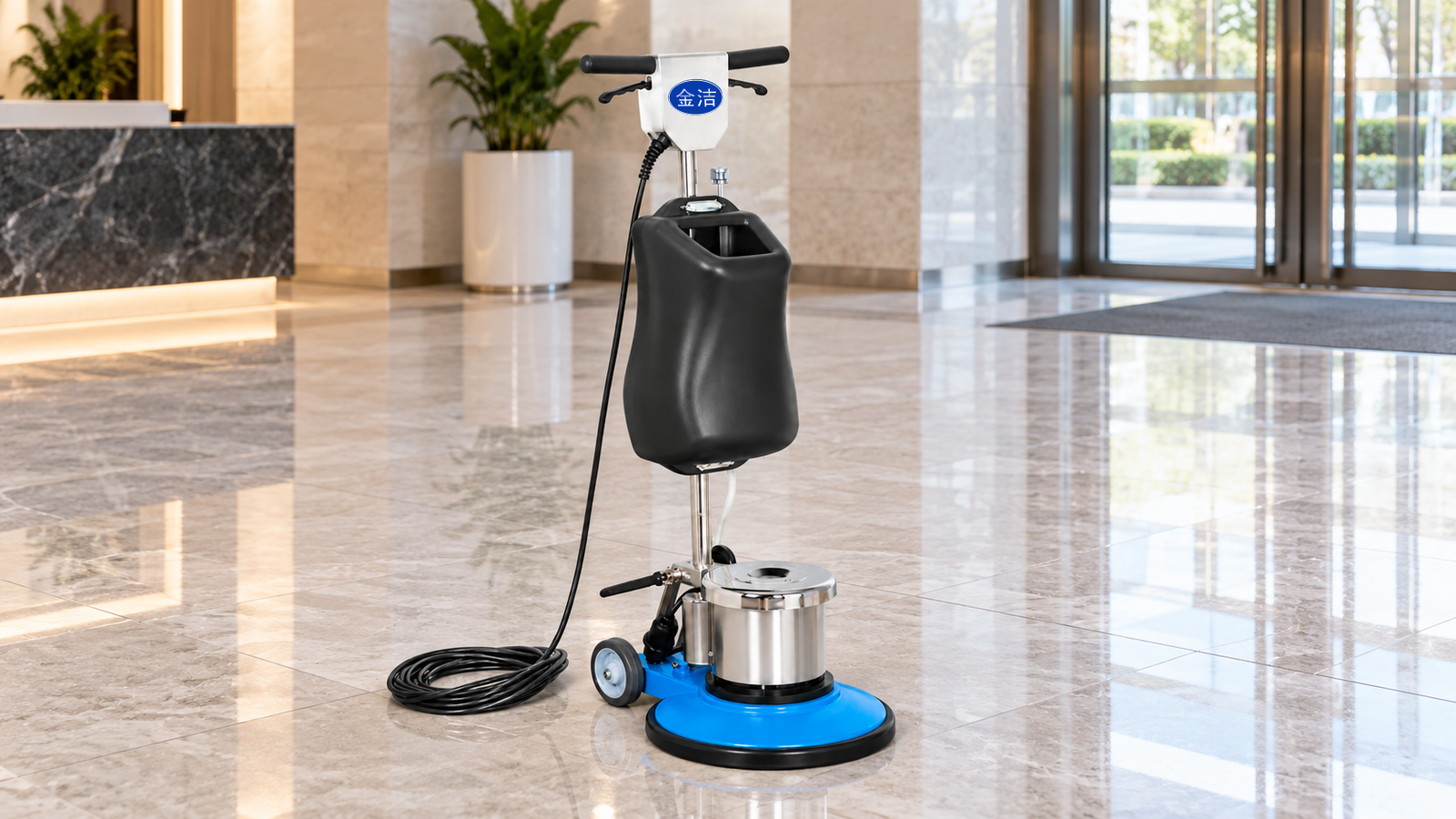
Suitable for maintenance of hard indoor floors with frequent traffic, confirm the floor material, stains, and open hours before operation.
View the corresponding scene description →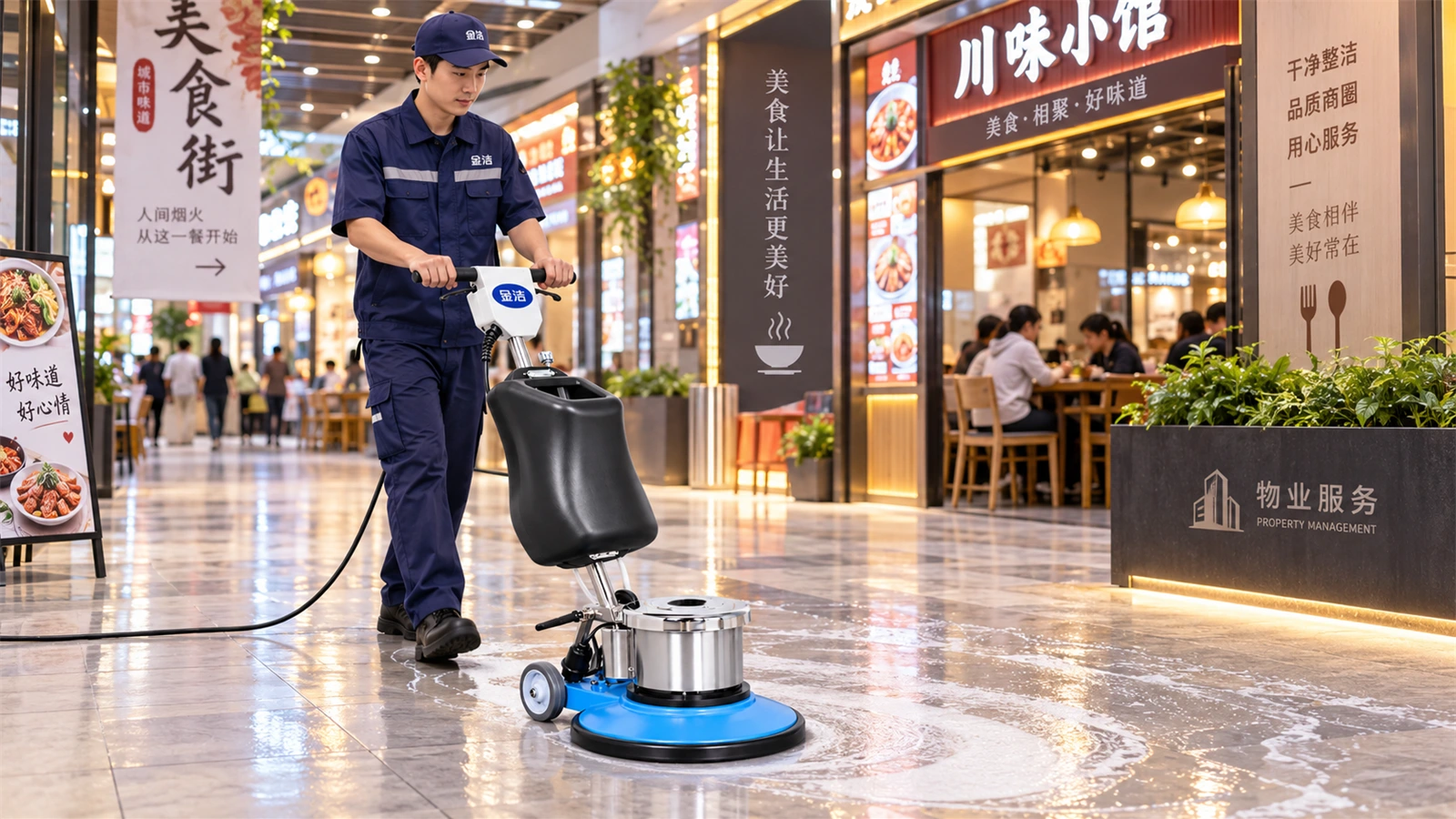
Allocate brushes, pad drivers and pads by project and floor-care task.
View the corresponding scene description →The first screen is for positioning; the complete specifications should be verified against the original data of the machine and the corresponding delivery version.
| Configuration item | Original page registration content |
|---|---|
| Rotation speed | 175rpm |
| Horsepower listing | 1.5HP |
| Voltage | 220V / 50Hz |
| Cord length | 12m |
| Brush size | 430mm |
| Body weight | 52kg |
Overall appearance of the machine and function explanation; 01-06 are explanatory indexes, and are not marked for unverified internal coordinates.
Familiarize yourself with the start-stop and control according to the instructions. First, perform a trial operation in the controlled area.
Match the actual brush roll configuration to the floor type, and do not equate the rated speed with the actual effect.
Check each item of the scrubbing pad and needle seat dimensions, fixation, and purpose.
Cleaning, waxing, and maintenance are separately equipped. Test compatibility first.
The cleaning and recovery are arranged separately, and no squeegee is added.
Safety wiring, stop the machine and disconnect power before replacing the brush and cleaning.
Combine the image to understand the appearance, operation, or accessories of the machine; specific components and delivery configuration are subject to the corresponding documentation.
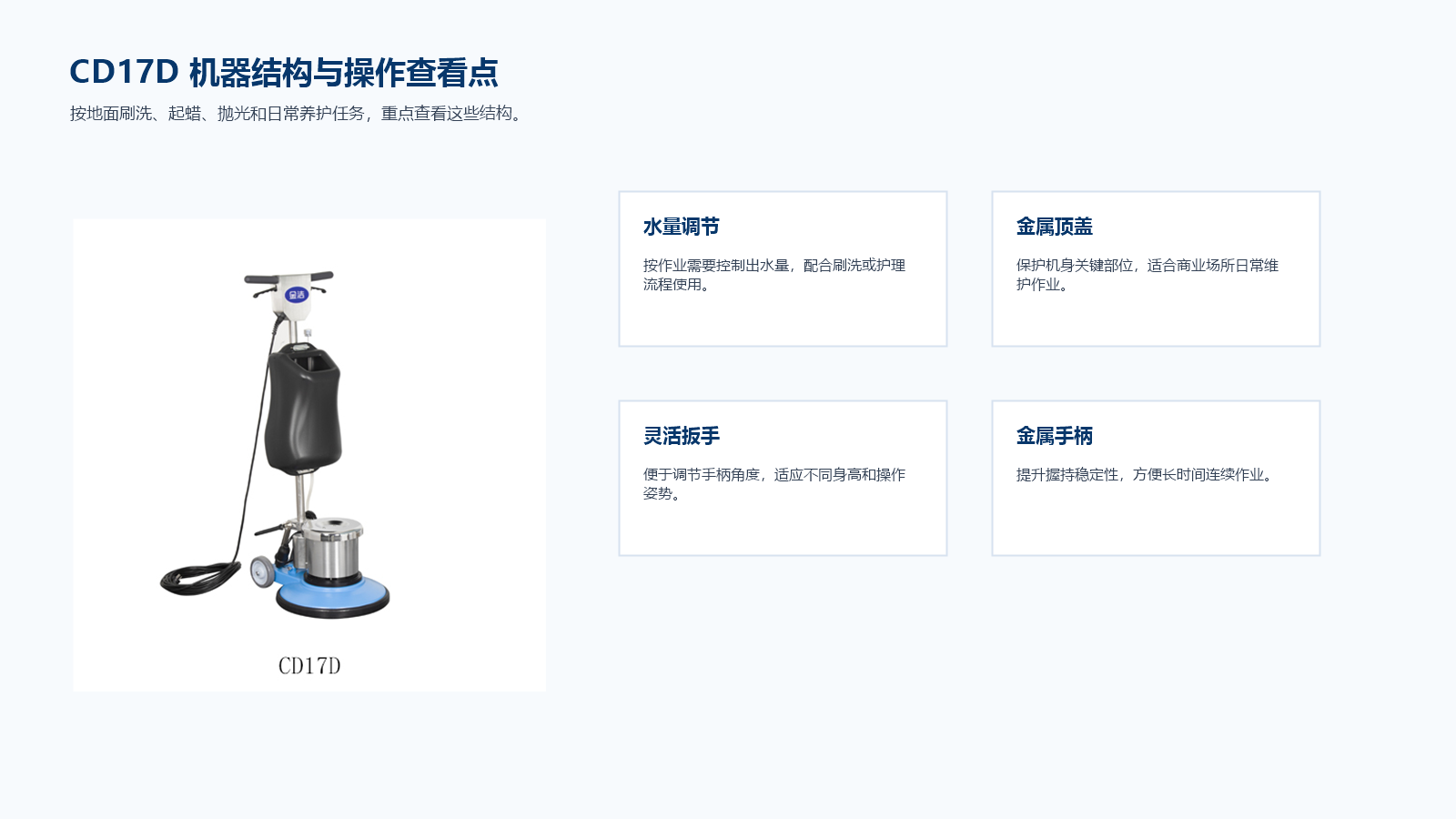
The work process is used to explain the process and personnel coordination, and does not replace the machine operation instructions and internal structure documents.
Floor materials, coatings, and contaminants, and carry out the operation according to the machine instructions and on-site conditions.
Brush roll, needle seat, and chemical compatibility, and implementation according to the machine instructions and on-site conditions
Operational space and personnel isolation, and execution according to the machine specifications and on-site conditions.
Wastewater recovery and resumption of traffic, and executed according to the machine instructions and on-site conditions
The main unit is matched with the brush disk, needle seat, and care consumables according to the process; the ground material, coating, and contaminants should be judged together with the recovery of dirty liquid and restoration of passage.
A single disk scrubber does not automatically have a waste collection system; different processes require corresponding consumables, and one pad is not used to process all types of floor materials.
Check against the actual attachments, interfaces, materials, or control requirements of the machine, and do not list optional components as standard configurations.
This model is centered. Left and right are real configurations or process references; different tasks are not simply high or low settings, and cannot be judged solely by the model number.
| Comparison criteria | 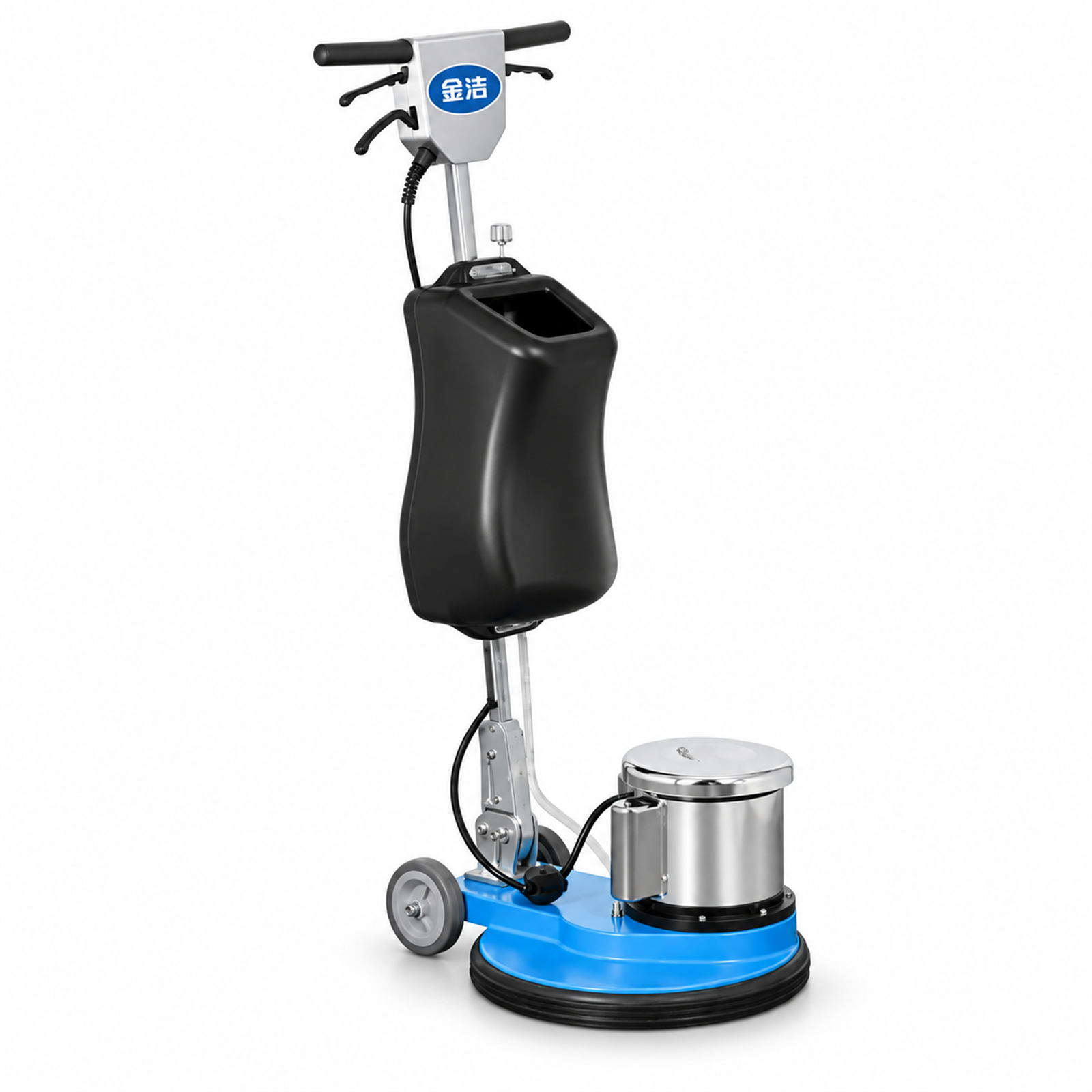 CD17P | CD17D | 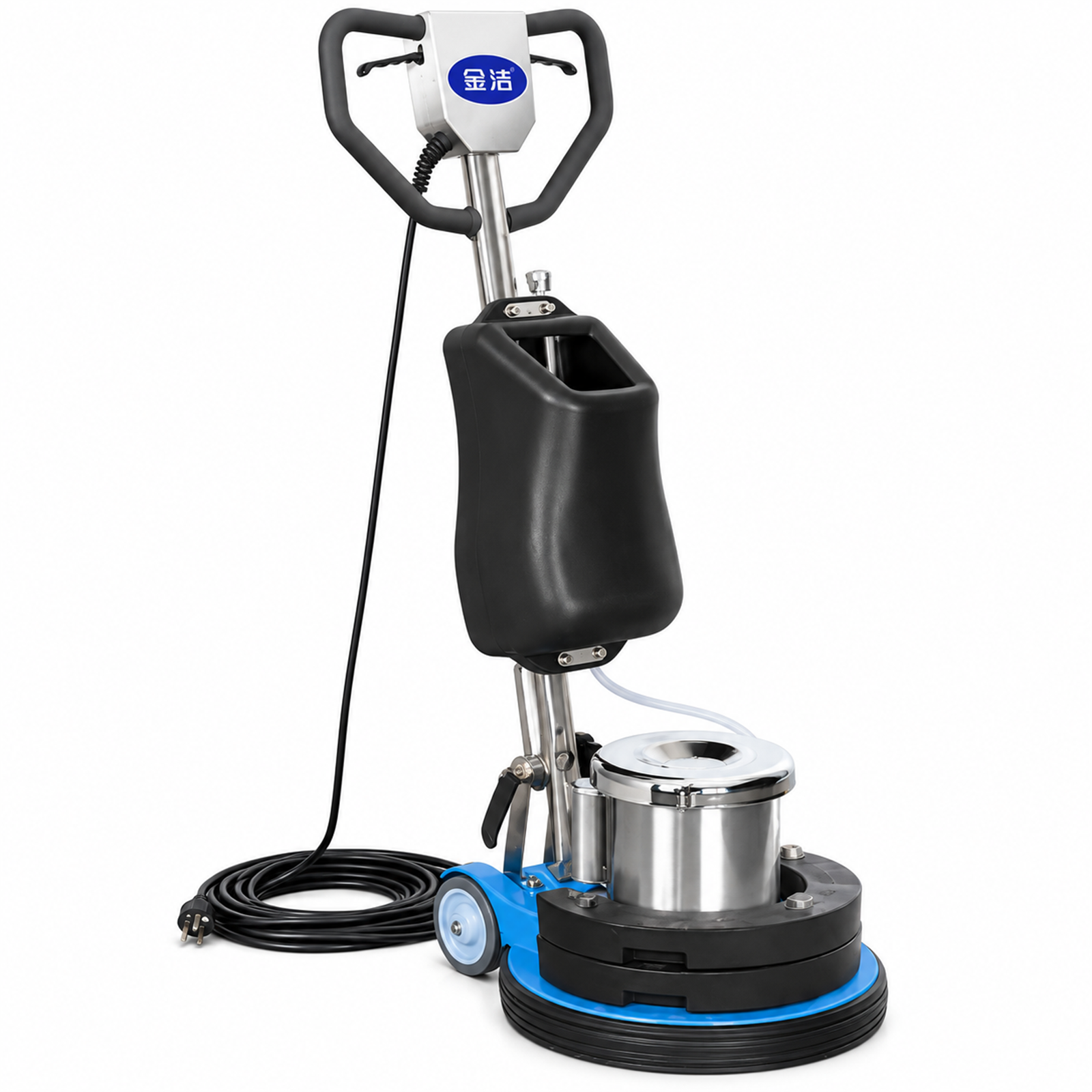 HD18 |
|---|---|---|---|
| Main tasks | Washing and periodic care of hard surfaces | Washing and basic care of hard surfaces | Adaptation for stone polishing and maintenance. |
| Configuration function. | orbital action mode compatible with the corresponding brush disk and consumables | The main unit is matched with the brush disk, needle seat, and cleaning consumables according to the process. | Around stone surface matching crystal care process |
| Selection focus | Floor surface, process, and accessories compatibility | Multi-process accessories and sludge post-treatment. | Stone condition and consumable compatibility |
| Power supply | Verify the configuration of this model independently | 220V / 50Hz | 220V / 50Hz |
| Work components. | Verify the configuration of this model independently | 430mm | 18 in |
The main unit, actual attachments, tools, or consumables are compared according to the same list; optional accessories are not considered as standard fittings.
Include the operation of cleaning hard surfaces with a brush, the basic care operations, turning the machine, and the multi-process attachments and post-treatment of wastewater into the preparation, without using nominal numbers to estimate actual efficiency.
Recycle the contaminated liquid and check the floor, and record the maintenance and disposal arrangements for consumables together, without setting a fixed cost-saving ratio or payback period.
Familiarize yourself with the start-stop and control according to the instructions. First, perform a trial operation in the controlled area. Specifically, the disassembly, maintenance cycle, and accompanying materials should be verified according to the machine's instructions.
Match the actual brush roll configuration to the floor type, and do not equate the rated speed with the actual effect. Specifically, check the disassembly and maintenance cycles as well as the accompanying materials according to the machine's instructions.
Check each item of the scrubbing pad and needle seat size, fixation, and purpose. Specifically, check the disassembly and maintenance cycle as well as the accompanying materials according to the machine's instructions.
Select separate products for cleaning, stripping and floor care, and test compatibility first. Consult the machine manual for component removal, maintenance intervals and compatible materials.
The cleaning and recovery processes should be scheduled separately, and no squeegee should be added that does not exist. Specifically, disassembly, maintenance cycles, and accompanying materials should be checked against the machine's instructions.
Safety wiring, replace brush and clean before turning off the machine and disconnecting the power. Specifically, disassembly and maintenance cycles and accompanying materials should be checked against the machine's manual.
Verify the model number, nameplate, random accessories, and delivery documents.
Understand the distinction between dry and wet cleaning or maintenance tasks and safety start/stop procedures as specified in the machine's manual.
Combine the cleaning and basic care of hard surfaces with on-site process communication regarding usage conditions.
Check the parts according to the interface, material, and delivery version.
Please provide the fault symptoms and inspection records; service scope and schedule are according to the agreement.
Inspection content, service location, cost, and cycle are subject to actual agreement.
For scrubbing and routine care of hard floors in hotels and shopping centres, fit the brush or consumable suited to each process. Provide separate equipment to recover the dirty solution.
The main unit is matched with the brush disk, needle seat, and care consumables according to the process; it is necessary to check the ground material, coating, and contaminants and wastewater together for recovery and restoration of passage.
A single disk scrubber does not automatically have a waste collection system; different processes require corresponding consumables, and one pad is not used to process all types of floor materials.
The reference model focuses on hard floor cleaning and periodic maintenance, while this model emphasizes hard floor brushing and basic care. First, separate the processes and accompanying equipment, then compare the corresponding original specifications, without judging based on model numbers.
Check the floor material, coating, and contaminants, the brush disk, needle seat, and chemical compatibility, the operational space and personnel isolation, liquid waste recovery and restoration of access, and for complex conditions, conduct small-scale tests and on-site assessments.
Organize the task according to the following steps: "Distinguish between cleaning and maintenance tasks → Check and prepare consumables and perform a trial operation → Isolate and divide the area for mechanical operations → Recycle the contaminated liquid and inspect the floor." The specific operations are determined by the on-site conditions and the machine's instructions.
First, focus on the main unit control, needle seat compatibility, and power supply and maintenance. Before servicing or disassembly, isolate the power as directed in the manual. Use the service interval specified for the model.
Provide photos of the hard surface area for periodic brushing, explaining the task, existing equipment, and multi-process attachments along with specific conditions for liquid waste treatment, and then determine if this machine is suitable.
Please describe your hard surface cleaning and basic maintenance task, including the floor surface, coating, dirt, and wastewater recovery, as well as restoration of pedestrian access. We will compare the on-site solution with the configuration of this machine.
Phone consultation: 0755-25621811