
01 Intended use
Large-diameter industrial collection and separation system

This machine is more suitable for industrial workstations that require larger collection containers and suction channels, with a focus on turbine fans and air circuits. Whether to add a separator should be determined based on the material load.
Large-diameter industrial collection and separation system
The turbine fan is matched with the entire collection air path.
Specify the inlet diameter, container and optional separator together. Match the power supply, tools and maintenance plan to the machine configuration.
Material density, particle size, and risk
Actual collection volume and disposal method
Power, route, and hose distance.
Material load, sealing, and emptying organization
The same as dust or fragments, the temperature, particle size, dry/wet condition, and hazard attributes differ; the large-diameter industrial collection and separation systems also need to be matched according to the medium.
Match the turbine blower to the collection air path. Pickup also depends on the inlet, the hose, filter loading and how full the container is.
Arrange the selection and matching of the diameter, container, and separator, and schedule the shutdown, emptying, and transfer to avoid interrupting the cleaning tasks repeatedly.
Material density, particle size, and risk
Actual collection volume and disposal method
Power, route, and hose distance.
Material load, sealing, and emptying organization
| Site task | Pay attention to the configuration and conditions | Selection check |
|---|---|---|
| Industrial work station centralized cleaning. | Material density, particle size, and risk | A larger diameter does not mean it can handle any large or hazardous material. |
| More ordinary dust collection | Actual collection volume and disposal method | Compare loading and unloading times with the suction task. |
| Warehouse area collection. | Power, route, and hose distance. | The turbine configuration still needs to be matched with the rated conditions of the machine and the actual air circuit. |
| Workstations being considered for a pre-separator | Material load, sealing, and emptying organization | The separator is an optional feature and must be checked for pressure loss and interface compatibility; it is not considered standard equipment. |
Please also specify the daily collection capacity, working hours, and the location for filter cleaning and disposal; whether it is applicable should be determined based on the machine's configuration and on-site testing. Without obtaining the corresponding certification, it should not be used for processing flammable and explosive dust, toxic dust, hot chips, or corrosive media.
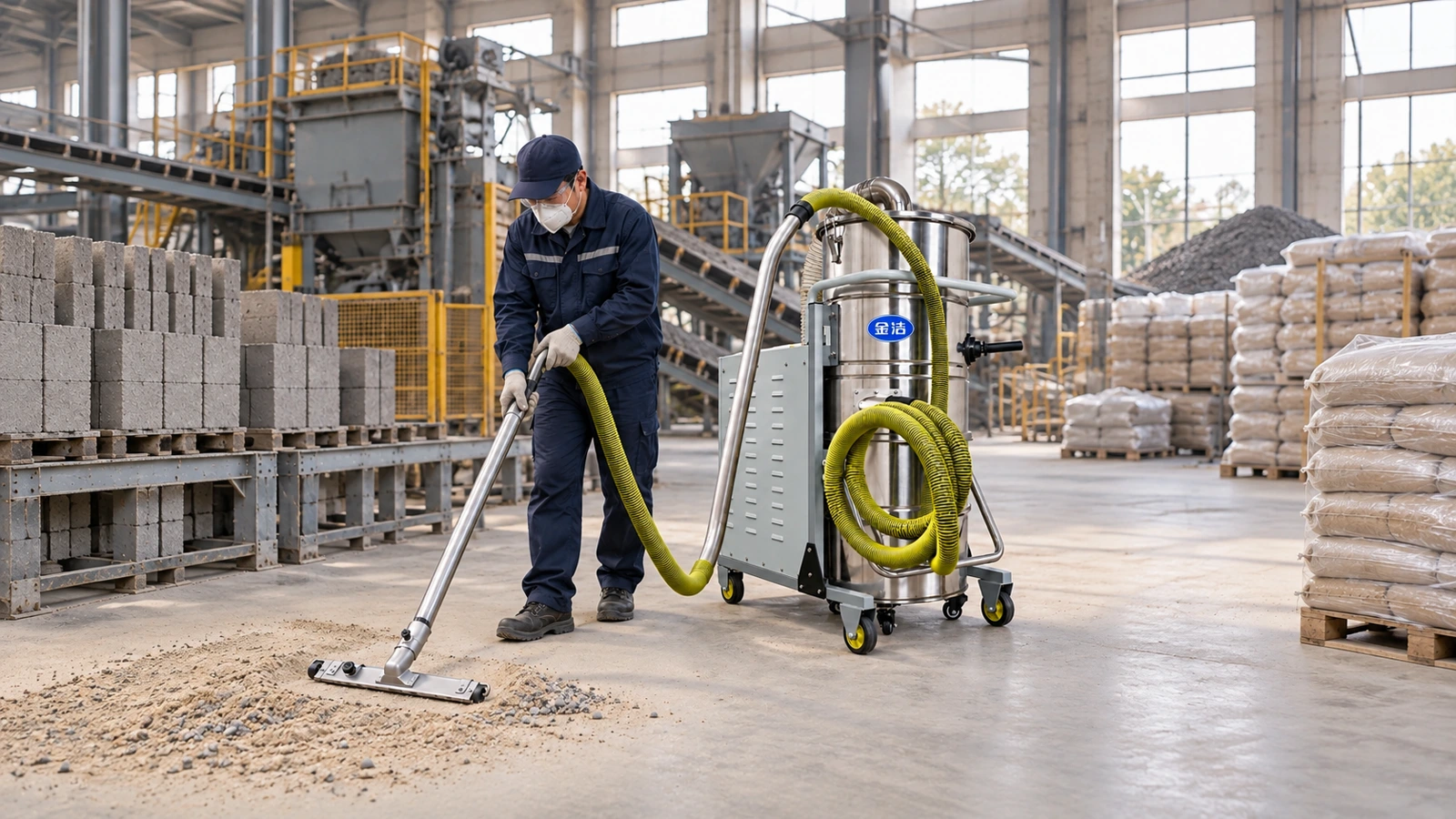
For sand, dirt and ordinary particles in building-material production; verify material, particle size and filtration.
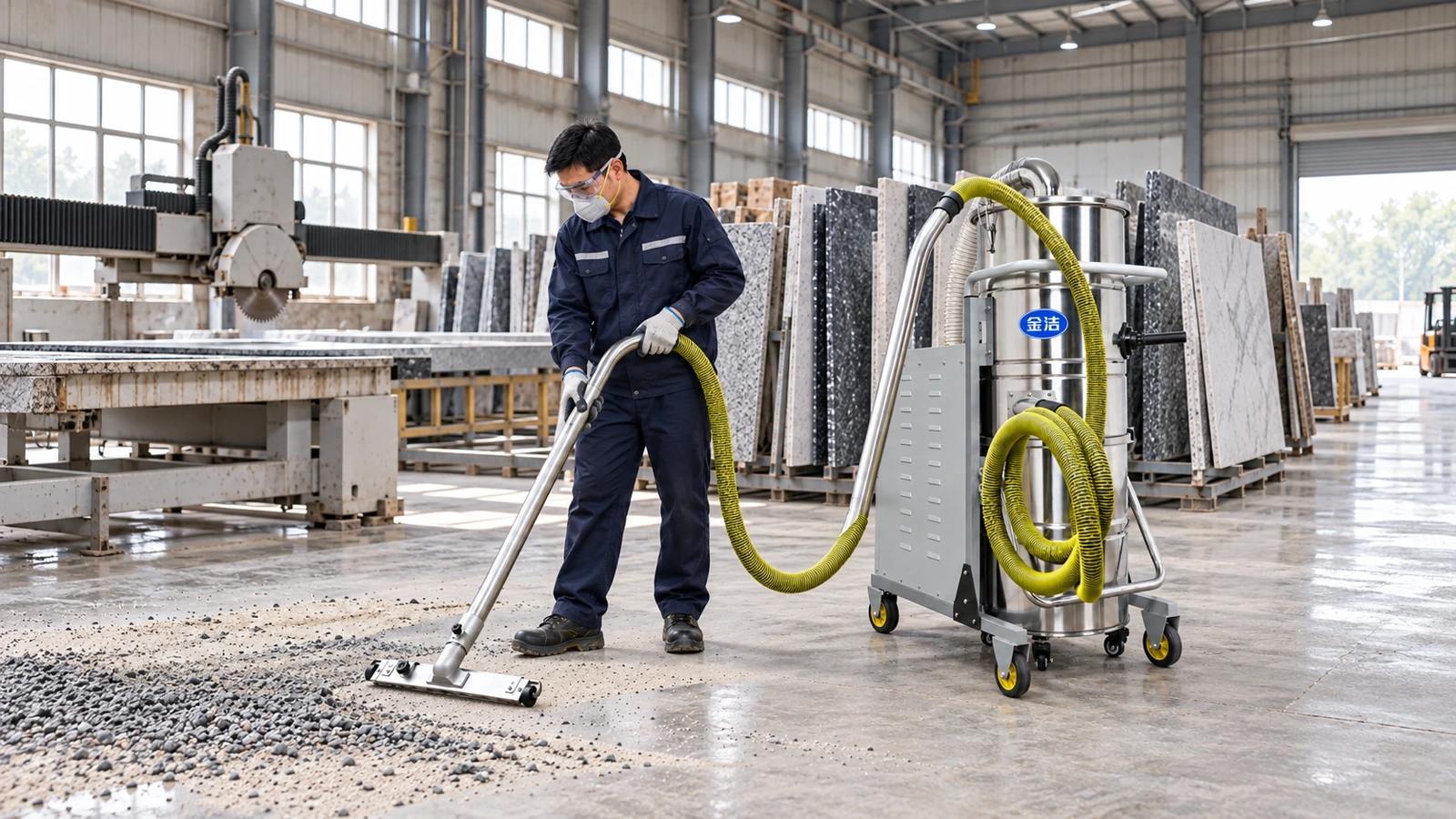
Separate settled particles from ordinary stone-processing debris; confirm wet/dry state, fineness and filtration maintenance before purchase.
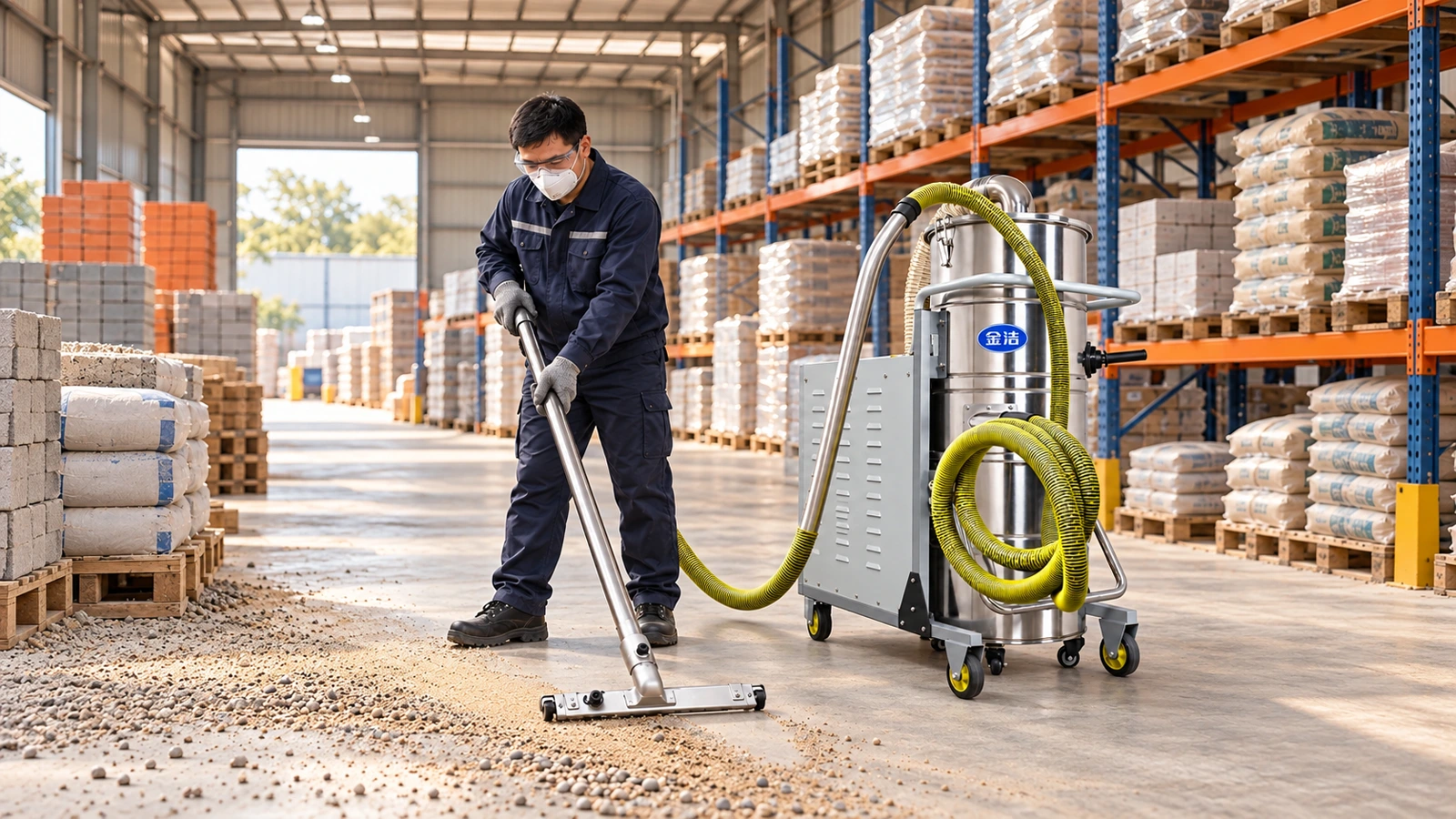
For sand/grit and ordinary solid waste in building-material aisles and loading areas; coordinate pickup/emptying with logistics routes.
First check the configurations related to the task, then verify the complete specifications and delivery version.
| Configuration item | This machine's page records |
|---|---|
| Airflow | 700m³/h |
| Vacuum pressure | 300mbar |
| Filter area | 32000cm² |
| Container capacity | 100L |
| Suction diameter | 75mm |
| Optional configuration | It can be equipped with a cyclone separator. |
| Power Supply Usage | 380V |
| Rated power | 7.5kW |
| Motor type | Turbine fan |
| Product model | JGY100-75 |
| Filtration method | Polyester fiber filter element |
| Filter-cleaning method | Manual dust removal cleaning |

The overall view of the machine shows the appearance of the machine; the following numbers are function description indexes, and do not claim to be verified internal component positions.
Verify the loading, unloading, and transfer routes; do not estimate the load capacity based on capacity alone.
Verify industrial power supply, start-stop operations, and actual gas circuit load.
Check the filter material and seal according to the medium; do not assume suitability for explosion-proof or toxic dust.
Maintain according to the instructions, and combine blockage and reduced suction with overall air circuit inspection.
Diameter, hose, and tools must be matched, noting blockage and air leakage.
When adding a separator, verify materials, interfaces, pressure loss, and emptying methods.
The following is an operational organization description, which is not the internal air circuit cross-section of this machine.
Material density, particle size, and risk; first exclude incompatible and hazardous materials
Check the filter material and seal according to the medium; do not assume suitability for explosion-proof or toxic dust. The suction head and airway are verified according to the machine interface.
Combine the route arrangement for industrial workstations concentrated cleaning tasks, pay attention to containers, suction, and filtration status.
When adding a separator, verify materials, interfaces, pressure loss, and emptying methods.
The turbine fan should be matched with the overall collection air path, and it needs to be verified together with the actual medium, attachments, and operating time period.
The compatibility of filter material, cleaning, sealing, and collection is jointly influential on maintenance; no certification can be assumed for special dust protection.
Hose length, bends, tools, filter material load, and emptying methods should be included in trial operation; rated parameters do not equal field wastewater recovery speed.
The middle is this model, and the left and right are configuration or material task references; different tasks do not mean simple high or low grades.
| Comparison criteria |  JGY80-40 | JGY100-75 |  JGY-3610P |
|---|---|---|---|
| Main tasks | Industrial power source workbench dust collection | Large-diameter industrial collection and separation system | Recycling of fibers, hair linters, and light dust. |
| Selection focus | Fixed position and air line load. | Inlet diameter, container and optional separator | Fiber winding and filter load. |
| Power supply | 380V | 380V | Verify the configuration documents of this model independently |
| Rated power | 4.0kW | 7.5kW | Verify the configuration documents of this model independently |
| Container | 80L | 100L | Verify the configuration documents of this model independently |
| Filter cleaning. | Polyester fiber filter element | Polyester fiber filter element | Verify the configuration documents of this model independently |
| Cleaning and routine maintenance | Manual dust removal cleaning | Manual dust removal cleaning | Verify the configuration documents of this model independently |
Include the machine, compatible nozzle and hose, filter media and necessary collection attachments in the quotation. List optional extras separately.
Based on actual power consumption, operating time, and pipe diameter, as well as the selection of the container and separator records, do not directly convert the energy saving ratio using the rated power.
Compare emptying, filter use, servicing and waste disposal on the same basis. A payback estimate requires these operating figures.
Verify the loading, unloading, and transfer routes; do not estimate the load capacity based on capacity alone. Specific disassembly, cycles, and consumables should be carried out according to the machine's manual.
Verify industrial power supply, start-stop operations, and actual gas circuit load. Specific disassembly, cycle, and consumables shall be carried out in accordance with the manual of this machine.
Check the filter material and seal according to the medium; do not assume suitability for explosion-proof or toxic dust. Specific disassembly, cycles, and consumables are executed according to the machine manual.
Maintain according to the instructions, and combine blockage and reduced suction with overall air circuit inspection. Specific disassembly, cycle, and consumables should be carried out according to the manual of this machine.
Match the inlet diameter, hose and tool, and check for blockages or air leaks. Use the model manual for disassembly, service intervals and consumables.
When adding a separator, verify materials, interfaces, pressure loss, and emptying methods. Specific disassembly, cycle, and consumables should be followed according to the machine's manual.
Verify the model number, nameplate, random accessories, and documentation.
Understand start/stop, collection, emptying, and abnormal stop procedures as specified in the machine's manual.
Integrate large-diameter industrial collection and separation with clear application conditions and operational boundaries.
Check the spare parts against the machine's version, interface, and filter material.
Fault description and inspection records should be provided first; service scope and arrangements shall be according to the actual agreement.
Check the agreed content, location, and cost for the equipment and working conditions.
This machine is more suitable for industrial workstations that require larger collection containers and suction channels, with a focus on turbine fans and air circuits. Whether to add a separator should be determined based on the material load.
The turbine fan should be matched with the overall collection air path, and the actual selection also needs to be combined with the material density, particle size, and risk.
Without corresponding protection and applicable evidence, cannot recommend the general industrial vacuum configuration; hot chips, sparks, and corrosive media require separate evaluation.
Based on the machine's nameplate, delivery version, and on-site circuit determination; the operation, filter cleaning, emptying, and transfer time are respectively verified, without committing to rated parameters for actual efficiency.
For the first machine, check the fixed workstation and air-system load. For this model, compare inlet diameter, container and optional separator against the material collected. A model number alone does not establish performance.
First, follow the instructions to shut down the machine, then check for blockage in the suction hose, load in the container, filter material, and seal. Do not directly determine motor damage, and do not disassemble while powered.
You cannot assume it is universal. Interfaces, materials, versions, and collection media should all be verified. You should not rely on the accessories configuration of a similar model for assurance.
Provide photos of the industrial workbench area for concentrated cleaning, the nature and quantity of collected materials, the distance of the hose, power supply, working hours, and the disposal point, to jointly determine if it is suitable.
Please explain the material density, particle size, and risk, and supplement the power supply, suction distance, and daily work schedule. We will combine this machine's configuration comparison tool with the filtration and waste removal plan.
Phone consultation: 0755-25621811