
01 Intended use
An electric drive suits fixed wash stations for equipment exteriors where a compatible industrial supply is available and eliminates fuel preparation. Check both electrical capacity and water supply.

This machine is more suitable for fixed cleaning in industrial areas with available industrial power, as electric drive eliminates the need for fuel refilling, making it convenient to incorporate into daily workstations. It allows for centralized handling of dirt on equipment surfaces.
An electric drive suits fixed wash stations for equipment exteriors where a compatible industrial supply is available and eliminates fuel preparation. Check both electrical capacity and water supply.
25 MPa pressure, 15 L/min flow; concentrated brushing of local dirt
Check motor, pump, inlet and outlet water connections, and hose gun separately; accessories are configured according to the delivery list of this model.
View the model's appearance and operation; discuss configuration against actual site conditions.
Provide cleaning tasks, site conditions and frequency to confirm suitable configuration.
Enquire about this modelSelect a similar task, then check the material, dirt, power, and water supply conditions together.
First check the sensitive parts and protection, then verify the equipment configuration.
View selection criteria →02First, check the floor material and drainage, then verify the equipment configuration.
View selection criteria →03First check the power supply protection and water source, then verify the equipment configuration.
View selection criteria →04First check the turn-around and hose route, then verify the equipment configuration.
View selection criteria →
Standard long pressure lance for factory hard floors with power and water. Choose nozzles and distance for materials and contamination.
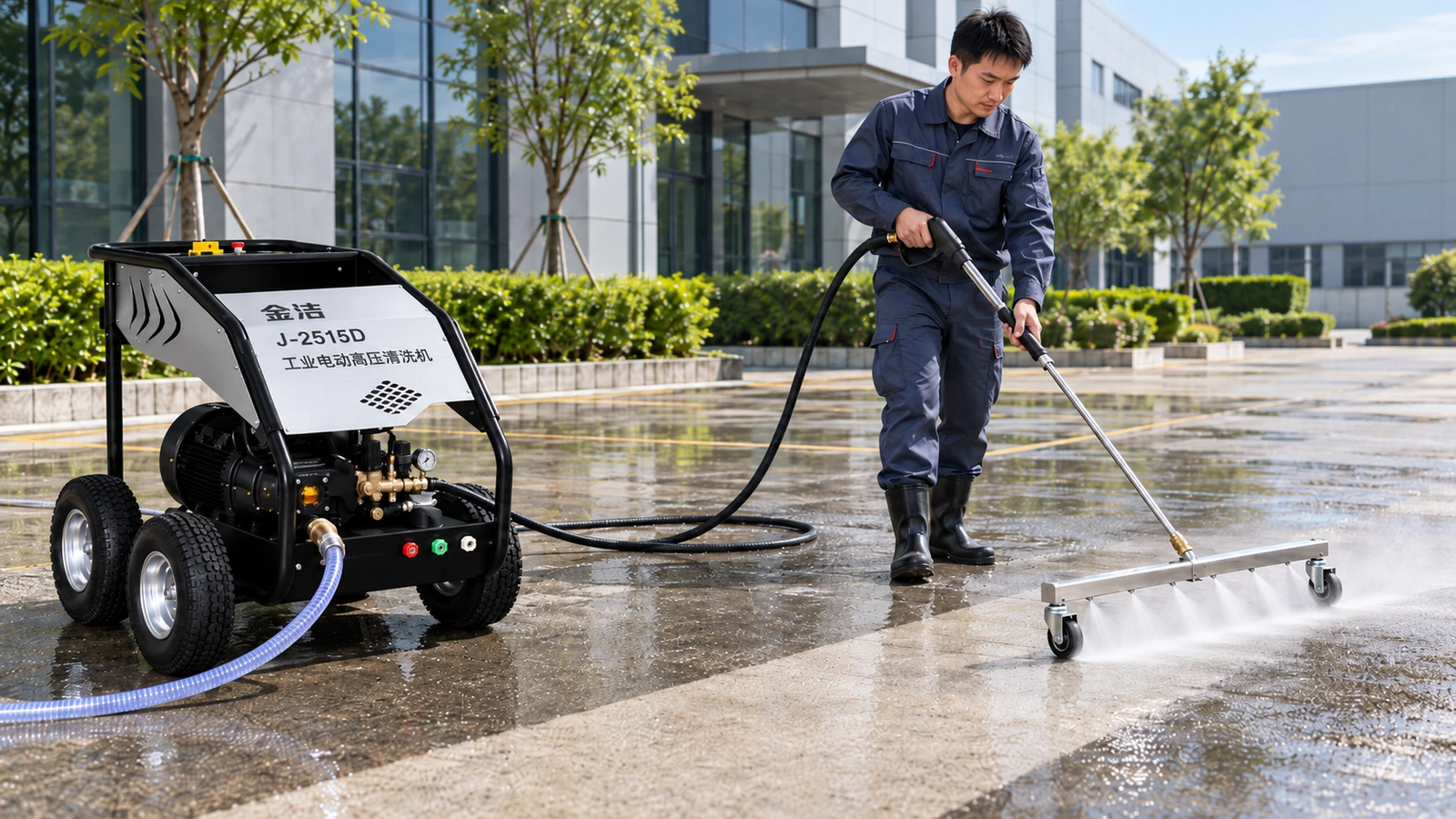
Optional multi-nozzle flushing is assessed for larger hard surfaces, subject to project/order. No nozzle count is presumed.
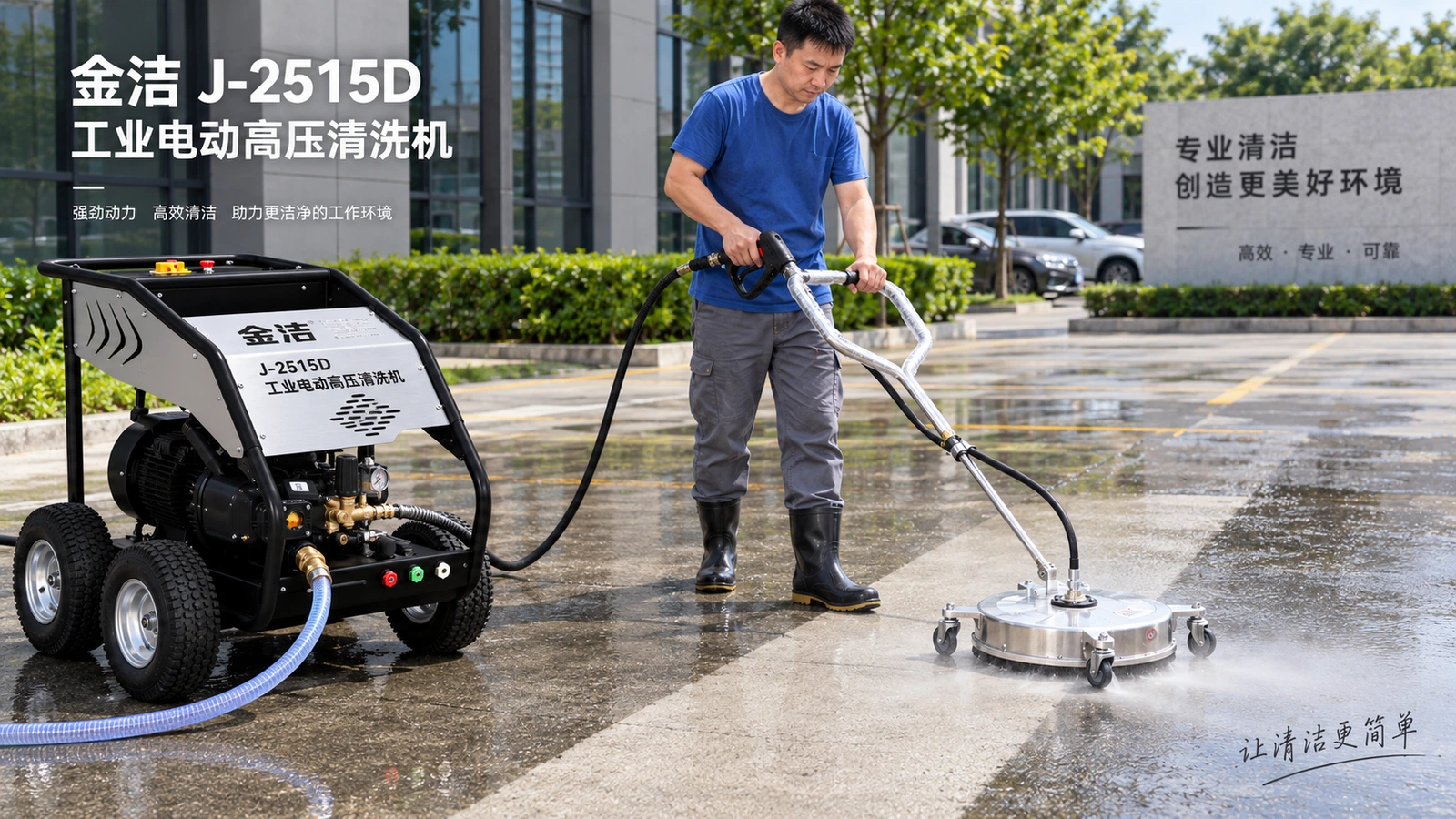
An optional surface cleaner is assessed for hard floors. Confirm material, supply and drainage first; the actual accessory is project/order dependent.
Everyday machines may be insufficient for contractors' factory-floor, equipment and vehicle tasks.
Workshops, workstations, concentrated property washing and vehicle maintenance need a stable electric configuration.
Pressure washing requires more than a machine: assess 380 V, supply and drainage.
The selection should be determined by the cleaning object, contaminants, water source, power supply, and working attachment, rather than solely based on the maximum pressure.
First check the material, sensitive areas, and dirt.
First, check the floor, dirt, and drainage routes.
First check the continuous water supply, power supply, and usage period.
First check the vehicle requirements, nozzle, and operating distance.
| Task | Objects and dirt | Water source and wastewater disposal | Judgment of working pressure and flow | Power, spray gun and accessories |
|---|---|---|---|---|
| The equipment should be rinsed at specific points on the exterior. | The outer shell, frame, and other water-washable surfaces; first distinguish between floating dust, adhered dirt, and oil stains. | The water source should be continuous, and wastewater can be collected; electrical and sensitive areas should be protected first. | Combine material test washing, working pressure, and nozzle compatibility, without using maximum pressure to replace continuous operating conditions. | Check industrial power according to the nameplate; long nozzle spray gun should be matched with appropriate nozzles, and direct impact on electrical parts should be avoided. |
| Factory hard-surfaced areas | First, confirm the floor material, joints, and coating; distinguish between mud and adhered dirt. | Check the water supply, drainage slope, and silt collection to avoid merely flushing the dirt to another place. | Balancing the requirements of sludge removal and flushing, the flow rate and discharge conditions should be evaluated together. | Check power supply and hose routing; the floor scrubber and flush attachment are optional, test the cleaning first to confirm effectiveness. |
| Fixed cleaning station | The task is relatively focused. First, list the daily cleaning objects, dirt, and usage time. | Confirm continuous water supply, inlet conditions, and wastewater discharge, to prevent water shortage from affecting operations. | Current standard pressure and flow are for configuration reference only; continuous operation conditions should be verified against the machine's original settings | First verify the power supply and protection; confirm the gun tube connection based on the working distance, and include the accessories and hose length in the delivery list. |
| Factory vehicle exteriors | First, distinguish between the paint surface, chassis, and sensitive components; then determine whether high-pressure washing is allowed based on the vehicle requirements. | Schedule vehicle parking, water supply, and wastewater collection without affecting traffic | From the perspective of material, nozzle, and working distance, it is not advisable to choose based on the higher pressure. | Check power supply, hose routing, and personnel isolation; use matching nozzles, avoiding impact on seals and electrical components. |
The above is a reference for selection, and the final decision is based on the machine's data, on-site conditions, and trial washing confirmation.
As per the confirmed unified attachment list, the delivery version and optional compatibility conditions shall be verified separately.
1 sets, used for controlling the working attachment. The spray gun and fitting are matched according to the delivery list of this machine.
0°, 15°, 25°, 40° each have 1 units. Select the nozzle and operating distance based on the material and type of dirt.
Feed water pipe 1 set; base high-pressure pipe 10 meter. The applicable range of this model's original record is 15 meter, check according to the delivery version.
Combine the attachment of dirt and material testing with washing, and check the allowed pressure, flow rate, and connection.
Used for floor tasks meeting the requirements of the annex, verify interfaces, water supply, and drainage conditions.
Multi-head jetting, dedicated jetting nozzles, and additional high-pressure hoses are optional based on the project; no commitment is made regarding the number of nozzles or multi-gun capability.
Standard and optional configurations are listed separately in the order. The fittings, pressure resistance, and compatibility range are based on the delivery documents.
Review day-to-day configuration first. Expand the full specifications for more detail.
| Key operating figures | |||
|---|---|---|---|
| Maximum pressure | 300bar(30MPa) | Normal pressure | 250bar(25MPa) |
| Flow | 15L/min | Pump configuration | Italian AR industrial precision ceramic plunger pump |
| Rotation speed | 1440r/min | High-pressure hose | 15m |
| Maximum inlet water temperature | 60℃ | ||
| Drive and electrical system | |||
| Power source | 7.5 kW copper-wound motor / 380 V 50 Hz | ||
| Machine configuration | |||
| Overall weight | 128kg | Machine dimensions | 1050×770×840mm |
A high-pressure washer cannot be judged solely by the pressure number. It is necessary to confirm the cleaning object, type of dirt, material, flow rate, power source, water supply, hose length, and daily continuous operating time simultaneously.
Balances routine coverage and supply requirements.
380 V power, water supply, wastewater disposal, materials, contamination and continuous working time.
First check the power supply, the cleaning object, and the water source, then compare the pressure rating, flow rate, and operating configuration.
| Corresponding projects |  J-1612D → |  J-2515D →Current Model |  J-2521D → |
|---|---|---|---|
| Current pressure diameter | Historical pressure diameter needs to be verified against the original data of this model | Maximum pressure: 300 bar (30 MPa); normal pressure: 250 bar (25 MPa). | Maximum pressure: 300 bar (30 MPa); normal pressure: 250 bar (25 MPa). |
| Flow rate record | 12L/min | 15L/min | 21L/min |
| Power and power supply | 220 V electric option | 7.5 kW copper-wound motor / 380 V 50 Hz | 9.2 kW copper-wound motor / 380 V 50 Hz |
| High-pressure hose length record | 10m | 15m | 15m |
| Existing size records | 700×420×480mm | 1050×770×840mm | 1050×770×840mm |
| Main judgment direction | General power point location, combined with the task and on-site conditions for selection. | Fixed industrial power for washing equipment exteriors and hard floors at a dedicated work point. | Compared to the conventional pressure direction, the focus is on the comparison of flow rate, water supply, and the demand for carrying away contaminants. |
The above is a reference to the current configuration of each model. Maximum pressure and regular pressure are separated. The delivery configuration, operating conditions, and hose length should be verified against the corresponding documentation and list.
The overall appearance of the machine is used for identification of the equipment, and component positions and internal connections are based on the specifications of this machine.
The high-pressure pump provides the rinsing water pressure, and the pressure and flow rate should be verified against the cleaning task; the pump type and allowable range are as per the machine's documentation.
The motor drives the high-pressure pump; before use, check the nameplate, on-site power supply and grounding conditions, and operate according to the instructions.
Operate according to the machine's specified pressure control, and do not adjust the pressure regulator or the safety protection settings on your own.
Continuous water supply is related to job stability; check the water source, inlet connection, and filtration conditions before use.
Connect the high-pressure hose to the working attachment, check the fittings, wear, and leakage; verify the length and pressure resistance according to the delivery list.
Select the nozzle based on the material and type of dirt, and adjust the working distance; the attachment configuration is as per the delivery list of this machine.
This is a function flow description and is not intended as the internal water circuit cross-section or component location diagram.
First, check the water source, inlet conditions, and sustainable water supply.
The motor drives the pump operation, and the operating conditions should be checked against the specifications of this machine.
Organized by matching piping and working attachment for flushing, no assumption of valve setting.
Arrange the work method according to the material, isolate splashing and collect the wastewater.
Do not take the maximum value as the continuous operating value, and do not take the theoretical hydraulic power as the rated power.
Working pressure, maximum pressure, and adjustable range are different for different diameters; they should be verified separately based on the original settings of this model and actual operating conditions.
Check the power supply and protection according to the voltage, power, and random instructions; the presence of power does not mean that any line is applicable.
Continuous water supply, pipeline pressure resistance, and nozzle need to be matched; do not derive multi-gun capability or fixed area efficiency based on the entire machine's flow rate.
When there are no actual data on human resources, energy, and maintenance, the energy saving ratio is not publicized.
Record the entire machine, the hose attachment, the on-site water supply, and the power supply configuration.
Record the actual labor hours, water, and electricity costs, taking into account the collection and discharge of waste.
Record piping, nozzle, sealing, and power maintenance according to this model's instructions, without estimating uniformly
When comparing, use the same task, usage duration, and cost range; separate the equipment investment from daily expenses.
Labor is recorded based on actual working hours, electricity cost is calculated based on actual electricity consumption and local electricity price, water cost and waste disposal are listed separately. 7.5 kW motor rated power cannot be directly used as the actual hourly electricity consumption; when switching tasks or nozzles, the usage conditions should be re-recorded.
Before maintenance, check the user manual for this machine to confirm the type of oil, maintenance schedule, and operating procedures; if there are any unclear points, bring the model number and usage conditions to consult after-sales service.
Check the water intake requirements and visible connections according to the instructions, and record any leaks, loosening, or abnormalities.
Check the hose, fittings, and spray nozzle condition, without using web images for reconnection.
Verify the power supply and protection according to the instructions, record the operation time and abnormalities, and contact after-sales service.
It is recommended to retain the machine model, configuration sheet, usage time, water source, inspection results, and part replacement records. The maintenance cycle and disassembly requirements for the pump, valve, motor, and piping are subject to the corresponding delivery version.
The following is for describing the phenomenon to after-sales service, and does not replace the equipment maintenance manual.
Stop the machine according to the random manual; record water source, water inlet connection, and external hose status. Do not misinterpret insufficient water supply as a pressure setting issue, and do not modify the connections according to the image.
Record the used nozzle, water supply, working distance, and the phenomena before and after the change. After stopping the machine, contact after-sales service according to the instructions. Do not adjust the pressure or safety valve setting on your own.
Stop work and isolate the site. Follow the random instructions to disconnect power and depressurize before handing it over to qualified personnel for inspection. Do not disconnect or repair pipes under pressure. Do not perform repairs on pumps and valves based on the position map on the web.
Delivery, use, and maintenance can be communicated in advance; service scope, schedule, and costs are confirmed based on the actual project and agreement.
Verify the model, configuration, random documents, and appearance according to the order.
As per the delivery equipment instructions, introduce the operation, shutdown, and precautions.
Verify the usage method based on the task, water and electricity conditions, and on-site conditions.
Verify applicable accessories based on model, version, and original component specifications
After fault communication, service is arranged according to the actual service scope and agreement.
Schedule maintenance based on usage conditions and service agreements.
Make judgment based on the tasks, configuration, and usage conditions of this model.
The conventional pressure 25 MPa and the maximum pressure 30 MPa should be understood separately. The maximum value cannot be considered as a guarantee for continuous operation, and the conditions for use in conjunction with the nominal flow rate still need to be checked in the machine's manual.
The pipe length is indicated as 15 meters, and the general base accessory is 10 meters; the corresponding version ranges need to be confirmed separately; when selecting the model, check the order and delivery list together.
Two models should be checked against current pressure and flow records, and compared based on waste, water source, and drainage requirements; no direct commitment is made that a particular model is faster for all tasks.
First confirm the material and no-water area, then select the nozzle and attachments according to the task, and do not use a fixed working method based solely on the machine's pressure.
Cleaning object, surface material, dirt, no-water areas, working distance, water supply and drainage conditions. For electric solutions, check the on-site power supply.
Verify each item on the order and delivery list. The long brush, angle nozzle, and base hose are separate from the additional hose length, rotating head, and floor scrubber, and are not determined by the image.
Retain the J-2515D name plate, configuration sheet, and random instructions. Check power supply and protection, inlet water, piping, and spray gun. Oils, cycles, and disassembly are according to the machine's instructions. The website does not provide its own cycle.
Follow the random instructions of J-2515D for shutdown processing, record the water source, fittings, pipelines, and abnormal phenomena, then contact after-sales. Do not disassemble the pipe under pressure, and do not modify the pressure regulating or protection components according to the web image.
Tell us the cleaning object, the dirt, and the water supply conditions, and together see how the J-2515D is configured.
Phone consultation: 0755-25621811
Provide the cleaning object, soil, material, power/fuel, water, pressure-hose length and daily working time to assess this model.