
01 Intended use
After cleaning, the damp areas are assisted in drying by auxiliary air drying.


This machine is more suitable for assisting in air drying after carpet and floor cleaning, by combining air flow with ventilation; it does not replace cleaning or water extraction, and requires prior treatment of standing water and proper safety wiring.
After cleaning, the damp areas are assisted in drying by auxiliary air drying.
Enhance air flow to connect with the drying process after recovery
Water treatment and ventilation layout, power and accessories should be checked according to the machine version.
Material, moisture content, and ventilation
Pre-emptive recovery of standing water and power source location.
Staff access and safety wiring.
Environmental humidity and open inspection
After cleaning, the damp areas require auxiliary drying and should be clearly defined in terms of the target area and the work procedures, and cannot be directly applied from similar equipment.
Enhance air flow to connect with the drying process after recovery; water treatment and ventilation layout are as important as on-site resources and personnel arrangements.
First, remove the standing water and isolate and inspect the area for dryness before opening it for joint arrangement, to avoid only completing the intermediate process.
Material, moisture content, and ventilation
Pre-emptive recovery of standing water and power source location.
Staff access and safety wiring.
Environmental humidity and open inspection
| Field or task | Conditions that require verification | Selection check |
|---|---|---|
| After carpet cleaning, drying is required. | Material, moisture content, and ventilation | First confirm the material, moisture content, and ventilation, then determine if carpet cleaning is suitable for drying after cleaning. |
| Inlet clear water treatment after | Pre-emptive recovery of standing water and power source location. | With the premise of prior recovery of visible water and power source locations, check the tools, operating methods, and risk boundaries. |
| Public area has localized dampness | Staff access and safety wiring. | Incorporate personnel passage and safety wiring into the on-site plan, not just compare individual specifications. |
| Nighttime zone recovery for use | Environmental humidity and open inspection | Combine the environmental humidity and open inspection schedule to finalize and hand over, with complex operating conditions tested or on-site verification first. |
The auxiliary drying function does not replace water extraction, cleaning, or dehumidification, and does not guarantee a fixed drying time; avoid use in areas with standing water and in environments not compatible with electrical systems.
The scenario is for illustrating the applicable conditions and is not a case of a completed customer or actual test results.
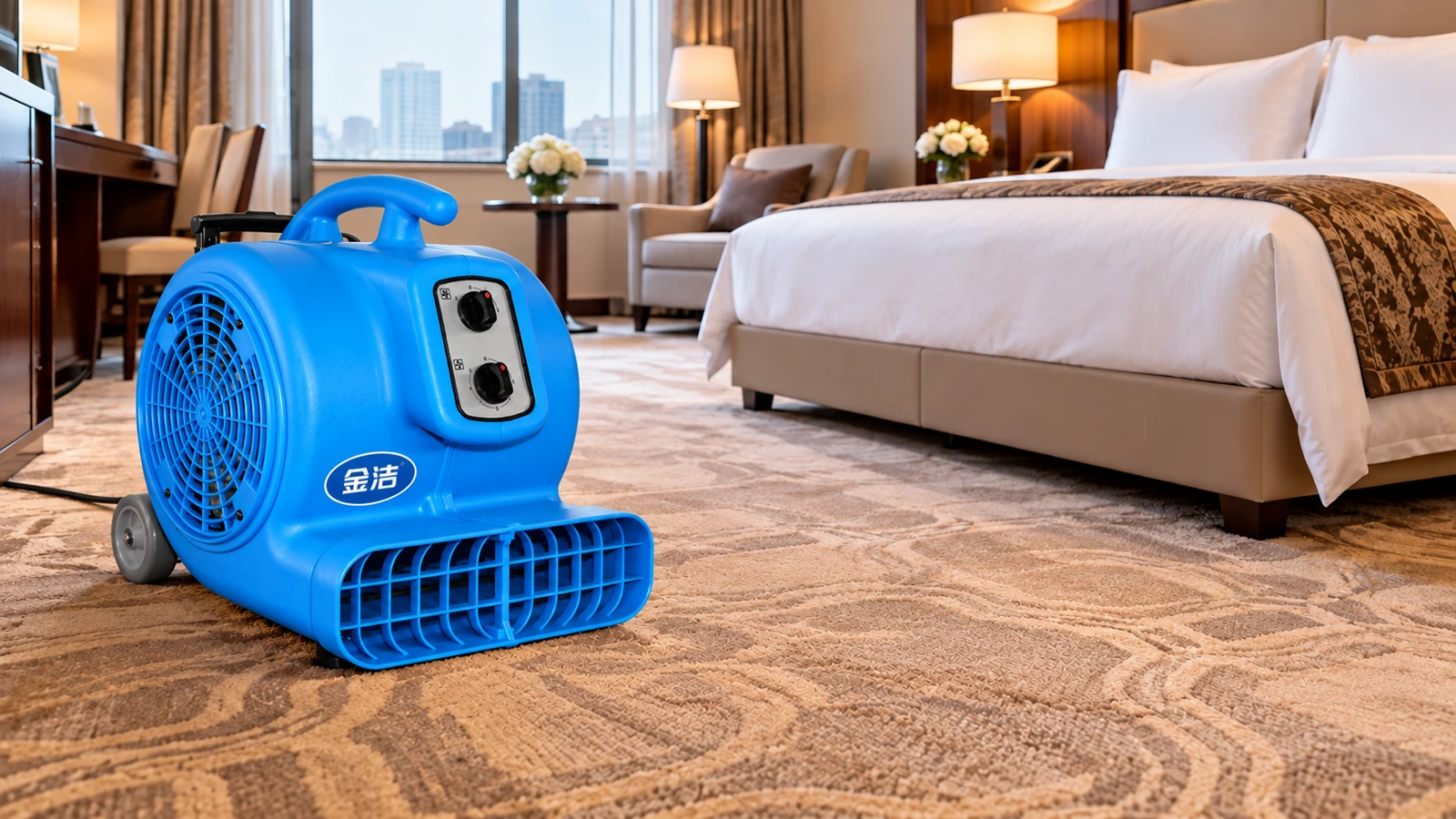
Assist guest-room carpet drying and check moisture against humidity and access needs.
View the corresponding scene description →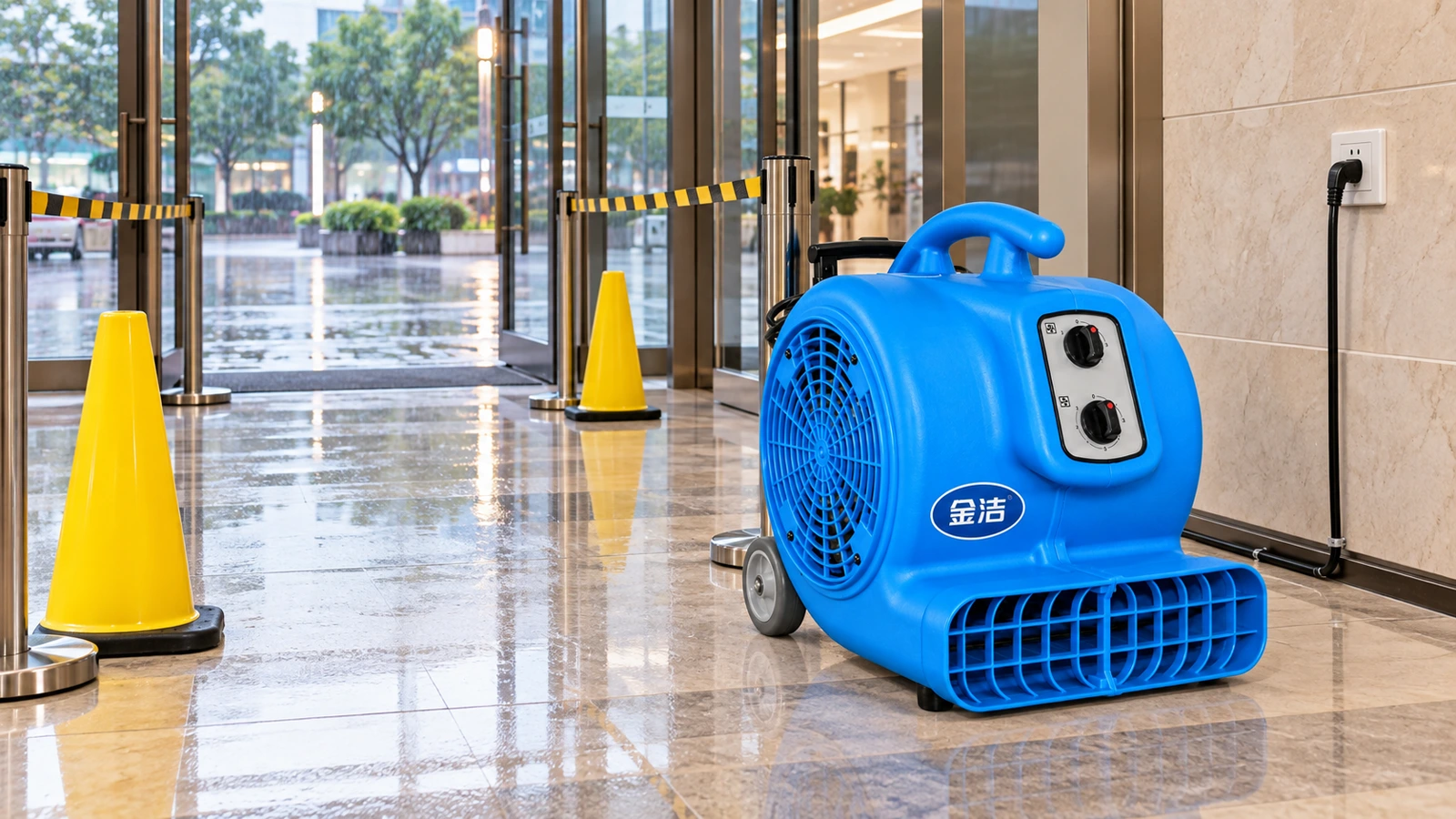
Remove visible entrance water first, then dry by zone with access separation and safe cables.
View the corresponding scene description →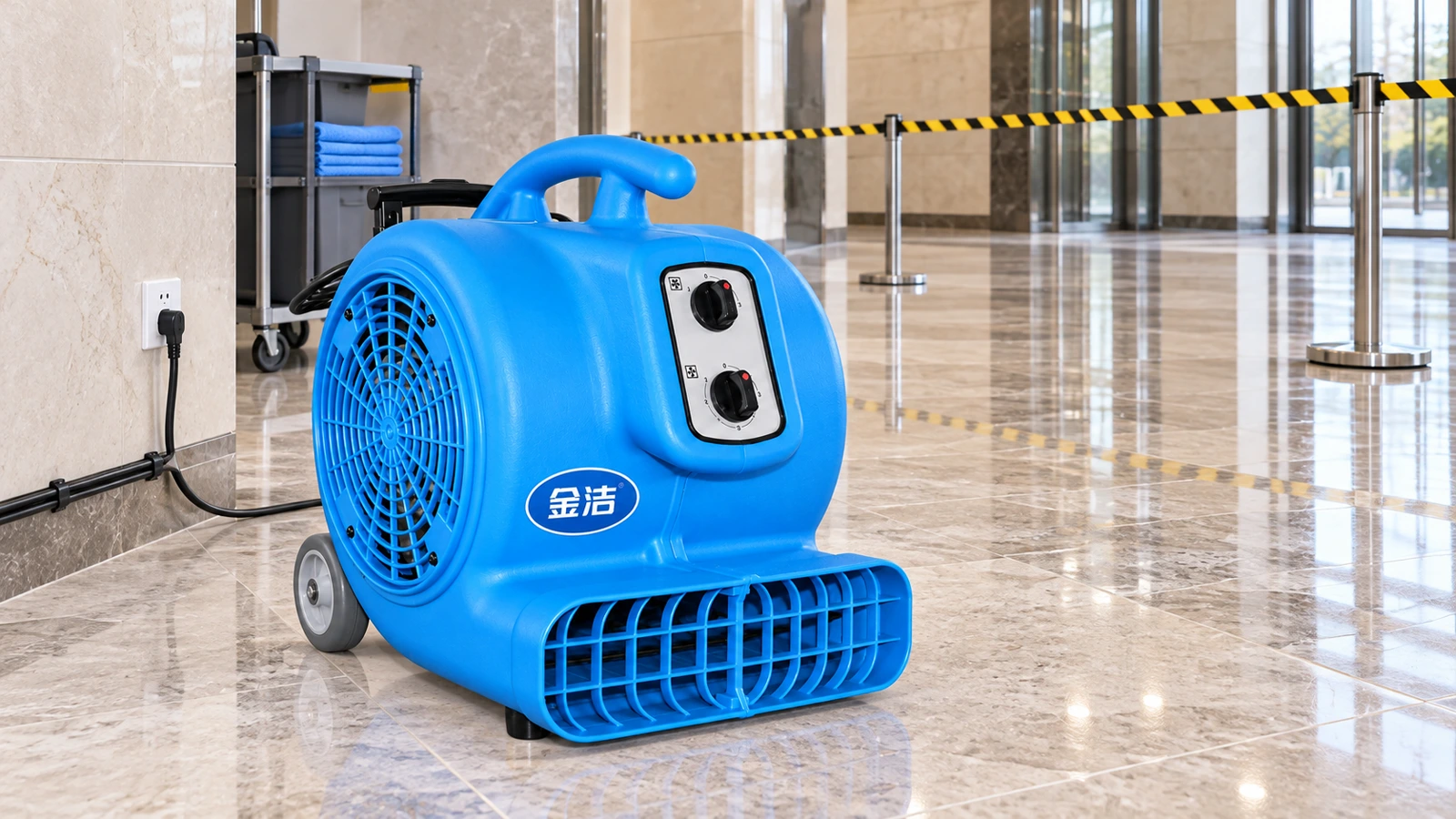
Assist drying according to the stone process and ventilation; inspect before reopening.
View the corresponding scene description →The first screen is for positioning; the complete specifications should be verified against the original data of the machine and the corresponding delivery version.
| Configuration item | Original page registration content |
|---|---|
| Equipment category | Jinjie J-25B Floor Air Mover |
| Product model | J-25B |
| Power | 900W |
| Operating voltage | 220V |
| Overall weight | 14kg |
| Cord length | 6m |
| Gear position | High, medium, and low three levels |
| Machine dimensions | 490×390×490mm |
Overall appearance of the machine and function explanation; 01-06 are explanatory indexes, and are not marked for unverified internal coordinates.
Arrange based on floor stability and passage requirements, without blocking exits.
By combining air flow with ventilation, it is not intended to replace cleaning or water absorption with drying.
Arrange according to the allowable position and the site material, without fabricating adjustable angle.
Avoid standing water and crowds, electrical requirements are based on the nameplate and instructions.
Organize wires after shutdown, verify storage and handling conditions
Check the intake and exhaust areas and the shell after power-off, and do not dismantle the machine with electricity.
Combine the image to understand the appearance, operation, or accessories of the machine; specific components and delivery configuration are subject to the corresponding documentation.
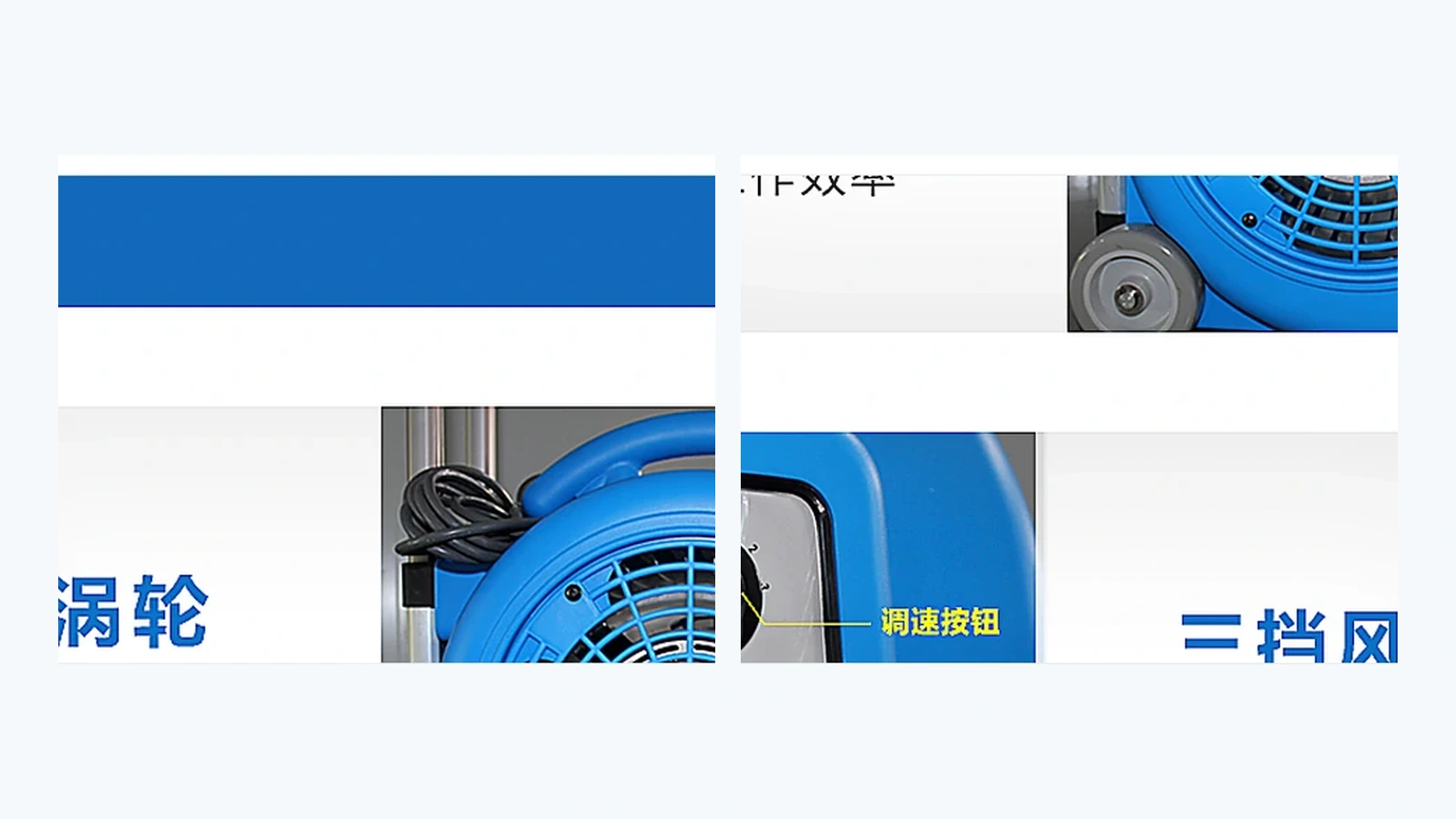
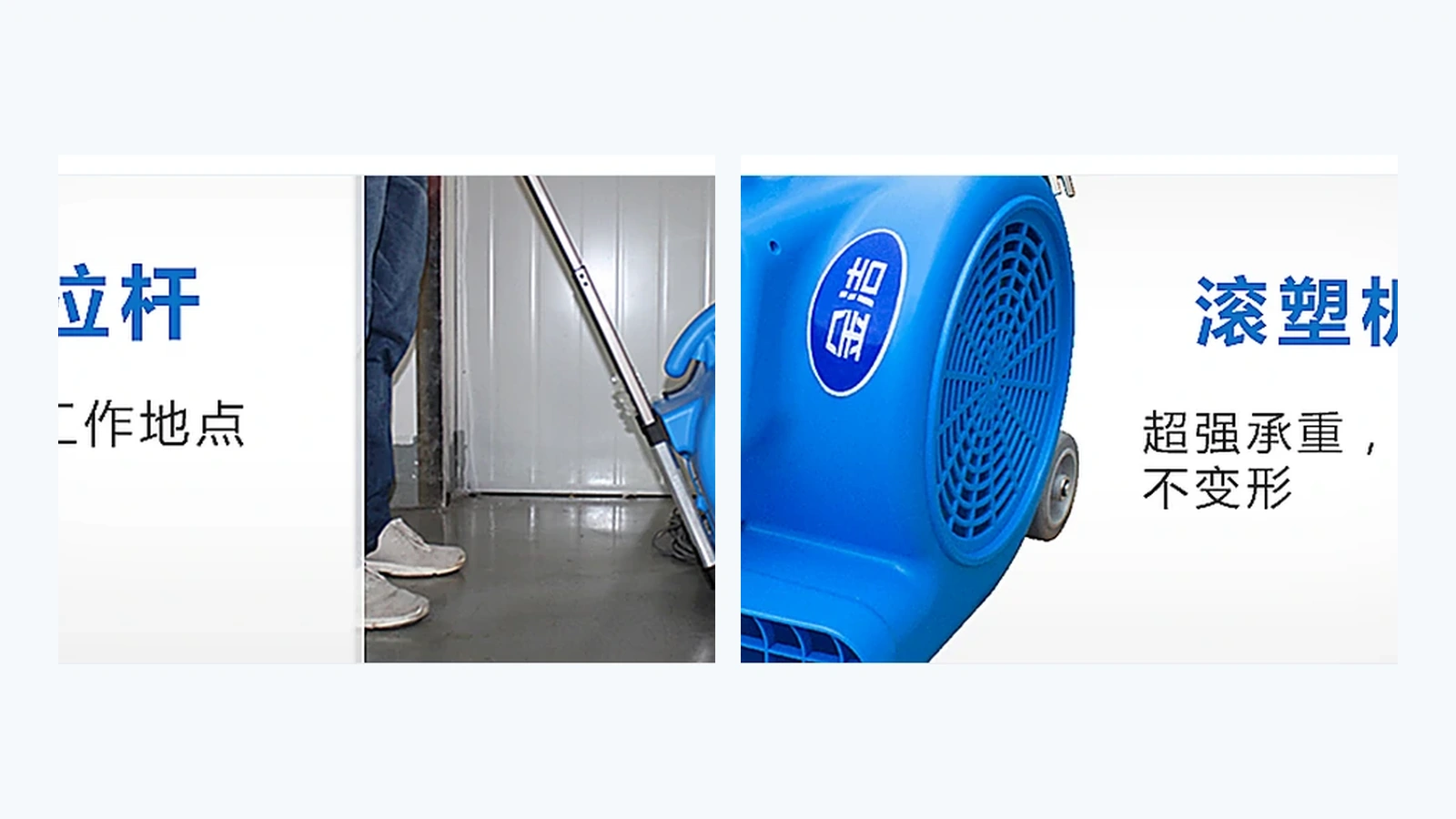
The work process is used to explain the process and personnel coordination, and does not replace the machine operation instructions and internal structure documents.
Material, moisture content, and ventilation, and executed according to the machine instructions and On-site conditions
Recycle the standing water and power source first, and proceed according to the machine instructions and on-site conditions.
Staff access and safety wiring, and execution according to the machine instructions and on-site conditions.
Environmental humidity and open inspection, and execute according to the machine instructions and on-site conditions.
Enhance air flow to connect with the drying process after recovery; the material, moisture content, ventilation, and environmental humidity, along with open inspections, should all be considered together.
The auxiliary drying function does not replace water extraction, cleaning, or dehumidification, and does not guarantee a fixed drying time; avoid use in areas with standing water and in environments not compatible with electrical systems.
Check against the actual attachments, interfaces, materials, or control requirements of the machine, and do not list optional components as standard configurations.
Combine the image to understand the appearance, operation, or accessories of the machine; specific components and delivery configuration are subject to the corresponding documentation.
This model is centered. Left and right are real configurations or process references; different tasks are not simply high or low settings, and cannot be judged solely by the model number.
| Comparison criteria | 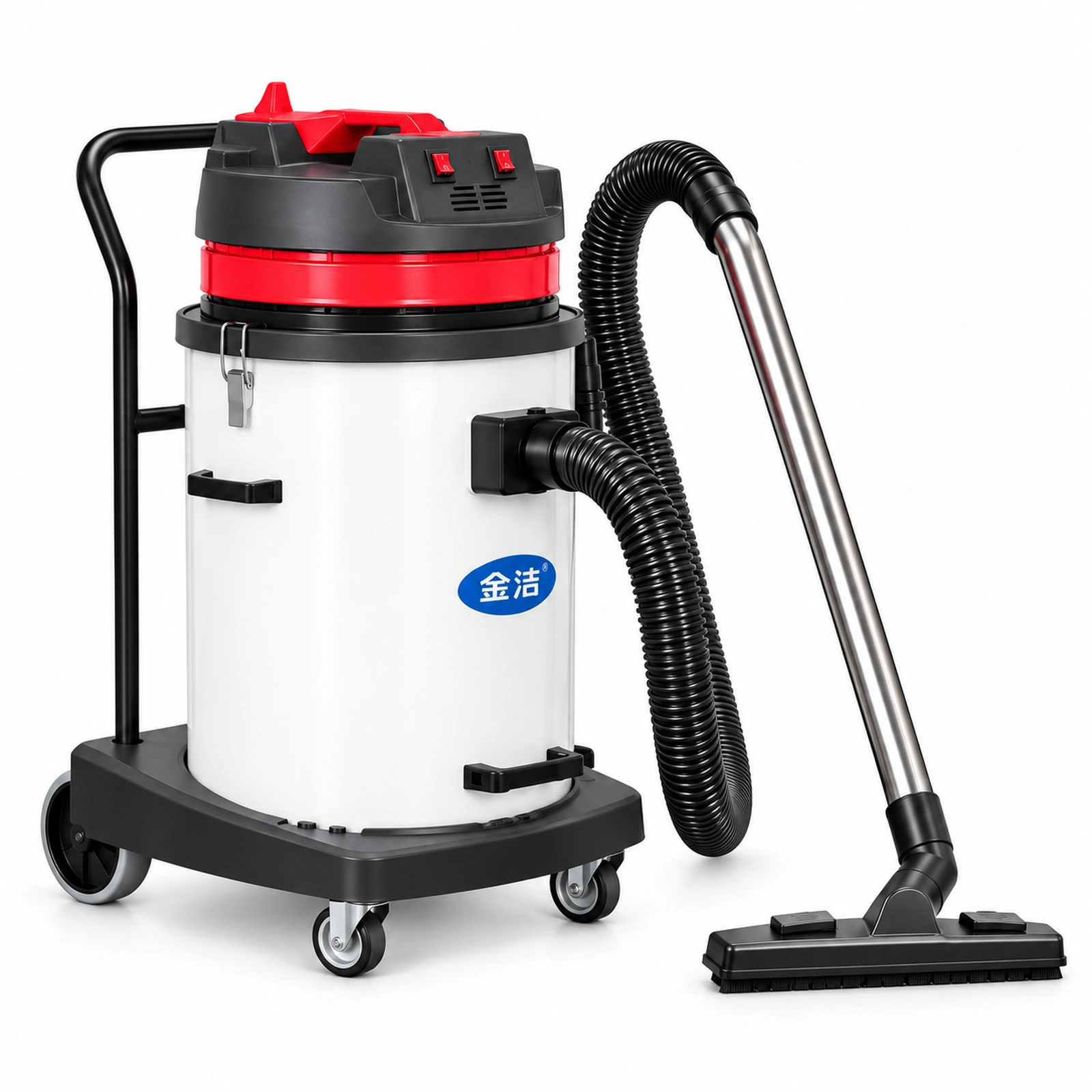 CL70-2 | J-25B |  J-45S |
|---|---|---|---|
| Main tasks | Wet and soiled area recovery in commercial mall public areas. | After cleaning, the damp areas are assisted in drying by auxiliary air drying. | Carpet and meeting room area carpet cleaning. |
| Configuration function. | Local recovery and waste removal should be isolated from pedestrian flow and integrated with waste collection. | Enhance air flow to connect with the drying process after recovery | Spray washing and wastewater recovery connected area operation. |
| Selection focus | People flow isolation and waste disposal route. | Water treatment and ventilation layout. | Carpet material and dry open. |
The main unit, actual attachments, tools, or consumables are compared according to the same list; optional accessories are not considered as standard fittings.
Include the operation of assisting in drying wet areas after cleaning, turning the scene, and handling standing water in the preparation related to ventilation layout, without nominating numerical values to estimate actual output.
Record the inspection and drying of the equipment before opening, as well as the maintenance and disposal arrangements for consumables, without setting a fixed cost-saving ratio or payback period.
Arrange based on floor stability and passage requirements, without blocking exits. Specific disassembly, maintenance cycles, and accompanying materials should be checked according to the machine's instructions.
By combining air flow with ventilation, it is not intended to replace cleaning or water absorption with drying. Specific disassembly, maintenance cycles, and accompanying materials should be checked according to the machine's instructions.
Arrange according to the allowable position and the site material, without fabricating adjustable angles. Specifically, check the disassembly and maintenance cycles as well as the accompanying materials according to the machine's instructions.
Avoid standing water and crowds, electrical requirements are based on the nameplate and instructions. Specific disassembly, maintenance cycles, and accompanying materials should be checked against the machine's instructions.
Organize wires after shutdown, verify storage and handling conditions. Specific disassembly, maintenance cycles, and supporting materials should Be verified according to this machine's instructions
Check the intake and exhaust areas and the shell after power-off, and do not dismantle the machine with electricity. Specific disassembly, maintenance cycle, and accompanying materials are verified according to the specifications of this machine.
Verify the model number, nameplate, random accessories, and delivery documents.
Follow the machine instructions to remove standing water and isolate and safely start and stop the machine.
Assist in drying the damp areas after cleaning and coordinate the usage conditions based on on-site process communication.
Check the parts according to the interface, material, and delivery version.
Please provide the fault symptoms and inspection records; service scope and schedule are according to the agreement.
Inspection content, service location, cost, and cycle are subject to actual agreement.
This machine is more suitable for assisting in air drying after carpet and floor cleaning, by combining air flow with ventilation; it does not replace cleaning or water extraction, and requires prior treatment of standing water and proper safety wiring.
Enhance air flow to connect with the drying process after recovery; the material, moisture content, ventilation, and environmental humidity, along with open inspections, should all be verified together.
The auxiliary drying function does not replace water extraction, cleaning, or dehumidification, and does not guarantee a fixed drying time; avoid use in areas with standing water and in environments not compatible with electrical systems.
The reference model focuses on the recovery of wet contaminants in the public areas of shopping malls. This model focuses on assisting in the drying of moist areas after cleaning. First, separate the processes and accompanying equipment, then compare the corresponding original specifications, without judging based on model numbers.
Check the material, moisture content, and ventilation; prior to commencing, recover any standing water and locate the power source. Ensure personnel passage and safe wiring. Assess the environment's humidity and open areas. For complex conditions, combine small-scale testing with on-site evaluation.
Organize the task according to "Remove standing water and isolate → Verify ventilation and safety wiring → Assist with on-site air supply → Check drying in person before opening"; the specific operations are decided jointly by the site and the machine instructions.
First, pay attention to the body and placement, wind direction arrangement, and maintenance checks. Before servicing or disassembly, isolate the power as directed in the manual. Use the service interval specified for the model.
Provide photos of the drying area after carpet cleaning, explaining the task, existing equipment, and specific conditions for water handling and ventilation layout, and then determine whether this machine is suitable.
Please describe your auxiliary drying tasks for wet areas after cleaning, including material, moisture content, and ventilation, as well as environmental humidity and open check. We will compare the on-site solution together with the configuration of this machine.
Phone consultation: 0755-25621811