
01 Intended use
Suitable for mobile rinsing around outdoor facilities and equipment, gasoline-powered reduces reliance on power sources; when changing locations, arrange water supply, fuel, and personnel isolation together.

This machine is more suitable for cleaning the exterior of outdoor facilities and equipment without a fixed power source, with gasoline power allowing for easy repositioning between points, reducing reliance on on-site power supply locations.
Suitable for mobile rinsing around outdoor facilities and equipment, gasoline-powered reduces reliance on power sources; when changing locations, arrange water supply, fuel, and personnel isolation together.
Maximum 28 MPa, 15 L/min flow; centralized treatment of surface adhered stains.
Engine, pump, piping, and working attachment should be checked separately; gasoline-powered units should be arranged according to outdoor conditions.
View the model's appearance and operation; discuss configuration against actual site conditions.
Provide cleaning tasks, site conditions and frequency to confirm suitable configuration.
Enquire about this modelSelect a similar task, then check the material, dirt, power, and water supply conditions together.
First check the personnel isolation, then verify the equipment configuration.
View selection criteria →02First check the surface material, then verify the equipment configuration
View selection criteria →03First check the water source, then verify the equipment configuration.
View selection criteria →04First check the turn-around route, then verify the equipment configuration.
View selection criteria →
The standard long lance serves road-facility and property-outdoor surface tasks. Match distance to material and soil, with traffic separation, drainage and operator protection.
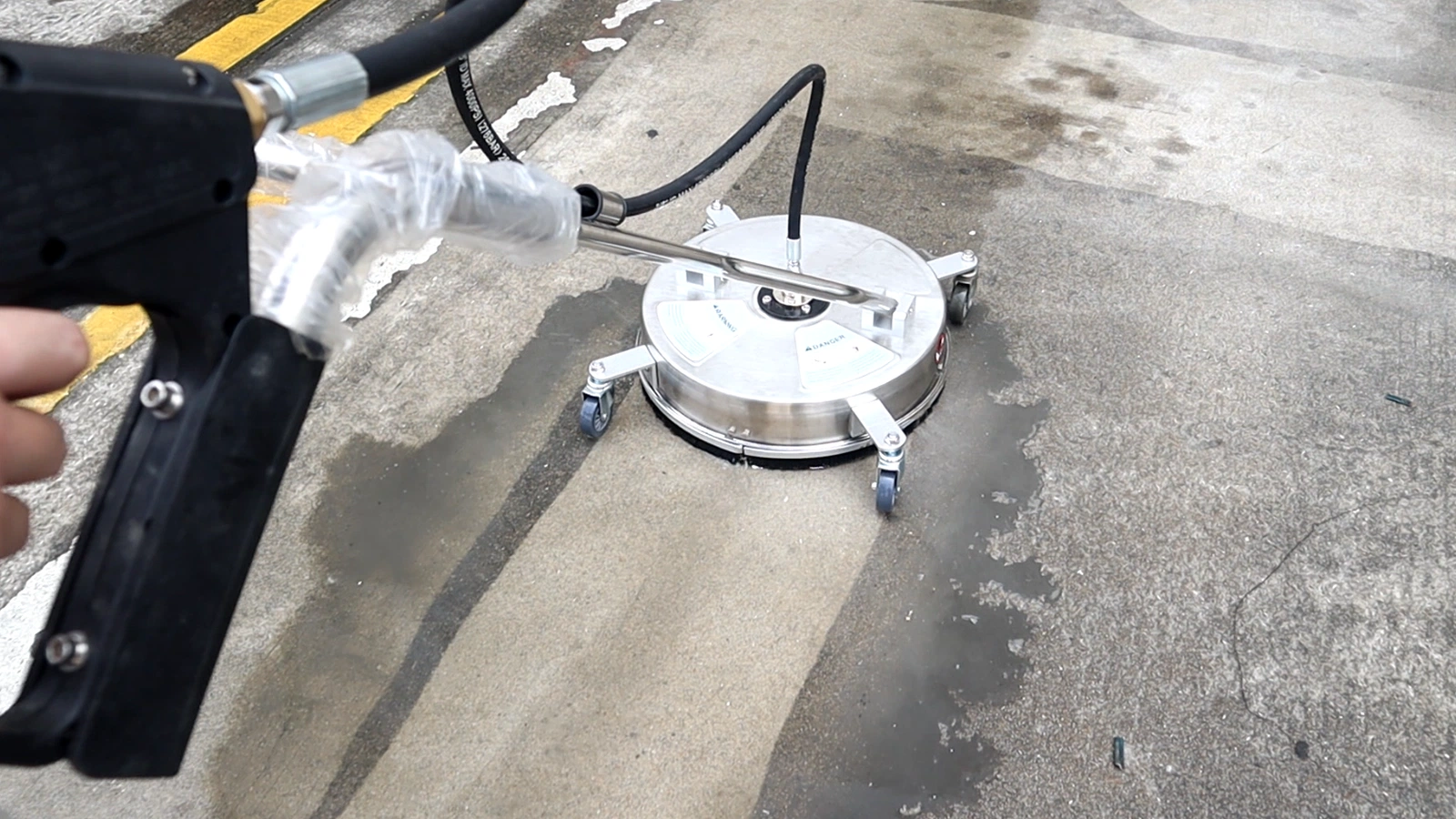
A surface cleaner is optional for hard floors. Confirm material, water and drainage before work; configuration follows the project and order.
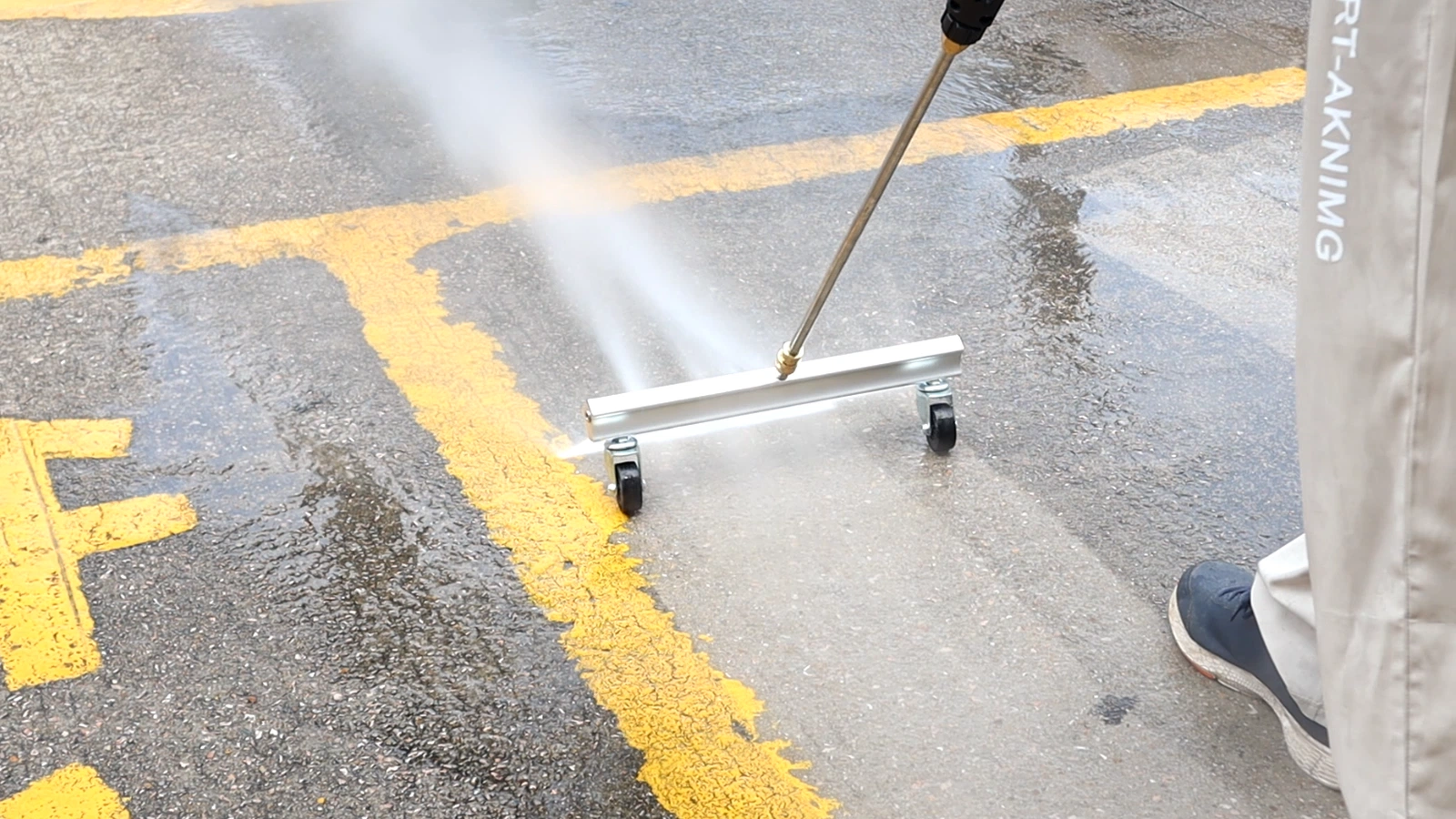
A multi-nozzle flushing attachment is optional for floor flushing. Confirm the project/order configuration; nozzle count is not assumed.
Fixed power can be inconvenient at vehicle, road and equipment cleaning points.
Equipment needs to move with the task rather than remain at one station.
Select the nozzle according to the material and dirt type, and set the distance and operating pressure.
The following is a selection reference, which does not replace original technical data, on-site verification, and trial washing.
Focus on checking personnel isolation.
Focus on the surface material.
Focus on checking the operational water source.
Focus on the transition route.
| Field or task | Configuration that requires attention | J-2815H Selection Judgment |
|---|---|---|
| Road dust maintenance | Staff isolation; pressure, flow, and tool compatibility. | Test the cleaning with materials, dirt, and site conditions, and do not rely on the maximum pressure promise for cleaning effectiveness. |
| Factory equipment exterior. | Surface material; pressure, flow rate, and working attachment compatibility. | Test the cleaning with materials, dirt, and site conditions, and do not rely on the maximum pressure promise for cleaning effectiveness. |
| Outdoor construction equipment | Job water source; pressure, flow rate, and nozzle matching. | Test the cleaning with materials, dirt, and site conditions, and do not rely on the maximum pressure promise for cleaning effectiveness. |
| Disperse moving points. | Scene transition route; pressure, flow rate, and working attachment matching. | Test the cleaning with materials, dirt, and site conditions, and do not rely on the maximum pressure promise for cleaning effectiveness. |
The long pressure lance is standard. Surface cleaners, multi-nozzle flushing and rotary nozzles are optional, subject to project and order.
The long pressure lance targets surface cleaning.
Match nozzles to material, soil and distance to help reduce repeated manual cleaning.
Select accessories for the hard-floor task.
Plan for material, water and drainage; confirm the project configuration and order.
Select accessories for coverage and soil conditions.
No nozzle count or simultaneous multi-lance capability is assumed. Discuss special configurations by project.
Review day-to-day configuration first. Expand the full specifications for more detail.
| Key operating figures | |||
|---|---|---|---|
| Maximum pressure | 280bar(28MPa) | Flow | 15L/min |
| High-pressure pump | Italian AR industrial precision ceramic plunger pump | Rotation speed | 3600r/min |
| High-pressure hose length | 15m | Maximum inlet water temperature | 60℃ |
| Drive and electrical system | |||
| Engine | Honda GX390 | Engine horsepower | 13HP |
| Fuel capacity | Gasoline 2.5 L | ||
| Machine configuration | |||
| Body material | Thickened 304 stainless steel | Weight | 90kg |
| Dimensions | 980×820×830mm | ||
A high-pressure washer cannot be judged solely by the pressure number. It is necessary to confirm the cleaning object, type of dirt, material, flow rate, power source, water supply, hose length, and daily continuous operating time simultaneously.
Single port quick connect 0°, 15°, 25°, 40°, each 1 pieces; other nozzles are optional, confirmed according to the project and order.
Rotary nozzles, surface cleaners, multi-nozzle flushing bars, specialist jetting nozzles, extra high-pressure hose and other accessories outside the standard package are confirmed for each order.
First check your power and water supply conditions, then compare the working pressure, flow rate, and attachments to determine which model is more suitable.
| Corresponding projects |  J-2815C → |  J-2815H →Current Model |  J-3515H → |
|---|---|---|---|
| Pressure diameter | Confirm the configuration of this machine separately during selection. | Confirm the configuration of this machine separately during selection. | Confirm the configuration of this machine separately during selection. |
| Flow rate record | Confirm the configuration of this machine separately during selection. | Confirm the configuration of this machine separately during selection. | Confirm the configuration of this machine separately during selection. |
| Power Records | Confirm the configuration of this machine separately during selection. | Confirm the configuration of this machine separately during selection. | Confirm the configuration of this machine separately during selection. |
When comparing in the direction of equal pressure and higher pressure, the working diameter still needs to be confirmed separately. Specifically, the configuration and operating conditions should be confirmed together with each machine's data when selecting the model.
When there are no actual data on human resources, energy, and maintenance, the energy saving ratio is not publicized.
Record the entire machine, the hose attachment, the on-site water system, and the fuel and mobile accessories.
Record the actual time spent by personnel, water, and fuel, taking into account the collection and discharge of waste.
Record piping, nozzle, sealing, and power maintenance according to this model's instructions, without estimating uniformly
When comparing, use the same task, usage duration, and cost range; separate the equipment investment from daily expenses.
Before maintenance, check the user manual for this machine to confirm the type of oil, maintenance schedule, and operating procedures; if there are any unclear points, bring the model number and usage conditions to consult after-sales service.
Check the water intake requirements and visible connections according to the instructions, and record any leaks, loosening, or abnormalities.
Check the hose, fittings, and spray nozzle condition, without using web images for reconnection.
Check the engine and fuel requirements as per the machine's instructions, record any abnormalities and usage conditions, then contact after-sales service.
First, understand the configuration and operational division by examining the overall appearance of the machine; the position and configuration of internal components can be further understood in conjunction with the machine's documentation.
Combine the complete appearance of the entire machine to check the equipment movement route and operational position.
Check the gasoline plan against the engine version, outdoor conditions, and fuel requirements first.
Check the pump type and operating conditions against the model nameplate and manual.
Check the water source, connections, and continuous water supply conditions before work.
Check the delivery hose length, fittings, and pipeline pressure rating separately.
Combine the cleaning material and task to confirm the applicable working attachment configuration.
This is a function flow description and is not intended as the internal water circuit cross-section or component location diagram.
First, check the water source, inlet conditions, and sustainable water supply.
The motor drives the pump operation, and the operating conditions should be checked against the specifications of this machine.
Organized by matching piping and working attachment for flushing, no assumption of valve setting.
Arrange the work method according to the material, isolate splashing and collect the wastewater.
Do not take the maximum value as the continuous operating value, and do not take the theoretical hydraulic power as the rated power.
Working pressure, maximum pressure, and adjustable range are different for different diameters; they should be verified separately based on the original settings of this model and actual operating conditions.
Gasoline internal combustion engines are not used in indoor or semi-enclosed spaces; outside, the machine's instructions still apply to tailpipe emissions, fire sources, and fuel management.
Continuous water supply, pipeline pressure resistance, and nozzle need to be matched; do not derive multi-gun capability or fixed area efficiency based on the entire machine's flow rate.
Through the overall view, understand J-2815H Honda GX390 main unit, long gun, high-pressure hose, and inlet connection, which is convenient for combining with your task for configuration.

Shows the petrol-engine area and nearby components for inspection reference. Follow the supplied manual for maintenance.

Shows pump and gauge locations for inspection and maintenance reference. Follow the supplied manual for procedures.
Confirm against the project configuration and order. Flushing-nozzle count needs separate checking and does not establish simultaneous multi-lance capability.
The standard high-pressure hose is 10 meters. If on-site different hose lengths or additional high-pressure hoses are required, please check according to the project configuration and order. The hose length descriptions for the existing models on this page remain unchanged.
Delivery, use, and maintenance can be communicated in advance; service scope, schedule, and costs are confirmed based on the actual project and agreement.
Verify the model, configuration, random documents, and appearance according to the order.
As per the delivery equipment instructions, introduce the operation, shutdown, and precautions.
Verify the usage method based on the task, water and electricity conditions, and on-site conditions.
Verify applicable accessories based on model, version, and original component specifications
After fault communication, service is arranged according to the actual service scope and agreement.
Schedule maintenance based on usage conditions and service agreements.
Make judgment based on the tasks, configuration, and usage conditions of this model.
The maximum value cannot be directly substituted for normal working conditions; the specific pressure adjustment range and continuous operating conditions should be based on the pump and power data of this machine.
Record the surface material, nearby people and vehicles, splashing range, and drainage route. First verify the applicable method, then arrange the work.
First check the required task and pressure diameter, then separately verify the engine, pump, flow rate, and water source; do not simply choose a machine based on higher pressure.
The gasoline-powered solution addresses the power supply organization issue, while a continuous water source and drainage still require prior arrangement.
Cleaning object, surface material, dirt, no-water areas, working distance, water supply and drainage conditions. For the gasoline plan, also check the outdoor environment, fuel, and transfer.
Verify each item on the order and delivery list. The long brush, angle nozzle, and base hose are separate from the additional hose length, rotating head, and floor scrubber, and are not determined by the image.
Retain J-2815H nameplate, configuration sheet, and random instructions. Check the engine visible condition, water supply, piping, and working attachment. Oils, cycles, and disassembly are according to the machine's instructions. The website does not provide cycles on its own.
Follow the random instructions of J-2815H for shutdown processing, record the water source, fittings, pipelines, and abnormal phenomena, then contact after-sales. Do not disassemble the pipe under pressure, and do not modify the pressure regulating or protection components according to the web image.
Tell us the cleaning object, the dirt, and the water supply conditions, and together see how the J-2815H is configured.
Phone consultation: 0755-25621811
Provide the cleaning object, soil, material, power/fuel, water, pressure-hose length and daily working time to assess this model.