
01 Intended use
Suitable for industrial power supply and professional heavy-duty workstations, electric drive facilitates fixed-point task organization; combine work pressure, material resistance, and on-site isolation to configure.

This machine is more suitable for heavy-duty work areas with both industrial power supply and water and drainage conditions, with electric drive convenient for fixed-point operations, and combined with confirmed working pressure and flow to arrange trial washing.
Suitable for industrial power supply and professional heavy-duty workstations, electric drive facilitates fixed-point task organization; combine work pressure, material resistance, and on-site isolation to configure.
Normal operating pressure 50 MPa, normal operating flow 22 L/min; pump condition and valve setting shall be checked separately.
Check motor, pump, inlet and outlet water connections, and hose gun separately; accessories are configured according to the delivery list of this model.
Select a similar task, then check the material, dirt, power, and water supply conditions together.
First check the no-water components and trial washing, then verify the equipment configuration
View selection criteria →02First check the surface requirements, then verify the equipment configuration.
View selection criteria →03First check the nozzle and isolation, then verify the equipment configuration.
View selection criteria →04First check the industrial power supply and continuous water source, then verify the equipment configuration.
View selection criteria →The following is a selection reference, which does not replace original technical data, on-site verification, and trial washing.
Focus on checking the no-water components and the test washing.
Focus on the surface requirements.
Focus on checking nozzles and isolation.
Focus on verifying industrial power supply and continuous water source.
| Field or task | Configuration that requires attention | J-5022D Selection Judgment |
|---|---|---|
| Engineering equipment exterior | Prohibited water parts and trial washing; pressure, flow rate, and working attachment matching. | Test the cleaning with materials, dirt, and site conditions, and do not rely on the maximum pressure promise for cleaning effectiveness. |
| Surfaces that can be rinsed | Surface requirements; pressure, flow rate, and working attachment should match. | Test the cleaning with materials, dirt, and site conditions, and do not rely on the maximum pressure promise for cleaning effectiveness. |
| Metal surface | Nozzle and isolation; pressure, flow, and working attachment matching. | Test the cleaning with materials, dirt, and site conditions, and do not rely on the maximum pressure promise for cleaning effectiveness. |
| Fixed industrial workstation | Industrial power supply and continuous water source; pressure, flow, and end-of-operation matching. | Test the cleaning with materials, dirt, and site conditions, and do not rely on the maximum pressure promise for cleaning effectiveness. |
These tasks do not establish multi-lance capability. First assess adhesion, material tolerance, nozzles, pressure, distance, water/wastewater and protection.
Address oil, oily sludge and deposits on equipment, parts and metal workpieces.
Check material tolerance, nozzle distance and wastewater conditions before purchase.
Flush residual casting sand, sediment, scale, surface rust and loose rust layers.
Complete rust removal or replacement of abrasive blasting is not promised; assess results against adhesion.
Clean scale, grease, resin and deposits from equipment exteriors, subject to assessment.
Confirm isolation, cleaning access, water and wastewater collection first.
Flush sediment, grease, cement or asphalt residue from construction vehicles and equipment, subject to material and adhesion checks.
For assessed heavy-soil maintenance with appropriate working distance and operator protection.
For adherent soil on construction equipment, stations and metal components, distinguish loose sediment, oil and hard deposits first.
Include available water and wastewater collection in selection rather than considering pressure alone.
Provide substrate and soil photos to select nozzles, distance and trial requirements and limit surface-damage risk.
Review day-to-day configuration first. Expand the full specifications for more detail.
| Key operating figures | |||
|---|---|---|---|
| Normal working pressure | 500bar(50MPa) | Working flow | 22 L/min |
| High-pressure pump | Italian AR industrial precision ceramic plunger pump | Pressure-regulating safety valve | Italian PA pressure-regulating safety valve |
| Jet configuration | Direct jet; optional rotary nozzle and abrasive-feed attachment | High-pressure hose | 15 m |
| Maximum inlet water temperature | 60℃ | Frame structure | Thickened steel tubing and 304 stainless-steel plate |
| Tyres | 13-inch solid shock-absorbing tyres | ||
| Drive and electrical system | |||
| Motor power | 22kW copper-winding motor | Motor speed | 1440 r/min |
| Operating voltage | 380 V / 50 Hz | ||
| Machine configuration | |||
| Product model | J-5022D | Overall dimensions | 1400 × 900 × 840 mm |
Assess specifications against the site task and conditions, not the figures alone.
Pressure affects local jet impact. Provide substrate, soil and working distance to assess trial-cleaning needs.
Flow affects residue transport. Provide water conditions and wastewater destination to select a configuration.
Provide voltage, connection location and working duration for electrical planning and deployment.
Direct jetting targets local soil. Rotary nozzles and abrasive-feed attachments are optional, subject to project and order.
Review task-specific features, then expand the full specification and compare it against site conditions.
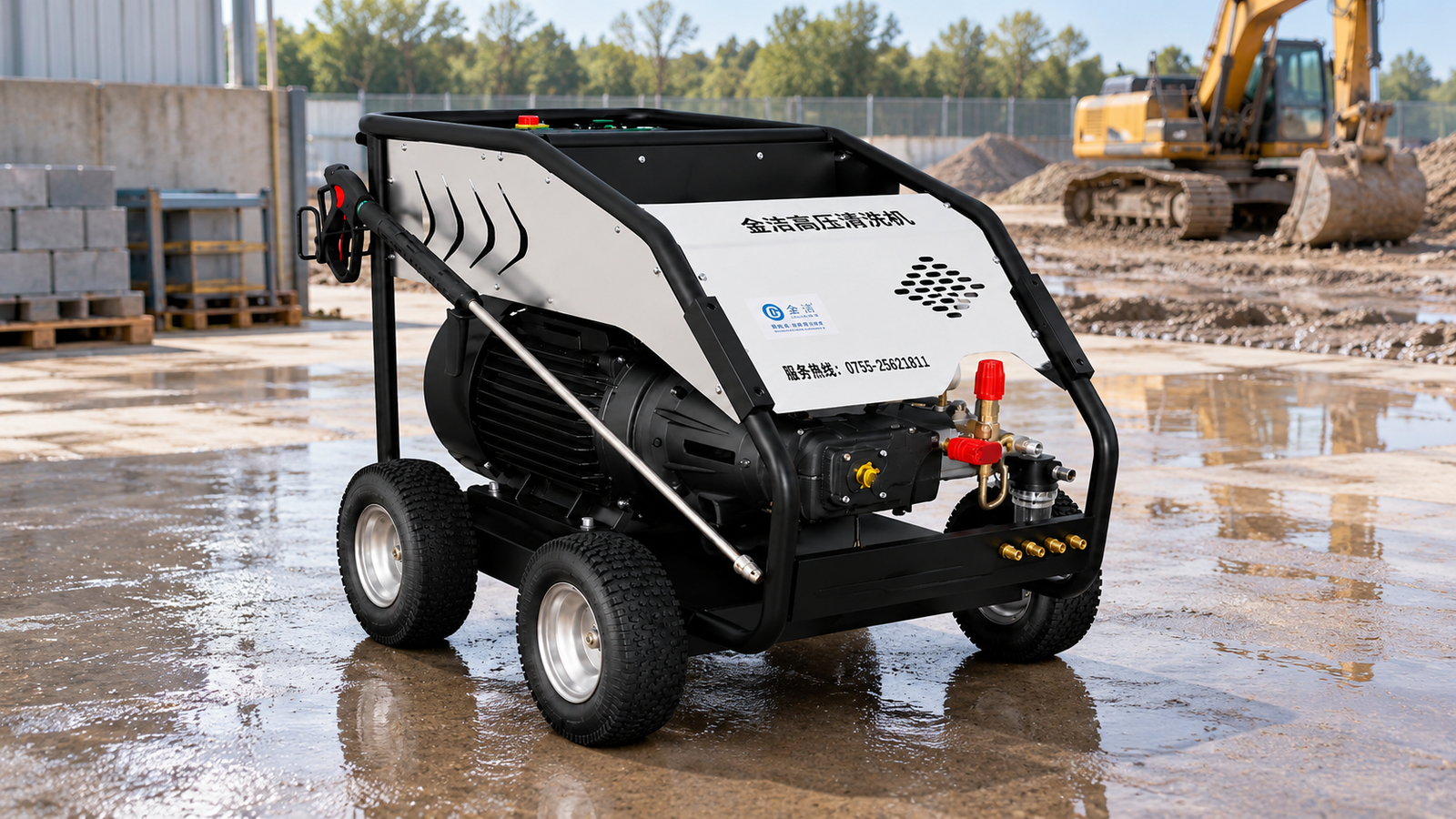 J-5022D · AI application illustration
For construction-equipment sediment, oil and residue after checking material, nozzle distance, water and wastewater.
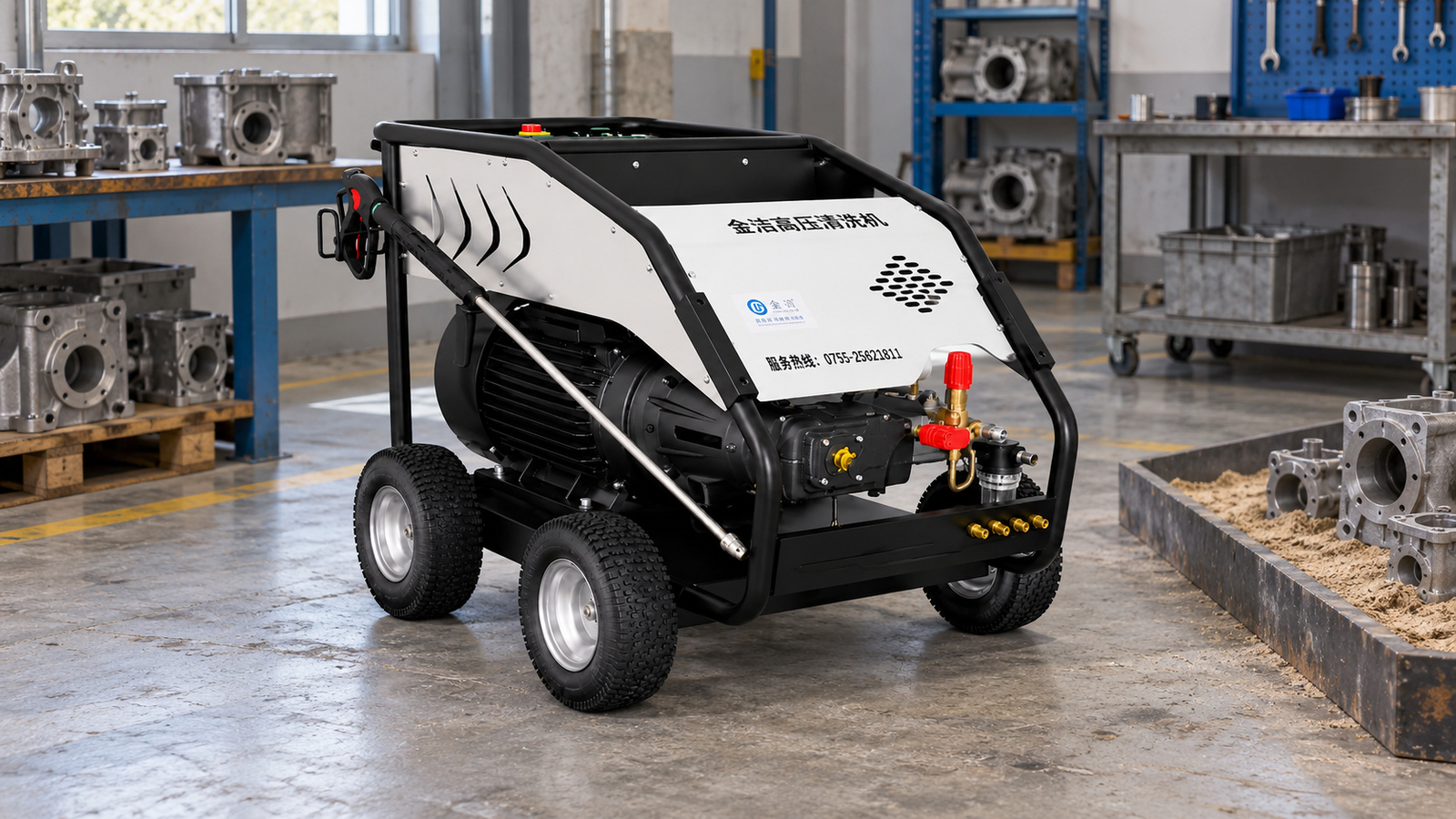
For mould, casting and workstation residual-sand cleaning after checking material, nozzle distance, water and wastewater.
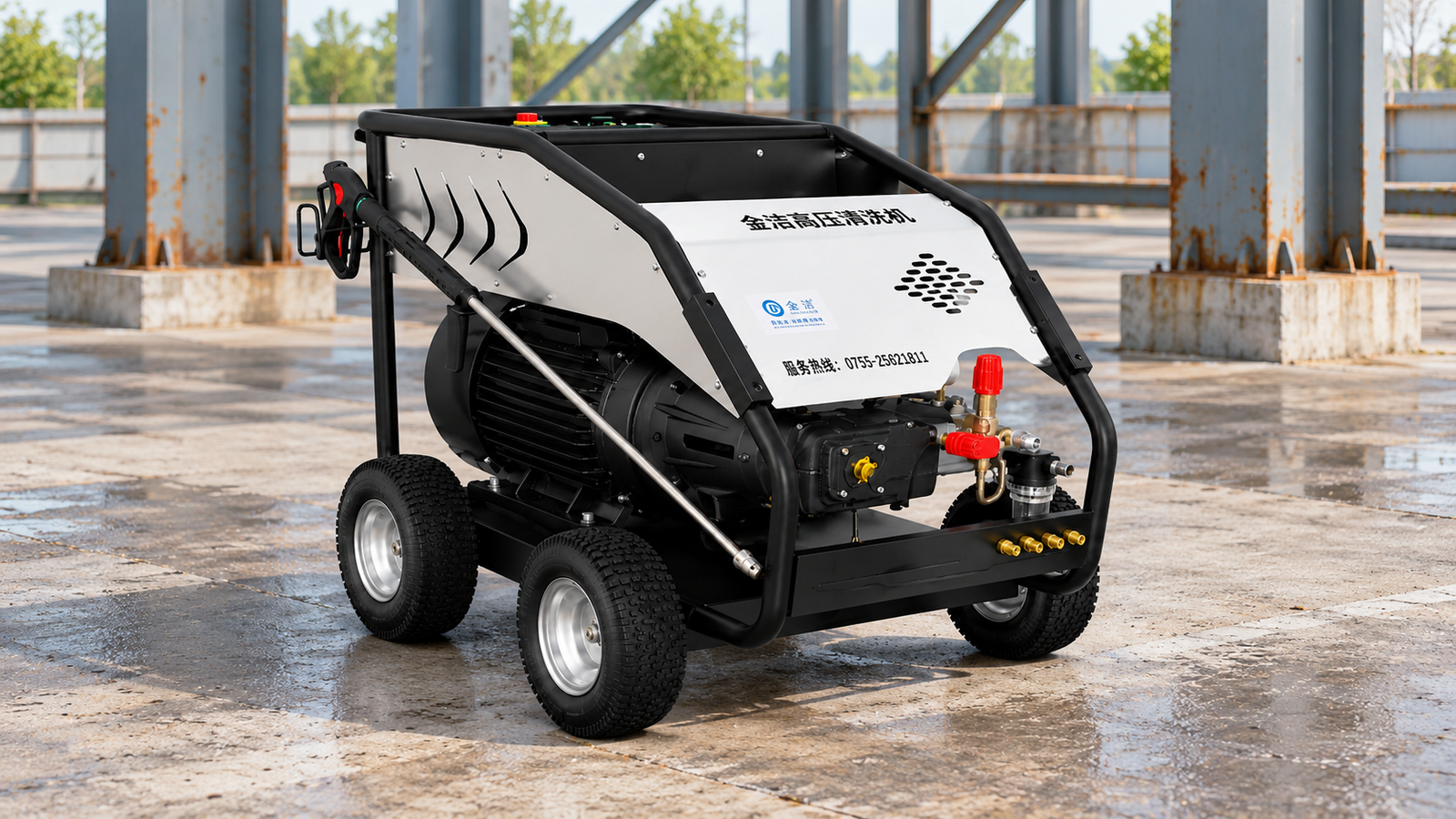
Assess local rust-layer and deposit flushing on metal components; results depend on corrosion, material and subsequent processing.
Describe the cleaning object and conditions before selecting accessories; simultaneous multi-lance operation is not assumed.
Direct the lance at equipment exteriors, edges and local soil with suitable quick-connect nozzles and working distance.
Discuss appropriate accessories for larger hard floors. Confirm the project/order configuration without assuming nozzle count.
Select for soil and substrate tolerance; trial-clean before deciding the method.
First check your power and water supply conditions, then compare the working pressure, flow rate, and attachments to determine which model is more suitable.
| Corresponding projects |  J-3522D → |  J-5022D →Current Model |  J-5022H → |
|---|---|---|---|
| Pressure diameter | Confirm the configuration of this machine separately during selection. | Confirm the configuration of this machine separately during selection. | Confirm the configuration of this machine separately during selection. |
| Flow rate record | Confirm the configuration of this machine separately during selection. | Confirm the configuration of this machine separately during selection. | Confirm the configuration of this machine separately during selection. |
| Power Records | Confirm the configuration of this machine separately during selection. | Confirm the configuration of this machine separately during selection. | Confirm the configuration of this machine separately during selection. |
When selecting, you can also compare different power options: the right side is a gasoline-powered option, which does not claim to have higher pressure or flow rate than this machine. Specifically, the configuration and operating conditions should be confirmed together with each machine's documentation during selection.
First, understand the configuration and operational division by examining the overall appearance of the machine; the position and configuration of internal components can be further understood in conjunction with the machine's documentation.
Combine the complete appearance of the entire machine to check the equipment movement route and operational position.
Check the on-site power supply conditions and delivery protection configuration for the electric solution.
Check the pump type and operating conditions against the model nameplate and manual.
Check the water source, connections, and continuous water supply conditions before work.
Check the delivery hose length, fittings, and pipeline pressure rating separately.
Combine the cleaning material and task to confirm the applicable working attachment configuration.
This is a function flow description and is not intended as the internal water circuit cross-section or component location diagram.
First, check the water source, inlet conditions, and sustainable water supply.
The motor drives the pump operation, and the operating conditions should be checked against the specifications of this machine.
Organized by matching piping and working attachment for flushing, no assumption of valve setting.
Arrange the work method according to the material, isolate splashing and collect the wastewater.
Do not take the maximum value as the continuous operating value, and do not take the theoretical hydraulic power as the rated power.
The machine has been confirmed to have a standard operating pressure of 50 MPa and an operating flow rate of 22 L/min; this confirmation cannot be applied to other models.
Check the power supply and protection according to the voltage, power, and random instructions; the presence of power does not mean that any line is applicable.
Continuous water supply, pipeline pressure resistance, and nozzle need to be matched; do not derive multi-gun capability or fixed area efficiency based on the entire machine's flow rate.
Through the overall view of the machine, understand the structure of the J-5022D host, the long brush, the high-pressure hose, and the water inlet connection, which facilitates communication of the configuration with your tasks.
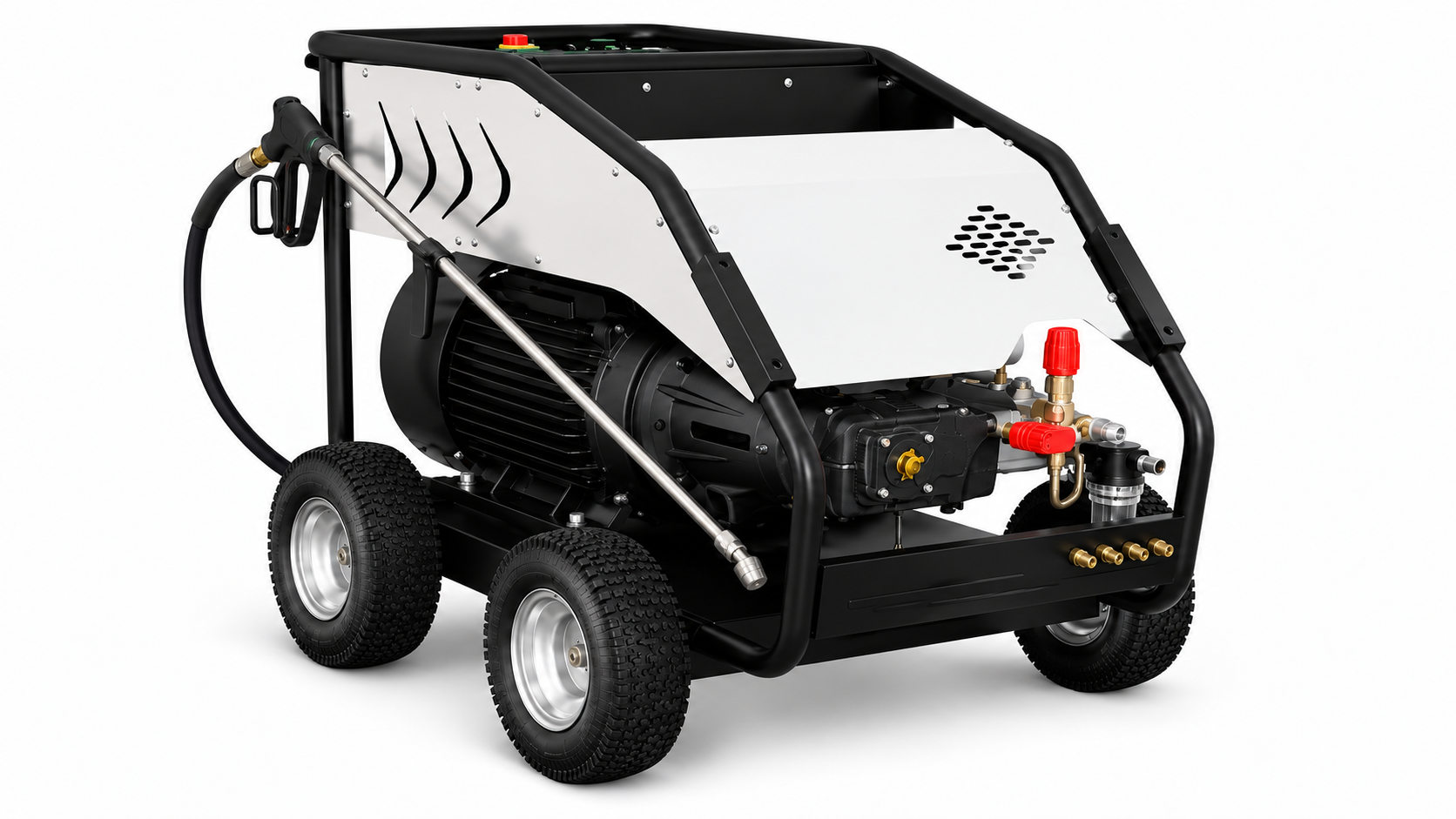
Inspect the drive, pump, gauge and lance arrangement; configuration follows current sales documentation.
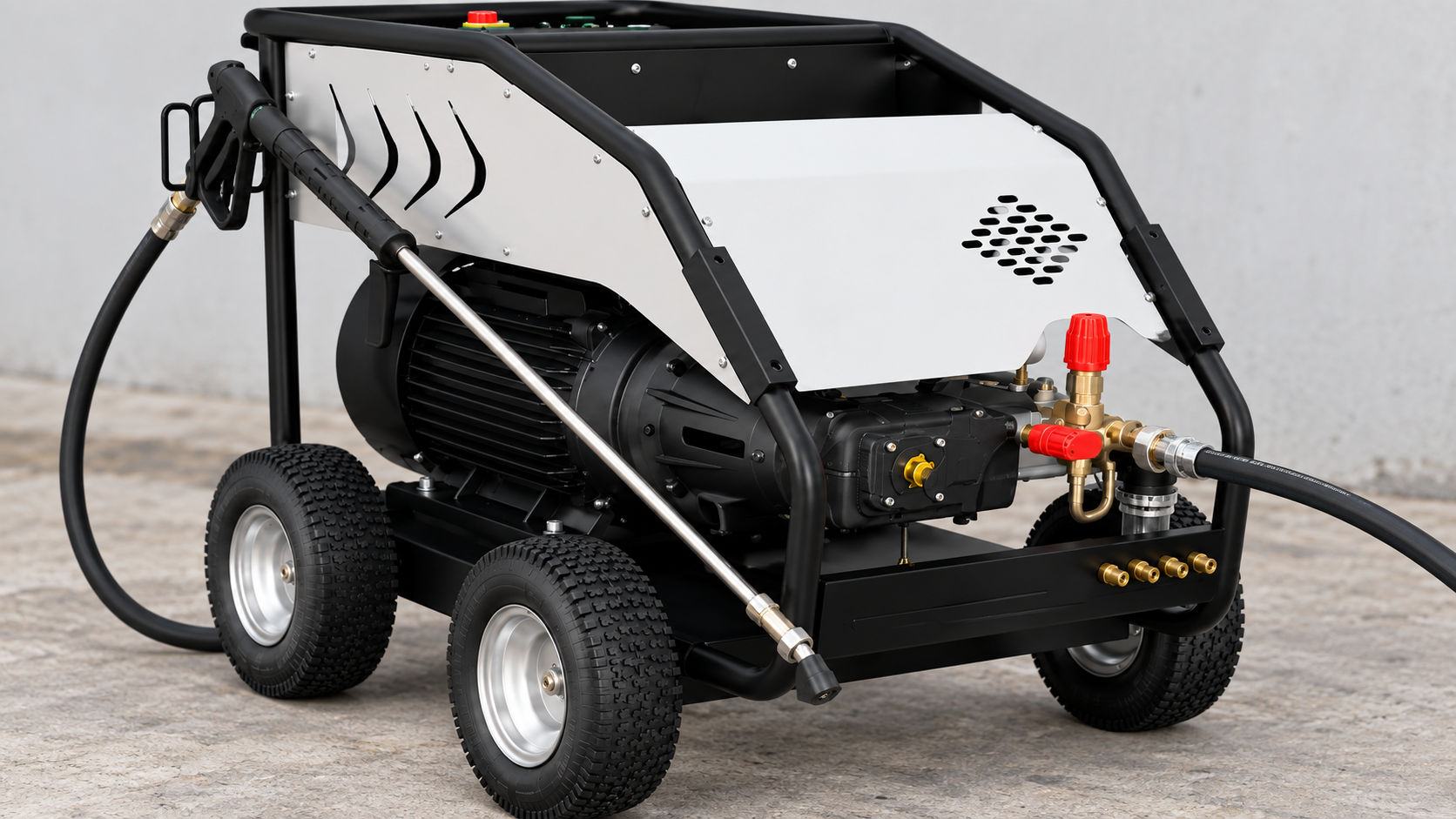
Before purchase, check inlet/outlet, hose length, supply conditions and site drainage.
Before purchasing parts and consumables, please provide the equipment model, usage scenario, and original parts information for confirmation.
When there are no actual data on human resources, energy, and maintenance, the energy saving ratio is not publicized.
Record the entire machine, the hose attachment, the on-site water supply, and the power supply configuration.
Record the actual labor hours, water, and electricity costs, taking into account the collection and discharge of waste.
Record piping, nozzle, sealing, and power maintenance according to this model's instructions, without estimating uniformly
When comparing, use the same task, usage duration, and cost range; separate the equipment investment from daily expenses.
Confirm against the project configuration and order. Flushing-nozzle count needs separate checking and does not establish simultaneous multi-lance capability.
The standard high-pressure hose is 10 meters. If on-site different hose lengths or additional high-pressure hoses are required, please check according to the project configuration and order. The hose length descriptions for the existing models on this page remain unchanged.
Delivery, use, and maintenance can be communicated in advance; service scope, schedule, and costs are confirmed based on the actual project and agreement.
Verify the model, configuration, random documents, and appearance according to the order.
As per the delivery equipment instructions, introduce the operation, shutdown, and precautions.
Verify the usage method based on the task, water and electricity conditions, and on-site conditions.
Verify applicable accessories based on model, version, and original component specifications
After fault communication, service is arranged according to the actual service scope and agreement.
Schedule maintenance based on usage conditions and service agreements.
Make judgment based on the tasks, configuration, and usage conditions of this model.
The standard working pressure of the machine is 50 MPa, and the working flow rate is 22 L/min. When selecting attachments and arranging water supply, it is also necessary to combine it with the allowable operating conditions of the pump.
No. The rated power of the motor is not the same as the ideal hydraulic calculation. Actual matching requires reference to pump operating conditions and losses.
The specific model of the pump, the allowable operating conditions, and the set pressure of the safety valve still need to be retained in the original version, and should not be inferred from the brand or image.
Fixed industrial power supply and outdoor gasoline transfer belong to different site conditions; separately verify the power, water supply, safety, and delivery versions.
Cleaning object, surface material, dirt, no-water areas, working distance, water supply and drainage conditions. For electric solutions, check the on-site power supply.
Verify each item on the order and delivery list. The long brush, angle nozzle, and base hose are separate from the additional hose length, rotating head, and floor scrubber, and are not determined by the image.
Retain the J-5022D name plate, configuration sheet, and random instructions. Check power supply and protection, inlet water, piping, and spray gun. Oils, cycles, and disassembly are according to the machine's instructions. The website does not provide its own cycle.
Follow the random instructions of J-5022D for shutdown processing, record the water source, fittings, pipelines, and abnormal phenomena, then contact after-sales. Do not disassemble the pipe under pressure, and do not modify the pressure regulating or protection components according to the web image.


Tell us the cleaning object, the dirt, and the water supply conditions, and together see how the J-5022D is configured.
Phone consultation: 0755-25621811
Describe the application, site conditions and frequency for selection advice.
See the water test with the J-5022D, twin cleaning head and connecting hoses.
