
01 Intended use
For a specialist cleaning project, specify the equipment around the cleaning object and workstation.
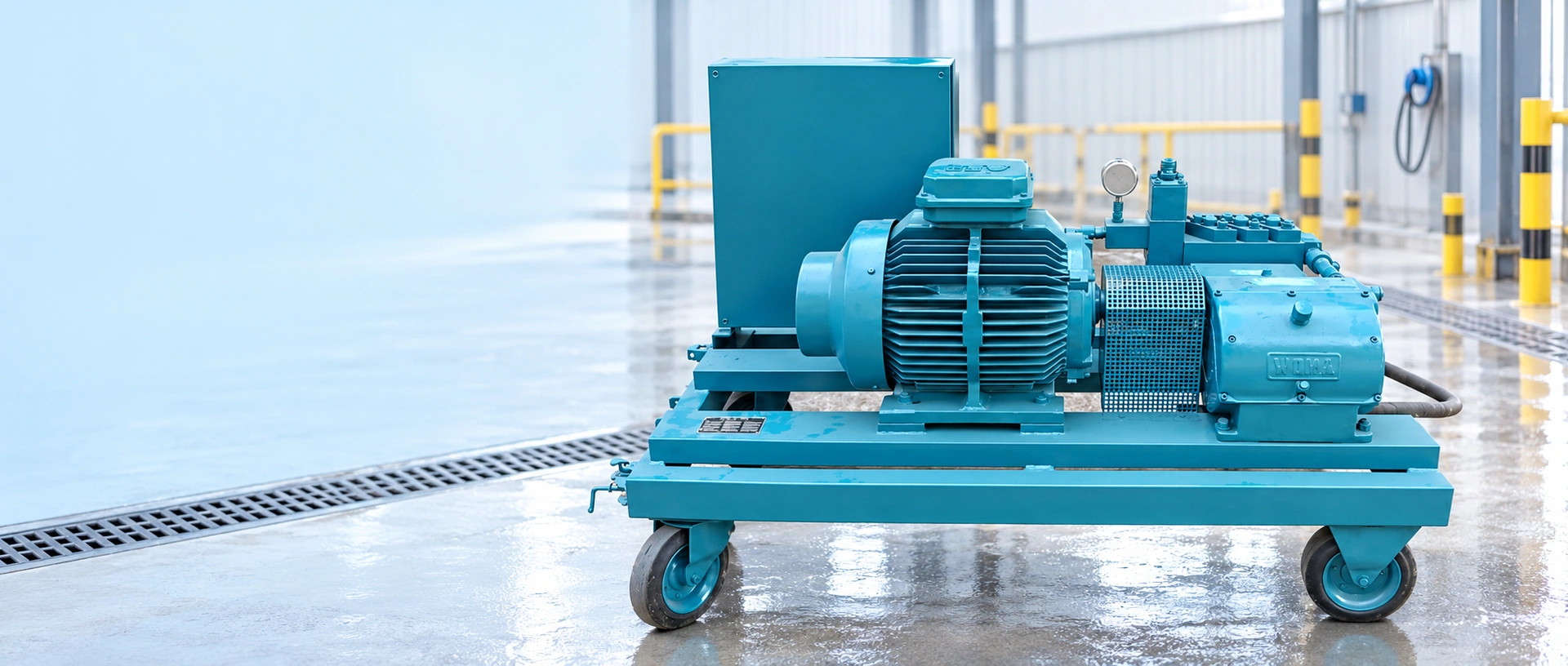
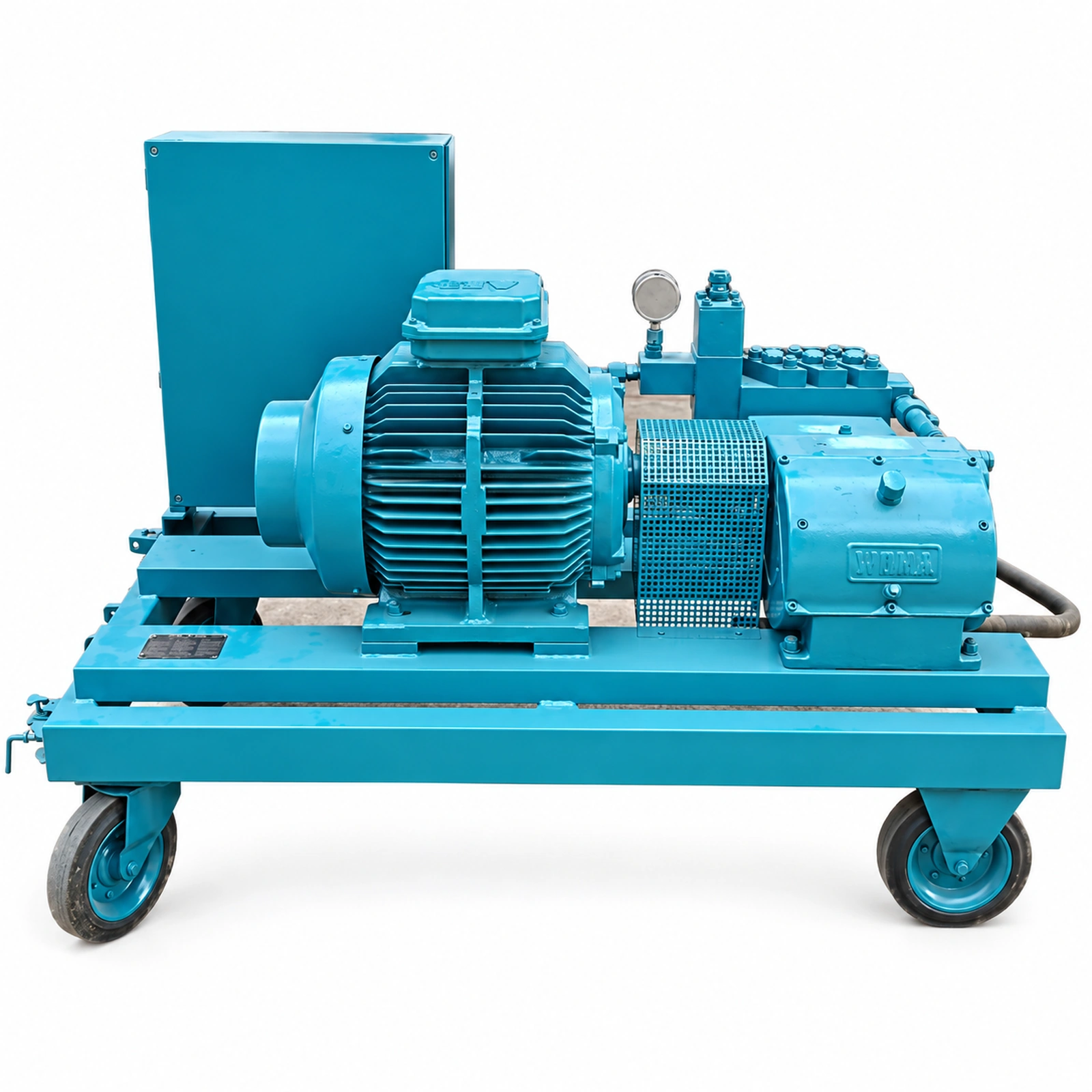
This machine provides a starting point for custom washing projects. Specify the task and required result, then match pressure, flow and attachments for the build.
For a specialist cleaning project, specify the equipment around the cleaning object and workstation.
Match working pressure and flow to the result required. Check the pump, drive, inlet and safety provisions together.
Select guns, nozzles, hoses and mobile equipment for the application. Production follows the agreed specification.
Plan the installation around workstation space, machine movement and maintenance access. Verify internal layout from technical information.
Select the pump and operating pressure for the task. Verify the maximum permitted pressure separately.
Match flow to the attachments and supply. Confirm both water availability and discharge.
Discuss drive, control and accessory requirements against the site supply and operating method.
Choose a hose, gun and nozzle for the distance and task. Verify pressure ratings and connections.
Manufacture and assembly follow the agreed design. Testing and delivery follow the agreed terms.
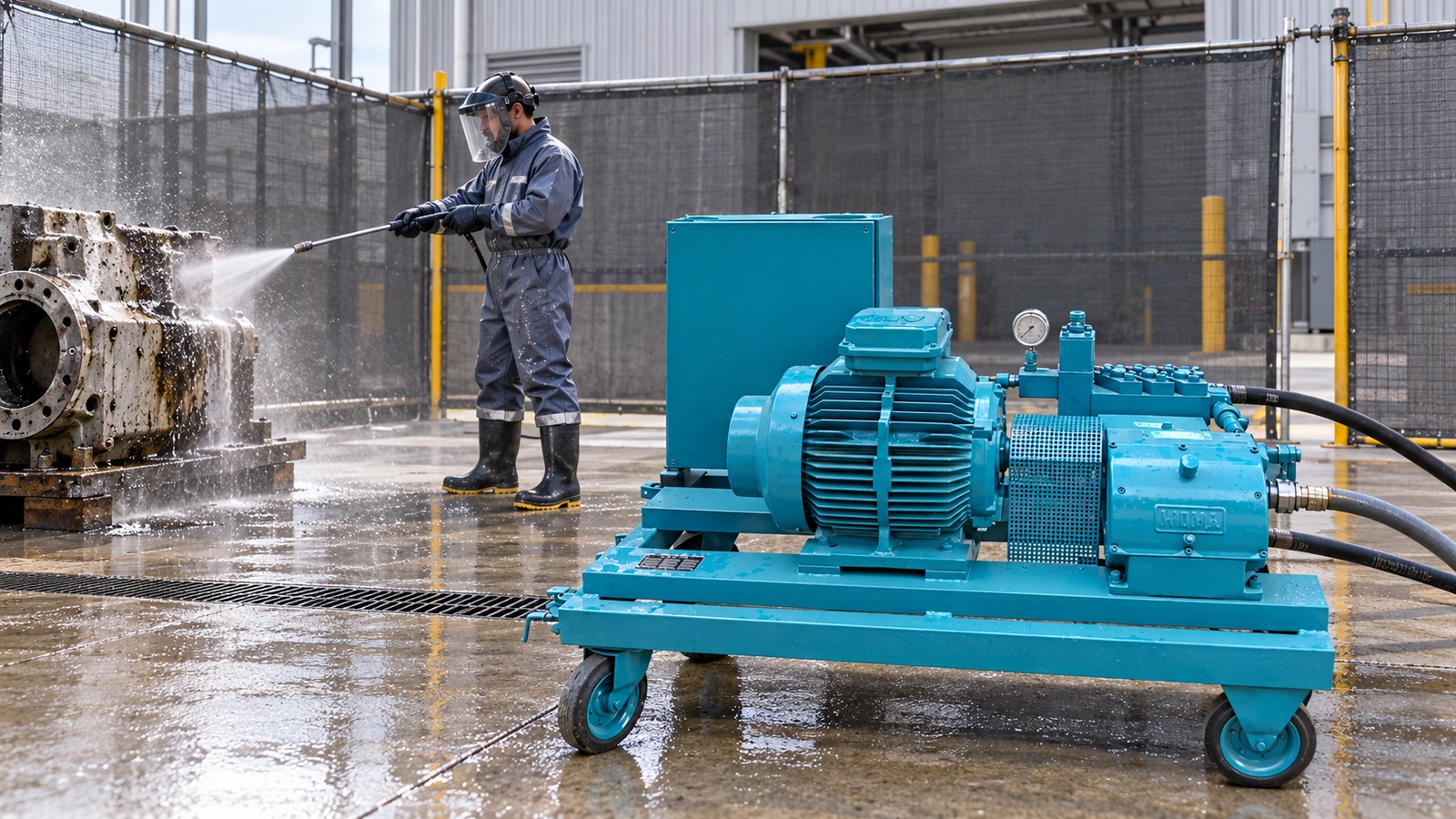
Match material, soil, compatible tools and controlled site conditions before choosing the process.
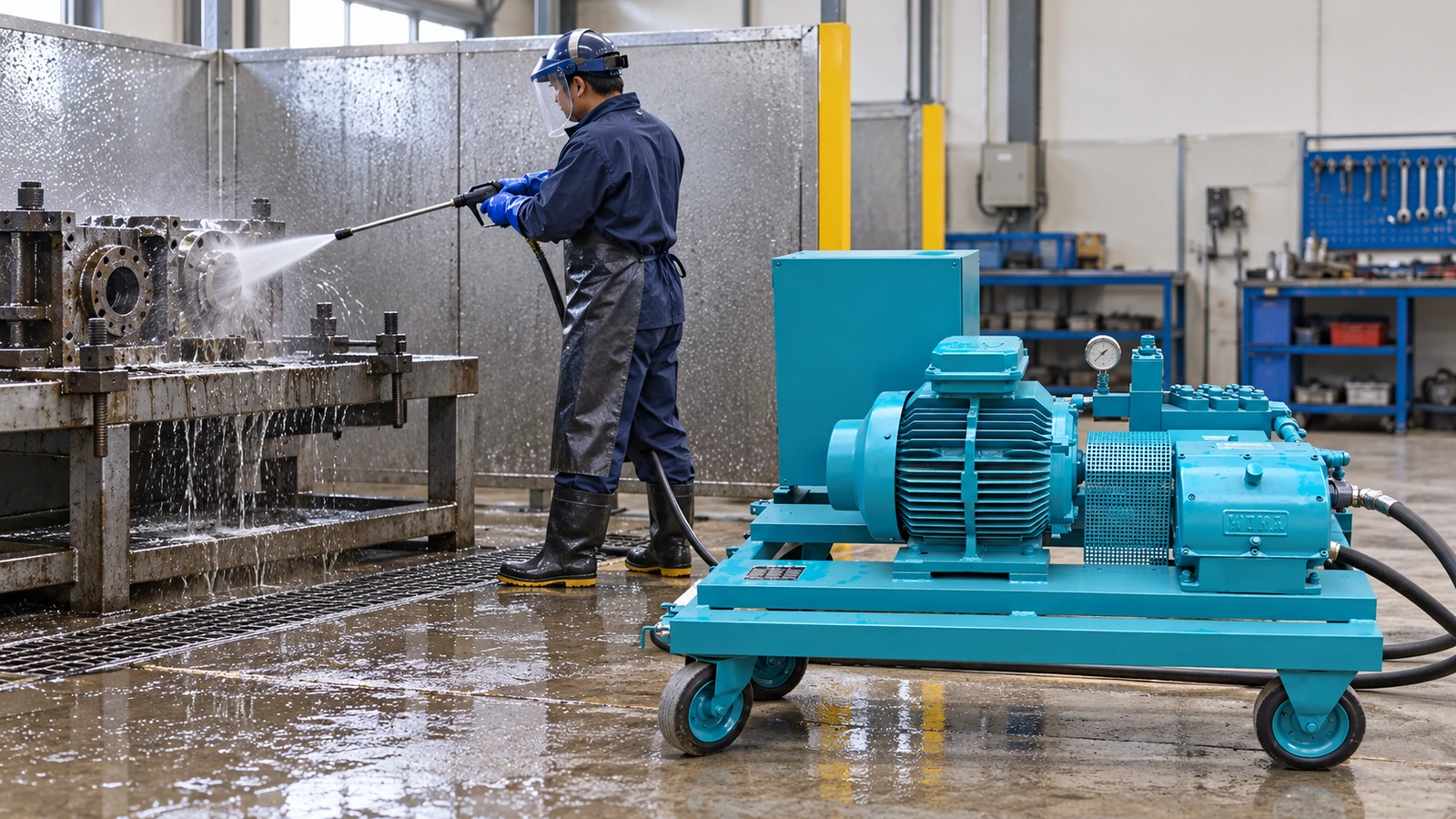
Match material, soil, compatible tools and controlled site conditions before choosing the process.
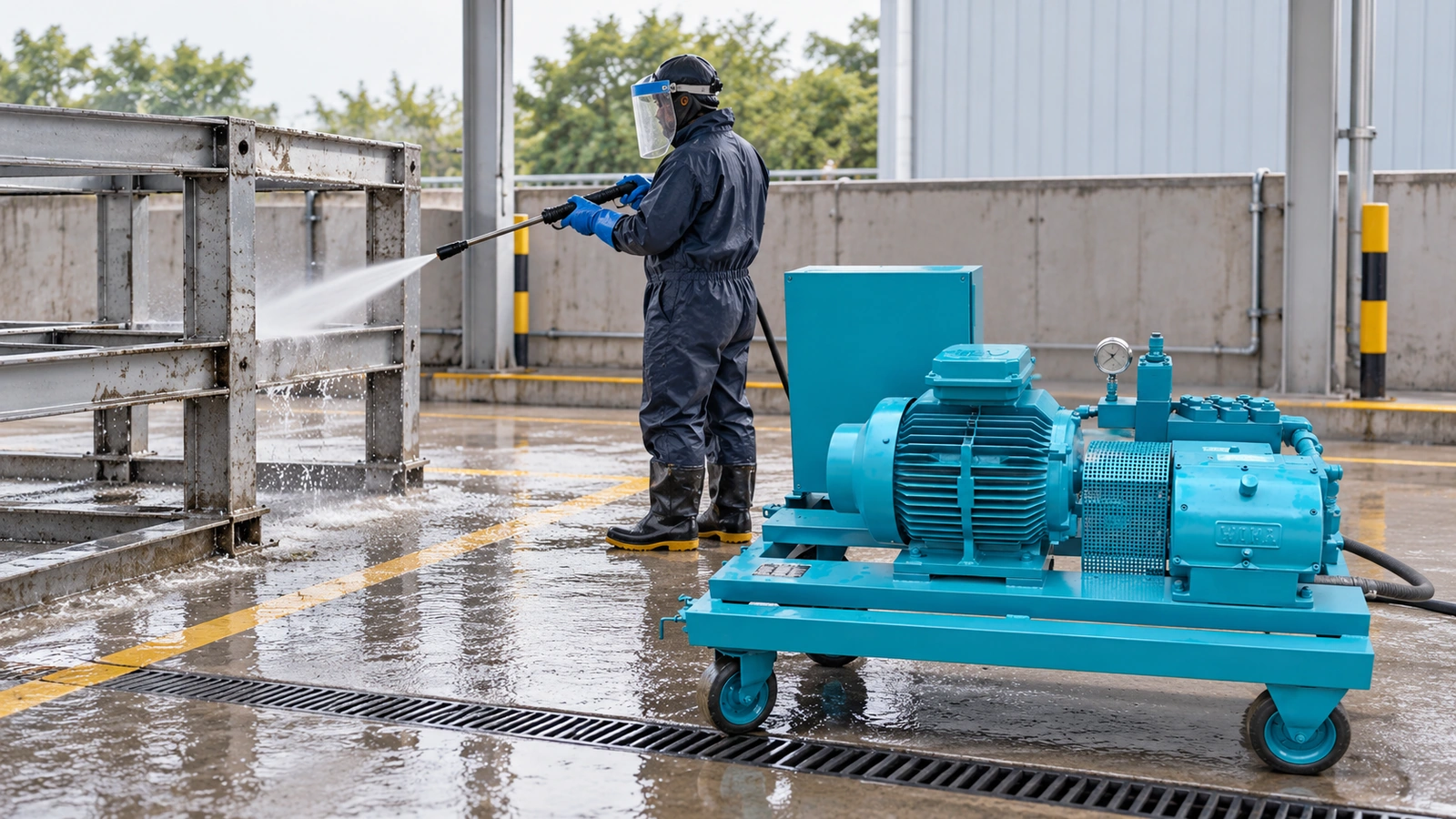
Match material, soil, compatible tools and controlled site conditions before choosing the process.
Cleaning equipment housings, fixtures and large metal components involves shutdown planning, handling, isolation and wastewater collection. Choosing only by maximum pressure can overlook material damage, water availability and the working schedule.
45 kW electric drive with a plunger pump unit is convenient for integration into industrial cleaning stations with fixed 380 V power supply; 30 L/min flow rate and pressure level should be combined with the object material and nozzle compatibility. The movable base facilitates station layout, but cannot replace transportation, braking, and site stability assessment.
Define the object, material and soil, confirm water compatibility and plan a controlled trial. Trained personnel should follow the machine instructions and site risk assessment, confirming authorised work, electrical and water services, rated hoses and tools, restraint, isolation and wastewater handling before using an approved process.
Coordinating the machine, accessories and site conditions can reduce mismatched equipment, repeated handling and rework. Fitting washing into maintenance windows supports clearer staffing and reopening plans. Results depend on material, soil, process and configuration; no fixed output or savings are promised.
750bar is the listed normal pressure and 850bar the listed maximum, not a universal continuous setting. A qualified person must confirm pressure and accessory ratings. No unverified abrasive stripping, concrete demolition, marine surface grade or hazardous-media capability is promised. Never direct a jet at people, energised electrical equipment or an unprotected area.
Start with the key features, then check the full specification.
| Key operating figures | |||
|---|---|---|---|
| Normal pressure | 750bar | Maximum pressure | 850bar |
| Flow | 30L/min | High-pressure pump | Industrial precision ceramic plunger pump |
| Rotation speed | 1440r/min | High-pressure hose length | 15m |
| Maximum inlet water temperature | 30°C | ||
| Drive and electrical system | |||
| Motor power | 45kW | Power supply | 380V / 50Hz |
Direct spray, rotating nozzle, and sanding device can be discussed as optional configurations; specific models, interfaces, rated pressure and flow rate, and usage conditions should be checked item by item, and are not considered as standard delivery with the main unit.
The listed flow is 30L/min. Check water availability, nozzles and accessories against the order configuration rather than comparing pressure alone.
No. The listed normal pressure is 750bar and the maximum is 850bar. The actual setting must match the object and the ratings of the complete accessory system.
No. It is an option requiring confirmation of the actual attachment, interface, rating and process before configuration.
The material, coating, seal, and water resistance conditions should be checked, and a controlled test should be conducted.
Provide object and soil photos, material, schedule, water and electrical services, space and drainage, and any requested special accessories.
Describe the surface, deposits, material, required result, working time and water and power supplies. We use these details to match pressure, flow and attachments for the proposed design and build.
Phone consultation:0755-25621811