
01 Intended use
- Verify the cleaning and floor scrubbing tasks separately.
- Suitable for analyzing particle cleaning and floor scrubbing together, not in the conventional understanding of a single sweep area.

Jinjie J-SX1360D washing and sweeping integrated machine, aimed at areas with both particulate waste and ground stains, organizes the cleaning, brushing, and wastewater recovery in sequence; separately checks 1360 mm cleaning, 900 mm brushing, and supply collection conditions.
Starting from your question.
First, distinguish the type of waste, entanglement risk, and stain characteristics, then schedule sweeping, scrubbing, and recovery, without considering a single width as the entire operation. J-SX1360D should also schedule waste hopper unloading, 200 L/260 L water tank refilling and drainage, and manual finishing; unmentioned slope, size, or continuous duration should not be inferred from appearance.
First, check the on-site conditions, then determine the appropriate equipment configuration together.
Channel width, turning position, business hours.
Handling large crowds, corridors, and elevators
Conditions of hard surfaces, drainage, and ramps
Oil stains, dust, obstacles, and work routes
| Site type | The on-site conditions for joint checking | J-SX1360D Selection Recommendation |
|---|---|---|
| Commercial spaces and shopping malls. | Channel width, turning position, business hours. | First confirm whether the equipment can turn and pass, then divide the continuous cleaning area. |
| Office and public buildings | Handling large crowds, corridors, and elevators | Verify the passage and floor transfer conditions; in narrow areas, pair with smaller models. |
| Property management garage and public areas | Conditions of hard surfaces, drainage, and ramps | Clarify and level the work area; slopes and elevation differences must be checked against the technical specifications of this machine. |
| Factory and warehouse floor cleaning equipment. | Oil stains, dust, obstacles, and work routes | First distinguish the type of dirt and the floor surface material, then arrange pre-treatment, brushing, and wastewater recovery. |
Customer Cleaning Challenges
Compare the type of ground dirt with the brushing and wastewater recovery method. For stubborn stains, try washing first, and do not only arrange personnel based on theoretical efficiency.
Measure the narrowest passage, doorways, and turns, and arrange the cleaning route separately from on-site traffic. In narrow areas, supplement with other tools.
Arrange the tasks based on the cleaning area, available time, and replenishment and drainage location. The working time should be verified according to the actual battery, load, and ground conditions.

Sweep loose particles and dust before scrubbing and recovering water for mixed floor tasks.
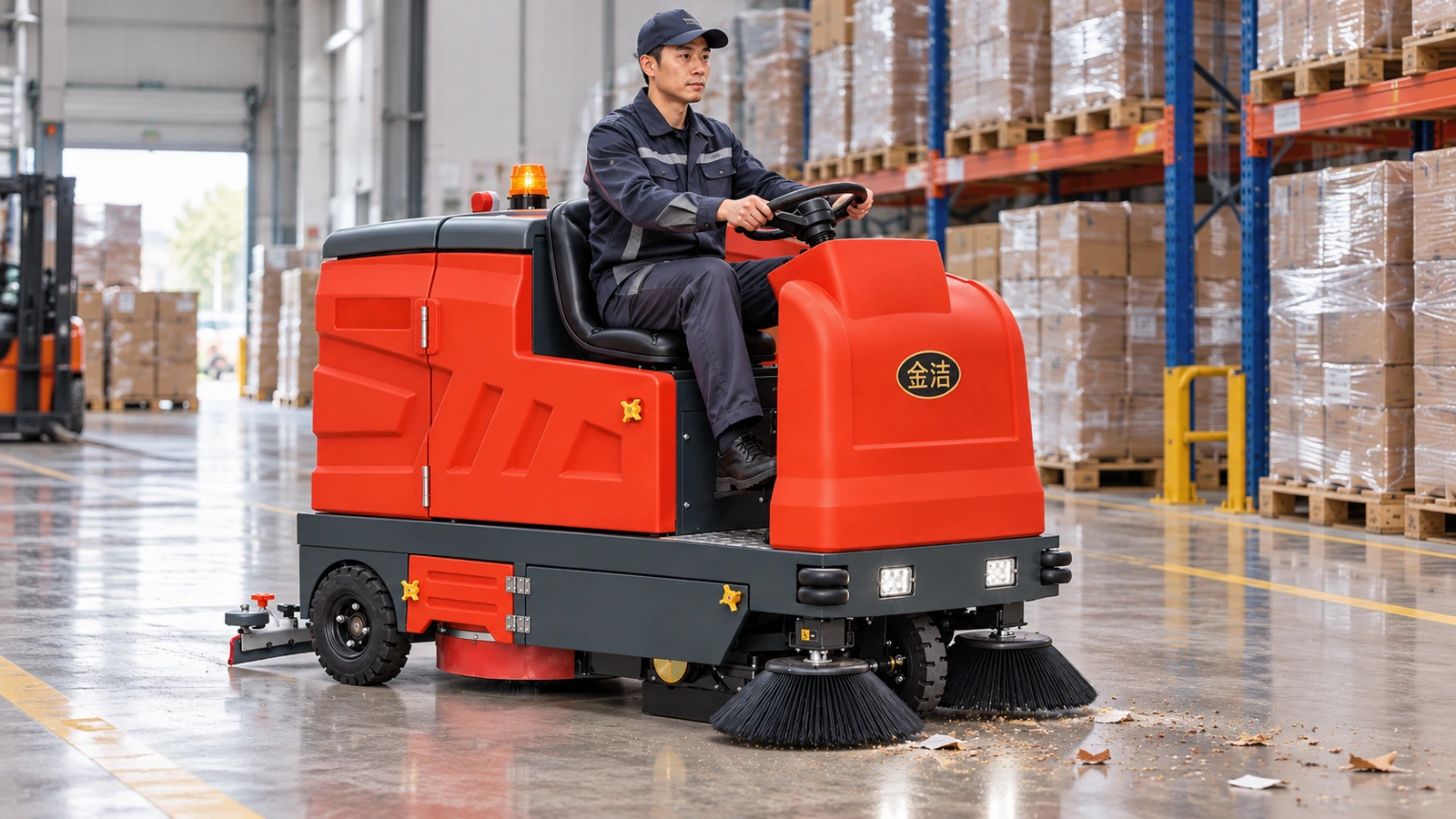
Reduce equipment switching on longer routes containing debris, dust and floor soil.
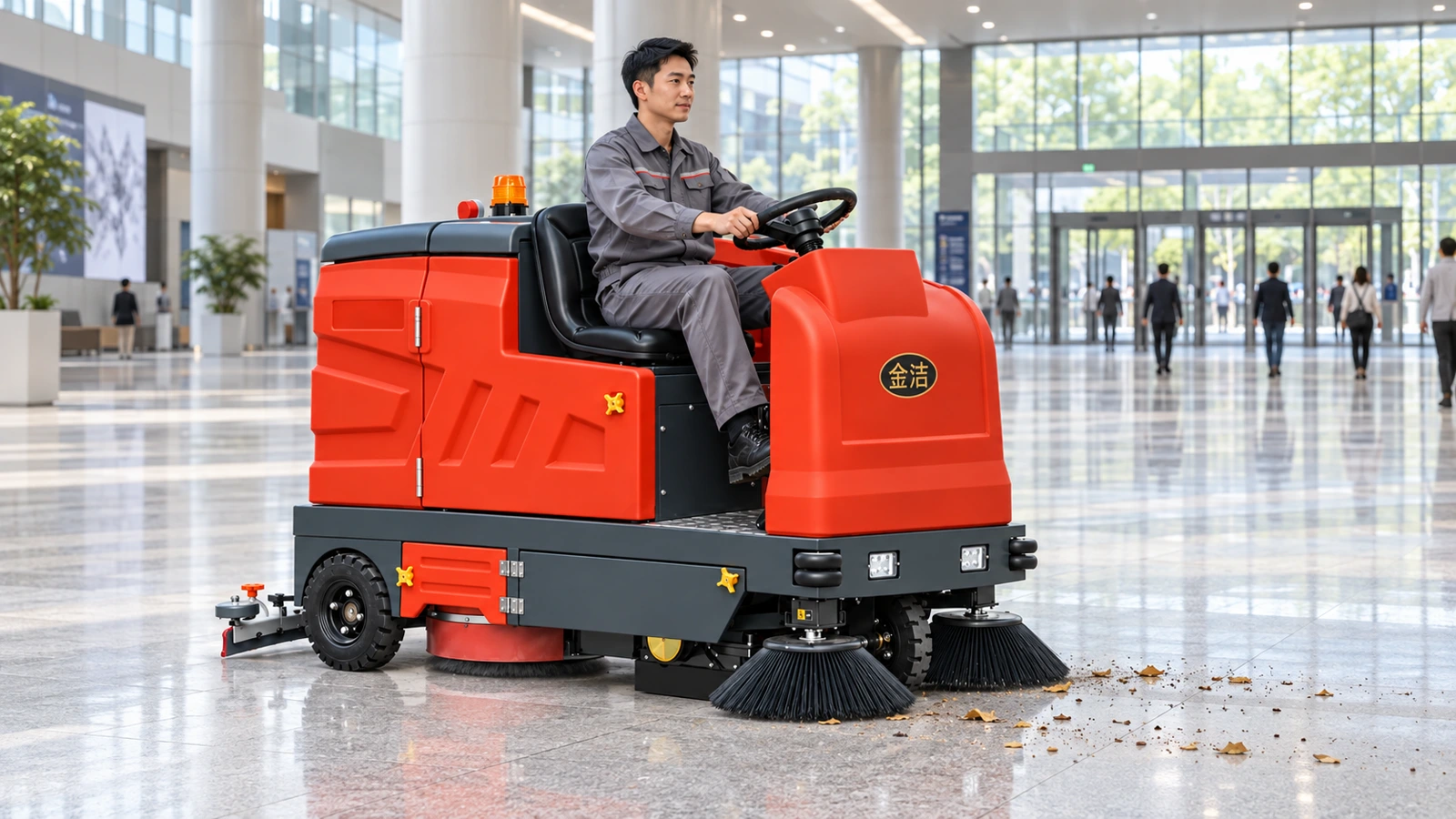
Hard floors requiring sweeping, scrubbing and wastewater recovery together.
First, check the settings related to daily use. The complete specifications can be viewed in detail.
| Key operating figures | |||
|---|---|---|---|
| Squeegee width | 1200mm | Clean water tank | 200L |
| sewage tank | 260L | Theoretical cleaning efficiency (user confirmed value) | 12000㎡/h |
| Sweeping width | 1360mm | Scrubbing width | 900mm |
| Maximum travel speed | 10km/h | Theoretical working speed | 10km/h |
| Solution pump | 24V 120W | Hopper capacity | 45L |
| Main brush length | 590mm | Main brush diameter | 300mm |
| Side brush diameter | 500mm | Brushing disk diameter | 460mm |
| Drive and electrical system | |||
| Operating voltage | 48V | Battery | 48V150Ah |
| Travel motor | 1200W | Recovery motor | 500W |
| Main-brush motor | 1000W | Side-brush motor | 100W × 2 |
| Scrub motor | 500W × 2 | Scrub-deck lift motor | 55W |
| Squeegee lift motor | 35W | ||
| Machine configuration | |||
| Product model | J-SX1360D | ||
Assess specifications against the site task and conditions, not the figures alone.
Runtime, charging time, maximum gradient, turning radius, minimum aisle/door width, filtration/dust control, and precise dimension/weight definitions
Theoretical efficiency, documentation working time, and actual continuous operation performance should be understood separately. On-site conditions and final delivery configuration need to be verified together.
Use the exterior view for operating and maintenance orientation. Consult component documentation for internal locations.

Integrated washing and sweeping configuration, organize operations according to the actual road width and turning space occupied.
The cleaner is responsible for handling particulate waste, and it should be separately verified against the scrubbing process.
Select the appropriate brush based on the floor type and dirt level, and stop the machine to check for entanglement.
Check the recovery pathway and water-absorbing components, maintaining appropriate contact with the floor.
Separate disposal of garbage, clear water, and wastewater, as per the instructions.
Organize the cleaning, scrubbing, and recovery according to the machine's instructions, without cross-model application.
If there are existing dust, sand particles, and packaging fragments on the site, and it is necessary to complete hard floor scrubbing and wastewater recovery, the wash-and-sweep integrated equipment can reduce the need for switching between pre-sweeping and floor scrubbing.
Where particles and loose dust are present, sweep before scrubbing to support wastewater recovery.
One machine combines sweeping, scrubbing and water recovery for larger mixed cleaning tasks.
Debris volume and size, floor soil and refilling/emptying conditions determine suitability together.
Compare related models
Place the three models together and see the differences in configuration and operating method.
| Comparison criteria |  J-105BF → | J-SX1360D → |  J-920B → |
|---|---|---|---|
| Cleaning width | 1050mm | Request the specification for this configuration. | 920mm |
| Squeegee width | 1300mm | 1200mm | 1260mm |
| Clean water tank | 180L | 200L | 160L |
| sewage tank | 190L | 260L | 165L |
| Battery configuration | 6 × 6V × 200Ah | 48V150Ah | 6 × 6V × 200Ah |
| Work time for the data. | 4–6h | Request the specification for this configuration. | 6h |
| Operating method | Operator-controlled. | Operator-controlled. | Operator-controlled. |
First, check the passage and operation mode, then compare the water tank, working time, and maintenance schedule. The data in the table is based on the current technical specifications of each model. The working time in the data does not equal the actual runtime under all operating conditions. Larger models of the same type have not been confirmed yet. The right side is a selection of different job configurations, which do not represent higher configurations.
Operating cost
Compare using the same floor, same cleaning requirements, and actual records.
Labor cost = number of people × actual working hours × hourly labor cost.
Record actual expenditure on tools, detergent and clean-up.
Single-use cost = operator labor + water and electricity with cleaning agent + consumable maintenance allocation + equipment investment allocation.
Compare sweeping, scrubbing, waste handling and wastewater recovery across the same set of tasks.
First, check the application scenario of this page. Combine it with your floor type, route, and work schedule to make a judgment. Real customer projects are only displayed according to the verified model, and the scenario images are not used as proof of customer results.
Understand customer applications → Talk about the site and trial run →Its selection also involves particle collection, brushing, and wastewater recovery, requiring separate judgment for each process. Ordinary floor scrubbing tasks cannot directly represent suitability for environments containing particles, and special, entangled, or hazardous waste should be confirmed separately.
First assess size, hardness, entanglement and effects on equipment and disposal. Remove large, cord-like or hazardous materials appropriately before selecting modes as instructed. An integrated machine is not a universal waste-treatment system.
The current data is listed as sweeping width 1360 mm, scrubbing width 900 mm, and squeegee width 1200 mm, with different functional diameters. It is not permissible to claim the same width for scrubbing using 1360 mm. Nor can any single value be used to replace the overall passage and rotation space of the entire machine.
Solid collection, solution filling and wastewater disposal are separate limits. Plan each for waste volume, soil and route; record processing frequency and return time. Large tanks do not remove bin-unloading requirements.
Agree the operating mode, floor, debris, soil and timing scope, then record sweeping, scrubbing, recovery, disposal and water handling as a complete process. The listed 12000 m²/h retains its confirmed source basis; it is not site output or another scrubber’s theoretical calculation.
Use the same waste-and-soil task and compare pre-cleaning, mode changes, bin unloading, water handling and finishing. Equipment count or a single width cannot establish workflow efficiency, and combined functions do not imply a performance multiplier.
After safely shutting down according to the instructions, check separately the cleaning and dust collection, brushing and water supply, and water suction and wastewater recovery circuits, and handle the garbage and water tank. If abnormalities are found, record which process is affected, and do not mix in maintenance steps from other models.
For a trial, provide photographs of the materials and floors, the type of debris, routes, intersecting operations, disposal points and supplies. Confirm the Jinjie delivery list, training and support for the actual version, and record results during the trial.
Check the equipment and configuration list together before delivery.
Understand service arrangements →Communicate startup, brushing, replenishment of water, and daily cleaning.
Understand service arrangements →In case of operational issues, communicate with the model and usage conditions.
Understand service arrangements →Check the brush roll, rubber strip, and other parts against the model.
Understand service arrangements →Service scope, costs, and arrival arrangements need to be confirmed first.
Understand service arrangements →Coordinate maintenance plans with the frequency of use and the location.
Understand service arrangements →Discuss the floor, routes, and daily cleaning schedule, and together see if J-SX1360D is suitable.
Phone consultation: 0755-25621811 View other contact information →
Product enquiryTell us about the usage area and the issues you hope to improve, and the equipment consultant will combine with the passage, ground and work arrangement, communicate the suitable configuration with you. The area is temporarily unclear, you can contact us first.