
01 Property estates
- Typical site
- Estate roads and property perimeters
- Why it fits
- Leaves and paper are scattered along roads; organize routine collection after checking turns, mixed traffic and emptying points.

The Jinjie J-XS1460 ride-on sweeper serves daily campus-road, factory-perimeter and parking tasks. Its 1460 mm coverage, 150 L hopper and 60 L tank support coordinated sweeping, waste collection and water planning.
1460 mm sweeping coverage supports organized routine debris collection on estate roads.
Identify comparable working areas and check the road, litter and schedule at your site.
Recurring leaves, paper, grit and dust on estate, campus and factory-perimeter roads can require repeated manual work.
Scattered locations require fixed routes for organized daily debris collection.
Hopper capacity, distance to emptying points, narrowest roads and turning space all affect sweeping rhythm.
Consider it when organising scattered manual sweeping into regular routes. Check roads, kerbs and turns and trial representative debris. Include manual filter cleaning and unloading in shifts, comparing access, waste and disposal alongside coverage.
Measure the narrowest road section and plan where to yield and empty. Allow for bends, traffic and scattered leaves.
Assess packaging fragments, grit and dust separately. Special dusts require an assessment before using ordinary road-cleaning equipment.
Check access between bays, overhead clearance, gradients and parking. Treat standing water and oil separately.
Arrange rounds for pedestrian activity, leaf fall and the surface. Check turns and separation from pedestrians.
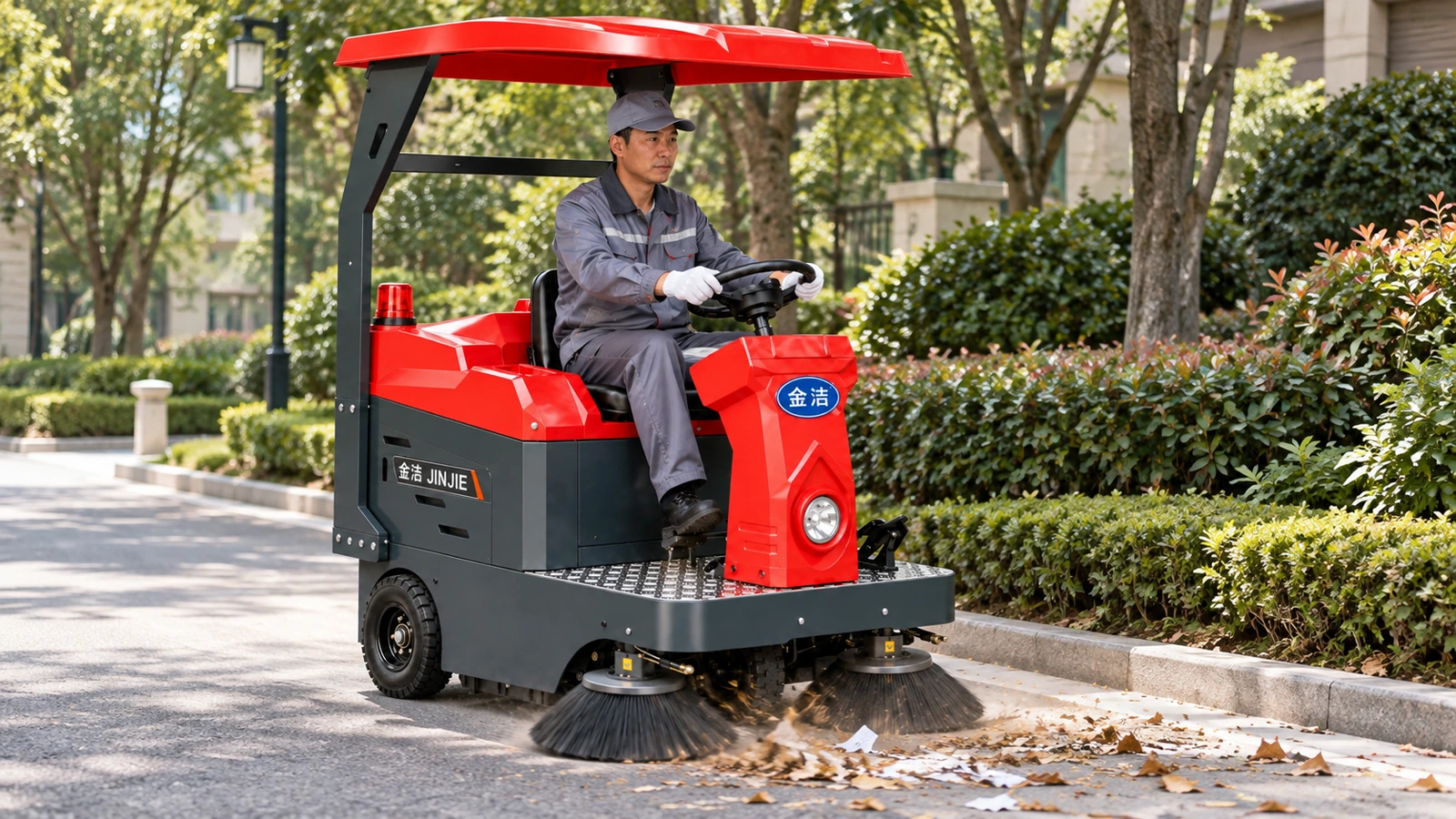
On medium-width roads with scattered debris, 1460 mm coverage supports routine collection of leaves, paper and grit.
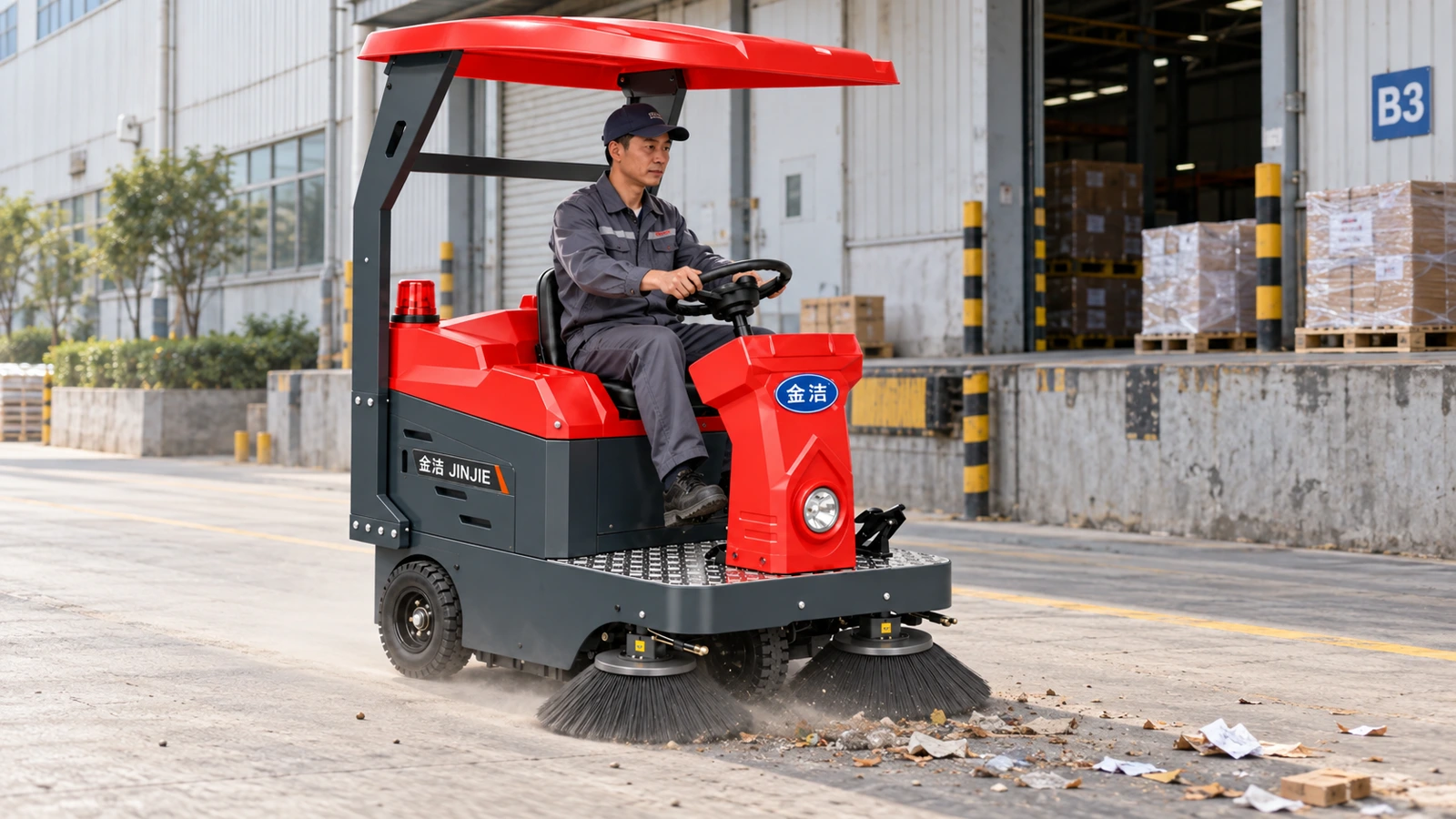
For grit, packaging fragments and ordinary dust around factories, J-XS1460 supports fixed-route sweeping to reduce manual follow-up sections.
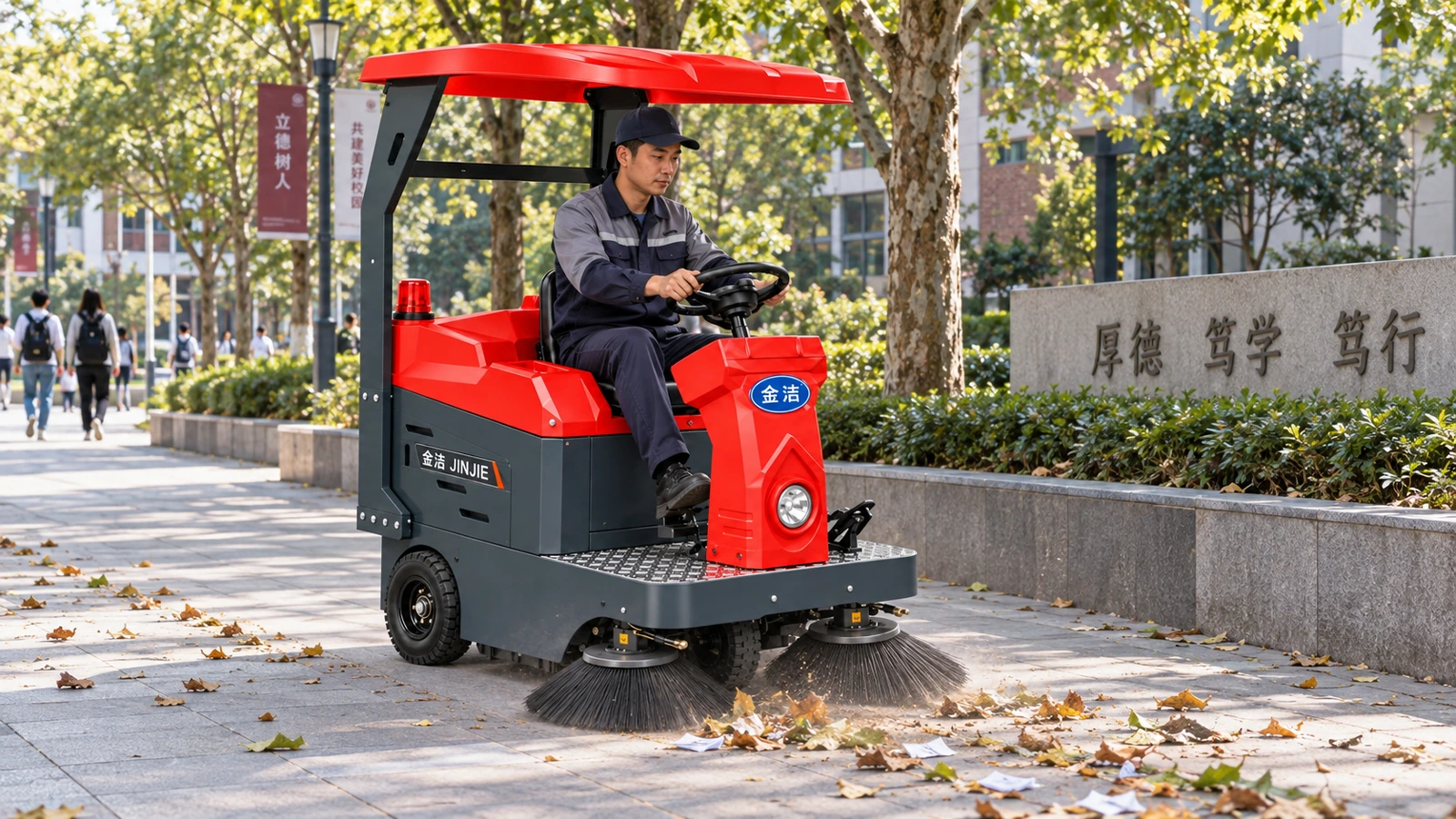
Campus and visitor-attraction debris varies by time. The 150 L hopper supports shift planning for regular public-road upkeep.
Key specifications for J-XS1460. Travel speed and area coverage are recorded separately.
Plan coverage around the actual route.
Schedule manual emptying according to the amount collected.
Follow the instructions for refilling and cleaning.
Main-brush diameter: 300 mm
Record separately from the main-brush diameter.
Published figure. Sustained working coverage depends on the route.
| Specification | Listed figure | Description |
|---|---|---|
| Model designation | J-XS1460 | Drive-type sweeper |
| Sweeping width | 1460mm | Confirm how the machine will be used on site. |
| Working rate | MAX 10150㎡/h | Rated maximum. Actual output depends on route, debris and operating conditions. |
| Water tank capacity | 60L | Confirm how the machine will be used on site. |
| hopper capacity | 150L | Confirm how the machine will be used on site. |
| Travel speed | MAX 12km/h | MAX denotes maximum travel speed. Choose a sweeping speed for the surface and load. |
| Main brush length | 690mm | Length: 690 mm. Main-brush diameter: 300 mm. |
| Main brush diameter | 300mm | 300 mm is the diameter of the main brush. The side brush has a separate dimension. |
| Side brush diameter | 500mm | 500 mm is the side-brush diameter. Check overall sweeping width separately. |
| Drive power | 1000W | Confirm how the machine will be used on site. |
| Main brush power | 850W | Confirm how the machine will be used on site. |
| Vacuum motor power | 400W | Confirm how the machine will be used on site. |
| Overall dimensions and weight | 180×145×110cm / 500kg | Dimensions in cm and weight in kg. Check clearances and overhead restrictions. |
| Steering capability | Supports a 360° turn on the spot. | Allow clearance for the body, canopy and rotating side brushes. |
| Filter-cleaning method | Manual | Follow the instructions for the machine. |
| Hopper discharge | Manual | Follow the machine instructions for emptying and disposal. |
| Sweeping speed | 8–12km/h | Set the working pace for the surface and debris. |
| Battery voltage and capacity | 48V / 100Ah | Battery configuration |
| Filter area | 8㎡ | Dust filtration equipment |
| Spray configuration | 2 nozzles | Follow the operating instructions for water spray and routine cleaning. |
The exterior view identifies the functions of the main brush, side brushes, collector and driving controls.

The 500 mm diameter side brush guides loose kerbside litter into the sweeping path.
The main brush sweeps and transfers debris. Length 690 mm, diameter 300 mm.
The 150 L hopper is emptied manually.
8 m² filter area with manual cleaning. Inspect the media and seals as instructed.
60 L tank and 2 spray nozzles. Spray assists dust suppression alongside the filter.
The operator controls travel, steering and yielding. Plan sweeping around site conditions.
This diagram shows the sweeping and suction process. Internal layout depends on the machine.
The side brushes guide ordinary loose debris from the edges into the main sweeping path.
The main brush and transfer mechanism carry debris towards the collection area.
The hopper is emptied manually. Capacity, fill level and disposal arrangements all affect working time.
Air passes through 8 m² of filter media. The filter is cleaned manually.
Check the 8 m² filter, manual filter cleaning and 2 spray nozzles together. Evaluate performance on the actual surface and debris.
Send photographs of dust, leaves, grit or fragments. Standing water, sticky waste and special dusts require separate assessment.
8 m² filter area and manual cleaning. After checking the media and seals, evaluate dust collection during a representative trial.
Use comparable debris and surfaces. Check pickup, edge residue and dust, then plan disposal and maintenance.
To compare machines, consider road layout, debris load and turning room alongside sweeping width.
| Comparison criteria | Narrower-coverage option J-XS1450 → | Current modelJ-XS1460 → | Wider-coverage option J-XS1500 → |
|---|---|---|---|
| Sweeping width | 1450mm | 1460mm | 1500mm |
| Hopper | 160L | 150L | 180L |
| Water tank | Ask about this option when specifying the machine. | 60L | 80L |
| Selection checks | Check clear road width, debris, turning room and supply points. | Check clear road width, debris, turning room and supply points. | Check clear road width, debris, turning room and supply points. |
Compare both options on the same route with equivalent debris and cleaning requirements. Calculate savings from the results.
Multiply crew size by hours per person and the hourly rate. Include handling, disposal and close-down time.
Include labour, charging, brushes, filters, maintenance and allocated capital cost. Allow time to empty the hopper and clean the filter.
Confirm these maintenance requirements at procurement and handover. Follow the manual and operator training for the actual machine.
Shut down and isolate power before checking for entanglement, objects and bristle wear. Use the parts and replacement method for this model.
Clean the filter manually as instructed and check its seating and seals. Use water or a pressure washer only if explicitly permitted by the manual.
Check hopper closure and the collection path. Schedule manual emptying for the density of the debris and follow the machine instructions.
This machine has 2 spray nozzles. Inspect the nozzles and water connections and clean them as instructed.
Verify battery chemistry, voltage, capacity and charger compatibility. Follow the supplied instructions for charging, storage and maintenance.
Stop the machine and check the hopper, filter, bristles and visible obstructions. Contact service if the problem persists.
View the six delivery, training, parts and maintenance services →
Assess loose dry debris on campus roads, factory perimeters and parking areas. Match 1460 mm coverage to the route and plan disposal for the 150 L hopper and edge finishing.
Side brushes guide debris towards the main-brush path. Keep suitable kerb clearance, plan disposal around bulky litter and remove straps and large objects first.
The 150 L hopper collects debris while the 60 L tank supports specified suppression. Plan unloading and water separately and mark both locations before longer routes.
Keep the 690 mm main-brush length, 300 mm main-brush diameter and 500 mm side-brush diameter separate. Check mounts and original parts to maintain collection and appropriate wear.
Assess dust, filters, sealing and manual filter cleaning together. Observe airborne dust and residue to set maintenance intervals; confirm suitability separately for hazardous materials.
Use actual roads, debris and cleaning windows. MAX 10150 m²/h is a listed rating; include overlap, turns, traffic, filter cleaning and unloading in practical shift planning.
Listed coverage is 1460, 1450 and 1500 mm, with hoppers of 150, 160 and 180 L respectively. Compare access first, then disposal, supplies, filtration, power and driving conditions.
Share routes, debris and shifts to discuss trials, configuration and training. Confirm brushes, battery, filters, manual cleaning and unloading so operators understand daily use and care.
The agreed service terms specify scope, charges and timing.
Confirm the model, accessories and operating conditions before delivery.
View service support →Training covers driving, sweeping, emptying and daily checks.
View service support →Describe the road surface, debris and maintenance history when seeking support.
View service support →Match main brushes, side brushes and filters to the model and supplied specification.
View service support →Confirm service area, charges and attendance arrangements in advance.
View service support →Agree on maintenance arrangements based on usage, location and condition.
View service support →Tell us about the roads, debris and daily rounds so we can check the suitability of J-XS1460.
Phone consultation: 0755-25621811
Product enquiryProvide road width, debris types, dust levels, emptying points and daily sweeping windows to assess J-XS1460.