
01 Intended use
- Routine sweeping on industrial estates
- Schedule rounds by litter load and check clearance and turns on site.
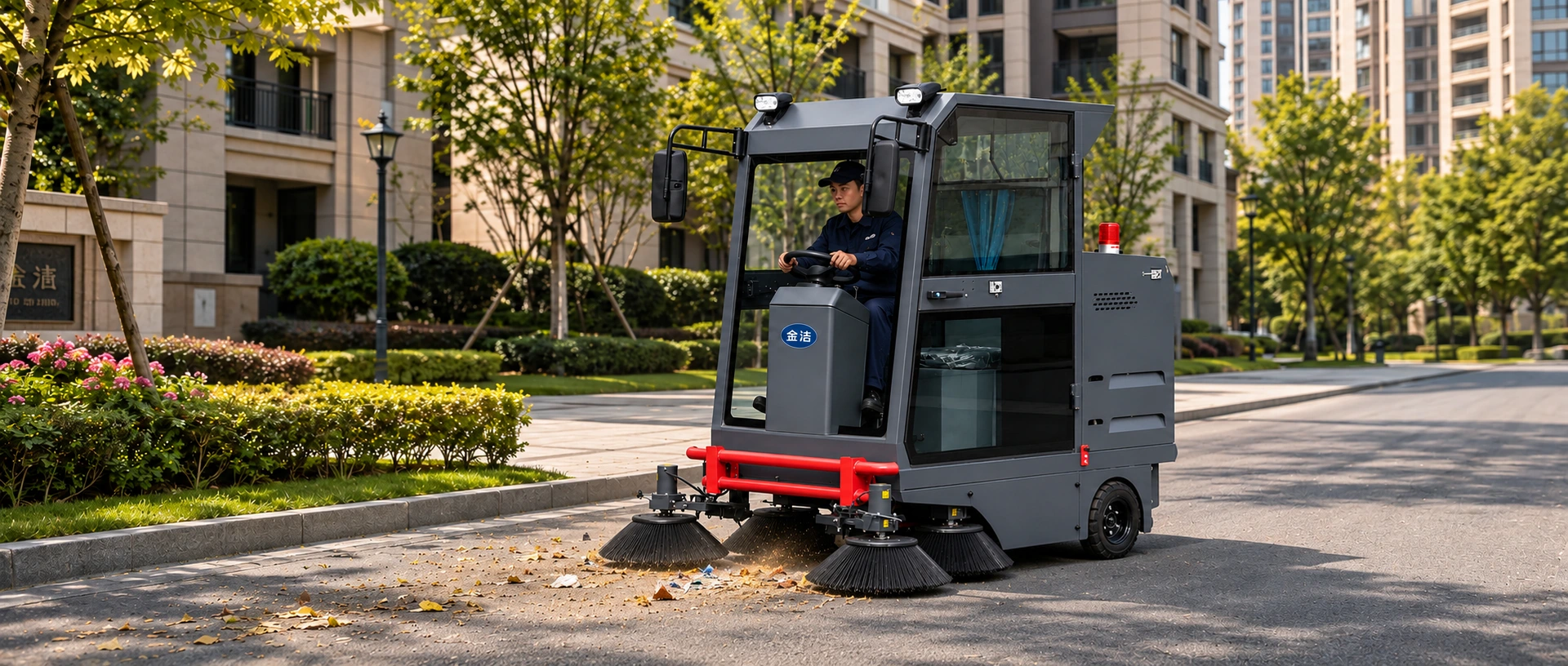
The Jinjie J-XS1950 uses 1900 mm sweeping coverage for open factories, campus roads and perimeters, focusing on route coverage, collection and coordinated operation.
An enclosed cab can improve the operator environment during longer outdoor sweeping shifts.

On longer routes with sunlight and dust exposure, an enclosed cab can improve the operator environment and support consistent route completion.
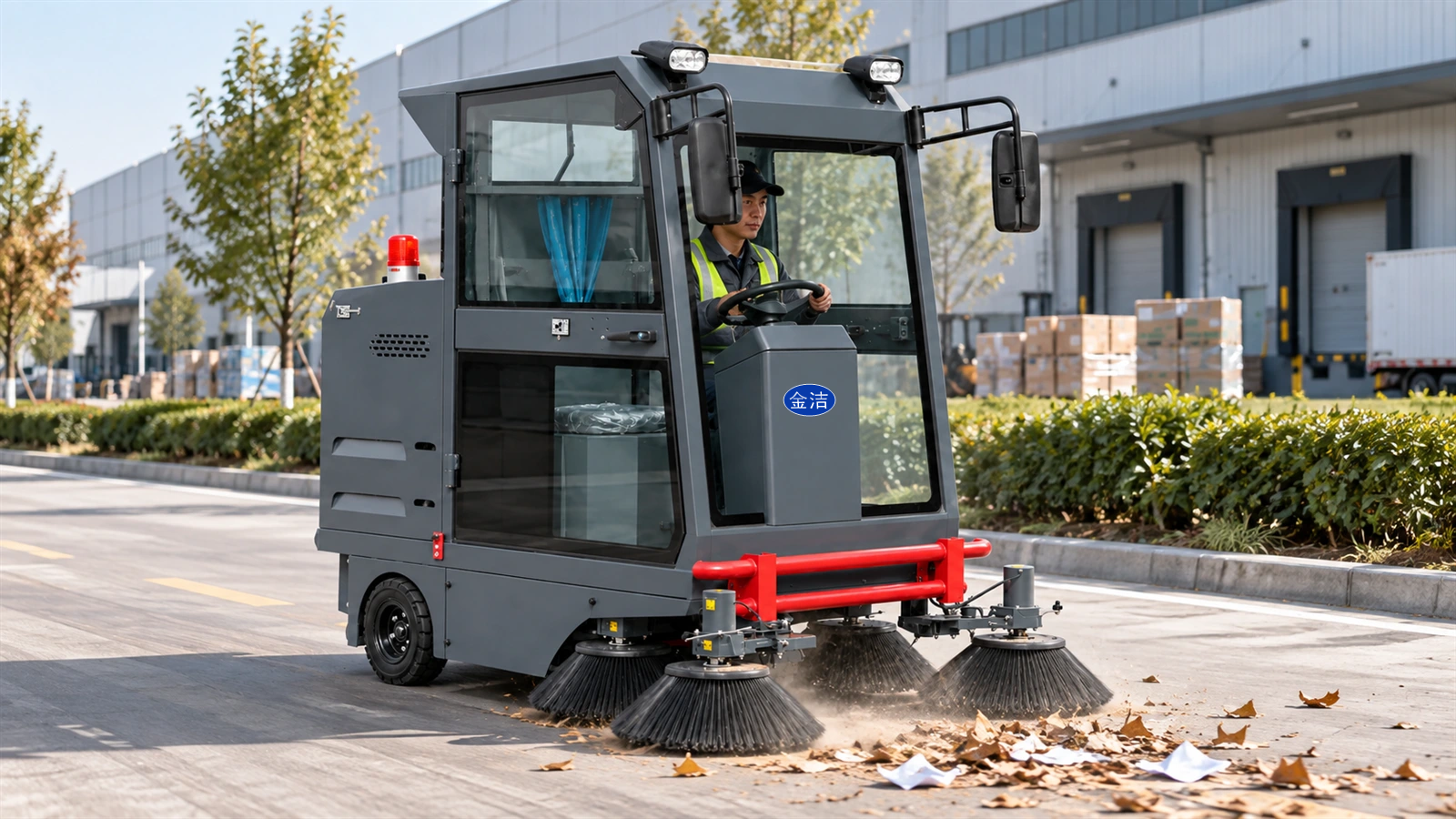
Factory yards commonly have dust, grit and mixed traffic. Assess J-XS1950 for ordinary road sweeping where an operator enclosure is needed.
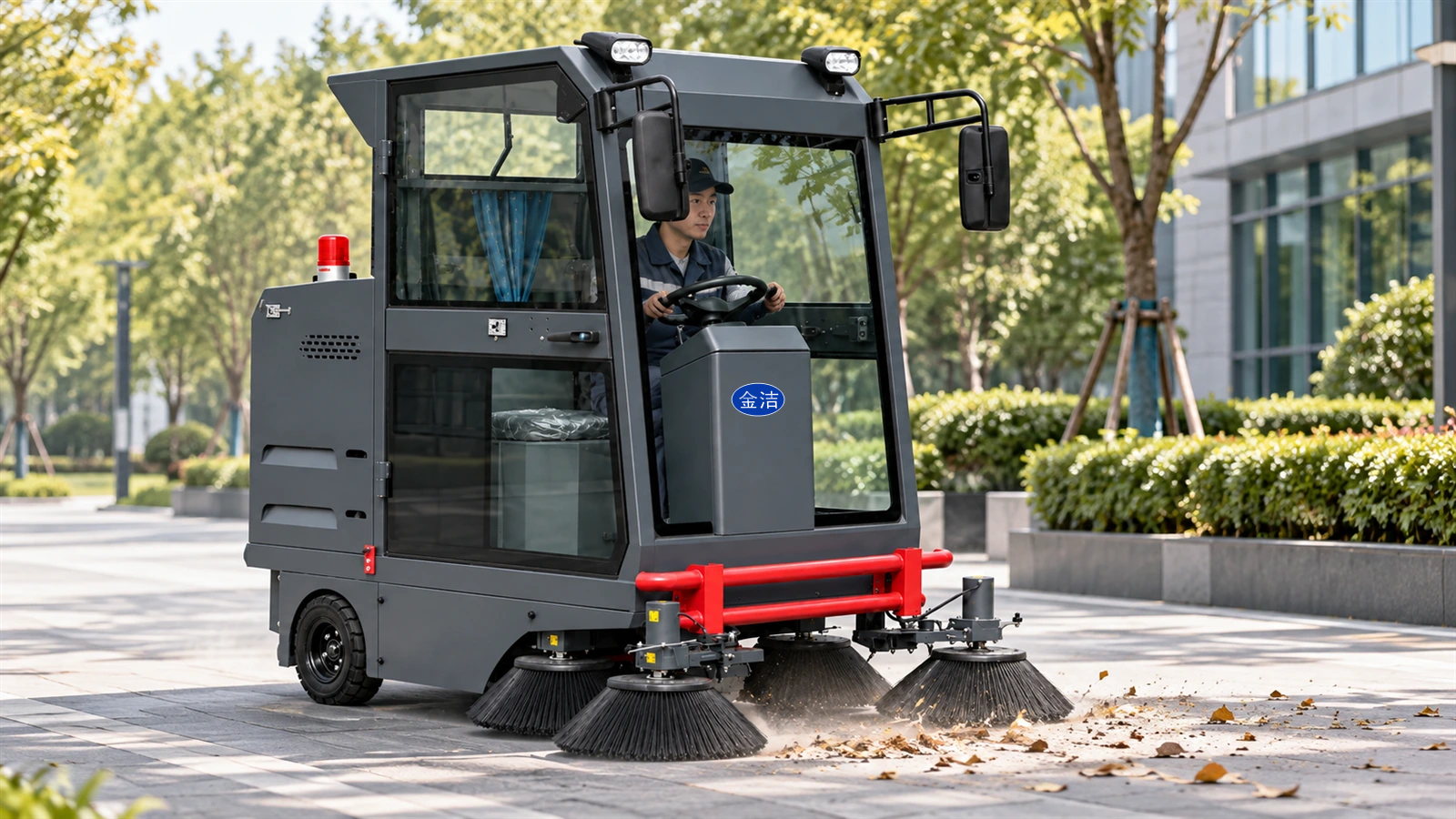
On longer routes with scattered debris and changing outdoor conditions, an enclosed cab can improve the operator's working environment.
Route length, coverage, debris collection and access jointly affect routine sweeping.
Dust, sunlight and longer routes affect the operator's working experience.
Entrance height, road width, turning space and visibility affect suitability of enclosed-cab equipment.
The page describes the operator enclosure without asserting unlisted weather protection or comfort equipment.
Assess continuous wide roads, checking gates and tight turns separately. Trial actual debris and dust and record collection, filter cleaning, supplies and disposal, then confirm driving, power and capacities for the intended staffing and routes.
Clear road width, kerbs, leaf load and pedestrian hours
Waste type, traffic, surface and distance to disposal
Gate height, narrowest section, columns and gradients
Pedestrian traffic, obstructions, level changes and disposal arrangements
Check access, debris and work patterns at the site when specifying the machine.
| Site type | Configuration and operating conditions to check | Selecting J-XS1950 |
|---|---|---|
| Residential and industrial estate roads | Clear road width, kerbs, leaf load and pedestrian hours | Check the footprint of J-XS1950 with the brushes deployed and plan the rounds for the debris load. |
| Factory and warehouse yards | Waste type, traffic, surface and distance to disposal | Separate sticky, entangling and special materials. Test collection and dust control on a representative stretch. |
| Car parks and connecting lanes | Gate height, narrowest section, columns and gradients | Check overall height, turning space and room to pass safely. Sweeping width alone cannot determine access. |
| Campus and public roads | Pedestrian traffic, obstructions, level changes and disposal arrangements | Choose a suitable time and arrange parking, disposal and maintenance before setting the route. |
Confirm selection against site measurements, the specified configuration and a representative trial.
Review day-to-day configuration first. Expand the full specifications for more detail.
| Key operating figures | |||
|---|---|---|---|
| Sweeping width | 1900mm | Working rate | Up to 10500 m²/h |
| Water tank capacity | 80L | hopper capacity | 180L |
| Maximum travel speed | 12km/h | Main brush length | 690mm |
| Main brush diameter | 300mm | Side brush diameter | 600mm |
| Drive and electrical system | |||
| Battery configuration | 48V 100Ah | Operating voltage | 48V |
| Drive power | 1200W | Main brush power | 1200W |
| Vacuum motor power | 600W | ||
| Machine configuration | |||
| Overall dimensions (length × width × height) | 2300 × 1700 × 1900mm | Overall weight | 620kg |
| Product model | J-XS1950 | ||
Use the exterior view for operating and maintenance orientation. Consult component documentation for internal locations.

Check machine width and turning space along the inspection route.
The main brush sweeps the floor. After shutdown, inspect it for wear and entanglement.
The side brush guides loose debris towards the sweeping path. Keep clearance from edges.
Empty according to waste volume, weight and disposal arrangements.
Check media, seals and water use against the supplied configuration.
The operator steers and yields to traffic. Maintain the power system according to the handover instructions.
This diagram explains the functions. Refer to the supplied instructions for installed parts, switching sequences and maintenance procedures.
The side brush guides suitable loose debris into the main brush path. Maintain safe kerb clearance.
The main brush sweeps and transfers debris. Brush condition, the surface and the material affect pickup.
Plan disposal around the actual hopper load and distance to the emptying point.
Assess dust collection, filter cleaning and water use on site. Shut down for end-of-shift maintenance.
Assess filtration, collection, seals and maintenance together. A filter-area or motor rating alone cannot predict dust at the site.
Identify wet, sticky, hazardous, combustible or toxic material before sweeping. Special dusts require a separate method and suitable equipment.
Identify the filter media, seals and cleaning method. Use spray only where the configuration and surface permit, and maintain the filter as specified.
During a trial, record dust, residue, pickup and maintenance frequency. Stop safely if anything appears abnormal. Confirm washability before rinsing the filter.
The sweeping width of J-XS1950 is 1900 mm. Compare body dimensions, drive and equipment individually, even where widths match.
| Comparison criteria | Related configurations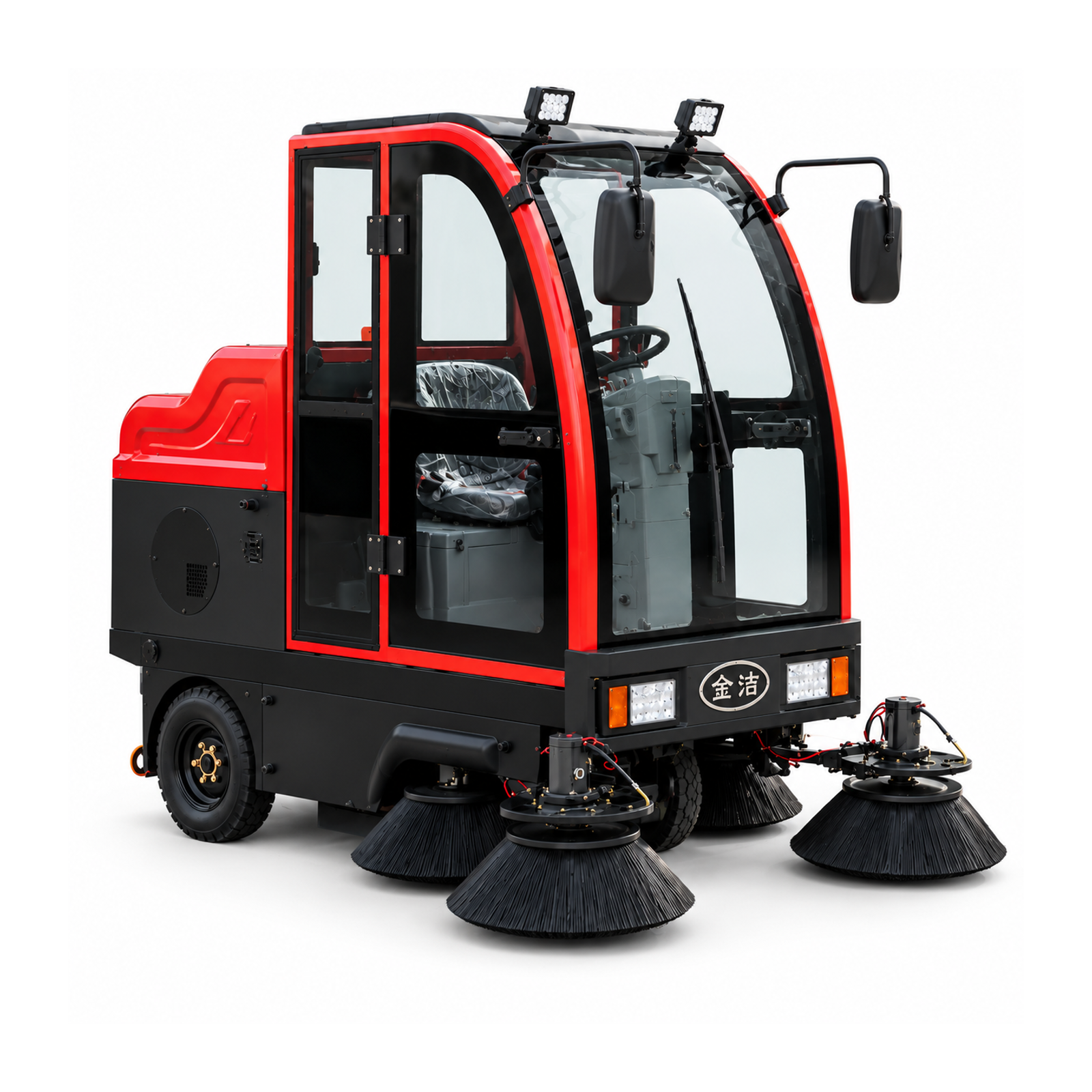 J-XS1900Q → | Current modelJ-XS1950 → | Related configurations J-XS2100 → |
|---|---|---|---|
| Sweeping width | 1900mm | 1900mm | 2100mm |
| Hopper | Ask about this option when specifying the machine. | 180L | 240L |
| Water tank | Ask about this option when specifying the machine. | 80L | 180L |
| Selection checks | Check clear road width, debris, turning room and supply points. | Check clear road width, debris, turning room and supply points. | Check clear road width, debris, turning room and supply points. |
Record sweeping, collection and disposal over the same period and to the same standard. Measure actual output on site.
Labour cost = crew size × hours per person × hourly rate. Record preparation, cleaning, transfers and close-down separately.
Include operation or supervision, energy, consumables, disposal and maintenance. Allocate equipment and battery costs over a suitable service period.
Record daily operating hours, routes, garbage or contaminants, and supply and shutdown times; under the same conditions, compare, and do not commit to any savings ratio that has not been calculated.
Shut down safely before checking brushes for wear and entanglement. Keep hands clear of moving parts.
Empty before reaching volume or weight limits. Hopper capacity alone does not specify safe payload.
Check installed parts for dust loading, damaged media and leaks. Wash only media approved for washing.
Check the supplied batteries, charger and charging conditions. Have a qualified technician investigate overheating, damage or electrical faults.
Record changes in level, obstacles, traffic and difficult sections. Reassess the route when conditions change.
Check drive, braking and parking as instructed. Stop if you hear abnormal noise or feel unexpected resistance.
Replace according to the manual, observed wear and duty. Supply the model, version and original part details when ordering.
Assess ordinary loose debris on open factory routes, campus main roads and perimeters. Use 1900 mm coverage and check continuous routes separately from narrow connections.
Use it for passes but measure gates, parked vehicles and turns against the body and brushes. Wide coverage needs suitable continuous routes, not merely a large total area.
Route by debris distribution, remove long or large objects first and trial ordinary mixed debris. Consider light-litter volume, grit weight, disposal distance and safe unloading.
Use continuous passes in open areas and coordinate side and main brushes at edges. Adjust clearance to obstacles and brush condition and plan finishing around tree pits, columns and corners.
Check filtration, sealing, cleaning and specified suppression alongside coverage. Observe dust, residue and maintenance needs in a trial and assess special materials separately.
Include disposal, brush inspection, filter care and electrical checks after shifts. Record wear, entanglement and faults and match consumables to this model for informed handover.
Coverage is 1900, 1900 and 2100 mm. Compare access, driving, power and collection even at equal width. For wider machines, check connections before supplies and disposal.
Agree a trial using routes, waste samples and shifts, then confirm driving, power, brushes, filtration and disposal. Handover covers operation, care and compatible parts for practical use.
The agreed service terms specify scope, charges and timing.
Before handover, check the equipment, accessories and configuration against the conditions on site.
View service support →Training covers driving or task operation, cleaning and safe shutdown for the equipment supplied.
View service support →Describe the surface, debris and schedule when discussing an operating issue.
View service support →Identify spares by the machine model, version and original part.
View service support →Confirm service area, charges and attendance arrangements in advance.
View service support →Agree on maintenance arrangements based on usage, location and condition.
View service support →Tell us about the roads, debris and daily rounds so we can check the suitability of J-XS1950.
Phone consultation: 0755-25621811
Provide entrance height, narrowest section, route length, dust/sunlight exposure, debris volumes and operator-enclosure needs.