
01 Intended use
Dispersed point washing for medium to small roads


The three-wheel platform can serve scattered soiled spots on residential access roads and estate perimeters. Check stopping space, hose routes, water refills and drainage together.
Dispersed point washing for medium to small roads
Three-wheel platform combined with hand-held rinsing to treat dispersed stains.
The route stops are connected to the water source, and the power and attachments are checked according to the model version of this machine.
View road, ground and public-facility washing demonstrations; choose configuration around refill points, routes and site conditions.
Video shows mobility and washing method; confirm working-end attachments and delivered version in the order.
Road surface material, dirt, and water resistance.
Stop, drag hose distance, and separation from people and vehicles.
Water source, drainage, and refilling points.
Route length and actual operating time
Dispersed point washing for medium to small roads requires separate clarification of the object and work process, and cannot be directly applied from similar equipment.
A three-wheel platform is used in conjunction with a handheld rinsing treatment to disperse stains; the route for stopping and connecting to water sources is equally influenced by on-site resources and personnel arrangements.
First, arrange the verification object along with the water source and shutdown unpressurization and return to the field inspection to avoid only completing the intermediate process.
Road surface material, dirt, and water resistance.
Stop, drag hose distance, and separation from people and vehicles.
Water source, drainage, and refilling points.
Route length and actual operating time
| Field or task | Conditions that require verification | Selection check |
|---|---|---|
| Washing residential access roads | Road surface material, dirt, and water resistance. | First confirm the road surface material, dirt, and water resistance, then determine if the community ramp flushing is suitable. |
| Road cleaning in the park | Stop, drag hose distance, and separation from people and vehicles. | With the premise of parking, hose retrieval distance, and separation from personnel and vehicles, check the tools, operating methods, and risk boundaries. |
| Property management perimeter stains | Water source, drainage, and refilling points. | Include water sources, drainage, and refilling points into the on-site solution, not just compare individual specifications |
| Field segment cleaning | Route length and actual operating time | Combine the route length with the actual working hours to arrange the end and handover, and for complex conditions, test the machine or verify on-site first. |
Working pressure, flow rate, and attachments should be verified based on the pump group of this vehicle and the delivery list; no assumption of road traffic qualifications, and no spraying to personnel or energized parts.
The scenario is for illustrating the applicable conditions and is not a case of a completed customer or actual test results.

Operators wash sections with a handheld lance, coordinating traffic, refilling and drainage.
View the corresponding scene description →
Clean ordinary ground mud by estate-road sections; determine method for actual contamination.
View the corresponding scene description →
Wash paved plazas and edges in sections, keeping pedestrians out of the isolated zone.
View the corresponding scene description →Combine the image to understand the appearance, operation, or accessories of the machine; specific components and delivery configuration are subject to the corresponding documentation.


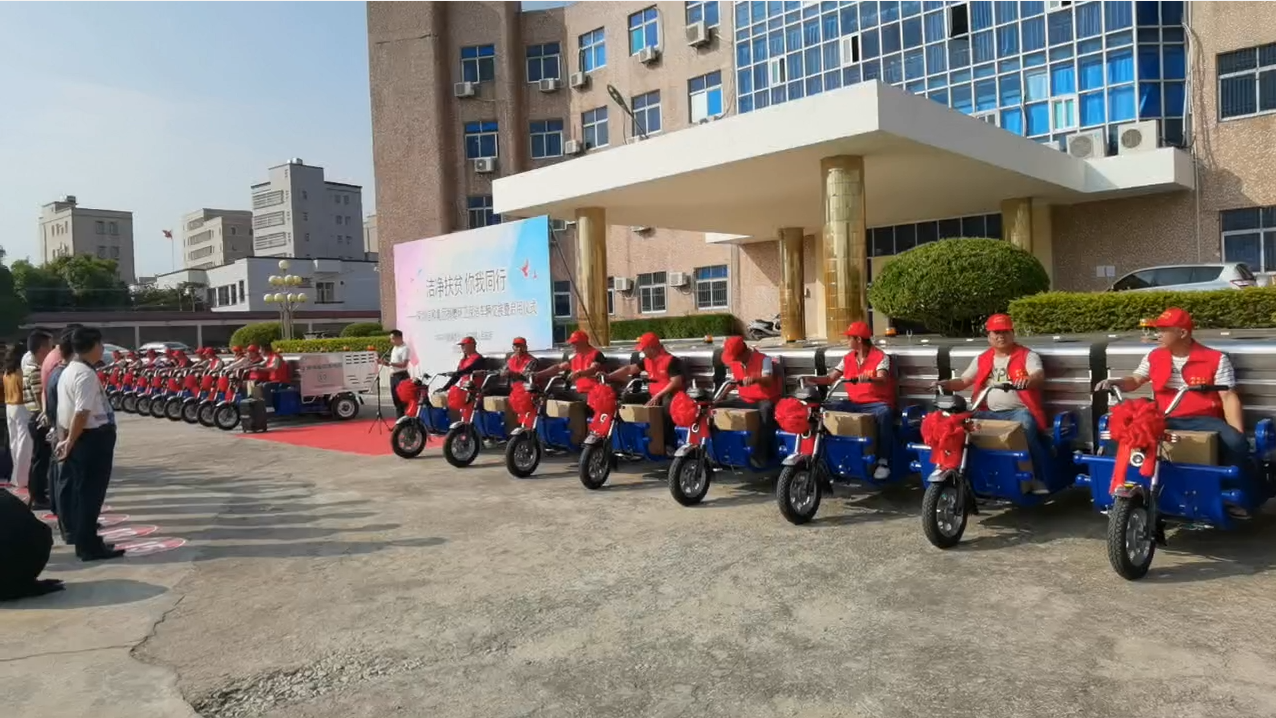
View the original handover photographs, event video and equipment preparation.
View the handover case →The first screen is for positioning; the complete specifications should be verified against the original data of the machine and the corresponding delivery version.
| Configuration item | Original page registration content |
|---|---|
| Pressure | Mobile pressure-washing configuration; confirm the pump set. |
| Flow | Confirm against the tank, nozzles and washing stations. |
| High-pressure hose configuration | Consider a hand-held wash hose with a quick-stow arrangement. |
Overall appearance of the machine and function explanation; 01-06 are explanatory indexes, and are not marked for unverified internal coordinates.
Arrange the rinsing station according to the overall outline of the vehicle, the road surface, and the parking position.
Check the water source and the location for water replenishment, the capacity is not equal to the continuous operation time.
Working pressure, flow rate, power, and safety protection are based on the actual configuration.
Check the pressure resistance, fittings, length, and tools together, and do not mix low-grade accessories.
Determine the process and isolation based on the water resistance material, dirt type, and test washing results.
Shut down and depressurize according to the instructions, check the piping, replenish water, and record any abnormalities.
The work process is used to explain the process and personnel coordination, and does not replace the machine operation instructions and internal structure documents.
The road surface material, dirt, and water resistance, and shall be carried out in accordance with the machine's instructions and on-site conditions.
Park, drag the hose at a distance from people and vehicles, and follow the machine's instructions and on-site conditions.
Water source, drainage, and refilling points, and carry out operations according to the machine instructions and on-site conditions.
The route length and actual operating time should be followed, and the machine's instructions and on-site conditions should be executed.
Three-wheel platform combined with handheld rinsing to treat dispersed stains; the road surface material, dirt, water resistance, and route length, as well as the actual working time, should be considered together.
Working pressure, flow rate, and attachments should be verified based on the pump group of this vehicle and the delivery list; no assumption of road traffic qualifications, and no spraying to personnel or energized parts.
Check against the actual attachments, interfaces, materials, or control requirements of the machine, and do not list optional components as standard configurations.
Combine the image to understand the appearance, operation, or accessories of the machine; specific components and delivery configuration are subject to the corresponding documentation.
This model is centered. Left and right are real configurations or process references; different tasks are not simply high or low settings, and cannot be judged solely by the model number.
| Comparison criteria |  JC-500JY | JC-500S |  JC-1800 |
|---|---|---|---|
| Main tasks | Road dust and water sweeping assistance. | Dispersed point washing for medium to small roads | Longer route and wider site rinsing |
| Configuration function. | Integrate water suppression dusting and localized rinsing into mobile operations. | Three-wheel platform combined with hand-held rinsing to treat dispersed stains. | Planning water supplies for a four-wheel wash vehicle on longer routes |
| Selection focus | Water sweeping process and replenishment and drainage conditions. | Route stop and water source connection | Water tank refilling and road isolation. |
The main unit, actual attachments, tools, or consumables are compared according to the same list; optional accessories are not considered as standard fittings.
Include the preparation for dispersing point-by-point rinsing of medium and small roads, turning the vehicle, and route stops connected to the water source in the calculation, without using nominal numbers to estimate actual output.
Record the shutdown depressurization and return to the charging dock inspection, consumable maintenance and disposal together, without creating a fixed saving ratio or return period.
Arrange the rinsing station according to the overall outline of the vehicle, the road surface, and the parking position. Specifically, disassembly, maintenance cycles, and accompanying materials should be checked against the manual for this machine.
Check the water source and the location for refilling, as the capacity is not equal to the continuous operation time. Specifically, the disassembly, maintenance cycle, and accompanying materials should be checked according to the machine's instructions.
Working pressure, flow rate, power, and safety protection are based on the actual configuration. Specific disassembly, maintenance cycle, and compatible materials should be verified according to the machine's manual.
Check the pressure resistance, fittings, length, and tools together, and do not mix low-grade accessories. Specific disassembly, maintenance cycles, and accompanying materials should be checked according to the machine's instructions.
Determine the process and isolation based on the water-resistant material, contaminants, and test washing results. Specific disassembly, maintenance cycles, and accompanying materials should be verified according to the machine's manual.
Shut down and depressurize according to the instructions, check the piping, replenish water, and record any abnormalities. Specifically, the disassembly, maintenance cycle, and accompanying materials should be verified according to the machine's instructions.
Verify the model number, nameplate, random accessories, and delivery documents.
Understand verification of the object and water source and safety start/stop procedures as specified in the machine's manual.
Combine the dispersed point-of-use rinsing for medium and small roads with on-site process communication based on usage conditions.
Check the parts according to the interface, material, and delivery version.
Please provide the fault symptoms and inspection records; service scope and schedule are according to the agreement.
Inspection content, service location, cost, and cycle are subject to actual agreement.
The three-wheel platform can serve scattered soiled spots on residential access roads and estate perimeters. Check stopping space, hose routes, water refills and drainage together.
Three-wheel platform combined with handheld rinsing to treat dispersed stains; the road surface material, contaminants, water resistance, and route length should be verified together with the actual working period.
Working pressure, flow rate, and attachments should be verified based on the pump group of this vehicle and the delivery list; no assumption of road traffic qualifications, and no spraying to personnel or energized parts.
The reference model focuses on road dust and water sweeping assistance, while this model is designed for small and medium road dispersed point washing. First, divide the processes and accompanying equipment, then compare the corresponding original specifications, without judging by the model number.
Check the road surface material, dirt type, water resistance, parking, hose length and separation from people and vehicles, water source, drainage and refilling points, route length and actual working hours, and conduct small-scale tests and on-site evaluations for complex conditions.
Organize the task according to "Verify the object and water source → Park the hose and isolate → Confirm the process and rinse → Stop the machine, release pressure, and inspect the site"; the specific operations are determined jointly by the on-site conditions and the machine's instructions.
Prioritize attention to the vehicle platform, pump group system, and return field maintenance. Before servicing or disassembly, isolate the power as directed in the manual. Use the service interval specified for the model.
Provide photos of community side road rinsing and other sites, explaining the tasks, existing equipment, and specific conditions for route parking and water source connection, and then determine whether this machine is suitable.
Please specify the requirements for your dry and wet cleaning tasks at dispersed points along medium and small roads, and supplement information on road surface material, dirt, water resistance, route length, and actual working hours. We will compare the on-site solution with the machine's configuration.
Phone consultation: 0755-25621811