
01 Intended use
Internal route regular garbage collection
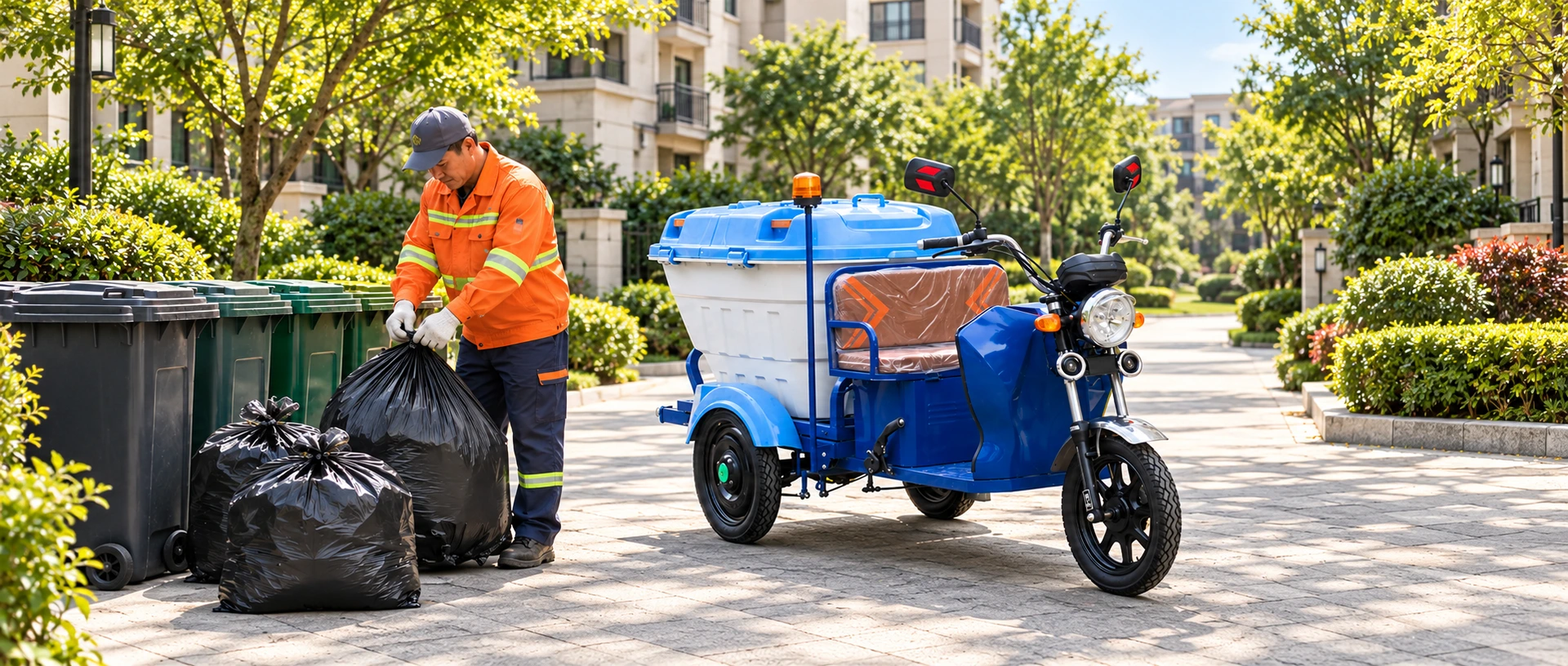

This machine is more suitable for dispersed waste collection within a park, with a three-wheel platform connecting collection points and concentration points; focus on verifying waste packaging, parking conditions, and personnel loading and unloading arrangements.
Internal route regular garbage collection
Three-wheel collection platform connects dispersed collection points with centralized points.
Packaging, parking, and loading/unloading routes, check the power and attachments according to the machine version.
A 90-second 1080p version with replacement Chinese narration, background music and subtitles, covering collection, loading, operation and transport.
Bagged, bulk, or container form
Channel, corner, and parking position.
Staff for loading and unloading and operating hours.
Centralized point location and route connection.
Internal route ordinary garbage collection requires separate and explicit objects and operational procedures, and cannot be directly applied from similar equipment.
A three-wheel collection platform connects dispersed collection points with centralized points; packaging, parking, and loading/unloading routes also affect usage, just like on-site resources and personnel arrangements.
First, verify the collection and transportation method and arrange for centralized handover and cleaning together to avoid completing only the intermediate process.
Bagged, bulk, or container form
Channel, corner, and parking position.
Staff for loading and unloading and operating hours.
Centralized point location and route connection.
| Field or task | Conditions that require verification | Selection check |
|---|---|---|
| Dispersed waste points in the park | Bagged, bulk, or container form | First confirm whether the equipment is bagged, bulk, or container form, then determine if the scattered garbage points in the park are suitable. |
| Internal service route for property management: The sweeper, floor scrubber, squeegee, dust mop, filter cleaning, hopper, pipe jetter, feed and retrieve the hose, filter element, clear width, Jinjie, and Wan Sheng Long. | Channel, corner, and parking position. | Verify the tools, work methods, and risk boundaries based on the channel, corners, and parking position. |
| Routine collection of general waste. | Staff for loading and unloading and operating hours. | Include loading and unloading personnel and operation hours into the on-site plan, and cannot just compare individual specifications. |
| Short-distance transfer at the concentration point | Centralized point location and route connection. | Combine the end point location with the route connection arrangement for completion and handover, and for complex conditions, test the machine or conduct on-site verification first. |
Does not inherit the bed, bucket position, or load capacity of other models; does not imply public road travel qualifications.
The scenario is for illustrating the applicable conditions and is not a case of a completed customer or actual test results.
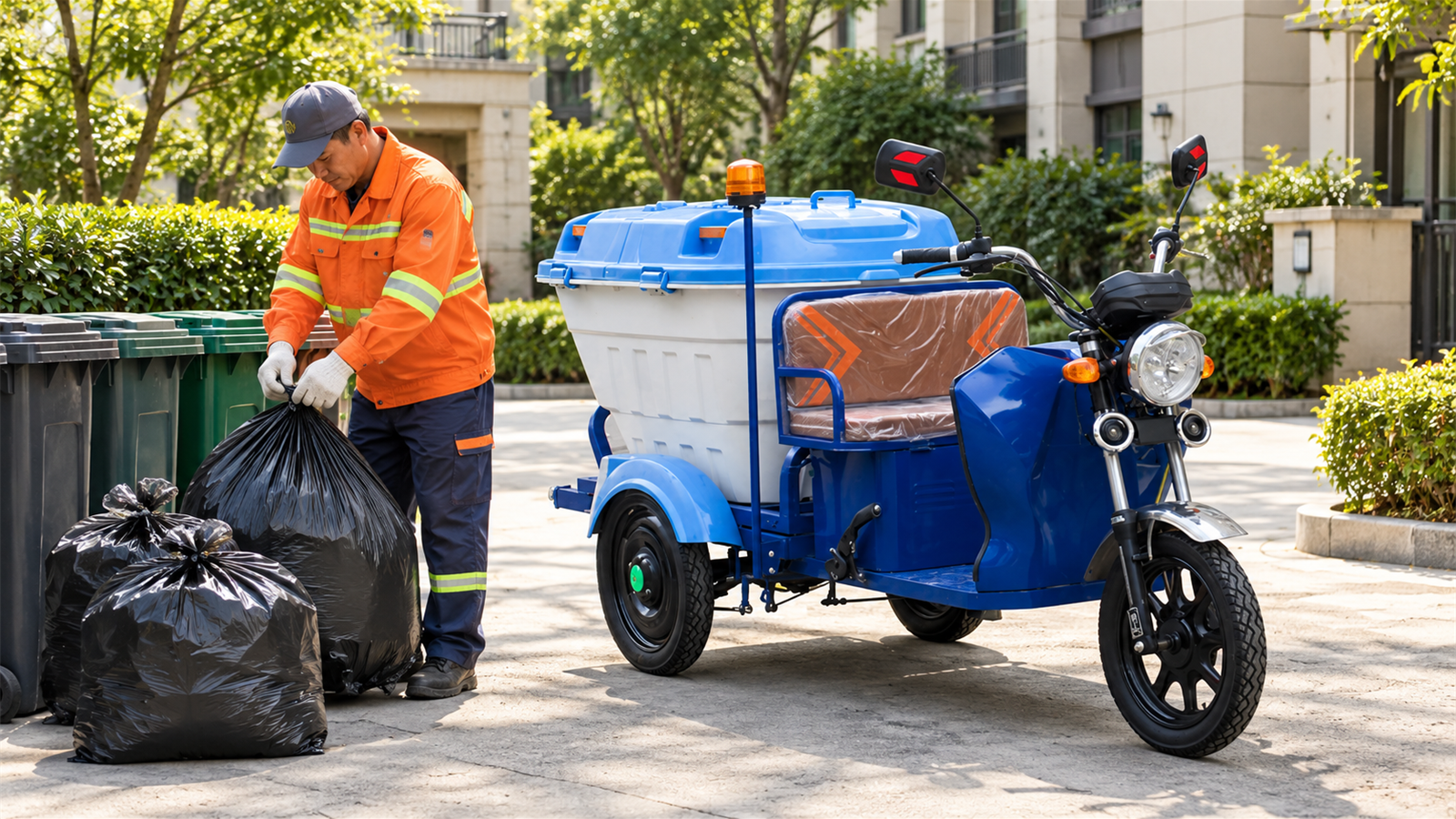
Plan ordinary bagged-waste collection around the original container and internal route to reduce dispersed carrying, checking loading and closure against this vehicle.
View the corresponding scene description →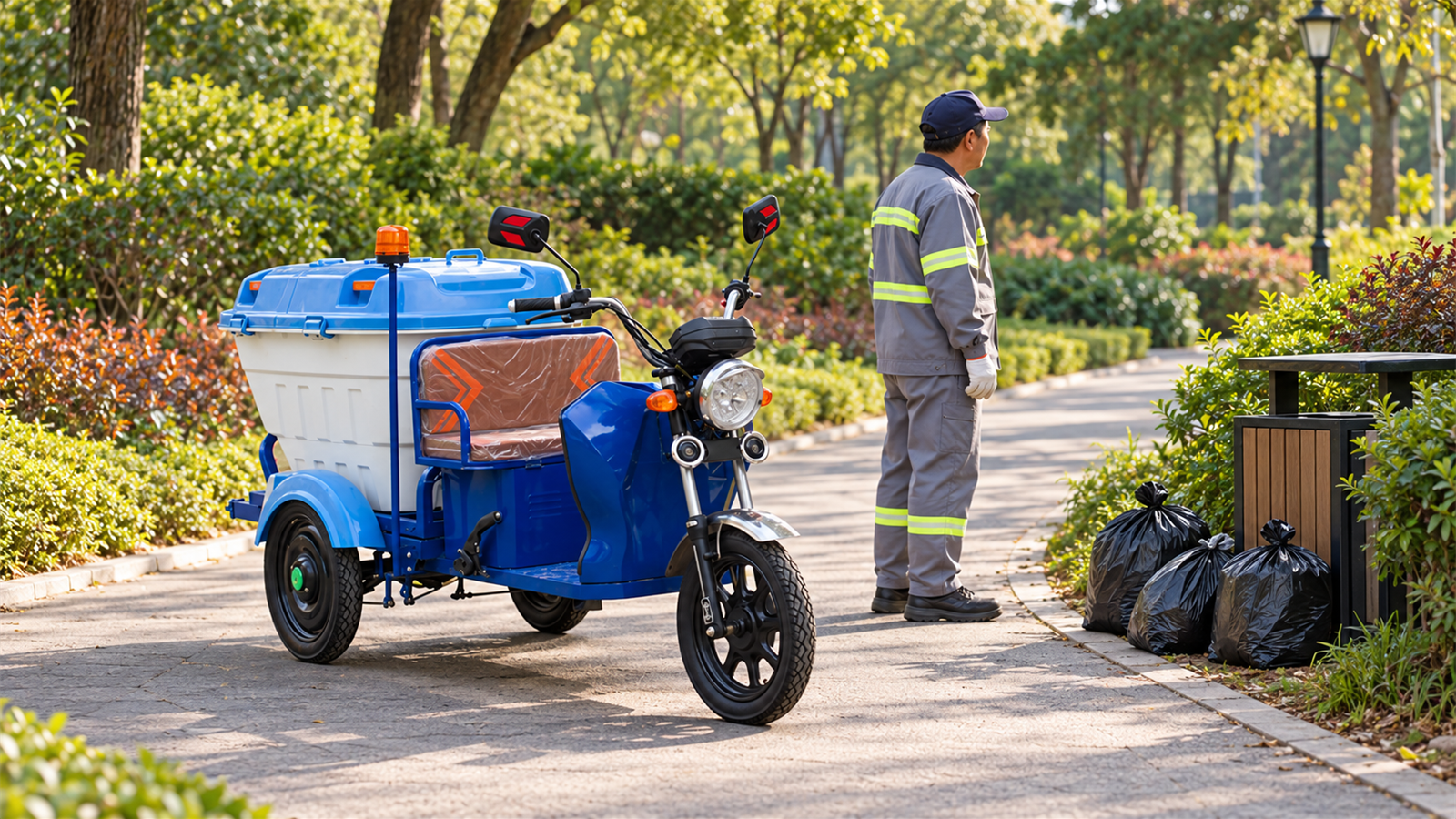
Check access, turns and handling points, then coordinate collection and transfer along controlled internal service routes.
View the corresponding scene description →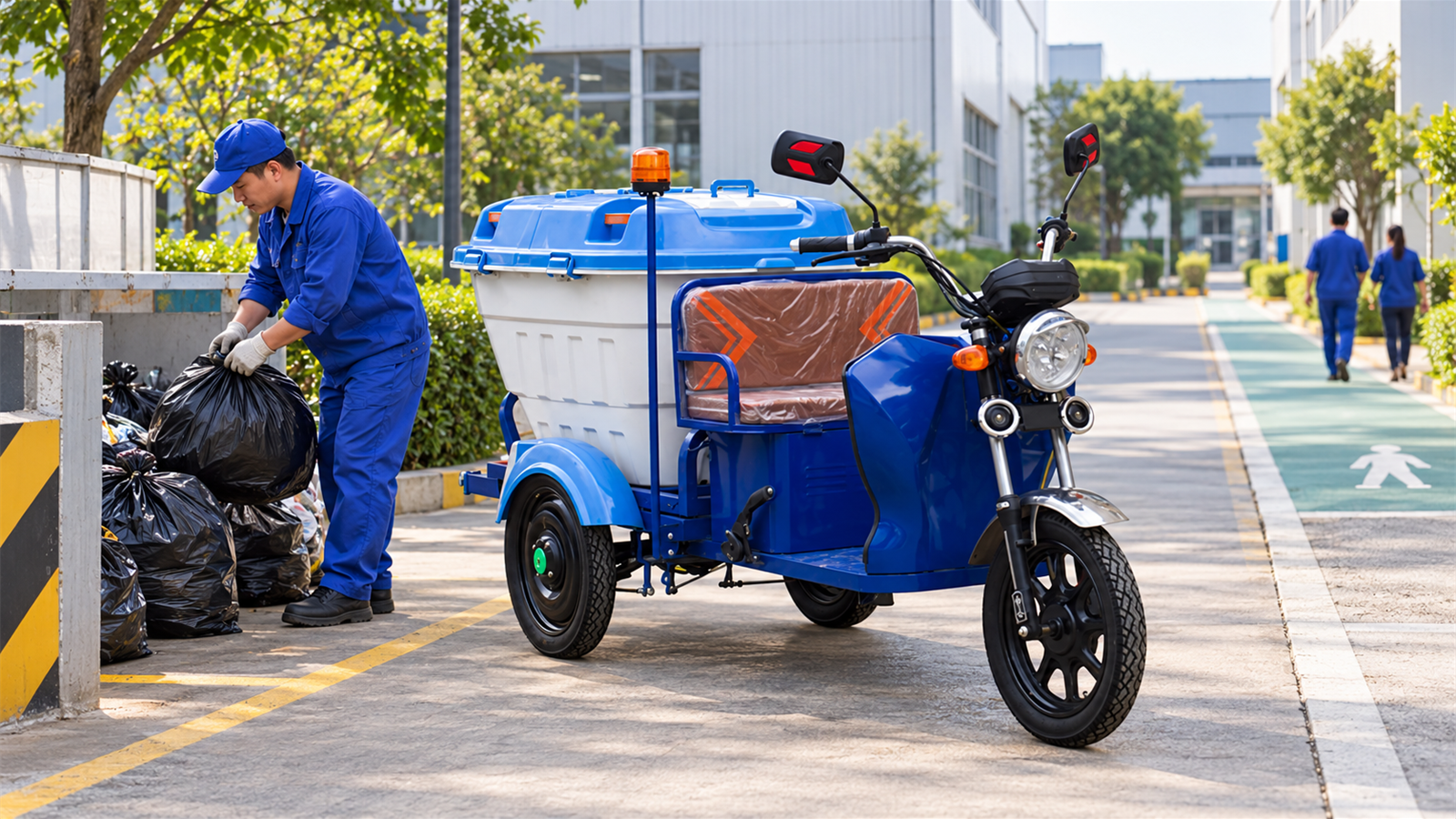
Coordinate ordinary housekeeping waste packaging, routes and pedestrian separation without borrowing another vehicle’s tipping, bin layout or payload capability.
View the corresponding scene description →The first screen is for positioning; the complete specifications should be verified against the original data of the machine and the corresponding delivery version.
| Configuration item | Original page registration content |
|---|---|
| Equipment category | Jinjie JQ-50 three-wheel waste-transport vehicle |
| Product model | JQ-50 |
Overall appearance of the machine and function explanation; 01-06 are explanatory indexes, and are not marked for unverified internal coordinates.
Check indoor routes against the vehicle dimensions, aisle width and floor conditions.
Check the garbage packaging against the container of this vehicle, without assuming the load capacity and volume.
Clarify personnel, parking points, and loading/unloading tools to prevent scattering.
The collection points and concentration points are connected, distinguishing between pedestrian and vehicle traffic flows.
Drive, braking, and recharging should be carried out according to the model version and instructions of this machine.
Inspect the body and loading fixed parts, clean and record any abnormalities.
The work process is used to explain the process and personnel coordination, and does not replace the machine operation instructions and internal structure documents.
Bagged, bulk, or container form, and executed according to the machine instructions and on-site conditions.
Passage, corners, and parking positions, and execute according to the machine's instructions and on-site conditions.
The personnel for loading and unloading should be coordinated with the operation time, and the operation should be carried out according to the instructions of this machine and the on-site conditions.
Concentrate on the location and route connection, and carry out according to the machine instructions and on-site conditions.
A three-wheel collection platform connects dispersed collection points with centralized points; it is necessary to determine the connection between bagged, bulk, or container forms and the location and route of the centralized point.
Does not inherit the bed, bucket position, or load capacity of other models; does not imply public road travel qualifications.
Check against the actual attachments, interfaces, materials, or control requirements of the machine, and do not list optional components as standard configurations.
This model is centered. Left and right are real configurations or process references; different tasks are not simply high or low settings, and cannot be judged solely by the model number.
| Comparison criteria |  JC-268 | JQ-50 |  JQ-260 |
|---|---|---|---|
| Main tasks | General leaf collection | Internal route regular garbage collection | Garbage transfer and centralized unloading. |
| Configuration function. | Connect the suction brush to the suction port of the original machine and the collection bag. | Three-wheel collection platform connects dispersed collection points with centralized points. | Internal collection and centralized loading are connected to the self-unloading process. |
| Selection focus | Leaf status and collection and transportation after collection | Packaging, parking, and loading/unloading routes | Receiving space and discharge organization. |
The main unit, actual attachments, tools, or consumables are compared according to the same list; optional accessories are not considered as standard fittings.
Include the operation of transporting general waste along internal routes, transfer and packaging, and preparation for parking and loading/unloading routes, without nominal numbers to calculate actual efficiency.
Record the centralized handover and cleaning, as well as the maintenance and disposal of consumables, together, without setting a fixed cost-saving ratio or payback cycle.
Check the internal route against the vehicle size, corridor, and ground conditions. Specifically, check the disassembly and maintenance cycles, and the accompanying materials according to the machine's manual.
Check the garbage packaging against the container of this vehicle, without assuming the load capacity and volume. Specifically, the disassembly, maintenance schedule, and accompanying materials should be checked according to the manual of this machine.
Clarify personnel, parking points, and loading/unloading tools to prevent scattering. Specifically check disassembly and maintenance cycles, as well as accompanying materials, according to the machine's instructions.
The collection points and concentration points are connected, and the pedestrian and vehicle traffic lines are distinguished. Specifically, the disassembly and maintenance cycles, as well as the accompanying materials, should be checked according to the machine's instructions.
Drive, braking, and refueling should be carried out according to the model version and instructions of the machine. Specific disassembly, maintenance cycles, and accompanying materials should be checked against the machine's instructions.
Check the body and loading fixation, clean and record any abnormalities. Specifically, disassembly, maintenance cycles, and accompanying materials should be verified according to the machine's manual.
Verify the model number, nameplate, random accessories, and delivery documents.
Check the machine instructions to verify the collection method and ensure safe start and stop.
Combine internal route ordinary garbage collection and on-site process communication usage conditions.
Check the parts according to the interface, material, and delivery version.
Please provide the fault symptoms and inspection records; service scope and schedule are according to the agreement.
Inspection content, service location, cost, and cycle are subject to actual agreement.
This machine is more suitable for dispersed waste collection within a park, with a three-wheel platform connecting collection points and concentration points; focus on verifying waste packaging, parking conditions, and personnel loading and unloading arrangements.
A three-wheel collection platform connects dispersed collection points with centralized points; it is necessary to verify the connection between bagged, bulk, or container forms and the location and route of the centralized point.
Does not inherit the bed, bucket position, or load capacity of other models; does not imply public road travel qualifications.
The reference model focuses on concentrated collection of ordinary leaves, while this model focuses on the transportation of ordinary garbage along the internal route. First, divide the processes and accompanying equipment, then compare the corresponding original specifications, without judging based on model numbers.
Check sequentially for bagged, bulk, or container forms, channels, corners, and parking positions, loading and unloading personnel and operating hours, the location of the concentration point, and route connectivity. In complex conditions, combine small-scale tests and on-site evaluations.
Organize the task according to "Verify the collection method → Arrange parking and loading → Transport along internal routes → Centralized handover and cleaning"; the on-site situation and the machine's instructions jointly determine the specific operations.
First, focus on the three-wheel platform, loading and unloading organization, and handover and cleaning. Before servicing or disassembly, isolate the power as directed in the manual. Use the service interval specified for the model.
Provide photos of dispersed waste points and other sites, explain the tasks, existing equipment and packaging, and the specific conditions of parking and loading/unloading routes, and then determine whether this machine is suitable.
Please specify the requirements for your internal route general waste collection tasks, and supplement information on bagged, bulk, or container forms, and the location of centralized points and route connectivity. We will compare the on-site solution with the machine's configuration.
Phone consultation: 0755-25621811