
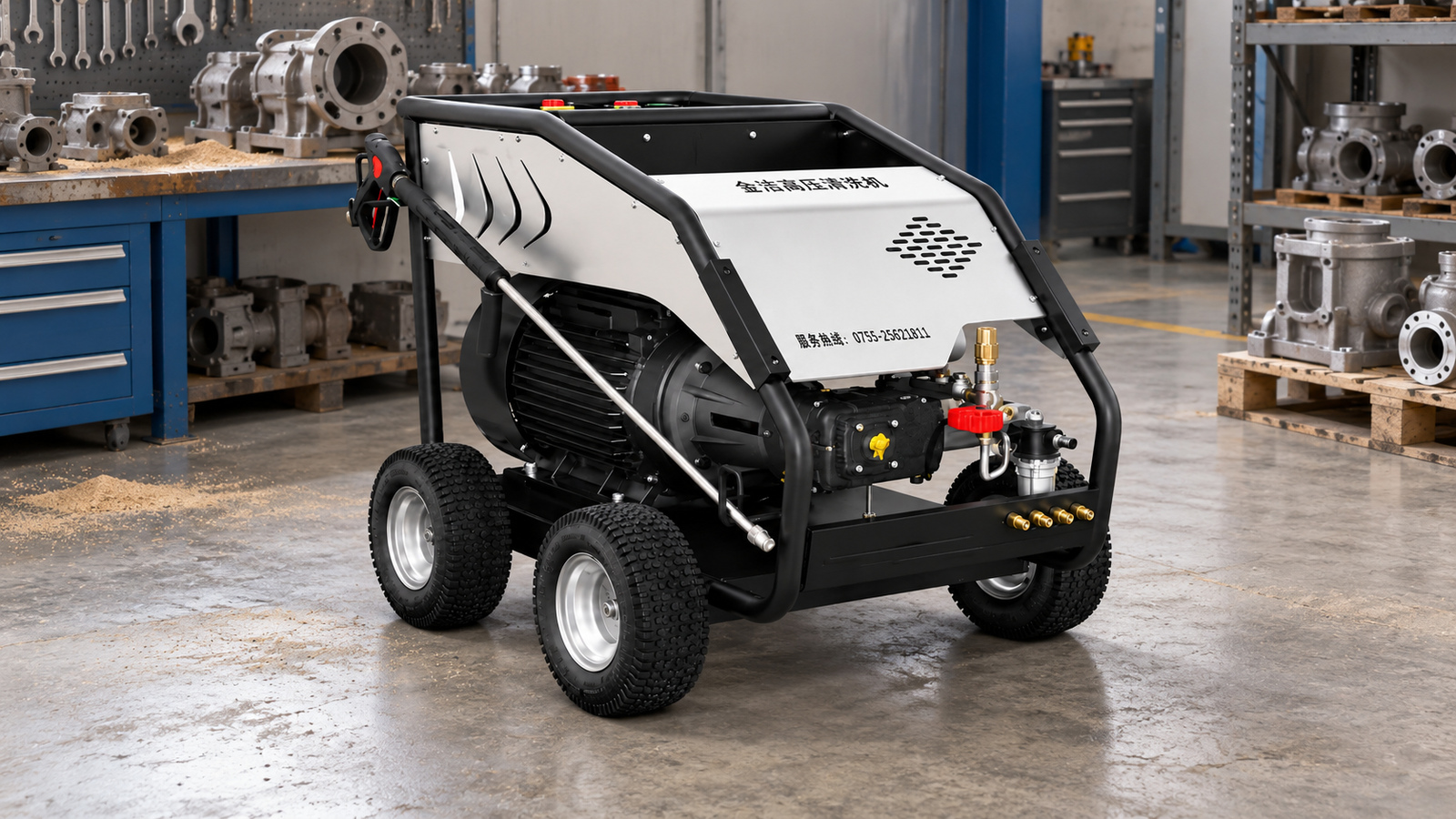
Selected model: Jinjie J-3515D
Typical application
Washing loose residue from castings and metal parts
Jinjie J-3515D
Recover loose sand and ordinary debris before local washing and collection. A planned sequence can reduce repeated brushing and prepare castings and metal components for inspection and maintenance.
01 | The problem: sand and loose deposits remain in corners
Casting edges, rib roots and metal joints retain sand, mud and loose deposits. Repeated manual brushing takes time, while uncollected debris can move onto neighbouring surfaces. Identify the substrate and inspect what remains before deciding whether specialist surface treatment is needed; not every oxide layer is ordinary dirt.
02 | Why choose Jinjie J-3515D or J-5022D
The current product information includes casting or metal-component washing for both models. J-3515D can support local removal of casting sand and loose deposits at fixed stations. J-5022D can support sectional washing and residue removal on metal components. Select settings independently from each machine’s instructions, substrate and nozzle trial; do not transfer another model’s figures or apply maximum pressure to every surface.
03 | The method: preclean, trial and collect sectionally
Secure the workpiece in an approved washable area with controlled drainage and isolate nearby equipment. Recover loose sand and bulk deposits first. Protect precision mating faces, seals, electrics and incompatible coatings. Trial a small permitted area with a matched nozzle, gentle setting and suitable distance; inspect the substrate and deposits before working towards collection. Check remaining sand, drying and corrosion-protection requirements before handover.
04 | Customer value: reduce redeposition and organise maintenance
Combining precleaning with local washing can reduce redeposition and repeated scraping. Station-based collection makes remaining deposits easier to inspect. A matched nozzle, distance and trial can limit damage from unsuitable jets. Coordinating washing, drying and inspection can reduce unnecessary movement and rework; actual time and total-cost benefits depend on soil, quantity and collection arrangements.
Technical and safety limits
For loose sand and ordinary deposits on approved water-compatible substrates only. No guarantee of removing dense scale, firmly bonded rust or coatings, no rust-removal grade and no substitute for blasting or coating preparation. Match nozzle and hose ratings, power, water and wastewater handling. Exclude hazardous media, live equipment and explosive atmospheres. Isolate power and release pressure before maintenance or changing nozzles.
Frequently asked questions
Will this achieve a specified rust-removal grade?
No grade is promised. Bonded rust, coating preparation and acceptance standards require a separately supported process and trials.
Why not use maximum pressure immediately?
Substrate, coatings, nozzle and distance affect the result. Follow the machine’s instructions and a trial to choose settings.
How can repeated cleanup be reduced?
Recover loose material first, work sectionally towards collection, then check corners, drying and corrosion protection.
Models and original application images
Compare each model against its own configuration and the actual route, material and site services.
Jinjie J-3515D
Current model
J-3515D: trial casting sand and loose deposits at a fixed station; no blasting substitute is claimed.
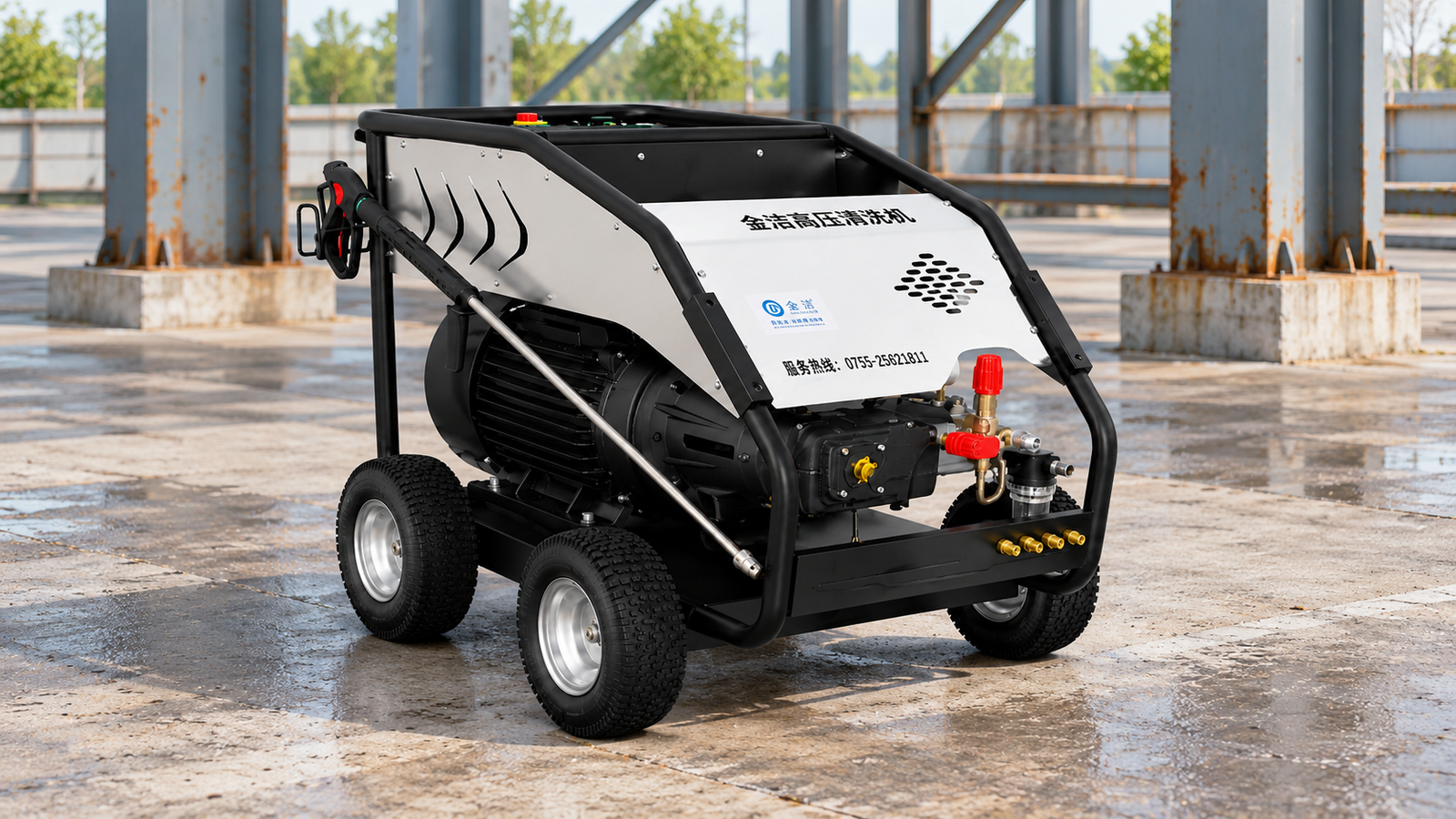
Jinjie J-5022D
J-5022D: match local washing to the metal and deposit, using this machine’s own supply and nozzle requirements; no rust-removal grade is claimed.