
Selected model: Jinjie JGY-3078P
Typical application
Cold ferrous-swarf cleanup around machine tools
Jinjie JGY-3078P
At isolated work stations and maintenance areas, separate sharp bulk pieces, liquids and special materials before collecting compatible cold short swarf. Reduce missed edges and coordinate cleanup with maintenance.
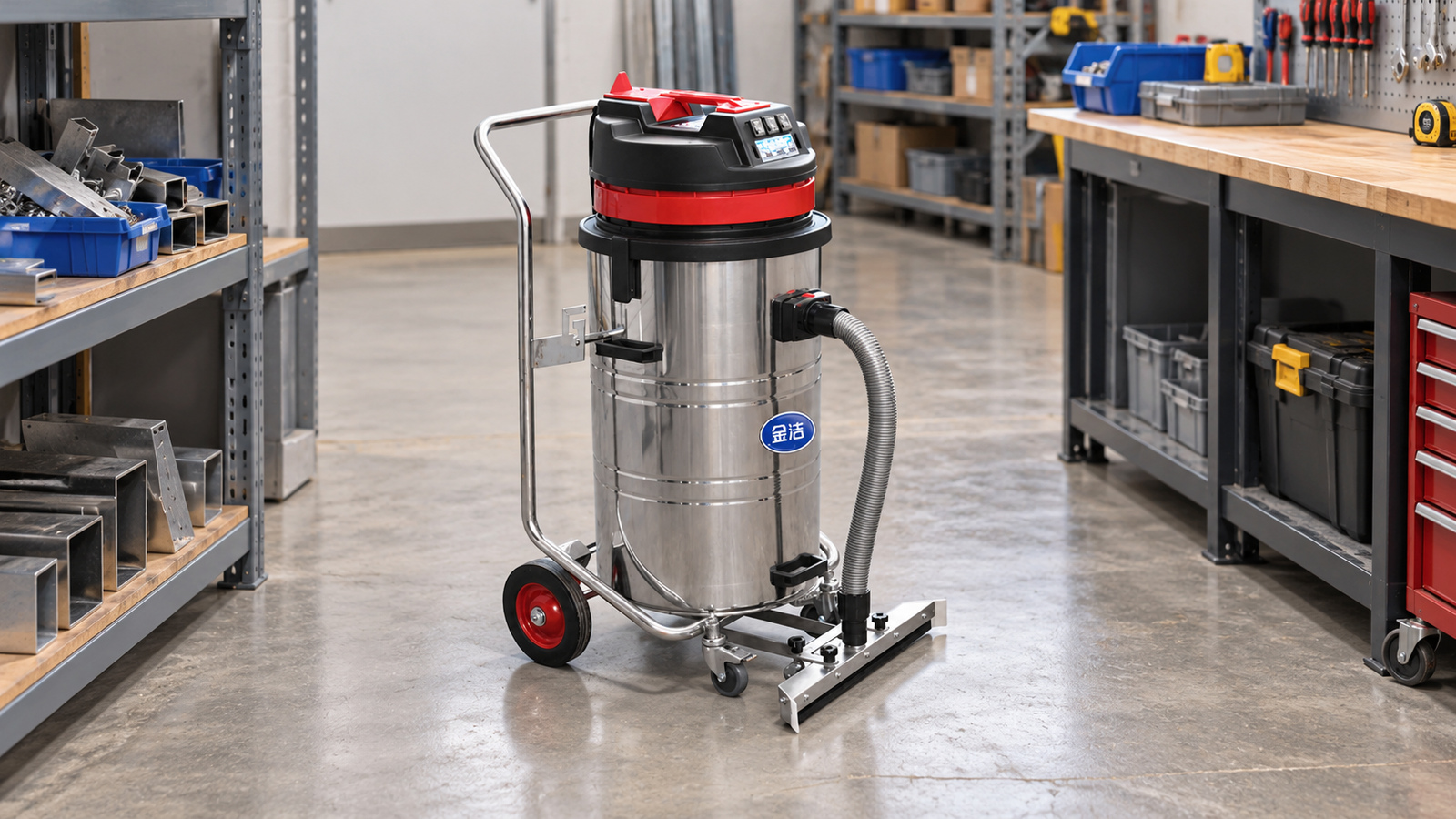
01 | The problem: cold swarf gathers at station edges
Cold ferrous swarf around machine bases and work stations is difficult to sweep away completely. Brushes can push it under edges, while mixing it with cutting fluid, fine dust or sharp long swarf creates more sorting. Maintenance teams need a defined collection area and handover sequence rather than a container of mixed workshop waste.
02 | Why choose Jinjie JGY-3078P
Current product information lists cold ferrous swarf and ordinary solid debris as collection tasks. With the actual suitable nozzle and hose, JGY-3078P can support dry short-swarf collection on floors outside isolated machines and around station edges. Separate accessible vacuuming from manual precleaning to reduce repeated sweeping. Ordinary industrial-vacuum construction does not establish explosion protection, hot-chip or unknown-liquid capability.
03 | The method: classify, check attachments and work by station
Stop machinery and follow site isolation procedures. Confirm that material is cool, dry, identified ordinary ferrous swarf permitted for collection, with no sparks, reactive metal powder or unknown chemicals. Remove sharp bulk pieces and tangled long swarf with suitable tools first. Check the dry filter, nozzle, hose and container against this machine’s instructions. Trial a small area, then work around external machine bases and lanes; never insert the nozzle into moving mechanisms. Switch off and isolate before clearing blockages or emptying, and segregate collected waste.
04 | Customer value: less repeated sweeping and clearer maintenance handover
Collecting compatible cold short swarf can reduce repeated sweeping and individual pickup at edges, helping keep floors orderly. Aligning collection with maintenance makes missed debris, staff allocation and reopening easier to manage. Separating bulk pieces, liquids and special materials helps protect hoses and filters and avoids maintenance caused by unsuitable mixed collection. Time and total-cost benefits depend on swarf, quantity, hose distance and maintenance frequency.
Material and safety boundaries
Limited to identified, ambient-temperature, dry ordinary ferrous short swarf compatible with this machine and its tools. Excludes hot chips, sparks, reactive metal powders such as magnesium or aluminium, combustible or toxic fine dust, corrosive media and unknown cutting fluids. Filter area, power and container appearance do not establish explosion protection or dust classification. Stop if substantial fine dust, unknown material or abnormal heating is found, and reassess against material and machine instructions.
Frequently asked questions
Can hot chips or sparks be collected directly?
Not under this plan. Isolate and assess material safely; ordinary vacuum appearance does not establish hot-material or explosion protection.
Can cutting fluid and swarf be mixed?
This is a dry cold-swarf plan and makes no wet-pickup claim. Assess the liquid, this model’s wet configuration and disposal separately.
How can blockages and repeat work be reduced?
Remove bulk, long and sharp pieces first, use matched tools and filters, collect by station and maintain the machine as instructed.
Models and original application images
Compare each model against its own configuration and the actual route, material and site services.
Jinjie JGY-3078P
Current model
JGY-3078P: use compatible dry tools for cold short ferrous swarf outside isolated machinery; no wet-pickup, explosion-proof or hot-chip capability is inferred.
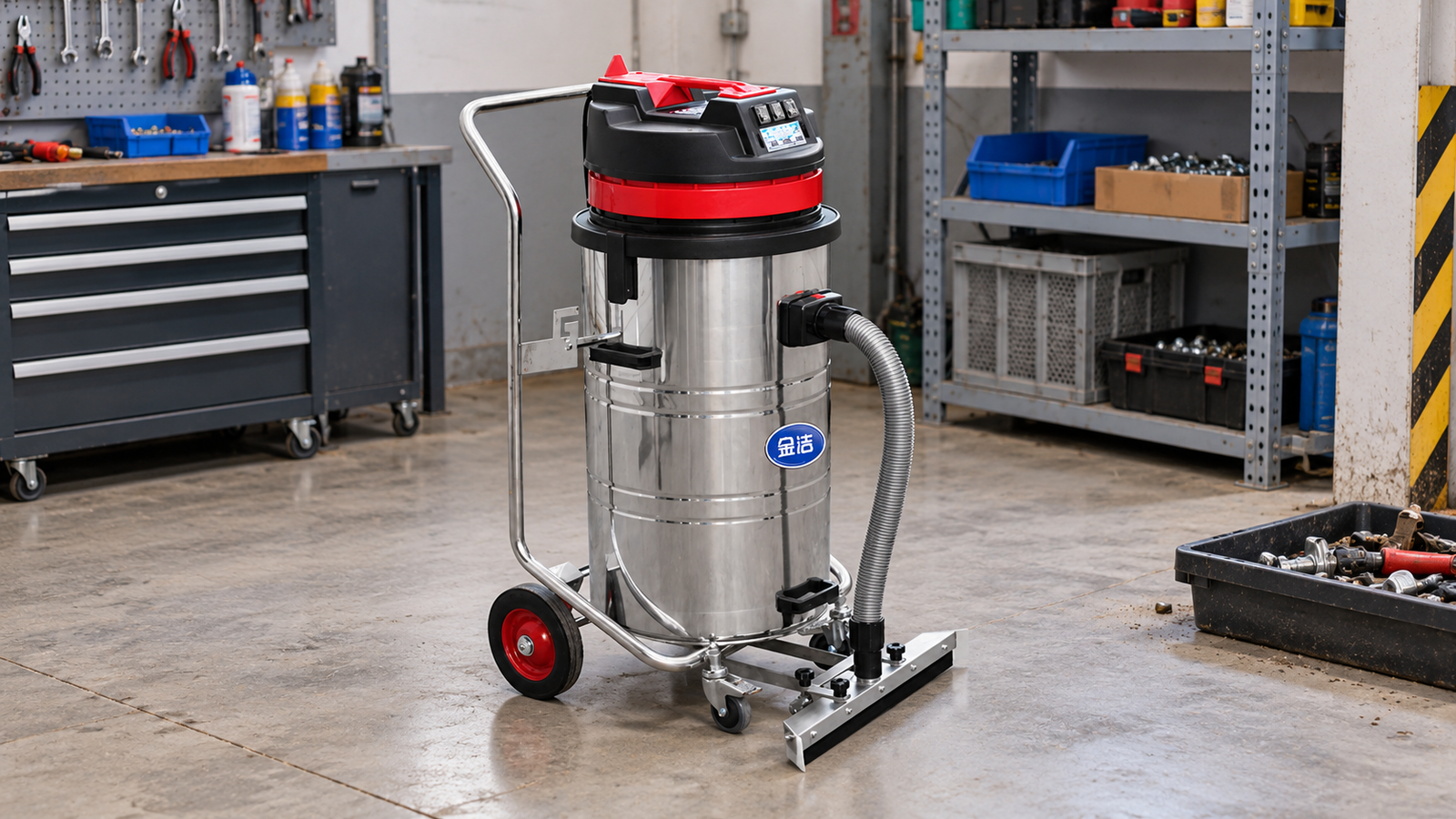
Jinjie JGY-3078P
JGY-3078P: use compatible dry tools for cold short ferrous swarf outside isolated machinery; no wet-pickup, explosion-proof or hot-chip capability is inferred.