
APPLICATION GUIDANCE · RIDE-ON SCRUBBER SELECTION
Jinjie J-D9R Ride-on Floor Scrubber · Typical application
Warehouse aisle cleaning
Plan for forklifts, rack ends and temporary goods storage. Remove debris and entangling items before ride-on scrubbing and wastewater recovery.
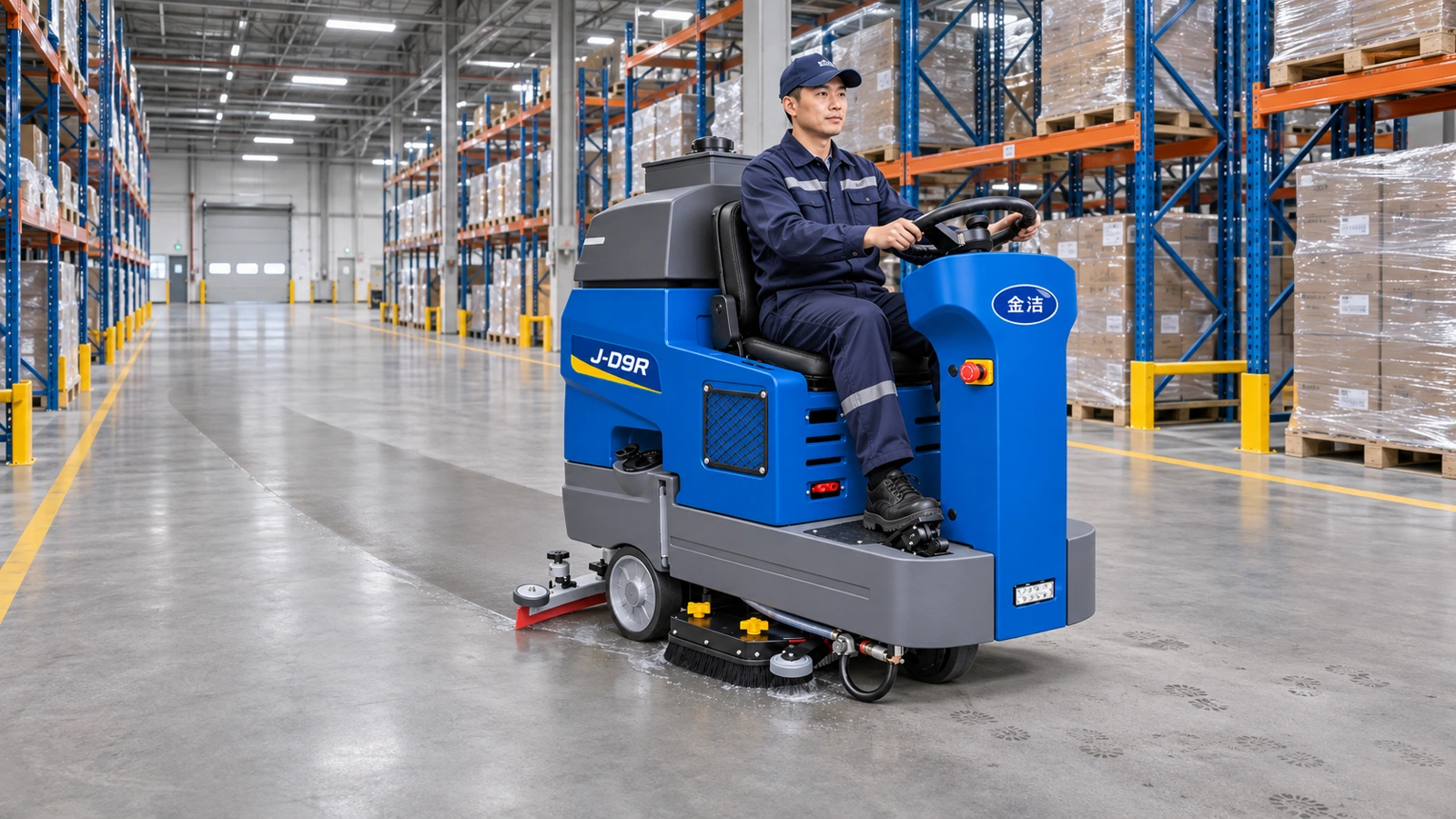
- 860mm · cleaning width
- 140L / 150L · solution / recovery
- 24V / 200Ah
01 · Understand the cleaning task
Main aisles, rack ends and goods-access points combine traffic and handling. Maintain dust and footprints during suitable gaps in logistics activity.
Cleaning and logistics
Separate the scrubber route from forklifts, pallet trucks and pedestrians.
Debris and entanglement
Remove straps and loose particles first instead of feeding them into the brush or recovery area.
Routes and servicing
Divide work by water points, drainage and shifts; do not derive task time from nominal output.
02 · Why consider this model
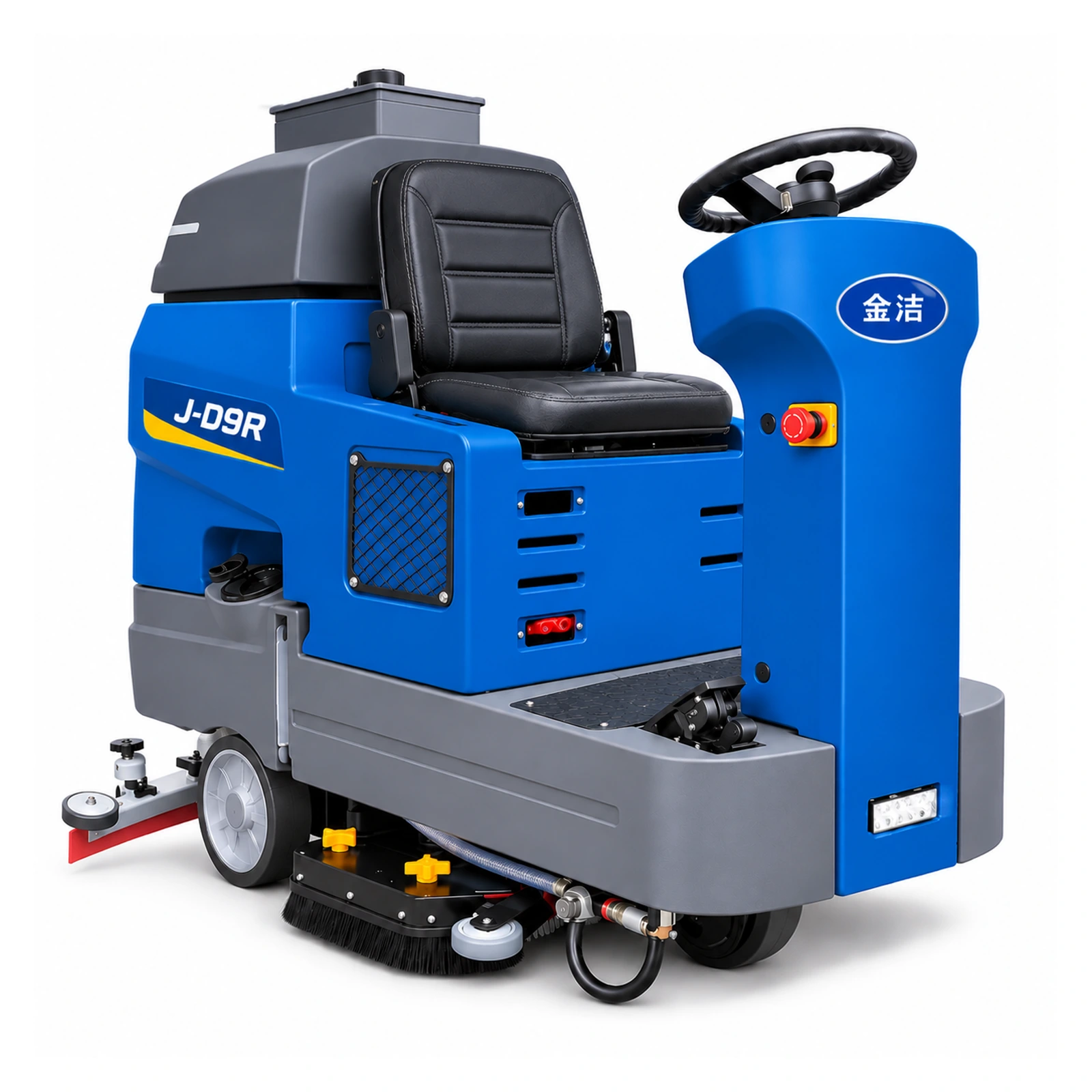
J-D9R specifies 860mm twin-disc cleaning, a 140L solution tank and 150L recovery tank. Consider it for this ride-on task after checking access, flooring and working conditions.
Driving and route planning
An operator drives, scrubs and recovers water. Plan stops, turns and operating periods; no automatic obstacle avoidance is claimed.
860mm cleaning configuration
Cleaning width describes coverage, not access clearance. Trial brushes on the actual floor.
140L / 150L separate tanks
Plan filling and draining by soil, water use and drainage routes; no fixed runtime is promised.
03 · Prepare, clean and inspect
Prepare the site
Agree traffic-free working periods and remove straps, particles and obstacles.
Plan route and equipment
Divide the route into main aisles and rack ends, checking turns, stopping points and water servicing.
Clean in zones
Scrub and recover along the route; yield to handling operations and protect stored goods.
Inspect recovery
Inspect joints and corners, clean tanks, brush and recovery hoses, and record care.
SITE → CONFIGURATION → DECISION
04 · Check the conditions before selection
| Site condition | Configuration or arrangement | Decision check |
|---|---|---|
| Rack ends, forklifts and pallet-truck separation | 860mm cleaning / 1200mm recovery | Measure the full envelope, turns and passing space rather than brush width alone. |
| Warehouse hard floors and access-area soil | Matched brush, water and recovery | Trial a small area; confirm heavy grease, coatings and special surfaces separately. |
| Water points and goods-handling shifts | 140L solution / 150L recovery | Plan from actual soil, water use and site services; capacity does not guarantee working time. |
| Workload | 5500m²/h supplied efficiency figure | Test conditions were not supplied. Actual output includes transfers, turns, water servicing and care. |
05 · Operating limits and safety
- Follow the operating manual, zone the work area and keep people, vehicles and site equipment clear.
- Remove large particles and entangling items first; the scrubber is not described as a debris-collection machine.
- Confirm slope, loading, floor tolerance and charging against the supplied manuals; an image does not establish access capability.
- Assess standing water, corrosive or flammable materials and damaged floors separately from routine light-soil tasks.
06 · Care for the machine after this task
Brushes and blades
After shutdown and power isolation, check wear and entanglement, remove blade deposits and inspect squeegee contact.
Tanks and recovery hoses
Drain and clean the recovery tank according to the manual; check hose blockage, seals and residual water.
Battery and handover
Charge according to the matched battery and charger manuals, record abnormalities and never dismantle during operation.
07 · Questions about this application
Can J-D9R be used in every warehouse aisles setting?
No. Check rack ends, forklifts and pallet-truck separation, warehouse hard floors and access-area soil and water servicing at the actual site.
Does 860mm cleaning width define aisle clearance?
No. Check the body and 1200mm squeegee envelope, turns, obstacles and passing space.
How should the 140L/150L tanks be serviced?
Plan around water points and goods-handling shifts, actual soil and water use, using approved filling and drainage points.
Will this task achieve 5500m²/h?
That is the supplied work-efficiency figure without test conditions, not guaranteed output or a labour-saving promise for this application.
Can it work directly on ramps or special floors?
A level-floor reference image is not evidence. Check ramps, floor tolerance, brushes and loading against machine data and site requirements.
08 · Other applications for this model
Share your site conditions
Share the floor material, area, rack ends, forklifts and pallet-truck separation, operating periods and filling/drainage points to assess J-D9R.
0755-25621811