
Selected model: Jinjie J-5022D
Typical application
Mould surface residue washing
Jinjie J-5022D
Recover loose grit, then rinse approved washable mould surfaces. A planned route can reduce repeated scraping and redeposition while protecting forming faces and coordinating turnaround.
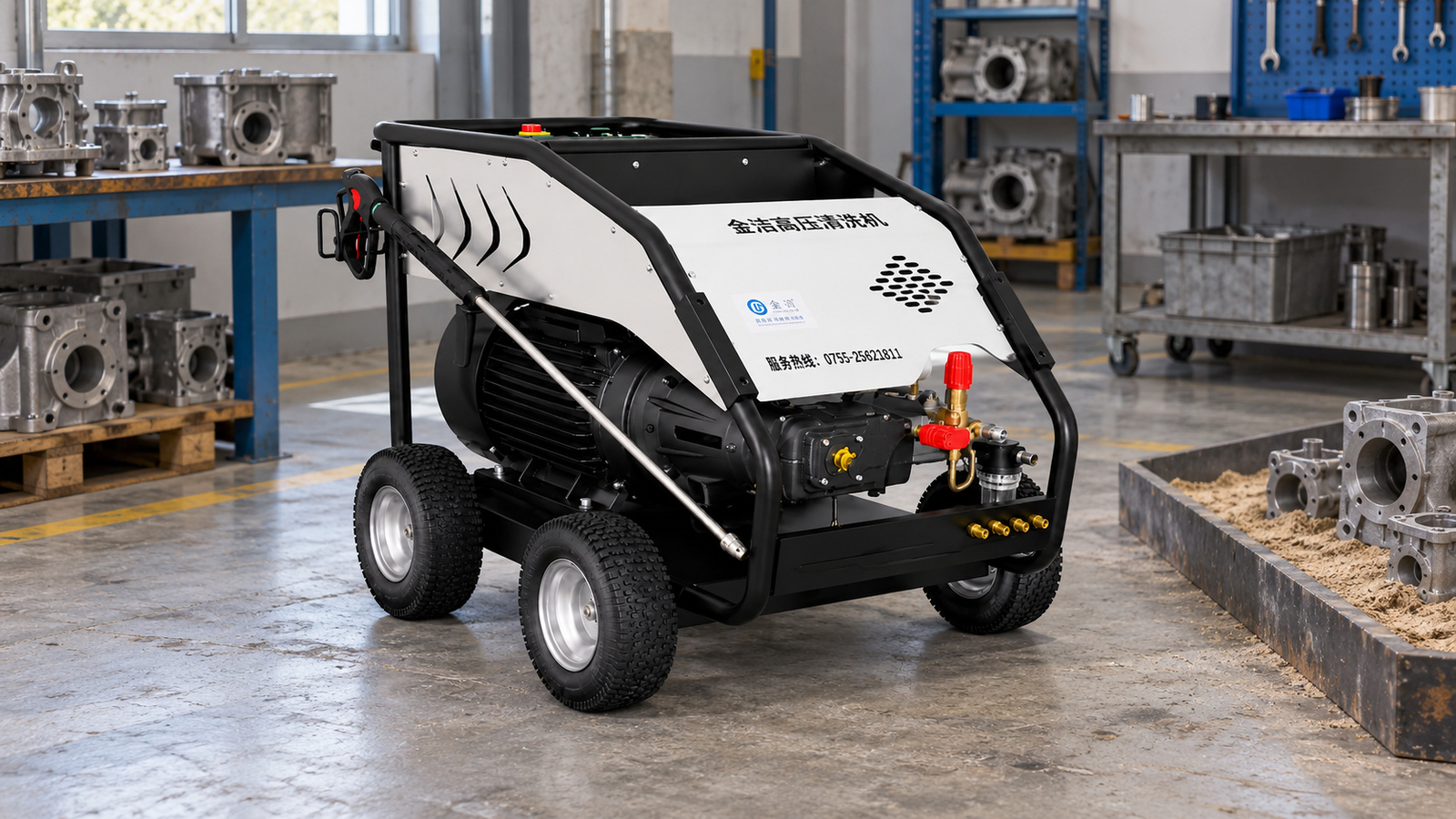
01 | The site problem: residue in corners disrupts the next operation
Loose grit and unset residue gather at edges. Unplanned rinsing can push debris into recesses and create more cleanup. Forming faces, release coatings and seals require different treatment. Identify the residue and permitted wet-cleaning areas before increasing pressure.
02 | Why consider these Jinjie models
J-5022D can support local washing at approved water-compatible mould and workpiece stations. Recover loose grit before treating ordinary remaining soil, coordinating precleaning, spray direction and collection. Match this machine to its instructions, water, power, nozzle and working settings; model numbers and maximum pressure are not operating settings.
03 | The method: preclean, trial, wash sectionally and collect
Stop equipment and secure the mould. Collect loose grit and bulk residue first. Protect electrics, seals, precision mating surfaces and incompatible coatings. Trial a permitted area with a gentle setting and a nozzle matched to the machine; work in short sections towards collection. Never aim at people, connections or vulnerable edges. Isolate power and release pressure before inspecting or changing tools.
04 | Practical customer value
Separating dry collection from rinsing can reduce redeposition and repeated scraping. Station-by-station washing and drying can fit maintenance and the next production operation. Correct material, nozzle and settings can limit damage caused by hard scraping or prolonged concentrated jets. Time and cost benefits depend on residue, station numbers and collection arrangements; no fixed saving is promised.
Conditions and preparation
This plan concerns identified ordinary residue on approved washable surfaces. Assess cured concrete, scale, paint, rust and release-agent compatibility separately. It does not promise cured-concrete removal and does not include abrasive blasting or coating preparation. Verify electrical protection, water supply, hose ratings and sediment collection; dispose of wastewater through authorised routes, not storm drains.
Frequently asked questions
Will this remove cured concrete?
No such performance is promised. Assess substrate, curing and coatings before selecting a supported specialist process.
Can different moulds use the same settings?
Do not transfer settings automatically. Follow this machine’s instructions, nozzle, mould material and trial results.
How can repeat cleaning be reduced?
Recover loose debris first, wash by station towards collection and check residue and drying before handover.
Models and original application images
Compare each model against its own configuration and the actual route, material and site services.
Jinjie J-5022D
Current model
Residual-sand cleaning of moulds and castings