
Selected model: Jinjie J-1020D
Typical application · Equipment selectionDrain edges and open service entrances: surface rinsing is not pipe jetting Drain edges and open service entrances: surface rinsing is not pipe jetting
J-1020D
Collect loose sediment before local rinsing and recovery to reduce repeated work caused by pushing waste back into openings. Protect compatible materials, electrics and adjacent areas for an orderly handover.
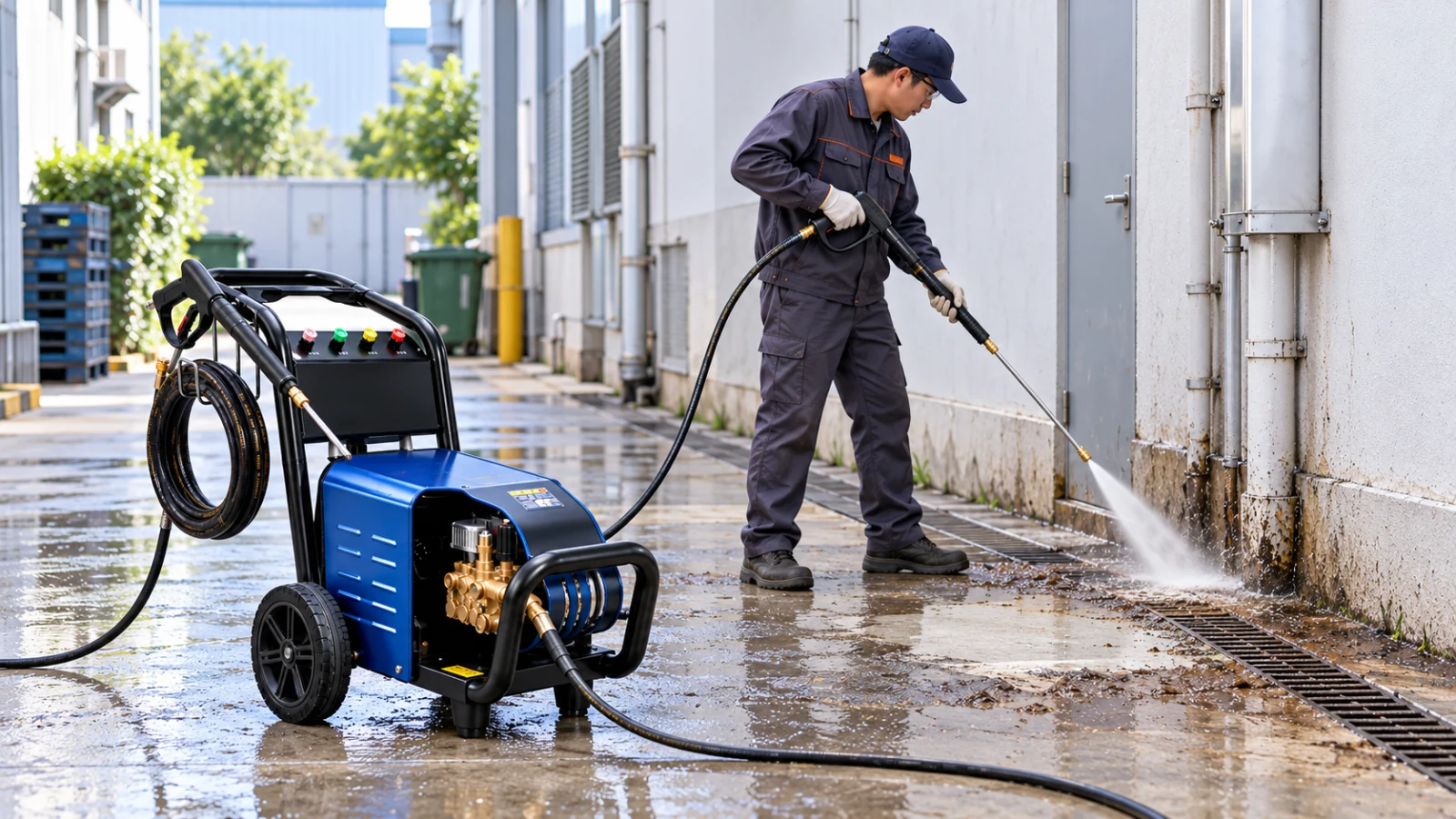
01 · What makes this task difficult?
Two original J-1020D images show lance work on floors and channel edges. The task is compatible service-area hard flooring, loose mud and residues, with collection to avoid merely pushing waste into a blocked opening. Visible water does not prove pipe clearance.
Sediment remains around openings and floor edges
Collect debris, trial the surface and inspect drainage
Service entrances adjoin electrics and people
Protect sockets and gaps, then plan collection and handover
02 · Why consider this Jinjie machine?
Assess J-1020D’s current electric lance configuration for local surface rinsing at service entrances and channel edges, coordinating spray direction, electrical protection and collection. Surface rinsing is not internal pipe jetting.
Compatible local lance cleaning
Collect debris, trial the surface and inspect drainage
Reduce repeat cleanup from pushing waste back into openings
Local work with protection and separation
Protect sockets and gaps, then plan collection and handover
Reduce avoidable disruption and rework
J-1020D · Current information lists 100bar(10MPa), 20 L/min, a 30 m hose and electric operation. Hose length is not guaranteed jetting reach; confirm the actual electrical supply on the nameplate.
03 · A better cleaning workflow and customer value
Collect loose sediment before local rinsing and recovery to reduce repeated work caused by pushing waste back into openings. Protect compatible materials, electrics and adjacent areas for an orderly handover.
Reduce repeat cleanup from pushing waste back into openings
Sediment remains around openings and floor edges · Collect debris, trial the surface and inspect drainage
Reduce avoidable disruption and rework
Service entrances adjoin electrics and people · Protect sockets and gaps, then plan collection and handover
Match tools, the material and the working route before comparing labour, time, consumables and maintenance costs. The potential value depends on suitable conditions and correct operation; no fixed saving or damage-free result is promised.
Exclude petrol units from underground, indoor and exhaust-trapping semi-enclosed locations. Verify actual electrical supply, water protection and permission; 380 V is not explosion protection. Do not operate until surface, nozzle and accessory compatibility are verified. Provide suitable waste recovery/disposal; original images do not prove customer delivery.
Compare related applications and models (2)
Compare each model’s actual drive, access, accessories and configuration on its own product page. Shared task guidance does not make the models interchangeable.
Working method, evidence and original professional analysis
Task-specific equipment selection
Drain edges and open service entrances: surface rinsing is not pipe jetting
Site, material and contamination
Two original J-1020D images show lance work on floors and channel edges. The task is compatible service-area hard flooring, loose mud and residues, with collection to avoid merely pushing waste into a blocked opening. Visible water does not prove pipe clearance.
Equipment basis and model differences
The current 100bar(10MPa), 20 L/min electric positioning supports local-task assessment; verify nameplate supply rather than borrowing another model's voltage. Specialist surface tools are project-specific options. The images show a lance, not hose-fed jetting or large-area scrubbing. Even open service entrances require checks of electrics, supply, drainage and people. Indoor or sensitive sites need separate assessment.
Model configuration and selection
Check model-specific configurations against the machine and order before purchase.
| Model | Current basis and limits |
|---|---|
| J-1020D | Current information lists 100bar(10MPa), 20 L/min, a 30 m hose and electric operation. Hose length is not guaranteed jetting reach; confirm the actual electrical supply on the nameplate. |
| Site problem | Equipment / conditions | Suggested method | Potential value |
|---|---|---|---|
| Sediment remains around openings and floor edges | Compatible local lance cleaning | Collect debris, trial the surface and inspect drainage | Reduce repeat cleanup from pushing waste back into openings |
| Service entrances adjoin electrics and people | Local work with protection and separation | Protect sockets and gaps, then plan collection and handover | Reduce avoidable disruption and rework |
Working method, accessories and site supply
- Identify · Assess blockage, waste and material first; remove larger items and collectable sediment.
- Protect and separate · Plan electrical/water separation, access controls and recovery. Spray no sockets, cabinets or door gaps.
- Trial locally · Trial under the manual on a representative surface and recover residues; stop for backflow or abnormal drainage.
- Inspect · Check opening and floor without treating a clean surface as acceptance of pipe structure or drainage capacity.
Limits and safety
Exclude petrol units from underground, indoor and exhaust-trapping semi-enclosed locations. Verify actual electrical supply, water protection and permission; 380 V is not explosion protection. Do not operate until surface, nozzle and accessory compatibility are verified. Provide suitable waste recovery/disposal; original images do not prove customer delivery.
Questions for this task
Prepare site information
Provide surface/joint and soil photos, area, access times, supply/recovery route, actual power and configuration list.
FAQ
Does rinsing an opening mean the pipe is cleared?
No. Surface rinsing and internal maintenance are different tasks; check actual drainage.
Can sludge simply be washed into a storm drain?
Do not assume permission; verify collection and site disposal requirements.
What site information is needed for selection?
Provide surface/joint and soil photos, area, access times, supply/recovery route, actual power and configuration list.
Select equipment for the actual site
Provide surface/joint and soil photos, area, access times, supply/recovery route, actual power and configuration list.
J-1020D · Selection enquiryCompare application plansModels and original application images
Compare each model against its own configuration and the actual route, material and site services.
Jinjie J-1020D
Current model
Target residues around drain openings
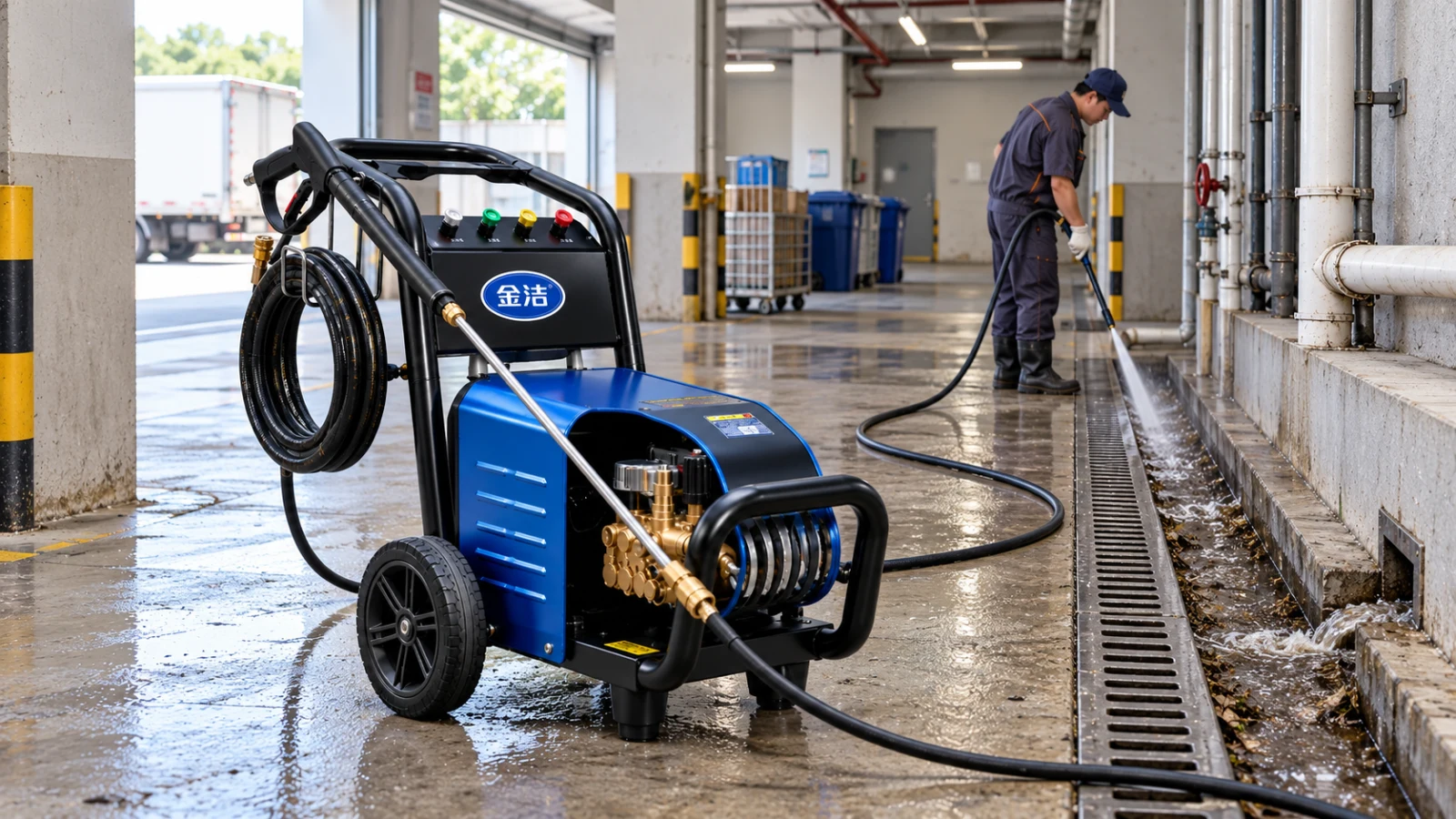
Jinjie J-1020D
Flush trench sand away promptly to support drainage
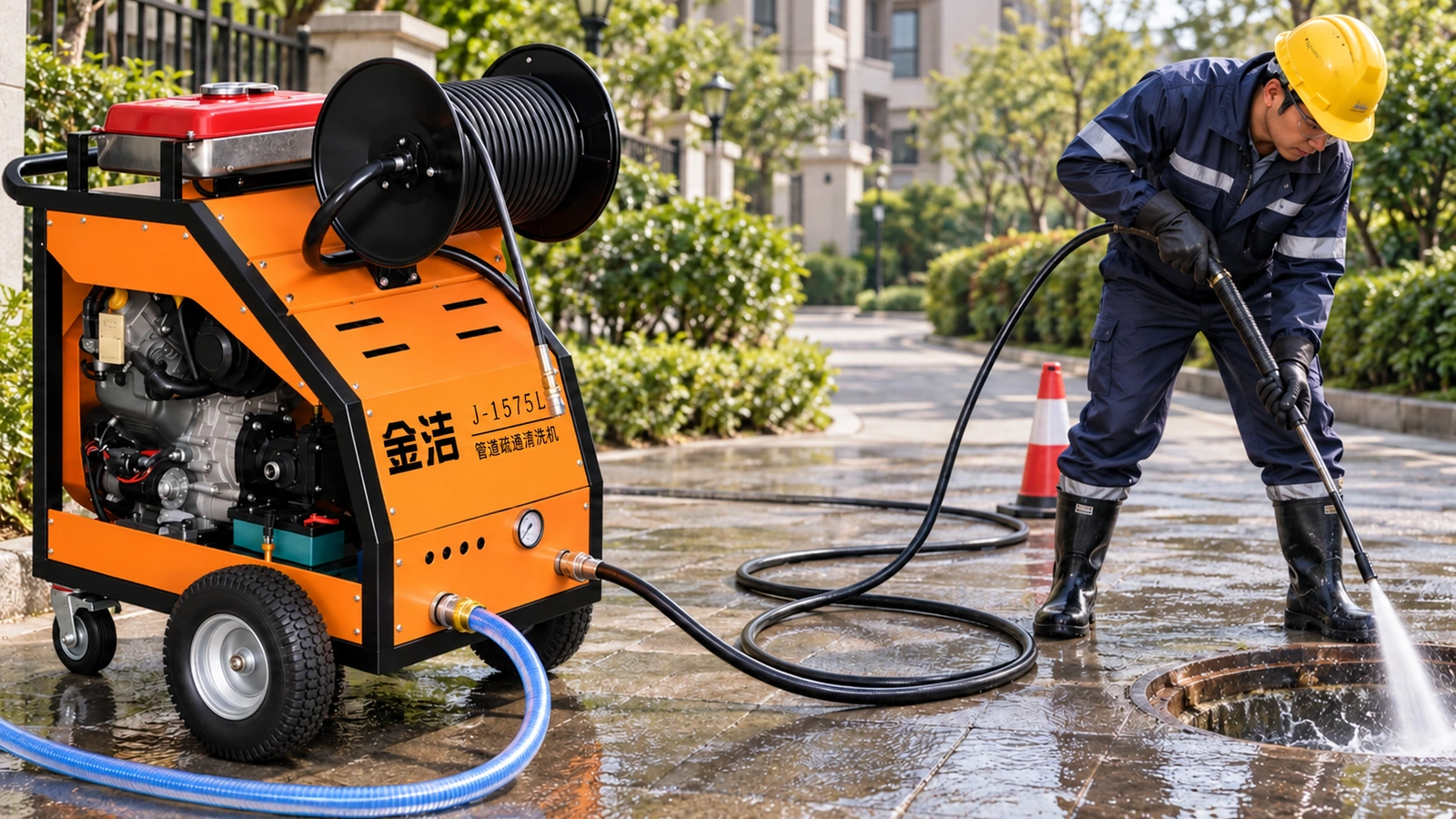
Jinjie J-1575L
Internal hose feeding and lance rinsing around an access point are different tasks. Each scene retains its own image and is never presented as a ten-nozzle bar. Machine flow of 75 L/min does not establish lance or per-nozzle output. Verify bore, bends, nozzle…