
Selected model: Jinjie J-XS1250
Typical application · Equipment selectionCampus and park paths: sweep leaves around foot traffic
Jinjie J-XS1250
Schedule collection of leaves and ordinary dry debris on outdoor campus paths to reduce long manual gathering tasks while preserving pedestrian and turning space.
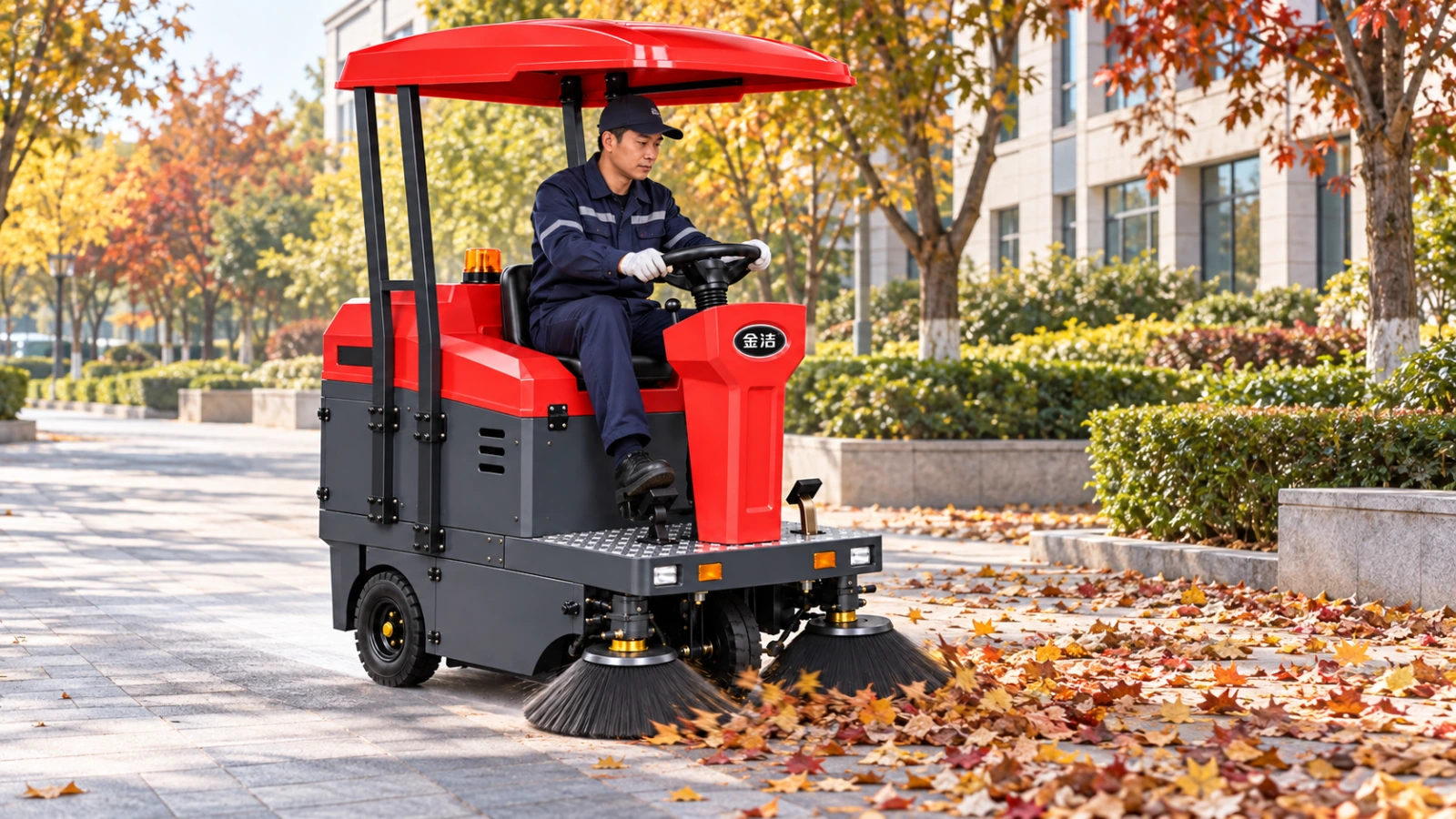
01 · What makes this task difficult?
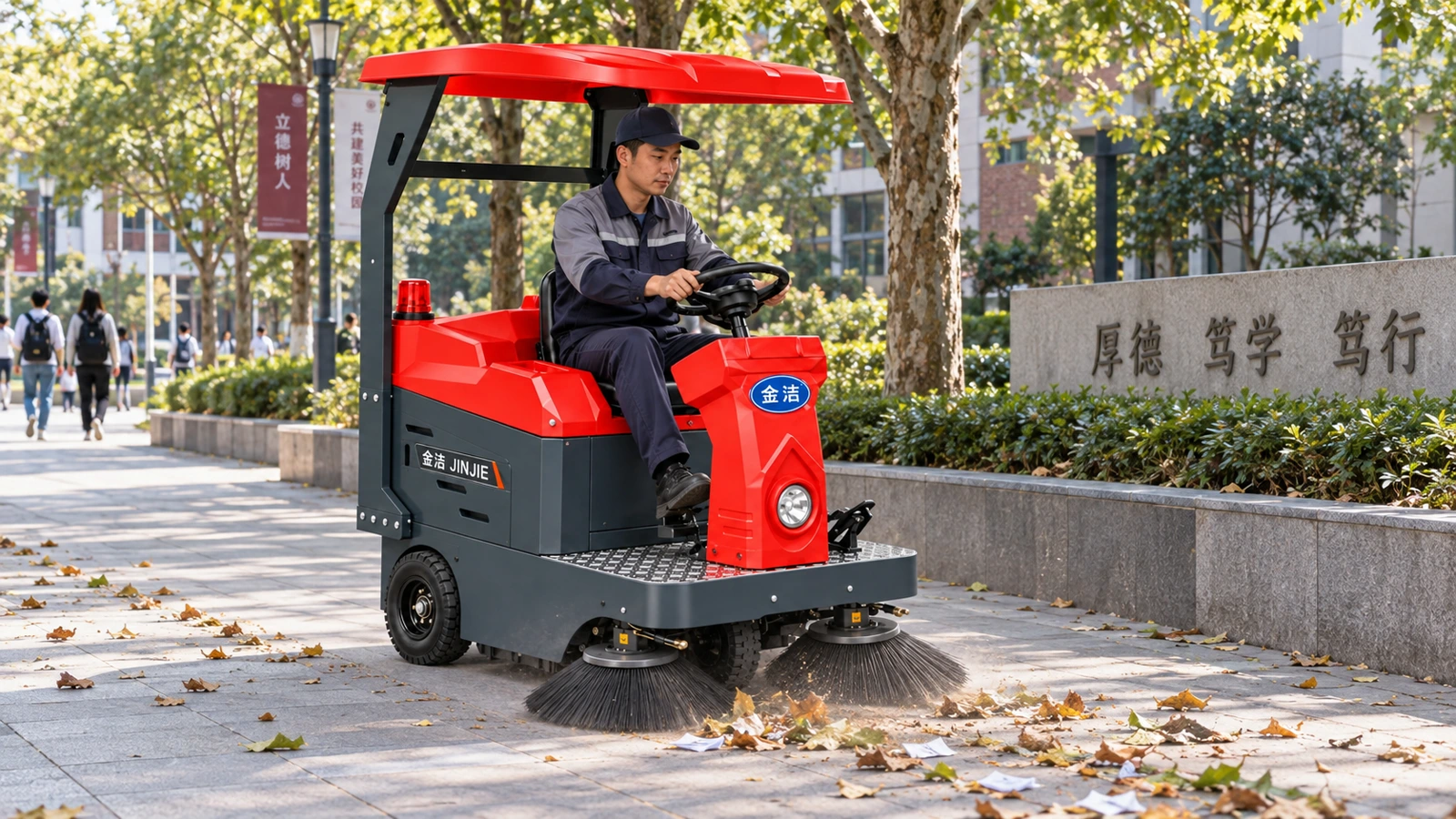
Tree-lined paths, school perimeters and similar park routes accumulate patches of leaves and paper during leaf fall or after breaks and events. Hard paving may include joints, tree pits and accessible routes that must not be crossed indiscriminately. Images illustrate comparable public paths; they do not establish a named school or customer delivery.
Leaf fall overlaps pedestrian peaks
Use short routes before opening or at quiet times; retain alternative access
Wet or piled leaves impair collection
Gather deep piles first and reassess sticky wet material
Kerbs alternate with tree pits
Trial the hard-surface edge; handle pits and steps manually
02 · Why consider this Jinjie machine?
For ordinary leaves and dry debris on outdoor campus paths, sweeping and collection can replace repeated gathering with a planned route, leaving staff to handle edges and crossings.
Segmented routes and human driving
Use short routes before opening or at quiet times; retain alternative access
Plan access rather than relying on last-second avoidance
Actual brushes, inlet and filter suitability
Gather deep piles first and reassess sticky wet material
Reduce repeated stops caused by unsuitable feed
Machine envelope and side-brush reach
Trial the hard-surface edge; handle pits and steps manually
Define machine and manual work boundaries
Jinjie J-XS1250 · 1250 mm sweep width, 120 L hopper and 48 V on the current page; check the route and charging. Hopper volume is not an area rating.
03 · A better cleaning workflow and customer value
Schedule collection of leaves and ordinary dry debris on outdoor campus paths to reduce long manual gathering tasks while preserving pedestrian and turning space.
Plan access rather than relying on last-second avoidance
Leaf fall overlaps pedestrian peaks · Use short routes before opening or at quiet times; retain alternative access
Reduce repeated stops caused by unsuitable feed
Wet or piled leaves impair collection · Gather deep piles first and reassess sticky wet material
Define machine and manual work boundaries
Kerbs alternate with tree pits · Trial the hard-surface edge; handle pits and steps manually
Match tools, the material and the working route before comparing labour, time, consumables and maintenance costs. The potential value depends on suitable conditions and correct operation; no fixed saving or damage-free result is promised.
Do not describe ordinary ride-on equipment as unattended, certified quiet or antimicrobial. Do not enter unverified grass, steps or slippery slopes. Leaves shown in an image do not prove wet-leaf suitability or universal waste collection.
Working method, evidence and original professional analysis
Task-specific equipment selection
Campus and park paths: sweep leaves around foot traffic
Site, material and contamination
Tree-lined paths, school perimeters and similar park routes accumulate patches of leaves and paper during leaf fall or after breaks and events. Hard paving may include joints, tree pits and accessible routes that must not be crossed indiscriminately. Images illustrate comparable public paths; they do not establish a named school or customer delivery.
Equipment basis and model differences
This chapter links the original path illustrations of J-XS1250, J-XS1300, J-XS1450, J-XS1550 and J-XS1460. Their selection purpose is collecting ordinary dry debris along accessible routes, with a driver still observing the site. Wider coverage must fit path clearance, turns and foot traffic. Verify J-XS1550 specification discrepancies against the actual configuration rather than promising complete collection of mixed waste.
Model configuration and selection
Check model-specific configurations against the machine and order before purchase.
| Model | Current basis and limits |
|---|---|
| J-XS1250 | 1250 mm sweep width, 120 L hopper and 48 V on the current page; check the route and charging. Hopper volume is not an area rating. |
| J-XS1300 | 1300 mm sweep width with a main brush and two side brushes; do not borrow unconfirmed hopper, battery or runtime figures from adjacent models. |
| J-XS1450 | 1450 mm sweep width, 160 L hopper and 48 V on the current page; assess coverage and unloading separately. |
| J-XS1550 | 1550 mm sweep width; the table lists an 80 L hopper while prose says capacity is unconfirmed. Verify capacity and configuration before planning continuous work. |
| J-XS1460 | 1460 mm sweep width, 150 L hopper and 60 L water tank on the current page; water assists dust control and does not make this a road washer or scrubber. |
| Site problem | Equipment / conditions | Suggested method | Potential value |
|---|---|---|---|
| Leaf fall overlaps pedestrian peaks | Segmented routes and human driving | Use short routes before opening or at quiet times; retain alternative access | Plan access rather than relying on last-second avoidance |
| Wet or piled leaves impair collection | Actual brushes, inlet and filter suitability | Gather deep piles first and reassess sticky wet material | Reduce repeated stops caused by unsuitable feed |
| Kerbs alternate with tree pits | Machine envelope and side-brush reach | Trial the hard-surface edge; handle pits and steps manually | Define machine and manual work boundaries |
Working method, accessories and site supply
- Check paving, width, slopes, tactile paving and fire-access requirements, then agree working times with site management.
- Remove straps and large hard objects. Do not push leaf piles towards people or drains. Use fitted brushes and dust controls under the machine instructions.
- Segregate and trial a section, checking wind, edge residues and dust before extending the route.
- Unload at the designated point and maintain brushes and filters. Reassess after rain or changes to activities.
Limits and safety
Do not describe ordinary ride-on equipment as unattended, certified quiet or antimicrobial. Do not enter unverified grass, steps or slippery slopes. Leaves shown in an image do not prove wet-leaf suitability or universal waste collection.
Questions for this task
Prepare site information
Provide path photos, leaf moisture, narrow points, tree pits, turns, pedestrian times and collection points.
FAQ
Does a large campus automatically need a large enclosed sweeper?
No. Check paths, turns, height limits and pedestrian peaks before route length and driver environment.
Can sweeping continue immediately beside students or visitors?
Machine passage is not permission to do so. Separate crossing traffic and follow site controls.
Can leaves be swept into storm drains?
No. Collect debris for designated disposal rather than transferring it into drainage.
What site information is needed for selection?
Provide path photos, leaf moisture, narrow points, tree pits, turns, pedestrian times and collection points.
Select equipment for the actual site
Provide path photos, leaf moisture, narrow points, tree pits, turns, pedestrian times and collection points.
Jinjie J-XS1250 · Selection enquiryCompare application plansModels and original application images
Compare each model against its own configuration and the actual route, material and site services.
Jinjie J-XS1250
Current model
1250 mm sweep width, 120 L hopper and 48 V on the current page; check the route and charging. Hopper volume is not an area rating.
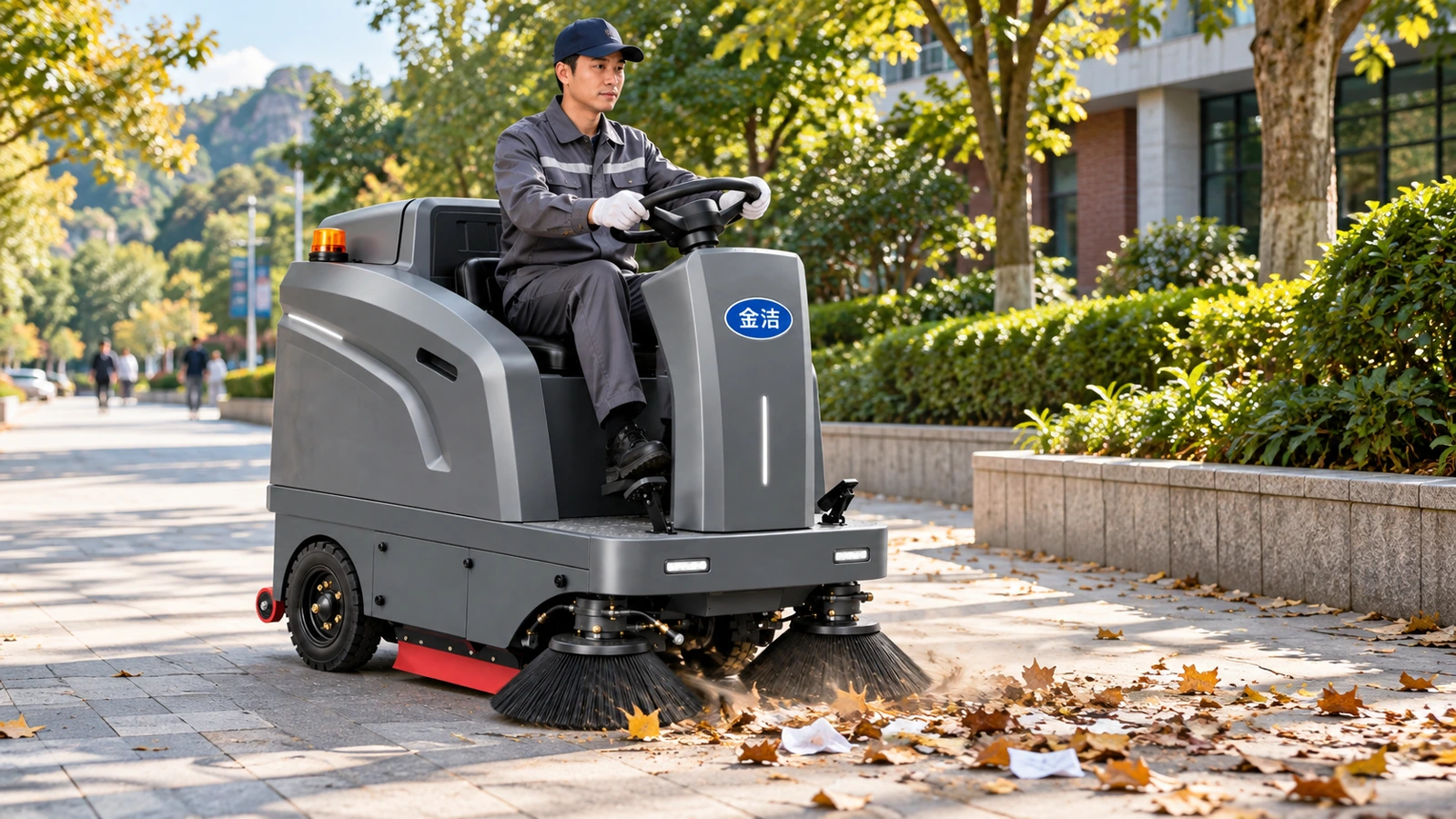
Jinjie J-XS1300
1300 mm sweep width with a main brush and two side brushes; do not borrow unconfirmed hopper, battery or runtime figures from adjacent models.
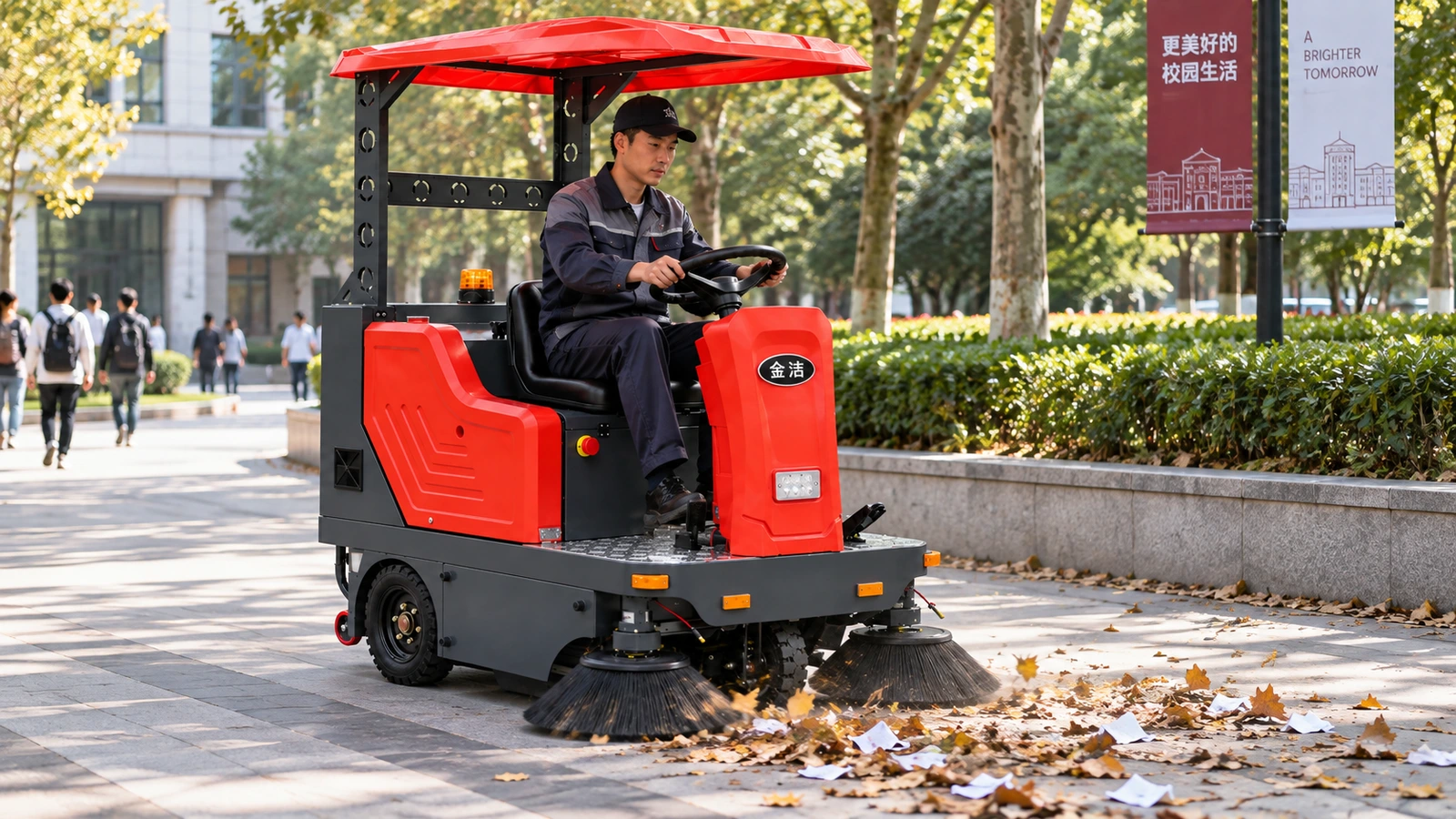
Jinjie J-XS1450
1450 mm sweep width, 160 L hopper and 48 V on the current page; assess coverage and unloading separately.
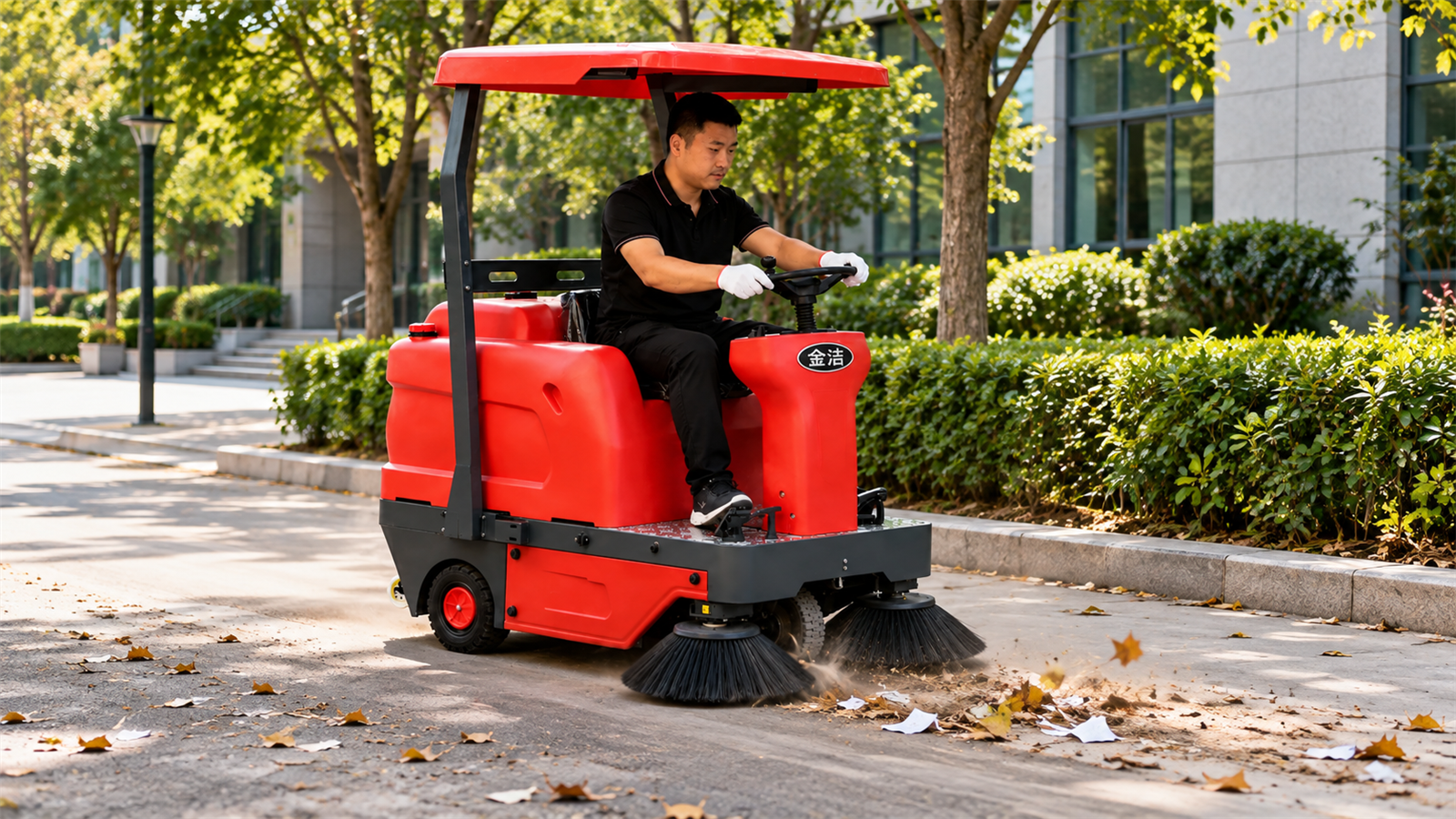
Jinjie J-XS1550
1550 mm sweep width; the table lists an 80 L hopper while prose says capacity is unconfirmed. Verify capacity and configuration before planning continuous work.
Jinjie J-XS1460
1460 mm sweep width, 150 L hopper and 60 L water tank on the current page; water assists dust control and does not make this a road washer or scrubber.