
Selected model: Jinjie J-SX1360D
Typical application · Equipment selectionMixed particles and bonded soil: selecting sweep-then-scrub equipment
Jinjie J-SX1360D
Sweeping before scrubbing can reduce grit tracking and equipment changes, limiting unnecessary repeat pickup. Correct pads, preparation and wastewater recovery help protect compatible finishes and organise aisle cleaning within maintenance windows. Actual productivity and cost depend on debris, routes, water services and shifts; theoretical figures are not measured guarantees.
01 · What makes this task difficult?
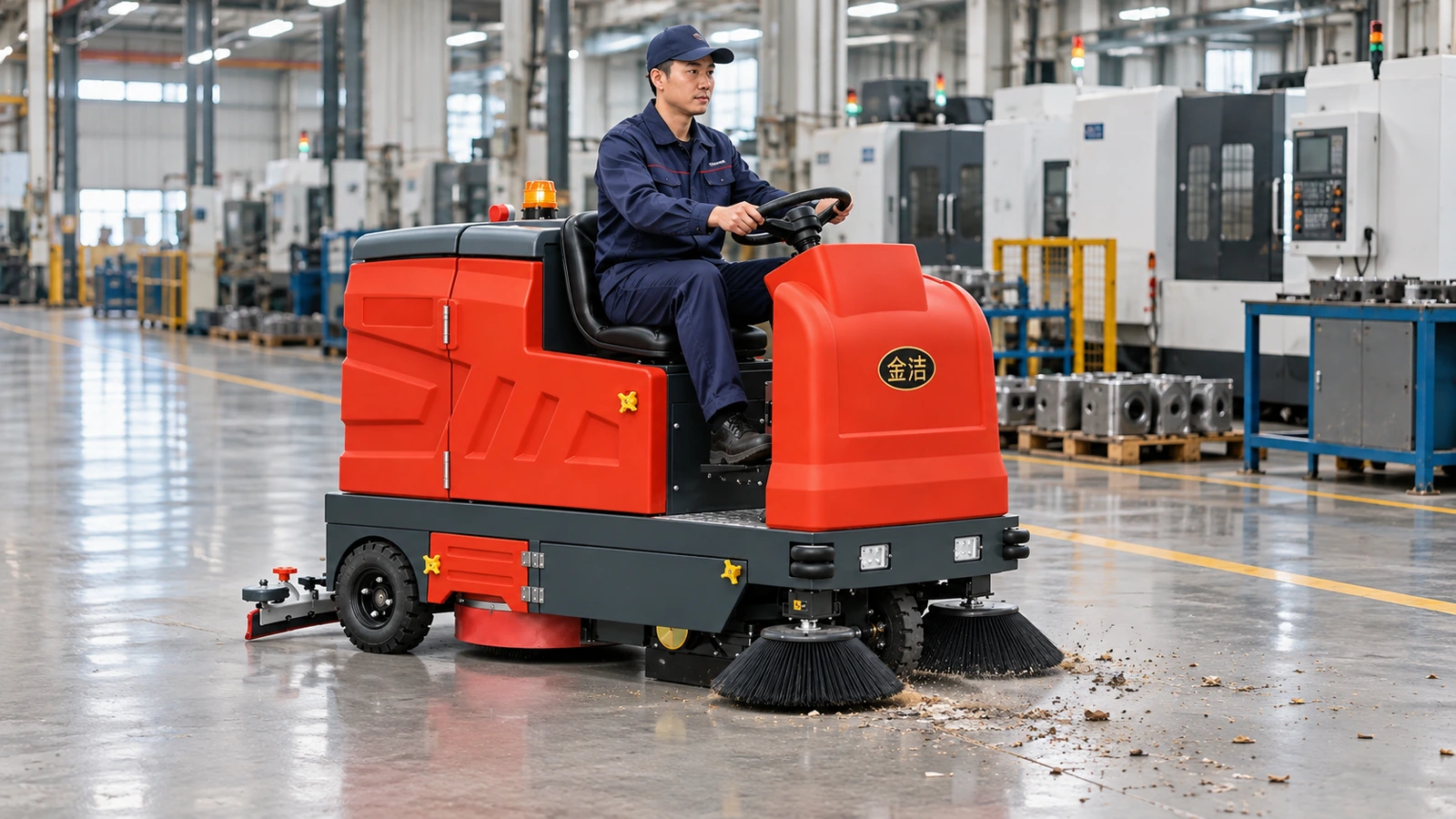
Production, warehouse and public main routes may combine packaging debris, grit and foot marks. Scrubbing directly can drag particles, while separate equipment adds handovers and travel. Collect ordinary particles before compatible hard-floor scrubbing and recovery, scheduling around work and traffic.
Repeated routes occupy staff time
Trial the route and cleaning mode before assigning staff roles
Protect floors and movement
Separate sections and inspect residual water and sensitive areas before handover
Servicing and exceptions interrupt work
Plan consumables, filling, emptying and exception handling
02 · Why consider this Jinjie machine?
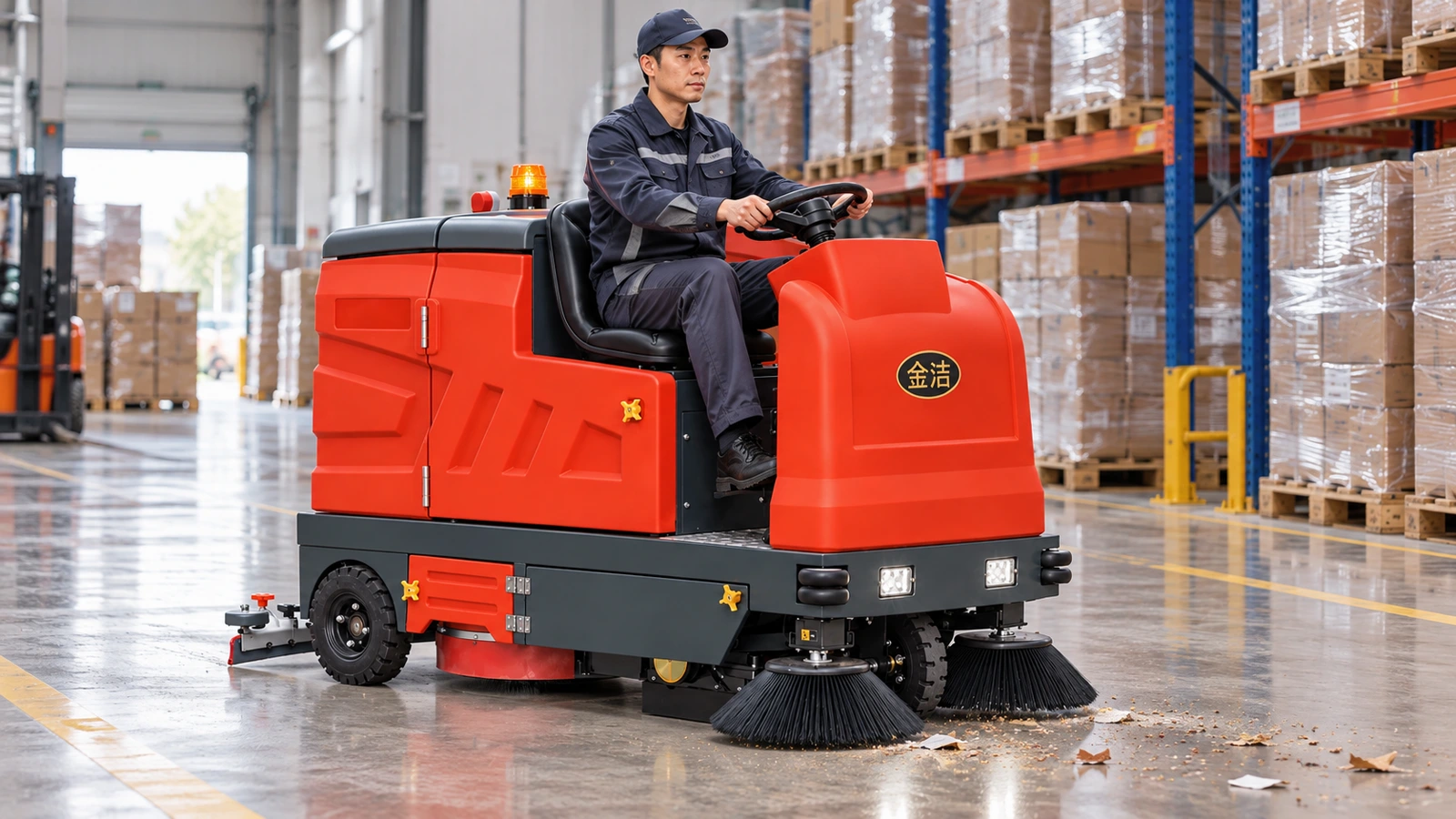
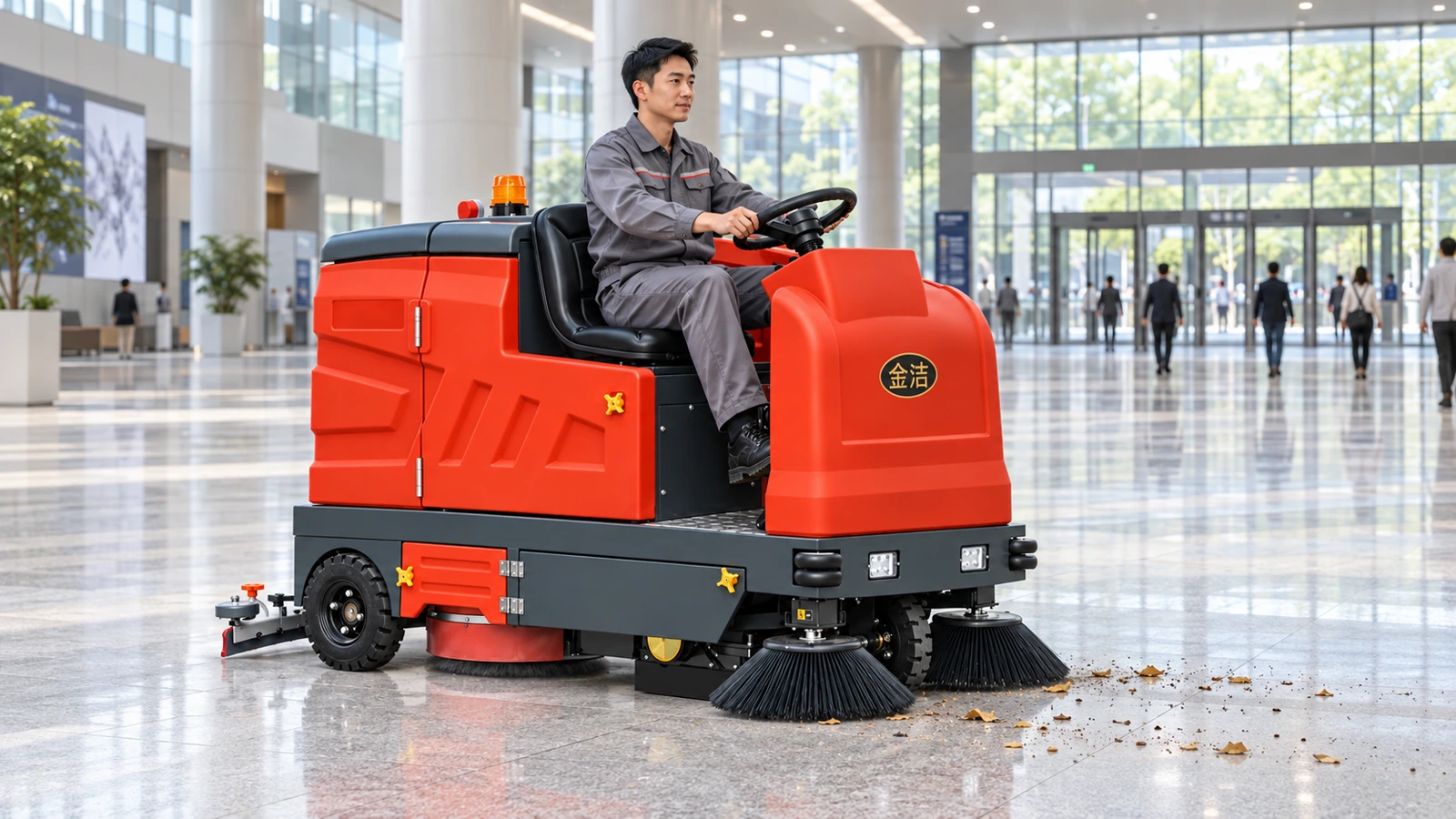
J-SX1360D: This model provides ride-on sweeping followed by scrubbing and wastewater recovery. Combined stages can reduce switching between pre-sweeping and washing, but exclude hazardous dust, hot chips and specialist materials. Model information lists 48 V, theoretical 12000 m²/h and theoretical 10 km/h; these are not measured productivity and the video and ordered-model configurations should be checked before purchase.
J-SX1360D current working configuration
Trial the route and cleaning mode before assigning staff roles
Reduce unnecessary repeat work
Compatible tools, recovery and boundary management
Separate sections and inspect residual water and sensitive areas before handover
Manage damage, slip and rework risks
This model’s configuration and takeover arrangements
Plan consumables, filling, emptying and exception handling
Organise shifts and overall resources
Jinjie J-SX1360D · This model provides ride-on sweeping followed by scrubbing and wastewater recovery. Combined stages can reduce switching between pre-sweeping and washing, but exclude hazardous dust, hot chips and specialist materials. Model information lists 48 V, theoretical 12000 m²/h and theoretical 10 km/h; these are not measured productivity and the video and ordered-model configurations should be checked before purchase.
03 · A better cleaning workflow and customer value
Sweeping before scrubbing can reduce grit tracking and equipment changes, limiting unnecessary repeat pickup. Correct pads, preparation and wastewater recovery help protect compatible finishes and organise aisle cleaning within maintenance windows. Actual productivity and cost depend on debris, routes, water services and shifts; theoretical figures are not measured guarantees.
Reduce unnecessary repeat work
Repeated routes occupy staff time · Trial the route and cleaning mode before assigning staff roles
Manage damage, slip and rework risks
Protect floors and movement · Separate sections and inspect residual water and sensitive areas before handover
Organise shifts and overall resources
Servicing and exceptions interrupt work · Plan consumables, filling, emptying and exception handling
Match tools, the material and the working route before comparing labour, time, consumables and maintenance costs. The potential value depends on suitable conditions and correct operation; no fixed saving or damage-free result is promised.
Limit work to assessed ordinary particles and wet-cleanable hard floors; exclude combustible dust, hot chips, hazardous media and explosion-protection requirements. Separate production, forklifts and people, then inspect residual water before reopening. Check theoretical figures and the ordered video/model configuration before purchase.
Working method, evidence and original professional analysis
Task-specific equipment selection
Combined factory and warehouse cleaning | J-SX1360D selection and value
Site, material and contamination
Production, warehouse and public main routes may combine packaging debris, grit and foot marks. Scrubbing directly can drag particles, while separate equipment adds handovers and travel. Collect ordinary particles before compatible hard-floor scrubbing and recovery, scheduling around work and traffic.
Equipment basis and model differences
This model provides ride-on sweeping followed by scrubbing and wastewater recovery. Combined stages can reduce switching between pre-sweeping and washing, but exclude hazardous dust, hot chips and specialist materials. Model information lists 48 V, theoretical 12000 m²/h and theoretical 10 km/h; these are not measured productivity and the video and ordered-model configurations should be checked before purchase.
Model configuration and selection
Check model-specific configurations against the machine and order before purchase.
| Model | Current basis and limits |
|---|---|
| J-SX1360D | This model provides ride-on sweeping followed by scrubbing and wastewater recovery. Combined stages can reduce switching between pre-sweeping and washing, but exclude hazardous dust, hot chips and specialist materials. Model information lists 48 V, theoretical 12000 m²/h and theoretical 10 km/h; these are not measured productivity and the video and ordered-model configurations should be checked before purchase. |
| Site problem | Equipment / conditions | Suggested method | Potential value |
|---|---|---|---|
| Repeated routes occupy staff time | J-SX1360D current working configuration | Trial the route and cleaning mode before assigning staff roles | Reduce unnecessary repeat work |
| Protect floors and movement | Compatible tools, recovery and boundary management | Separate sections and inspect residual water and sensitive areas before handover | Manage damage, slip and rework risks |
| Servicing and exceptions interrupt work | This model’s configuration and takeover arrangements | Plan consumables, filling, emptying and exception handling | Organise shifts and overall resources |
Working method, accessories and site supply
- Identify debris, dust and material; remove large or unsuitable items.
- Separate work and forklift routes, then sweep and collect ordinary particles under the model instructions.
- Trial compatible pads and detergent before scrubbing and recovery, checking residual water.
- Plan finishing around tanks, waste collection and charging, recording actual output instead of quoting theoretical values.
Limits and safety
Limit work to assessed ordinary particles and wet-cleanable hard floors; exclude combustible dust, hot chips, hazardous media and explosion-protection requirements. Separate production, forklifts and people, then inspect residual water before reopening. Check theoretical figures and the ordered video/model configuration before purchase.
Questions for this task
Prepare site information
Provide a floor plan, material and soil photos, pedestrian and vehicle windows, thresholds and gradients, service and disposal points, the model configuration and a site contact.
FAQ
Why select the configuration for this model?
This model provides ride-on sweeping followed by scrubbing and wastewater recovery. Combined stages can reduce switching between pre-sweeping and washing, but exclude hazardous dust, hot chips and specialist materials. Model information lists 48 V, theoretical 12000 m²/h and theoretical 10 km/h; these are not measured productivity and the video and ordered-model configurations should be checked before purchase.
Does the image prove a delivery or measured result?
Please describe the surface, contamination, access and work window so the equipment can be matched to your task.
How should actual value be assessed?
Validate material, soil, tools, supply and safety under this model’s instructions, then record actual work, human support and maintenance resources. Fixed savings are not promised.
What site information is needed for selection?
Provide a floor plan, material and soil photos, pedestrian and vehicle windows, thresholds and gradients, service and disposal points, the model configuration and a site contact.
Select equipment for the actual site
Provide a floor plan, material and soil photos, pedestrian and vehicle windows, thresholds and gradients, service and disposal points, the model configuration and a site contact.
Jinjie J-SX1360D · Selection enquiryCompare application plansModels and original application images
Compare each model against its own configuration and the actual route, material and site services.
Jinjie J-SX1360D
Current model
This model provides ride-on sweeping followed by scrubbing and wastewater recovery. Combined stages can reduce switching between pre-sweeping and washing, but exclude hazardous dust, hot chips and specialist materials. Model information lists 48 V, theoretica…
Jinjie J-SX1360D
This model provides ride-on sweeping followed by scrubbing and wastewater recovery. Combined stages can reduce switching between pre-sweeping and washing, but exclude hazardous dust, hot chips and specialist materials. Model information lists 48 V, theoretica…
Jinjie J-SX1360D
This model provides ride-on sweeping followed by scrubbing and wastewater recovery. Combined stages can reduce switching between pre-sweeping and washing, but exclude hazardous dust, hot chips and specialist materials. Model information lists 48 V, theoretica…