
Selected model: Jinjie J-XS1250
Typical application · Equipment selectionFactory and warehouse perimeters: separate dry debris from oil and hazardous dust
Jinjie J-XS1250
Sweep ordinary dry debris on industrial perimeter roads in sections, reducing repeated gathering and coordinating cleaning with transport routes.
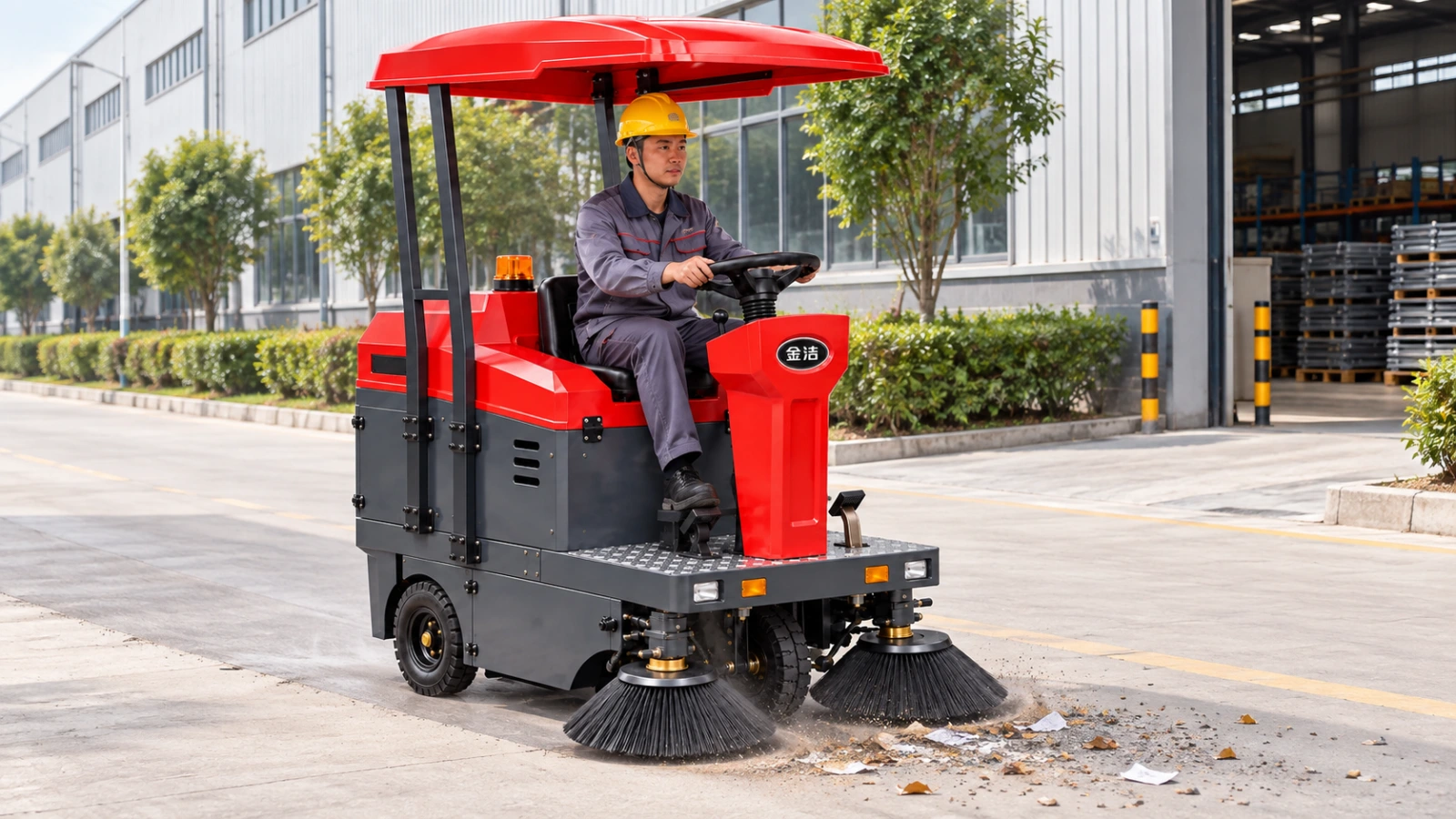
01 · What makes this task difficult?
This chapter addresses ordinary grit, paper, leaves and confirmed non-hazardous packaging debris on hard-surfaced factory roads, warehouse perimeters, loading-area edges and vehicle routes. Forklifts and trucks disperse particles. Oil films, sharp metal chips, chemical spills and process dust require different assessment.
Packaging mixes with unidentified powder
Identify the source; stop disturbing unknown powder
Vehicles turn frequently near loading doors
Agree traffic pauses, sweep sections and hand over
Grit and oil films occur together
Collect suitable dry particles first; trial oil treatment and recovery separately
02 · Why consider this Jinjie machine?
On ordinary industrial perimeter roads, sweeping equipment can gather suitable dry debris along a verified route for collection, reducing repeated manual piles while each model retains its own power and dust-control limits.
Waste classification and equipment suitability
Identify the source; stop disturbing unknown powder
Avoid treating hazardous material as road dust
Separate driving and loading operations
Agree traffic pauses, sweep sections and hand over
Coordinate cleaning with logistics
Divide sweeping, vacuuming and scrubbing tasks
Collect suitable dry particles first; trial oil treatment and recovery separately
Avoid assigning every contaminant to one machine
Jinjie J-XS1250 · 1250 mm sweep width, 120 L hopper and 48 V on the current page; check the route and charging. Hopper volume is not an area rating.
03 · A better cleaning workflow and customer value
Sweep ordinary dry debris on industrial perimeter roads in sections, reducing repeated gathering and coordinating cleaning with transport routes.
Avoid treating hazardous material as road dust
Packaging mixes with unidentified powder · Identify the source; stop disturbing unknown powder
Coordinate cleaning with logistics
Vehicles turn frequently near loading doors · Agree traffic pauses, sweep sections and hand over
Avoid assigning every contaminant to one machine
Grit and oil films occur together · Collect suitable dry particles first; trial oil treatment and recovery separately
Match tools, the material and the working route before comparing labour, time, consumables and maintenance costs. The potential value depends on suitable conditions and correct operation; no fixed saving or damage-free result is promised.
Only confirmed ordinary dry waste on outdoor roads is covered, not process equipment interiors, hot material, hazardous dust or petrochemical hazardous areas. Water-assisted dust control does not guarantee air-quality compliance. Voltage or an enclosed appearance does not establish explosion protection. Theoretical output and calculation speed are not site capacity or recommended operating speed.
Working method, evidence and original professional analysis
Task-specific equipment selection
Factory and warehouse perimeters: separate dry debris from oil and hazardous dust
Site, material and contamination
This chapter addresses ordinary grit, paper, leaves and confirmed non-hazardous packaging debris on hard-surfaced factory roads, warehouse perimeters, loading-area edges and vehicle routes. Forklifts and trucks disperse particles. Oil films, sharp metal chips, chemical spills and process dust require different assessment.
Equipment basis and model differences
Linked models from J-XS1250 to J-XS2100Q address different road scales; current-page specifications are listed individually below. Check passage, turning, filter maintenance and unloading for ordinary dry-debris routes first. J-XS1800 has a stated 1880 mm width for more open routes, but width establishes neither payload, slope limits nor real output. Enclosed models are not thereby explosion-proof, hazardous-dust-rated or certified airtight.
Model configuration and selection
Check model-specific configurations against the machine and order before purchase.
| Model | Current basis and limits |
|---|---|
| J-XS1250 | 1250 mm sweep width, 120 L hopper and 48 V on the current page; check the route and charging. Hopper volume is not an area rating. |
| J-XS1300 | 1300 mm sweep width with a main brush and two side brushes; do not borrow unconfirmed hopper, battery or runtime figures from adjacent models. |
| J-XS1450 | 1450 mm sweep width, 160 L hopper and 48 V on the current page; assess coverage and unloading separately. |
| J-XS1550 | 1550 mm sweep width; the table lists an 80 L hopper while prose says capacity is unconfirmed. Verify capacity and configuration before planning continuous work. |
| J-XS1280 | 1280 mm sweep width and 36 V; an 80 L table entry coexists with capacity-verification wording. Confirm the actual machine. |
| J-XS1800 | Current sweep width is 1880 mm with a 180 L hopper, not 1800 mm inferred from the model name. Check the narrowest route first. |
| J-XS1900Q | 1900 mm sweep width, 180 L hopper, 150 L water tank and 48 V on the current page; an enclosed cab establishes neither a dust-protection rating nor explosion protection. |
| J-XS2100Q | 2100 mm sweep width, 200 L hopper, 100 L water tank and 48 V on the current page; verify gates and turns rather than choosing solely by open-road area. |
| J-XS1460 | 1460 mm sweep width, 150 L hopper and 60 L water tank on the current page; water assists dust control and does not make this a road washer or scrubber. |
| Site problem | Equipment / conditions | Suggested method | Potential value |
|---|---|---|---|
| Packaging mixes with unidentified powder | Waste classification and equipment suitability | Identify the source; stop disturbing unknown powder | Avoid treating hazardous material as road dust |
| Vehicles turn frequently near loading doors | Separate driving and loading operations | Agree traffic pauses, sweep sections and hand over | Coordinate cleaning with logistics |
| Grit and oil films occur together | Divide sweeping, vacuuming and scrubbing tasks | Collect suitable dry particles first; trial oil treatment and recovery separately | Avoid assigning every contaminant to one machine |
Working method, accessories and site supply
- Confirm waste origin, safety information and hazardous-area classification with site management. Do not recommend ordinary sweepers for unknown dust, metal powder or combustible atmospheres.
- Measure loading access and narrow routes; remove pallets, oversized objects and entanglement, then separate people and vehicles.
- Trial a representative level route under the manual and observe residues and dust. Verify any vacuuming, wet-cleaning or dust-control configuration separately; do not improvise attachments.
- Unload at a designated point and stop for brush/filter maintenance. Handle oily water and special waste through separate disposal arrangements.
Limits and safety
Only confirmed ordinary dry waste on outdoor roads is covered, not process equipment interiors, hot material, hazardous dust or petrochemical hazardous areas. Water-assisted dust control does not guarantee air-quality compliance. Voltage or an enclosed appearance does not establish explosion protection. Theoretical output and calculation speed are not site capacity or recommended operating speed.
Questions for this task
Prepare site information
Provide external routes, loading windows, waste origin and properties, oil contamination, unloading points and charging conditions. Have the site safety lead assess special dust first.
FAQ
Does an outdoor factory image prove suitability for every dust at that factory?
No. Assess contaminant, area and actual filtration. An exterior image is not hazardous-dust or explosion-protection evidence.
Will increasing speed remove oil marks left after sweeping?
No. Distinguish bonded oil from particles and assess compatible chemicals, scrubbing and recovery instead.
Can every model water tank be used for road washing?
No. Verify the actual dust-control function. Road washing needs a separate equipment and drainage assessment.
What site information is needed for selection?
Provide external routes, loading windows, waste origin and properties, oil contamination, unloading points and charging conditions. Have the site safety lead assess special dust first.
Select equipment for the actual site
Provide external routes, loading windows, waste origin and properties, oil contamination, unloading points and charging conditions. Have the site safety lead assess special dust first.
Jinjie J-XS1250 · Selection enquiryCompare application plansModels and original application images
Compare each model against its own configuration and the actual route, material and site services.
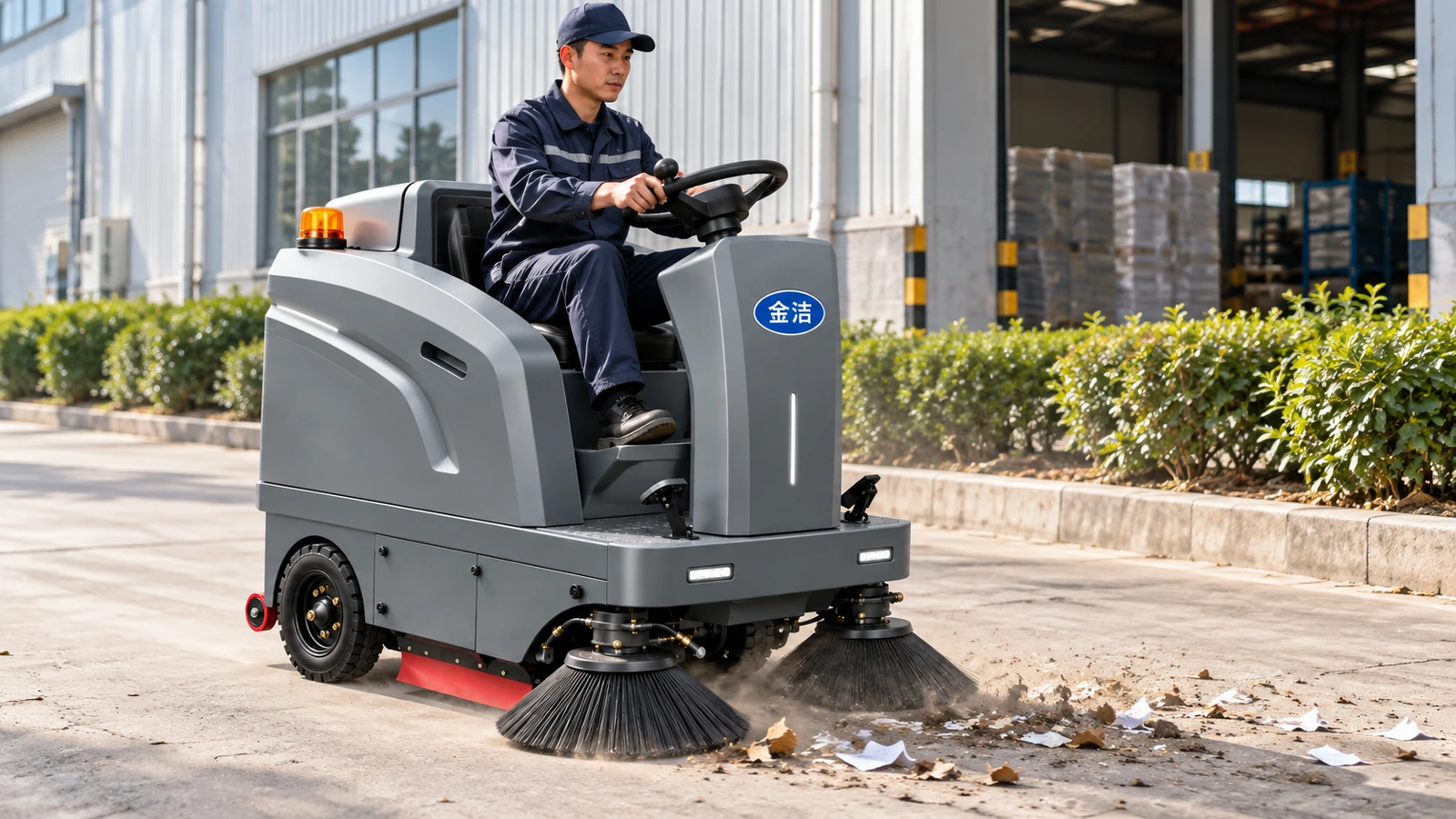
Jinjie J-XS1250
Current model
1250 mm sweep width, 120 L hopper and 48 V on the current page; check the route and charging. Hopper volume is not an area rating.
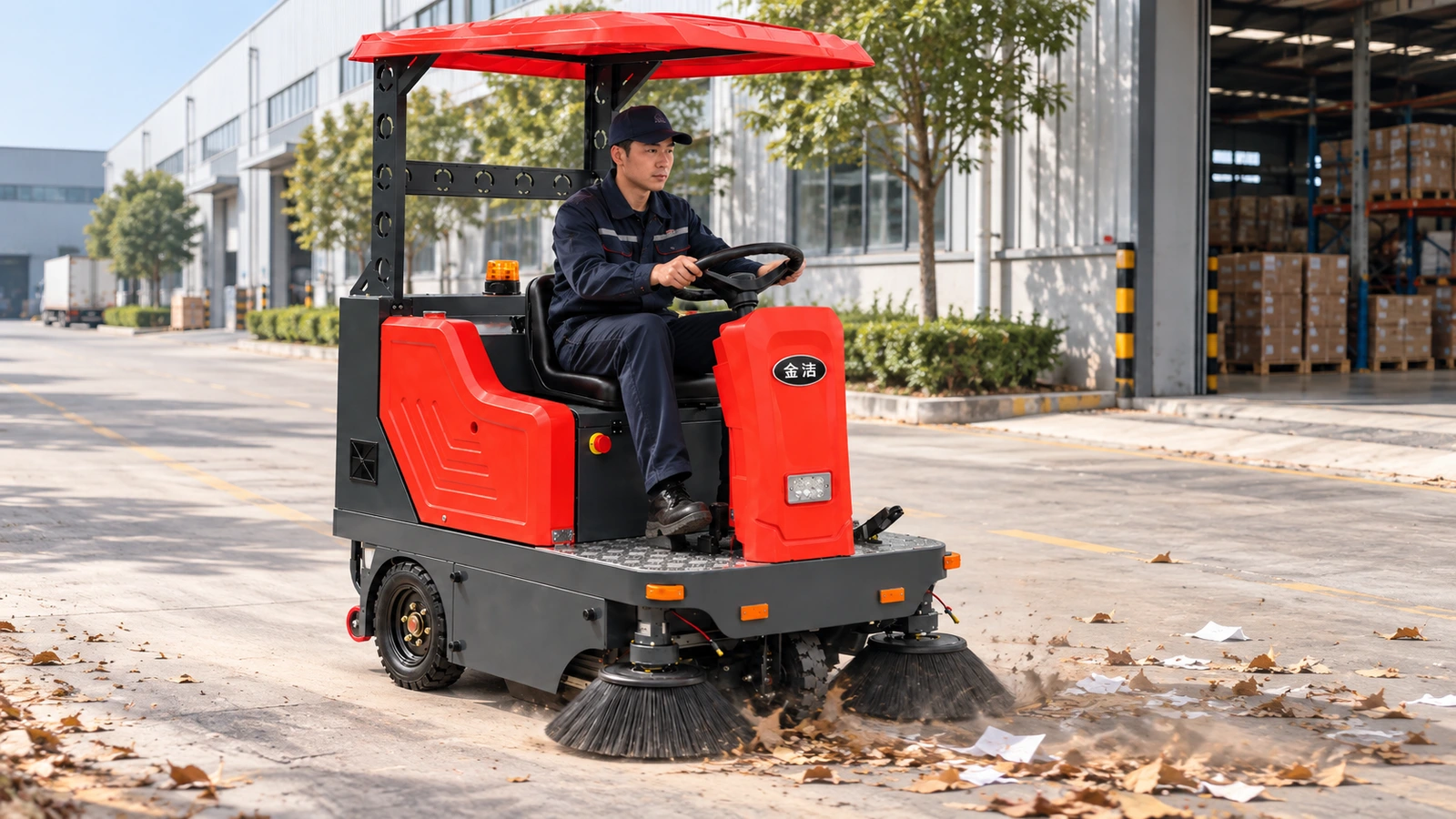
Jinjie J-XS1300
1300 mm sweep width with a main brush and two side brushes; do not borrow unconfirmed hopper, battery or runtime figures from adjacent models.
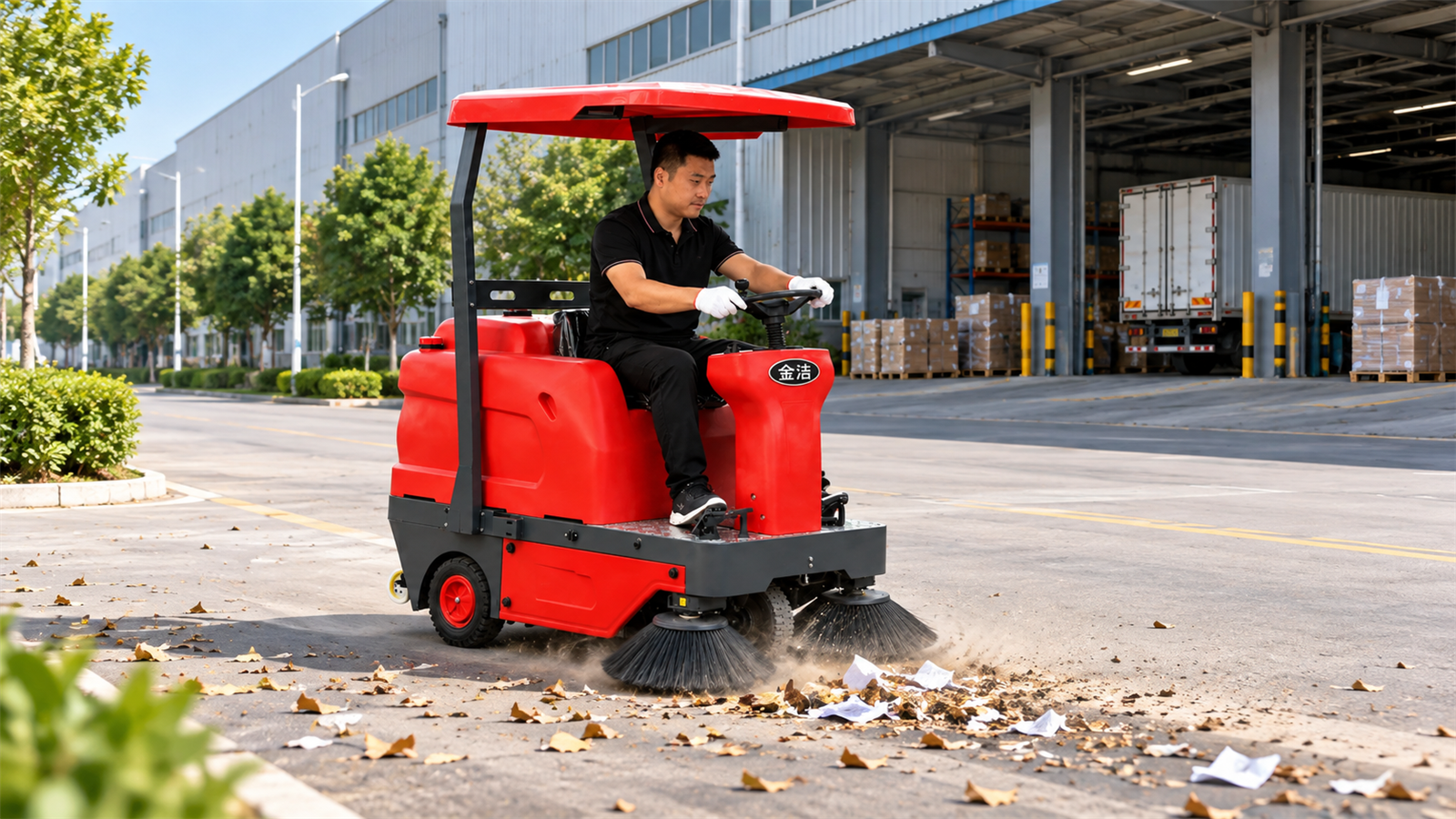
Jinjie J-XS1450
1450 mm sweep width, 160 L hopper and 48 V on the current page; assess coverage and unloading separately.
Jinjie J-XS1550
1550 mm sweep width; the table lists an 80 L hopper while prose says capacity is unconfirmed. Verify capacity and configuration before planning continuous work.
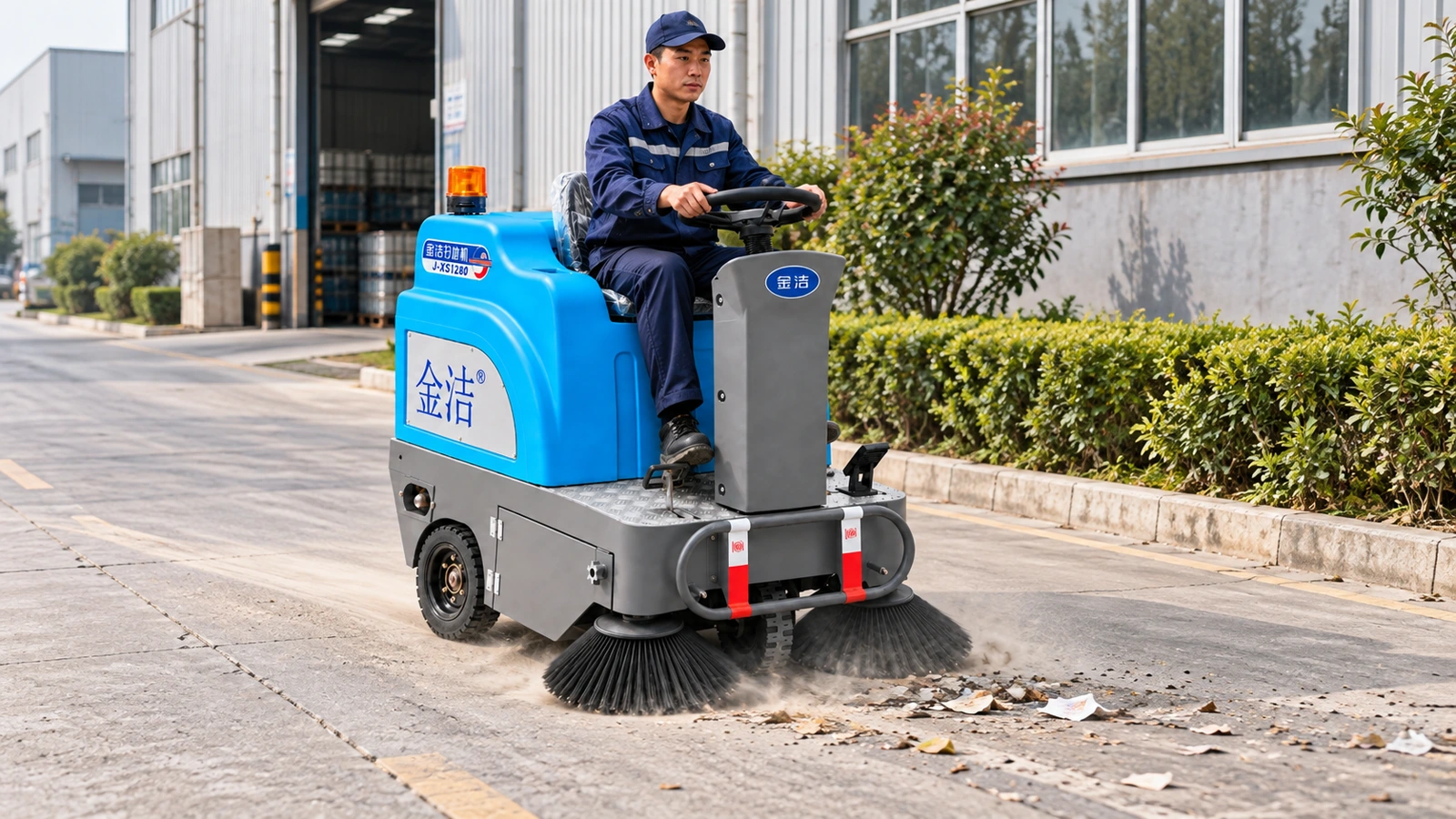
Jinjie J-XS1280
1280 mm sweep width and 36 V; an 80 L table entry coexists with capacity-verification wording. Confirm the actual machine.
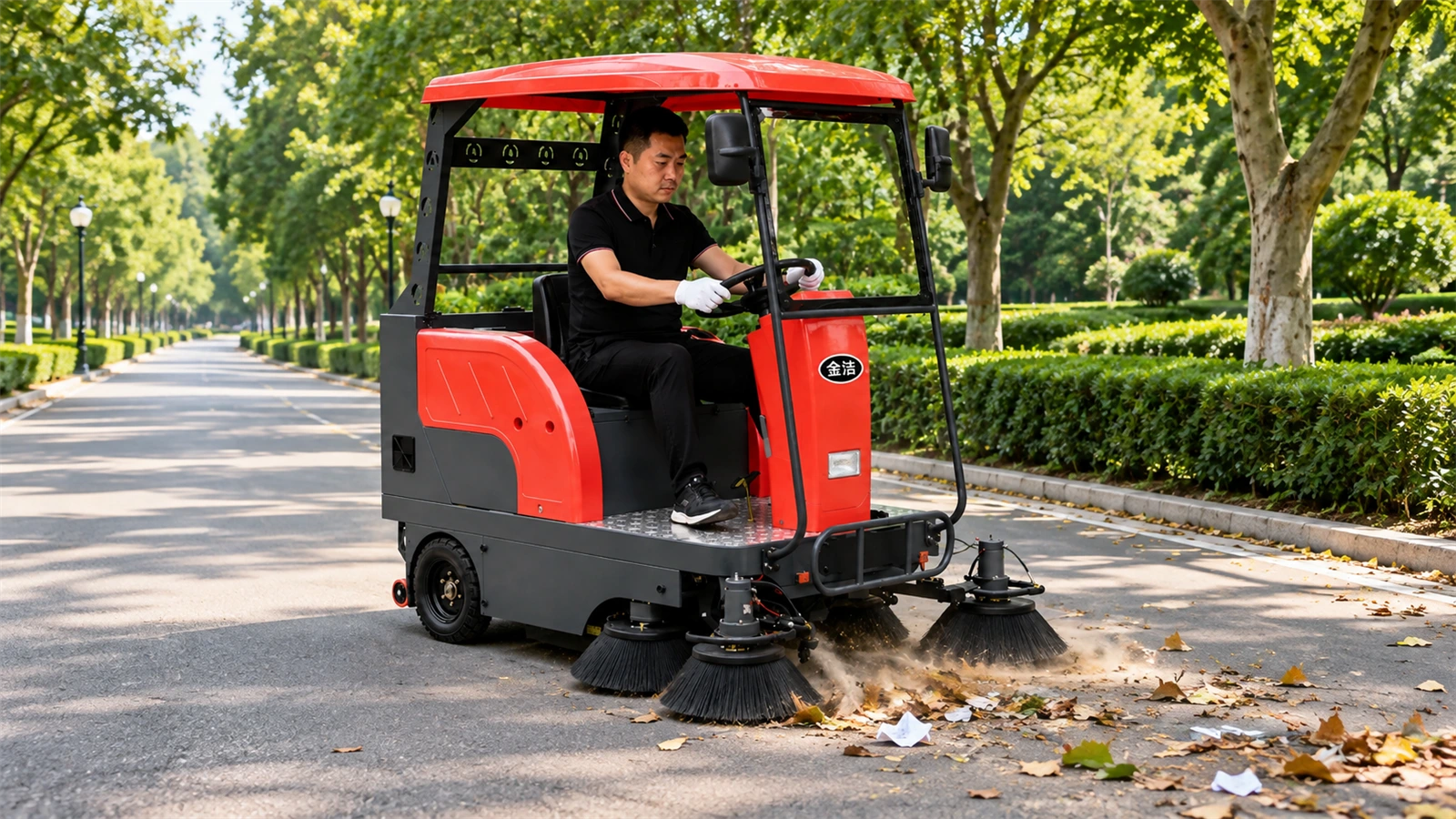
Jinjie J-XS1800
Current sweep width is 1880 mm with a 180 L hopper, not 1800 mm inferred from the model name. Check the narrowest route first.
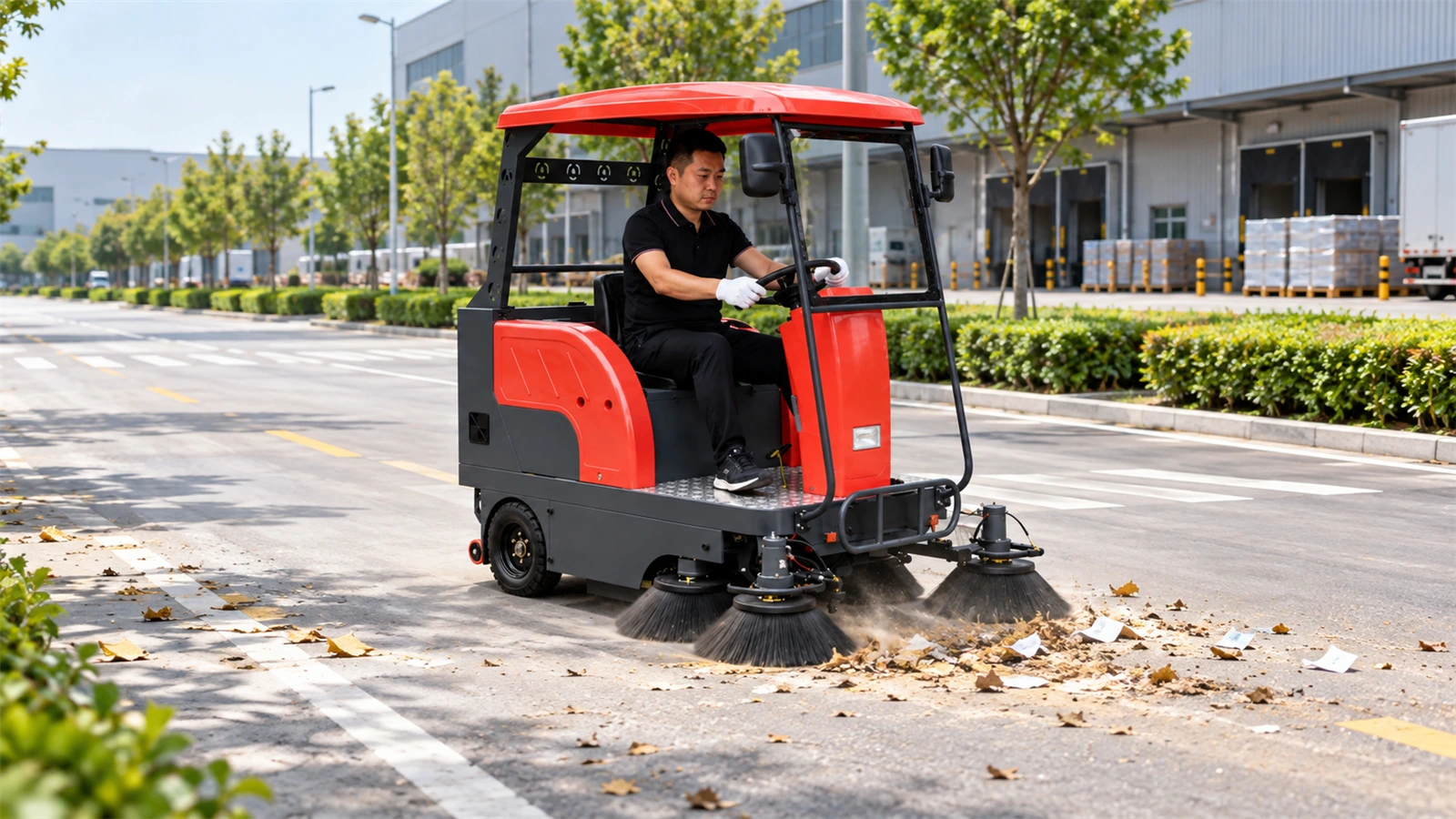
Jinjie J-XS1800
Current sweep width is 1880 mm with a 180 L hopper, not 1800 mm inferred from the model name. Check the narrowest route first.
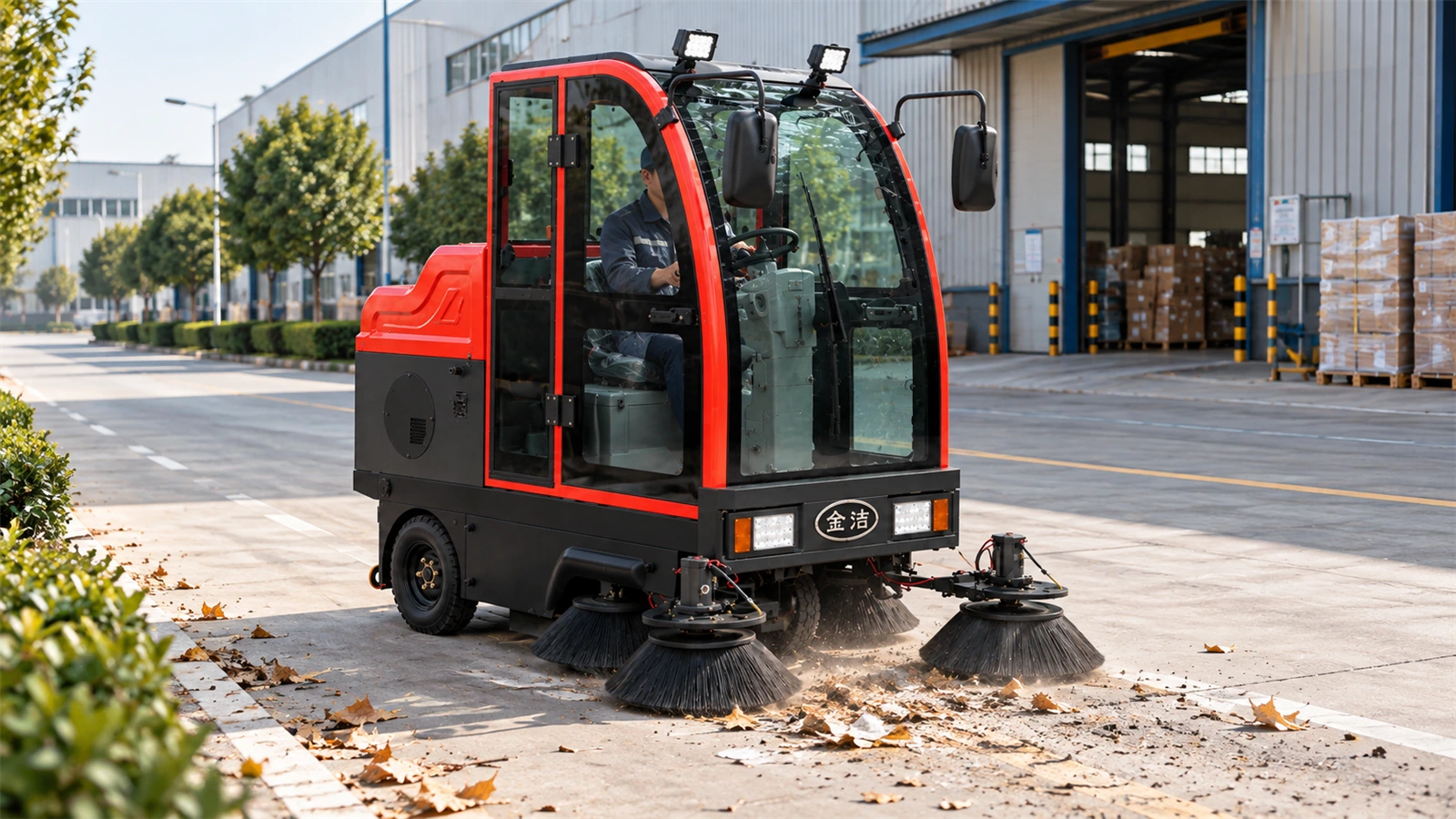
Jinjie J-XS1900Q
1900 mm sweep width, 180 L hopper, 150 L water tank and 48 V on the current page; an enclosed cab establishes neither a dust-protection rating nor explosion protection.
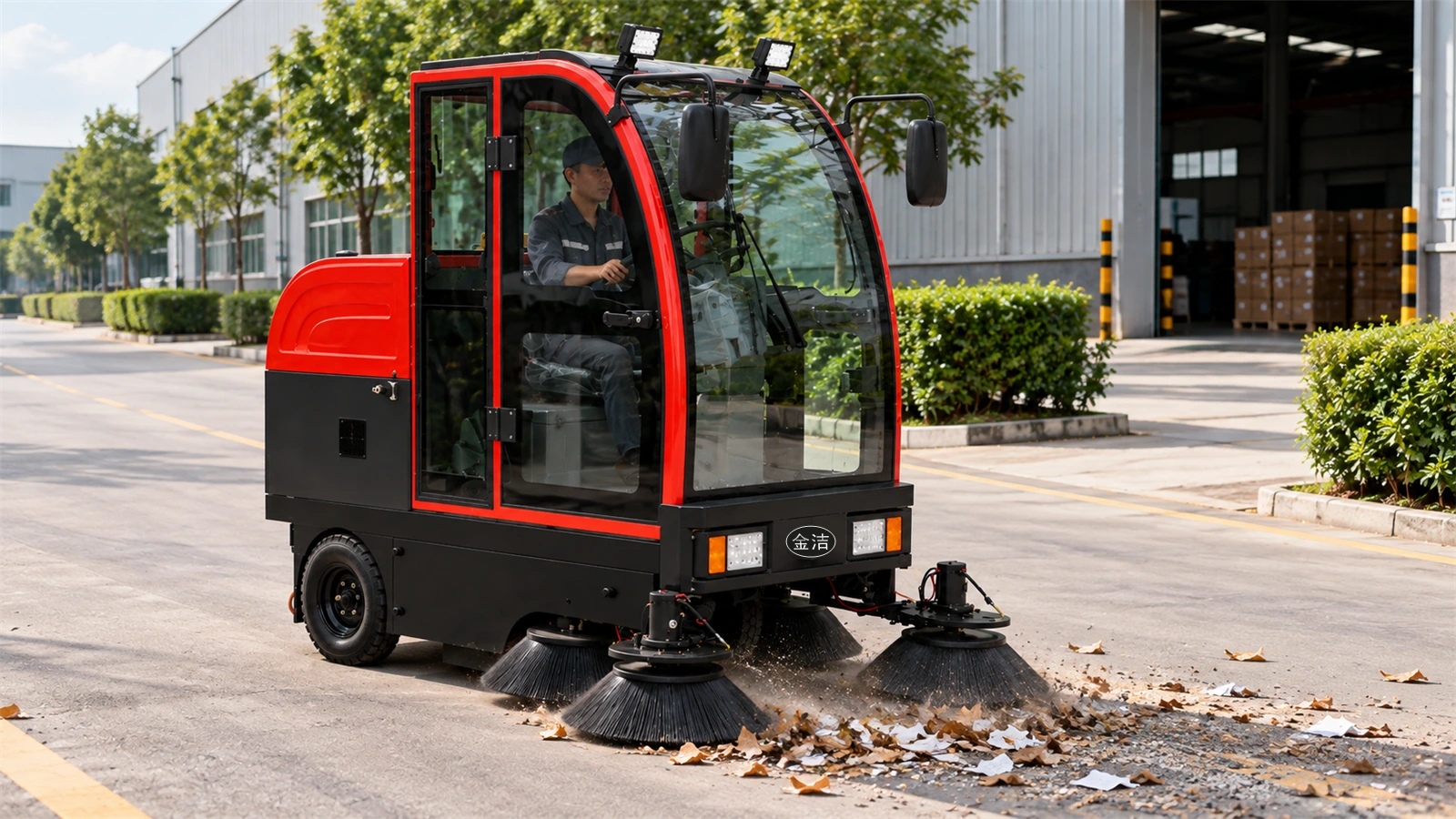
Jinjie J-XS2100Q
2100 mm sweep width, 200 L hopper, 100 L water tank and 48 V on the current page; verify gates and turns rather than choosing solely by open-road area.
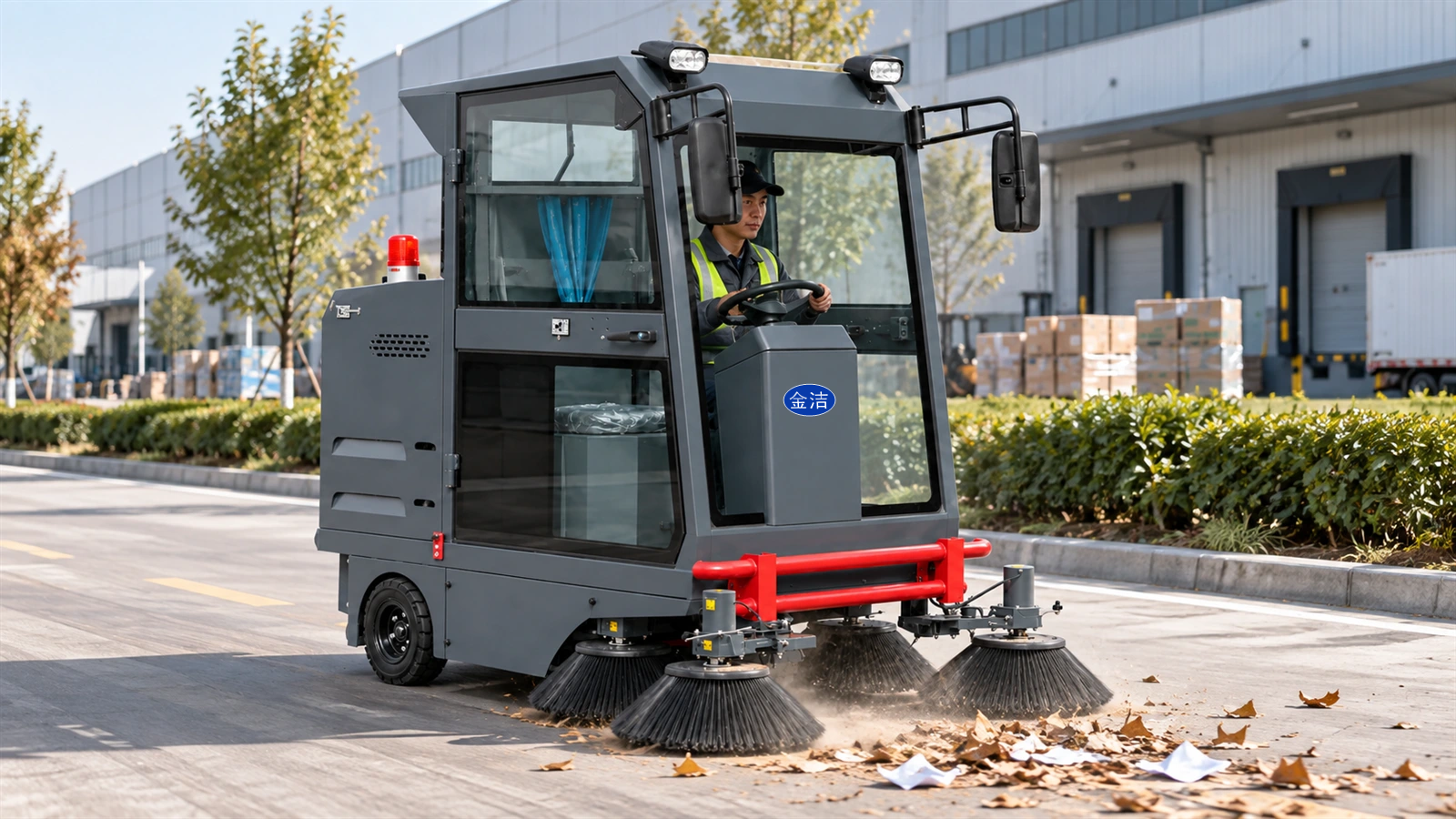
Jinjie J-XS1950
Model information positions J-XS1950 as an enclosed ride-on option for wider outdoor routes, with visibility, turns and height clearance assessed. Do not infer sweeping width from 1950; enclosure does not certify hazardous-dust protection or unlimited working…
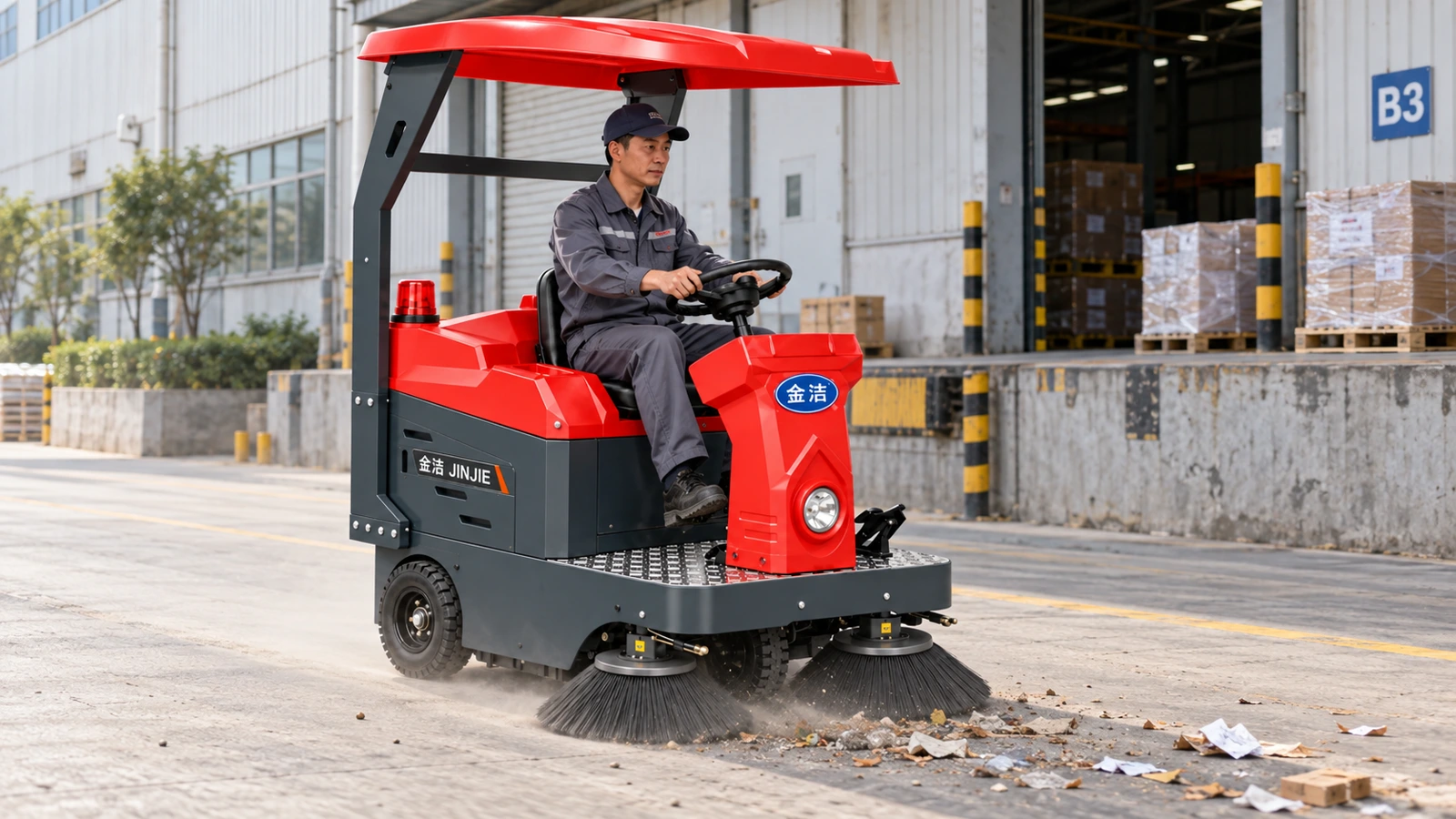
Jinjie J-XS1460
1460 mm sweep width, 150 L hopper and 60 L water tank on the current page; water assists dust control and does not make this a road washer or scrubber.
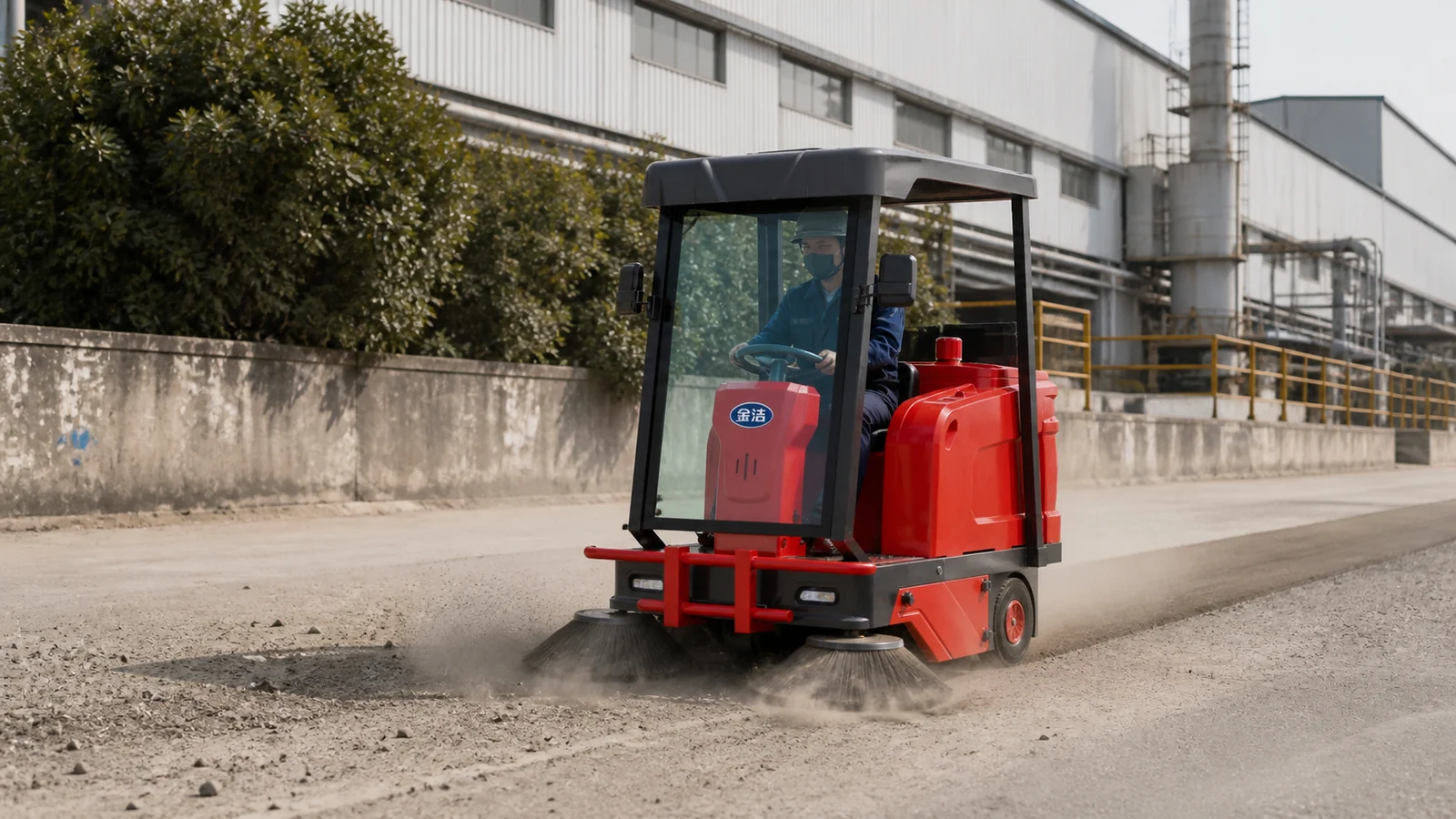
Jinjie J-XS1500
J-XS1500 supports ride-on sweeping planned around fixed obstacles, charging, disposal points and shifts. Ride-on work can reduce long manual gathering routes but still requires an operator, observation and maintenance; no fixed runtime is promised.
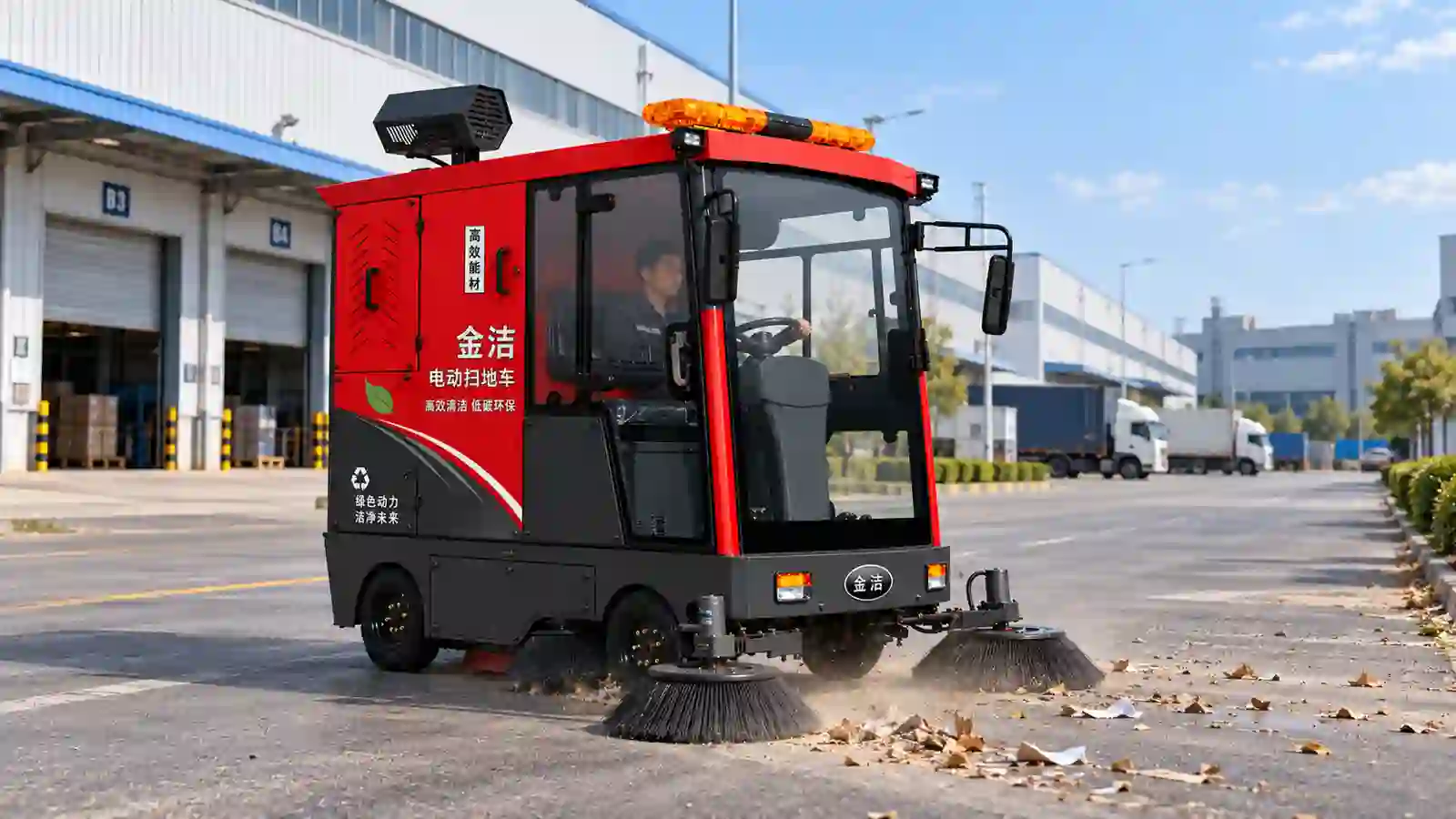
Jinjie J-WX2400A
J-WX2400A is intended for larger enclosed road sweeping, electric routes, water replenishment, disposal and charging. Verify width, hopper and comfort equipment against its sales configuration rather than borrowing B mist-cannon or R specifications.
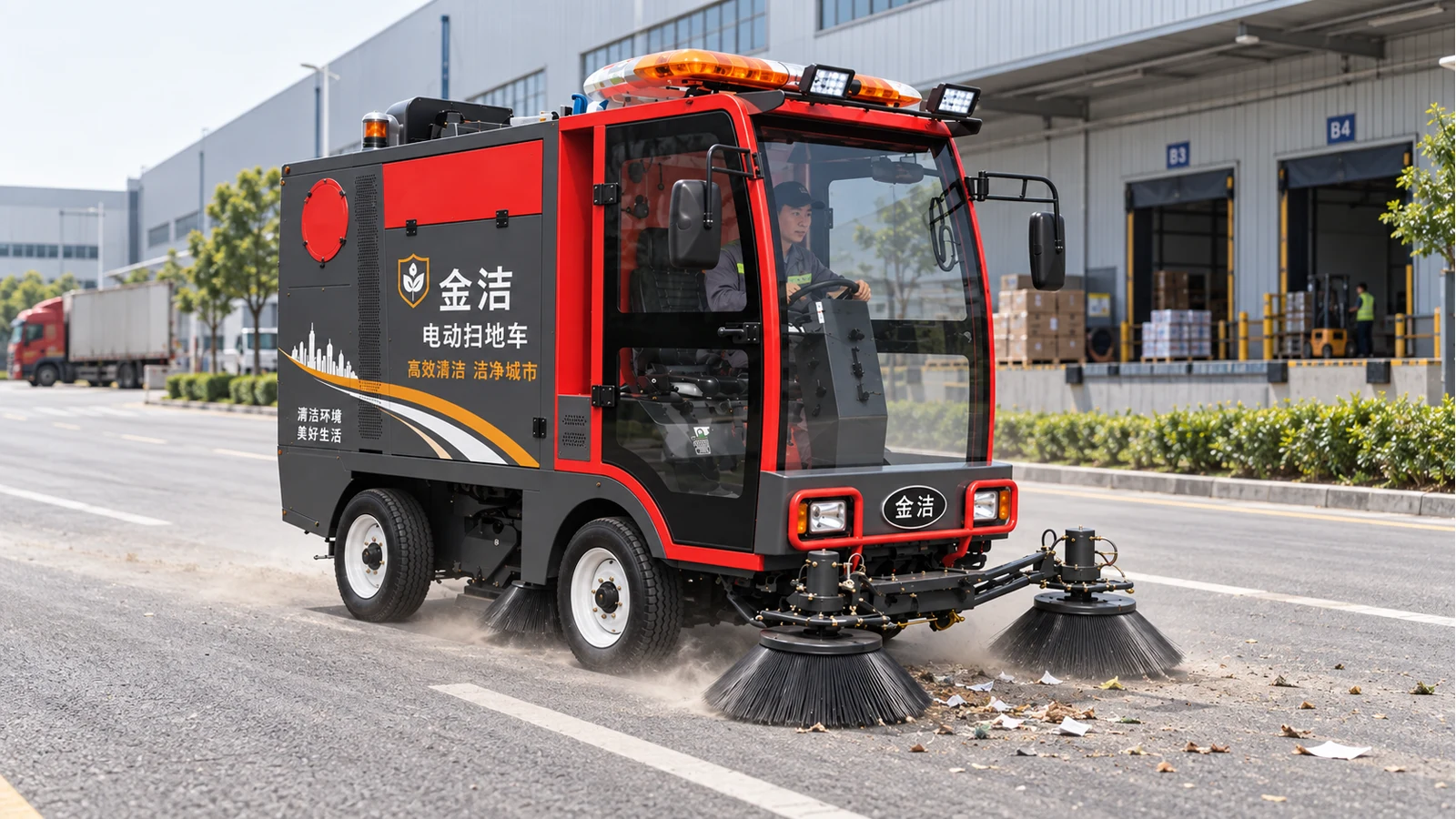
Jinjie J-WX2400B
J-WX2400B provides sweeping with auxiliary mist-cannon dust suppression. Water, wind, people, vehicles and electrics must suit spraying; this is not hazardous-dust treatment or certified air purification. Verify its own tanks, hopper and battery.
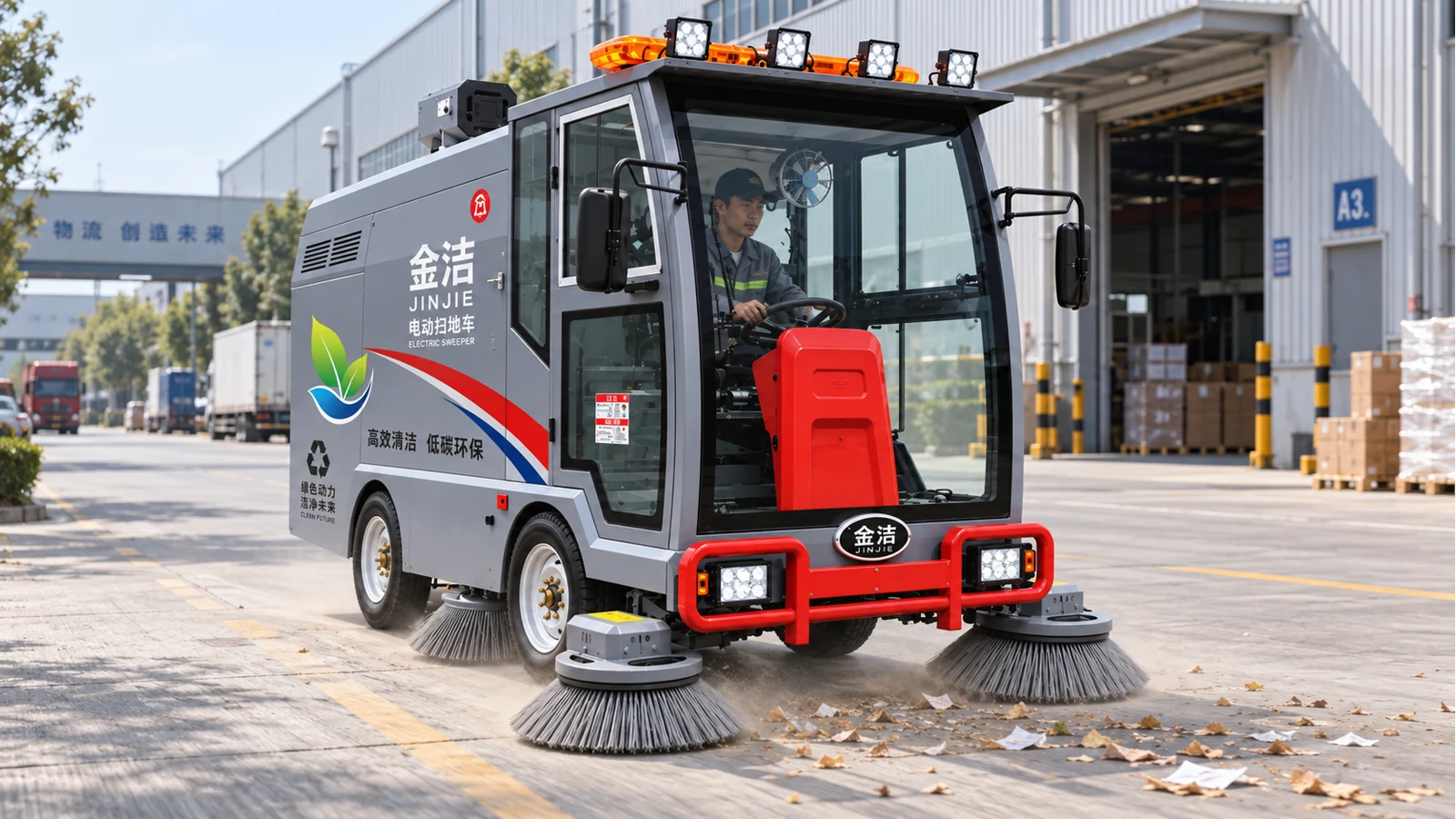
Jinjie J-WX2400R
J-WX2400R is a larger enclosed road sweeper selected around route length, height clearance, water, disposal, gradients and charging. Confirm air conditioning and specialist dust options; enclosure does not imply explosion protection, dust certification or wor…